3D wall installations using wood slats, metalwork, and panels let you add depth, texture, and character to your spaces. Wood slats bring warmth and natural beauty while serving as sound absorbers. Metalwork adds a modern, industrial touch and enhances acoustics with perforated or textured surfaces. Panels and composites offer versatile options for intricate or minimalist designs that combine visual interest with functionality. Explore further to discover how these materials can transform your interior environment seamlessly.
Key Takeaways
- 3D wall installations utilize materials like wood slats, metalwork, and panels to add depth and texture to interior spaces.
- Wood slats offer natural warmth, acoustic absorption, and versatile pattern arrangements such as vertical, horizontal, or diagonal.
- Metalwork provides a modern, industrial look, with perforated or textured surfaces enhancing visual impact and sound diffusion.
- Panels and composite materials allow for intricate or minimalist designs, combining aesthetic appeal with acoustic functionality.
- Combining these materials enables customized, durable, and visually striking 3D wall features tailored to various interior styles.
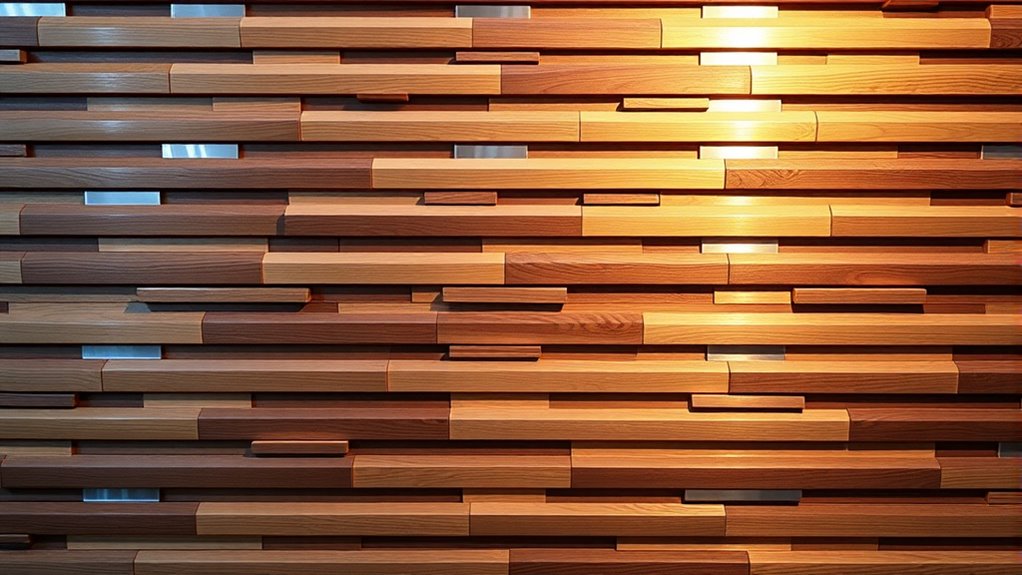
3D wall installations have become a popular way to add depth and character to any space, transforming flat surfaces into dynamic visual statements. When you choose to incorporate these designs using wood slats, metalwork, or panels, you’re not just creating an eye-catching feature—you’re also enhancing the room’s acoustic solutions. These textured surfaces can absorb sound, reduce echo, and improve overall audio quality, making your space more comfortable and functional. The layered, textured nature of 3D installations naturally introduces decorative textures that elevate your interior’s aesthetic appeal. Whether you’re designing a cozy lounge, a modern office, or a sophisticated restaurant, these installations serve as both art and utility, blending form with function seamlessly. Utilizing materials like wood slats and metalwork allows for the integration of AI-driven design tools, enabling precise customization and innovative patterns. Using wood slats in your 3D wall design offers warmth and natural beauty that many other materials can’t match. You can arrange them in various patterns—vertical, horizontal, or diagonal—to create visual interest while also serving as acoustic solutions. The wood acts as a natural sound absorber, dampening noise levels and making conversations clearer in busy environments. Plus, the tactile quality of wood slats adds a layer of decorative textures that invite touch and exploration, making your space more inviting. The flexibility of wood allows for customization—stain, finish, or paint—to match your overall decor scheme, whether you prefer a rustic, sleek, or contemporary look. Metalwork, on the other hand, introduces a modern, industrial vibe to your walls. When you incorporate metal panels or cutouts into your 3D installation, you achieve a striking visual impact that commands attention. Metal surfaces can be perforated or textured to serve as acoustic solutions, effectively diffusing sound waves and cutting down on unwanted noise. They also bring a bold decorative texture, with finishes ranging from matte to polished, allowing you to craft a unique aesthetic. Metal panels are durable and low-maintenance, making them ideal for high-traffic areas or commercial spaces. Their reflective qualities can also add brightness and a sense of openness to your environment. Panels made from composite or other materials provide yet another versatile option. They can be molded into intricate patterns or sleek, minimalist designs, offering a variety of decorative textures that suit any style. These panels often combine acoustic solutions and visual appeal in one package, making them a practical choice for enhancing both the look and sound quality of your space. Whether you opt for natural wood, industrial metal, or modern composite panels, each material allows you to craft a 3D installation that not only transforms your walls but also elevates your entire environment—adding depth, character, and a touch of artistry.
Frequently Asked Questions
What Are the Best Adhesives for Wood Slat Wall Installations?
For wood slat wall installations, you should choose adhesives with strong adhesive strength like construction adhesive or heavy-duty wood glue. These provide secure bonding and durability. Make sure to follow installation tips such as applying the adhesive evenly and pressing the slats firmly against the wall. This guarantees a smooth, long-lasting finish. Always check the manufacturer’s instructions to optimize adhesion and prevent issues down the line.
How Do You Maintain Metal Wall Panels Over Time?
To maintain metal wall panels, regularly clean them with a mild detergent and water to prevent dirt buildup. Inspect for signs of metal corrosion and apply protective coatings as needed to prevent rust. Touch up any chipped or damaged coatings promptly to protect against moisture. Proper maintenance keeps your panels looking fresh and extends their lifespan, ensuring they stay corrosion-free and visually appealing over time.
Can 3D Wall Panels Be Customized for Specific Designs?
Yes, you can customize 3D wall panels for specific designs. You have a range of custom panel designs and 3D pattern options to choose from, allowing you to create a unique look that fits your style. Whether you want intricate patterns or simple geometric shapes, your options are flexible. Work with your provider to select the right materials and patterns, ensuring your wall panels perfectly match your vision.
What Are the Cost Differences Between Materials?
You’ll find that wood slats are generally more affordable but less durable, making them ideal for decorative accents. Metalwork tends to be pricier due to higher material costs and increased installation complexity, which can also affect overall expenses. Consider your needs for material durability and ease of installation; choosing the right material balances your budget with long-term value, ensuring your wall design stays stunning and functional over time.
Are There Eco-Friendly Options for Wall Paneling?
Yes, you can choose eco-friendly wall paneling options. Look for sustainable materials like bamboo, reclaimed wood, or recycled metal, which reduce environmental impact. Additionally, opt for eco-friendly finishes that are low in volatile organic compounds (VOCs) to guarantee healthier indoor air quality. These choices help you create a stylish, sustainable space while supporting environmentally responsible practices.
Conclusion
Imagine walking into a space where textured wood slats catch the light, shadows dance across sleek metalwork, and panels create a mesmerizing depth. These 3D wall installations transform ordinary walls into dynamic works of art, inviting you to explore every corner. With each element, you feel the tactile richness and visual intrigue, turning everyday rooms into inspiring environments. Embrace the power of design, and let your walls tell a story that’s as striking as it is unforgettable.