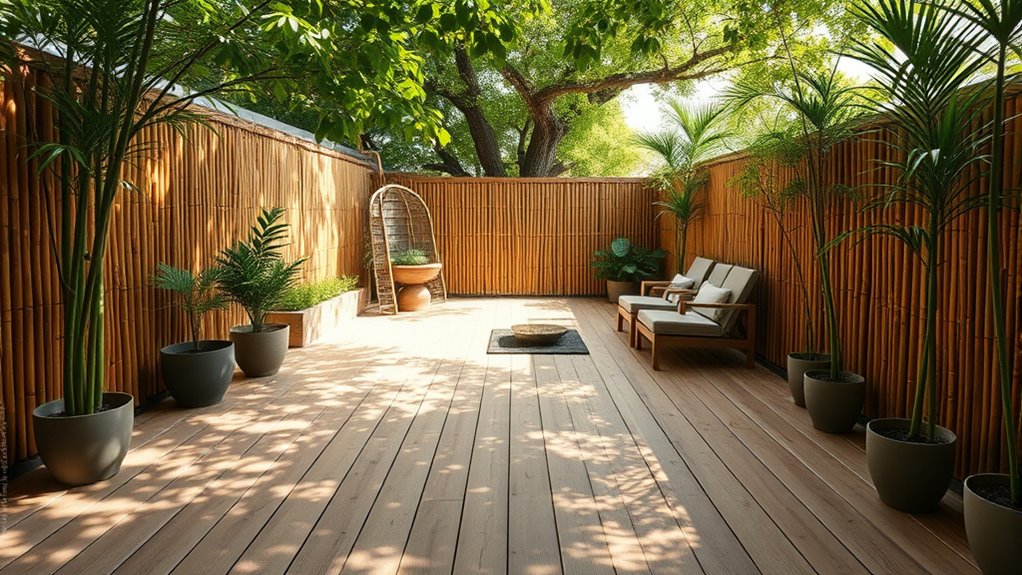

To design a sustainable patio, consider using eco-friendly materials like recycled wood and bamboo. Recycled wood, sourced from reclaimed pallets or old furniture, adds warmth and reduces waste, while bamboo’s rapid growth makes it a renewable alternative to hardwoods. These materials lower your environmental impact and promote resource conservation. Incorporating solar lighting and rainwater harvesting further enhances sustainability. Keep exploring to discover how these choices can create a beautiful, eco-conscious outdoor space that benefits future generations.
Key Takeaways
- Use recycled wood and bamboo for decking, furniture, and fencing to promote sustainability and reduce resource depletion.
- Incorporate solar lighting and rainwater harvesting systems to minimize energy consumption and water usage.
- Select native plants that require less water and maintenance, enhancing eco-friendly outdoor spaces.
- Opt for eco-conscious materials like recycled wood and bamboo to lower environmental impact and support resource conservation.
- Implement design strategies that combine renewable materials and eco-friendly features for a stylish, sustainable patio.

Have you ever considered how your patio design can contribute to a greener future? When you choose eco-friendly materials like recycled wood and bamboo, you’re taking a significant step toward sustainability. These materials not only reduce waste and lessen the demand for virgin resources but also bring a natural, warm aesthetic to your outdoor space. Recycled wood, for instance, often comes from reclaimed pallets, old furniture, or construction debris, giving it a second life while preventing it from ending up in landfills. Bamboo, known for its rapid growth and renewability, offers a sturdy alternative to traditional hardwoods, making it an excellent choice for decking, furniture, or fencing. By integrating these materials, you reduce your carbon footprint and promote a more sustainable lifestyle.
Choose eco-friendly materials like recycled wood and bamboo to create a sustainable, beautiful patio that benefits the planet.
Beyond the materials you choose for your patio itself, you can also incorporate eco-friendly features that enhance its sustainability. Solar lighting, for example, allows you to illuminate your outdoor space without relying on grid electricity. These lights harness sunlight during the day and automatically turn on at dusk, providing energy-efficient illumination. Not only does this cut down on electricity usage, but it also adds a charming ambiance to your patio after sunset. Pairing solar lighting with rainwater harvesting systems can further boost your eco-friendly efforts. Rainwater harvesting involves collecting and storing rainwater from your roof or other surfaces, which can then be used for watering plants, cleaning, or other outdoor purposes. This practice reduces your dependence on municipal water supplies, conserving valuable resources and lowering your water bills.
When designing your sustainable patio, think about how these elements work together. Use recycled wood or bamboo for furniture and decking, complemented by solar-powered lanterns and pathway lights. Install rainwater harvesting systems to irrigate your plants, reducing runoff and making your garden more resilient. Consider incorporating native plants that require less water and maintenance, further minimizing your environmental impact. Additionally, choosing imaginative and holistic Waldorf toys for outdoor play can foster creativity and a deeper connection with nature, enriching your outdoor experience. Every choice you make, from the materials to the energy sources and water management, contributes to creating a space that’s both beautiful and environmentally responsible.
Ultimately, designing a sustainable patio isn’t just about aesthetics; it’s about making mindful decisions that support the planet. With the integration of recycled and renewable materials, solar lighting, and rainwater harvesting, you can enjoy a stylish, functional outdoor retreat that minimizes harm to the environment. Your effort in choosing eco-conscious options helps protect natural resources and sets an example for others to follow. So, when planning your patio, think beyond beauty—think about the legacy you want to leave for future generations.
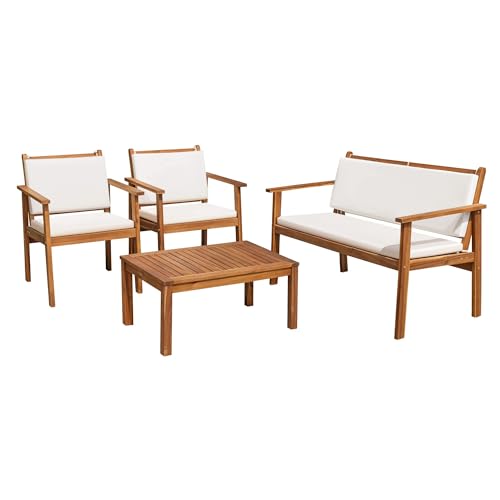
Flamaker Patio Furniture 4 Piece Outdoor Acacia Wood Patio Conversation Sofa Set with Table & Cushions Porch Furniture for Deck, Balcony, Backyard
【Natural Acacia Wood】Patio furniture is made of whole solid Acacia wood, which provides better load bearing and appearance…
As an affiliate, we earn on qualifying purchases.
As an affiliate, we earn on qualifying purchases.
Frequently Asked Questions
How Long Do Recycled Wood and Bamboo Patios Typically Last?
Recycled wood and bamboo patios typically last 10 to 25 years, depending on durability factors like exposure to weather, maintenance, and installation quality. Recycled wood can be quite durable with proper sealing, while bamboo, if treated well, offers a solid lifespan but may degrade faster without regular upkeep. Your material choice and care will considerably influence the overall material lifespan and how long your eco-friendly patio remains beautiful and functional.
Are Eco-Friendly Patio Materials More Cost-Effective Than Traditional Options?
Eco-friendly patio materials like recycled wood and bamboo can be more cost-effective than traditional options because they offer better long-term cost savings through enhanced material durability. While the initial investment might be higher, their resilience reduces maintenance and replacement expenses over time. Plus, choosing sustainable materials often qualifies you for eco-incentives, further lowering overall costs and making your patio both environmentally friendly and budget-wise.
What Maintenance Is Required for Sustainable Patio Materials?
You’ll need to follow simple cleaning routines, like sweeping and occasional washing, to keep your sustainable patio materials looking their best. Applying protective treatments, such as sealants or oils, helps prevent damage from weather and wear. Regular maintenance ensures longevity, so check for signs of deterioration and reapply treatments as needed. With proper care, eco-friendly materials like recycled wood and bamboo stay durable and beautiful for years.
Can Recycled Wood and Bamboo Withstand Extreme Weather Conditions?
Recycled wood and bamboo can withstand extreme weather conditions if properly treated. They offer good weather resilience, resisting moisture, pests, and temperature changes. Material durability depends on factors like sealants, finishes, and installation techniques. You should regularly maintain them, applying protective treatments to enhance longevity. With the right care, recycled wood and bamboo can be durable choices, ensuring your patio remains beautiful and functional even in harsh climates.
Are There Specific Design Considerations for Eco-Friendly Patios?
When designing your eco-friendly patio, focus on sustainable landscape design by choosing native plants and permeable surfaces to reduce environmental impact. Incorporate eco-conscious lighting choices, like solar-powered fixtures, to enhance energy efficiency. Guarantee your materials, such as recycled wood and bamboo, are treated for weather resistance. Additionally, plan for proper drainage and shading to maximize comfort and durability, creating a beautiful, sustainable space that aligns with your eco values.

ShunHong Polymer Composite Interlocking Deck Tiles Outdoor,12×12 Thick Composite Patio Floor Tiles Decking Boards for All Weather Use,Waterproof, Poolside,Balcony,Patio(9Pcs,Coffee,9 sqft)
【Durable sturdy and Sustainable materials】: ShunHong uses high-quality sustainable polymer composite materials, integrating high-density polyethylene(HDPE) and recycled wood…
As an affiliate, we earn on qualifying purchases.
As an affiliate, we earn on qualifying purchases.
Conclusion
By choosing eco-friendly materials like recycled wood and bamboo, you create a beautiful, sustainable patio that benefits the environment. While these materials may seem simple or humble, they offer durability and style that rival traditional options. You’ll enjoy a space that’s both eco-conscious and inviting, blending nature with modern design. In the end, building sustainably isn’t just about materials; it’s about creating a future where beauty and responsibility go hand in hand.

Eyrosa Solar Lights Outdoor, 12 Pack Waterproof Solar Landscape Lighting for Pathway Garden Yard Path Walkway Driveway Lawn Patio Outside Decor, Warm White
UNIQUE PATENTED SOLAR PATHWAY LIGHTS: 360° high transparent lampshade, which makes the light with strong transmission, bright light…
As an affiliate, we earn on qualifying purchases.
As an affiliate, we earn on qualifying purchases.

Collapsible Rain Barrel Water Storage Containers-53 Gallon Portable Rainwater Collect System Water Tank to Collect Rainwater from Gutter Downspout Water Catcher with Spigots,Filter&Overflow Kits
【Leak-Proof Design】Unlike typical rain barrels, our product features an integrated design with a straightforward screw-in faucet, eliminating the…
As an affiliate, we earn on qualifying purchases.
As an affiliate, we earn on qualifying purchases.