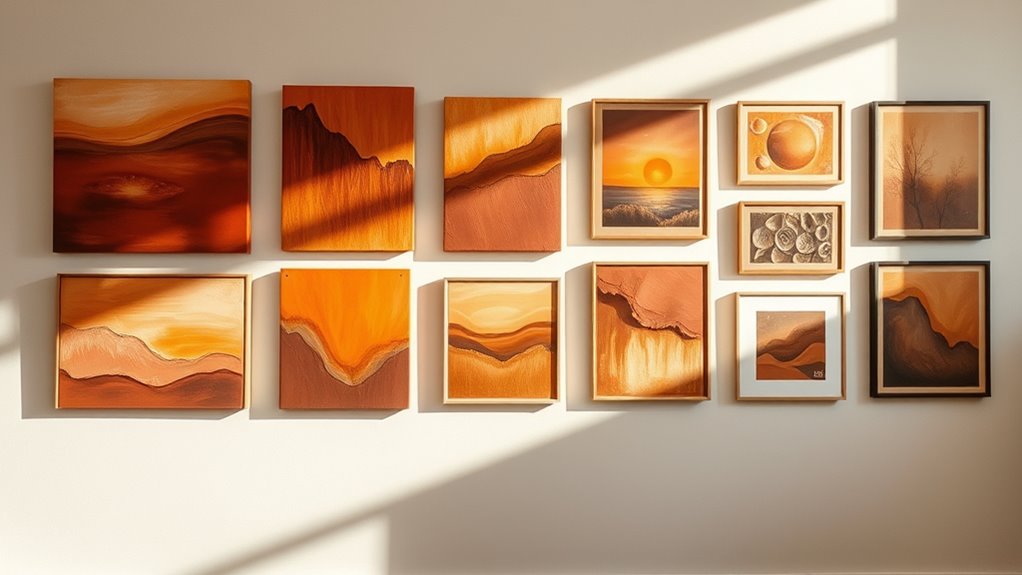
To create a cohesive art collection centered on themes and color stories, focus on grouping artworks with similar subjects, colors, or moods to build visual continuity. Arrange pieces thoughtfully, considering flow and spacing, and choose consistent framing styles to unify diverse pieces. Use lighting strategically to highlight key artworks and set the mood. By balancing these elements, you’ll craft a harmonious display that tells a compelling story—exploring further will help refine your perfect arrangement.
Key Takeaways
- Group artworks by similar themes or subjects to create a visual narrative and emotional connection.
- Use consistent color palettes or complementary hues to build a unified color story throughout the collection.
- Arrange artworks to balance themes and colors, avoiding dominance or disjointed transitions.
- Incorporate framing styles and layouts that reinforce the collection’s cohesive aesthetic.
- Enhance cohesion with strategic lighting that highlights themes and emphasizes color harmony.
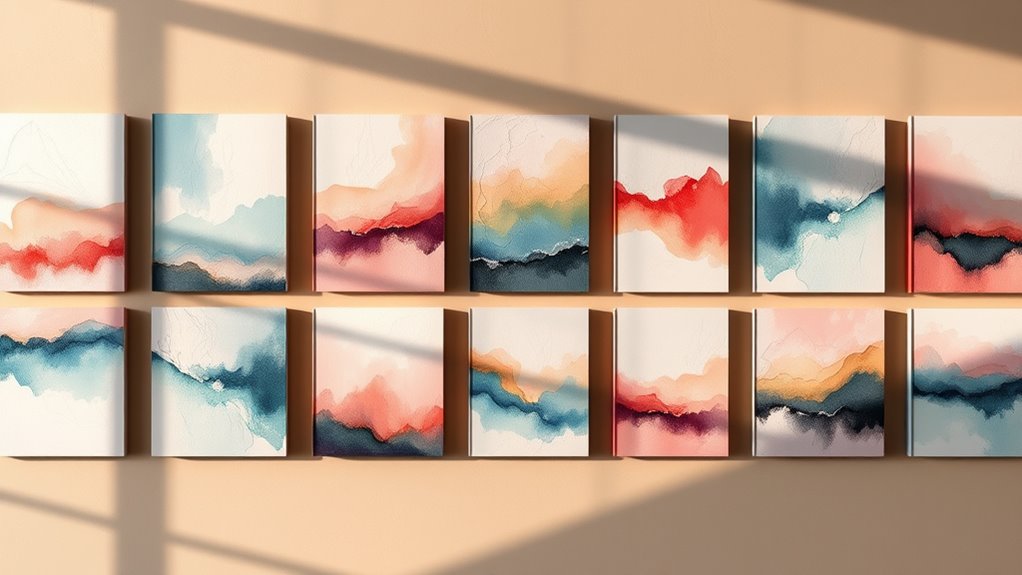
Have you ever wondered how to turn a scattered array of artworks into a unified, compelling collection? The secret lies in thoughtful arrangement and attention to detail. First, consider your gallery layout. How you position each piece influences the flow and overall feel of your collection. Opt for a layout that guides the viewer naturally from one artwork to the next, creating a visual journey. Symmetrical arrangements work well for a formal, cohesive look, while asymmetrical setups can add dynamism and interest. Think about spacing—too tight can feel cluttered, too loose might seem disconnected. Use furniture or architectural features to anchor your pieces, creating a sense of harmony.
Thoughtful arrangement and spacing create harmony and guide viewers through a cohesive art collection.
Next, focus on framing styles. Your choice of frames plays a significant role in tying diverse artworks together. Selecting a consistent framing style, such as sleek black borders or natural wood finishes, can unify different mediums and colors, giving your collection a polished appearance. Alternatively, mixing frames intentionally—varying styles but keeping a common element, like color or material—can add character without losing cohesion. The key is consistency in the framing approach to prevent the collection from feeling chaotic. Frames should complement the artwork without overpowering it, so choose styles that enhance your pieces and align with your overall theme.
When arranging your collection, consider the thematic and color stories behind your artworks. Group pieces with similar subjects or color palettes to create visual continuity. For example, placing warm-toned paintings together can evoke a cozy atmosphere, while cool hues might lend a calming vibe. This approach helps your collection tell a story and makes it easier for viewers to connect emotionally with your work. Keep in mind that a balanced distribution of colors and themes across the space prevents any one area from becoming overly dominant, maintaining flow and interest.
Additionally, pay attention to how lighting interacts with your gallery layout and framing choices. Proper lighting accentuates details, highlights colors, and enhances the overall cohesion of your collection. Use spotlights or adjustable fixtures to emphasize focal points or to create mood. When combined with strategic placement and consistent framing, lighting ties everything together, ensuring your collection feels intentional and harmonious. Incorporating lighting techniques can further elevate your display and highlight the unique qualities of each piece.
In the end, creating a cohesive art collection isn’t just about choosing beautiful pieces; it’s about how you present them. Thoughtful gallery layout, intentional framing styles, and a clear theme or color story will help you craft an arrangement that’s visually pleasing and emotionally resonant. Take your time experimenting with different configurations, and don’t be afraid to make adjustments until your collection feels perfectly unified.
Frequently Asked Questions
How Do I Incorporate Different Art Styles Into a Cohesive Collection?
You can incorporate different art styles into a cohesive collection by intentionally mixing styles while maintaining a unifying element, like color or theme. Use stylistic contrast to highlight each piece’s unique qualities without clashing. Arrange artworks thoughtfully, balancing diverse styles with consistent framing or presentation. This approach creates visual interest and harmony, allowing your collection to showcase variety while feeling unified and intentional.
What Are Effective Ways to Balance Color Variety and Harmony?
Did you know that 85% of viewers find balanced color schemes more appealing? To maintain color variety and harmony, focus on effective color coordination by selecting a dominant hue and complementing it with accents. Use visual balance techniques like symmetry or focal points to create cohesion. This approach ensures your collection feels unified yet dynamic, allowing each piece to stand out while contributing to an overall harmonious aesthetic.
How Often Should I Update or Rotate Artworks in My Collection?
You should update or rotate artworks in your collection every 6 to 12 months to keep your gallery fresh and engaging. Regular gallery maintenance guarantees your collection stays vibrant and well-curated. As you refine your collection curation, consider seasonal themes or new acquisitions to maintain visual interest. Rotating pieces also helps you appreciate different artworks over time, creating a dynamic space that reflects your evolving taste and the story you want to tell through your collection.
Can Personal Memories Influence the Theme and Cohesion of My Collection?
Yes, personal memories can profoundly influence the theme and cohesion of your collection. When you include artworks that evoke emotional influence or hold personal significance, your collection becomes more authentic and meaningful. These memories add depth and a unique narrative, creating a cohesive story that reflects your experiences. By selecting pieces tied to your personal memories, you guarantee your collection resonates emotionally, making it more compelling and truly yours.
How Do I Display Art to Enhance Theme and Color Storytelling?
You should use gallery lighting to highlight your artwork’s colors and themes, creating focal points that draw viewers into your story. Opt for framing techniques that complement your collection’s mood, such as sleek modern frames for contemporary pieces or ornate ones for classic themes. Arrange your art thoughtfully, balancing colors and themes across the space to enhance cohesion and storytelling. This approach keeps viewers engaged and emphasizes your collection’s narrative.
Conclusion
By mastering themes and color stories, you’ll transform your art collection into an unstoppable masterpiece that commands attention from miles away. It’ll be so cohesive, it’ll practically shout its story across the universe, turning your space into a breathtaking gallery that leaves everyone in awe. Your collection won’t just be beautiful—it’ll be legendary, an unstoppable force of artistic harmony that elevates your entire environment to a level of perfection few can even imagine.