
To make your home accessible and support aging in place, focus on designing storage within easy reach. Use open shelves, shallow cabinets, and pull-out drawers at waist level for effortless access. Incorporate smart technology like motorized shelves and voice-controlled systems for added convenience. Proper lighting and clutter-free pathways enhance safety and visibility. By planning thoughtfully, you can create a home that’s safer and easier to navigate—keep exploring to learn more tips for ideal storage solutions.
Key Takeaways
- Incorporate open, shallow, and pull-out storage solutions at waist level for easy access.
- Use universal design principles to create barrier-free, adaptable storage layouts.
- Integrate smart, motorized shelves and voice-controlled systems for effortless retrieval.
- Prioritize proper lighting and decluttering to enhance visibility and safety when reaching for items.
- Plan storage with minimal effort access, considering future physical limitations and ease of use.

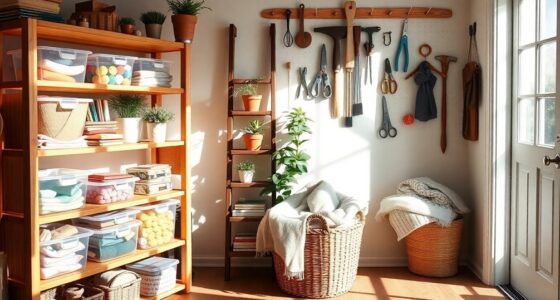
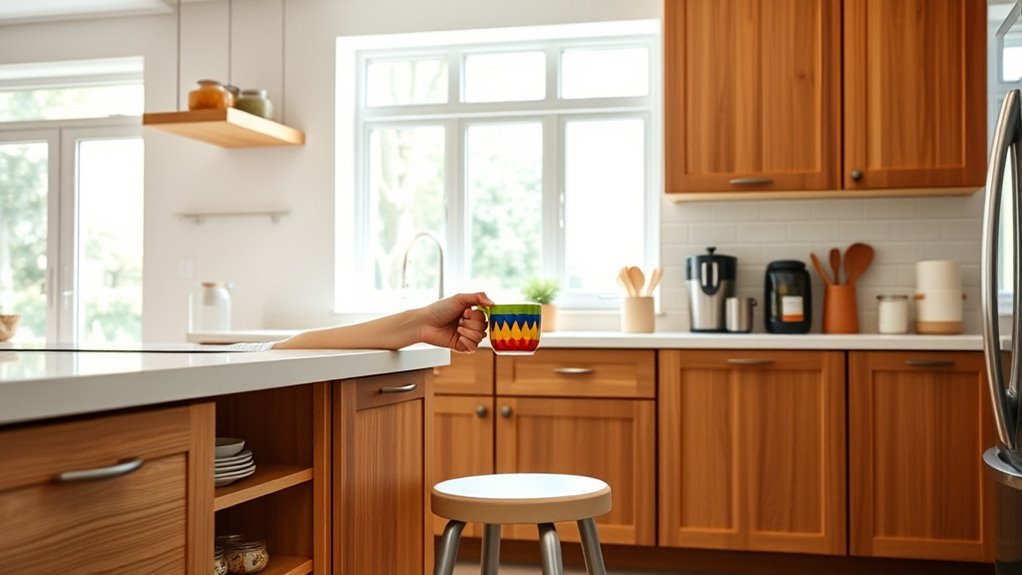
As we age, maintaining independence becomes increasingly important, and creating accessible living spaces is key to aging in place. One of the most effective ways to achieve this is by designing your storage to be within easy reach. When you plan your home with accessibility in mind, you can avoid unnecessary strain or the need for help. For example, installing open shelves or shallow cabinets at waist level ensures that you can access everyday items without bending or stretching excessively. This simple adjustment makes your space more functional and reduces the risk of falls or injuries. Incorporating universal design principles means creating a layout that accommodates your changing needs, regardless of physical ability. It’s about removing barriers and making every aspect of your home usable by everyone, which benefits not just you but visitors too.
A smart home setup can markedly enhance your ability to access stored items easily. Think about voice-controlled lighting, motorized shelves, or automated closet systems. These innovations allow you to operate storage spaces effortlessly, especially if mobility becomes an issue. For instance, motorized drawers can bring items closer to you at the push of a button or voice command. Coupling smart technology with universal design principles ensures your storage solutions are not only accessible but also intuitive. You won’t have to struggle with complicated mechanisms or reach into hard-to-access corners; everything is tailored to your comfort and convenience. This integration helps maintain your independence and provides peace of mind, knowing that your home adapts to your needs.
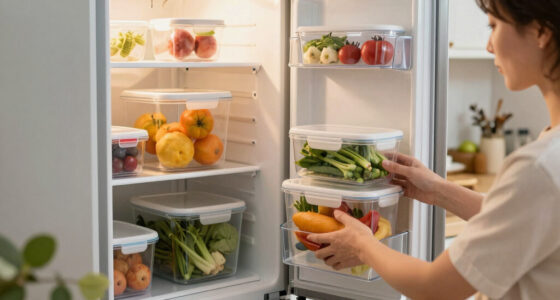
Another essential aspect of designing storage within reach is considering the height and depth of your cabinets and shelves. Opt for pull-out drawers, lazy Susans, or slide-out shelves that maximize space and minimize effort. These features allow you to retrieve items easily without excessive bending or stretching. When planning your space, think about decluttering regularly to keep pathways clear and prevent hazards. Proper lighting is also vital—well-lit storage areas help you see items clearly, reducing the chance of accidents. Additionally, utilizing apps or journals for tracking your organization and needs can further support maintaining an accessible and safe environment. Remember, the goal is to create a living environment where everything you need is accessible with minimal effort, supporting your goal of aging comfortably in your own home.

MDYHY 2 Tier Pull-Down System, Heavy Duty Drop Down Shelf for Kitchen, Bar and Cafe Upper Cabinets, 4 Bearing Weight Settings
Two-Tier Design Provides double storage space, allowing efficient organization of items in upper cabinets while maintaining easy access.
As an affiliate, we earn on qualifying purchases.
As an affiliate, we earn on qualifying purchases.
Frequently Asked Questions
How Can Technology Improve Storage Accessibility for Seniors?
Technology can substantially improve storage accessibility for seniors by integrating smart sensors and voice assistants. Smart sensors detect when items are nearby or misplaced, alerting you directly. Voice assistants allow you to effortlessly ask for specific items or control storage features, reducing the need to bend or reach. Together, these technologies make it easier for you to access stored belongings, enhancing independence and safety in your everyday routines.
What Are Cost-Effective Solutions for Aging-In-Place Storage Redesigns?
You can implement affordable solutions like adding pull-out shelves or adjustable-height storage units to make your space more accessible. DIY modifications, such as installing easy-to-reach hooks or reorganizing cabinets for better reach, also help. These simple, cost-effective strategies require minimal investment but considerably improve storage accessibility, allowing you to age in place comfortably and safely without extensive renovations or high expenses.
How Do Cultural Differences Influence Storage Preferences for Seniors?
Cultural norms and traditional preferences shape how seniors prefer to store and access their belongings. You might find that some cultures favor open shelving or communal storage, while others prefer concealed cabinets for privacy. These differences influence your design choices, ensuring that storage solutions align with cultural expectations. By respecting these preferences, you create a space that feels familiar and comfortable, supporting your independence and well-being as you age in place.
What Training Is Available for Caregivers on Accessible Storage Design?
You can find training programs for caregivers that focus on accessible storage design, including ergonomic techniques and mobility training. These courses often cover practical skills to make spaces safer and easier to navigate, ensuring seniors can reach what they need without strain. Many organizations, like the AARP or local healthcare providers, offer workshops or online modules. Don’t wait to get trained—it’s the best way to stay ahead of the curve and provide first-rate care.
How Does Climate Impact Storage Choices for Aging-In-Place Homes?
Climate impacts your storage choices by requiring climate adaptation strategies and suitable storage materials. You should select materials that resist moisture, mold, and temperature fluctuations, especially in humid or extreme climates. For example, use waterproof or rust-resistant containers in damp areas, and insulate storage spaces in cold climates. These adjustments help protect your belongings and ensure safe, accessible storage that supports aging-in-place needs.

VST Under Cabinet Lighting 6 Pack, Smart LED Light Bars 2700K-6500K Dimmable, App & Voice Control for Google Home & Alexa, Remote & Hand Wave, Seamless Linkable 12V Plug-in for Kitchen, Closet, Shelf
[Touch Control]:Easily adjust the light’s color temperature, brightness, or turn the system on/off through the touch switch. Control…
As an affiliate, we earn on qualifying purchases.
As an affiliate, we earn on qualifying purchases.
Conclusion
So, you’ve designed your space to be perfectly accessible—just within reach, everything in its place. Ironically, the very effort to make aging in place easier might mean you never have to stretch or bend again. But isn’t that the point? With thoughtful storage, you create a haven where comfort and independence thrive—until the day you realize you’ve made access so effortless, you’ll never want to leave. Now, that’s true aging in place.

PAKETA 4 Pack Expandable Pull Out Cabinet Organizer, 21'' Deep Pull Out Drawers for Cabinets,Upgrade 3 Slide Rails Sliding Drawer for Kitchen Cabinet Organizer with Adhesive Nano Film (White)
[🔝 WARM TIPS]: Please note that this pull out cabinet organizer suitable for cabinets with internal width exceeding…
As an affiliate, we earn on qualifying purchases.
As an affiliate, we earn on qualifying purchases.
waist level open shelves for aging in place
As an affiliate, we earn on qualifying purchases.
As an affiliate, we earn on qualifying purchases.