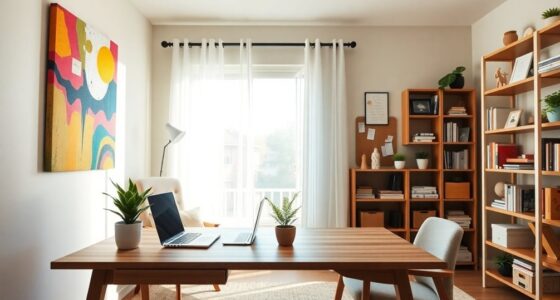
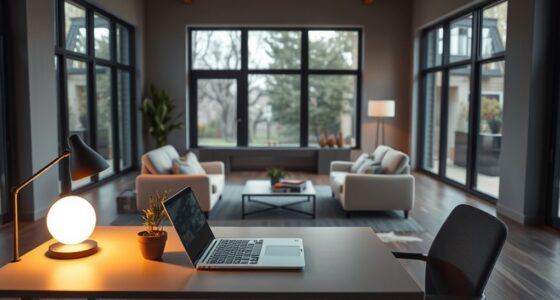
When designing a shared home office, focus on adjustable furniture like desks and chairs to suit different users, and incorporate sound-absorbing materials to manage noise. Maximize natural light and add task lighting for comfort, while using organized storage to reduce clutter. Create versatile layouts that can easily adapt to changing needs and user numbers for long-term usability. For more tips on balancing comfort and functionality, continue exploring effective shared workspace strategies.
Key Takeaways
- Incorporate adjustable furniture and partition screens to create personalized, private work zones for multiple users.
- Use sound-absorbing materials and noise-canceling solutions to manage shared noise levels effectively.
- Maximize natural light and provide adequate task lighting to ensure comfortable, well-lit workspaces for everyone.
- Opt for versatile, flexible furniture and organizational systems that adapt to changing user needs and space dynamics.
- Foster a healthy environment by integrating ergonomic furniture, organized storage, and relaxation areas to support well-being.

Shared home offices are becoming an increasingly popular solution for those balancing work and personal life in limited space. When designing a shared workspace, your goal is to create an environment that promotes productivity and comfort for everyone involved. One of the most important aspects is choosing ergonomic furniture. Since multiple people will be using the space, investing in adjustable chairs and desks becomes essential. Ergonomic furniture helps reduce strain and prevents discomfort during long hours of work. Adjustable height desks allow each user to customize their workspace, ensuring proper posture and minimizing fatigue. Likewise, supportive chairs with lumbar support help maintain good spinal alignment, which is paramount when working for extended periods. By prioritizing ergonomic furniture, you make the space adaptable and comfortable, encouraging better focus and reducing health issues related to poor posture.
Noise management is another critical element in shared home offices. When multiple people share a space, noise can quickly become a distraction, hampering concentration and productivity. To address this, consider incorporating sound-absorbing materials such as acoustic panels, rugs, or curtains. These elements help dampen sound and create a quieter environment. Additionally, strategically placing furniture, like bookshelves or soft seating, can help block noise pathways. If privacy is a concern, partition screens or room dividers can be effective in defining individual work zones, allowing each person to focus without interruption. For those working on sensitive or complex tasks, noise-canceling headphones can be a simple yet effective solution. Managing noise effectively not only improves individual productivity but also fosters a respectful, collaborative atmosphere in the shared space. Incorporating sleep and relaxation techniques can also help reduce stress and improve overall mental well-being, making the workspace more sustainable for long-term use.
In your design, think about lighting as well. Natural light is ideal, but if that’s limited, ensure each workstation has adequate task lighting. This reduces eye strain and enhances focus. Storage solutions should be accessible yet unobtrusive, keeping clutter to a minimum and maintaining a professional look. Remember, the key to a successful shared home office is flexibility. You want a setup that can easily adapt to changing needs or number of users. Proper furniture selection, noise management strategies, and thoughtful organization combine to create a space where everyone feels comfortable, focused, and productive. With attention to these details, your shared home office can become a seamless environment that balances work and personal life without sacrificing comfort or efficiency.
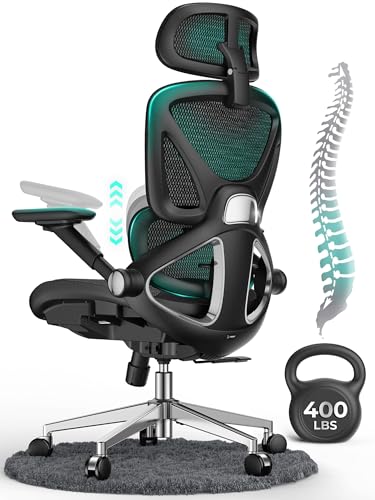
CAPOT Ergonomic Mesh Office Chair, Adjustable Lumbar High Back Desk Chair 400lbs, 4D Flip-up Arms, 3-Level Tilt Backrest, 3D Headrest, PU Wheels, Swivel Rolling Computer Seating for Long Desk Work
【STURDY, SNUG WORK CHAIR】Made for long sits over 8 hours of desk work. Micro-adjust lumbar support, flip-up arms,…
As an affiliate, we earn on qualifying purchases.
As an affiliate, we earn on qualifying purchases.
Frequently Asked Questions
How Can Noise Levels Be Minimized in Shared Workspaces?
To minimize noise in shared workspaces, you should implement soundproofing strategies like adding acoustic panels strategically placed on walls and ceilings. Proper acoustic panel placement helps absorb sound and reduce echo, creating a quieter environment. You can also use rugs, fabric partitions, and door seals to block noise from traveling. These steps make your shared home office more comfortable and productive for everyone involved.
What Are the Best Ways to Personalize a Shared Office?
Think of your shared office as a blank canvas waiting for your splash of personality. You can personalize it by adding decorative accessories that reflect your style—like vibrant plants or inspiring artwork. Invest in ergonomic furniture to keep you comfortable during long hours. These touches transform the space into your own oasis, making work feel less like a chore and more like a creative sanctuary.
How Do You Manage Different Work Schedules Effectively?
You manage different work schedules effectively by establishing flexible schedules and creating coordinated routines. Communicate openly with everyone, setting clear boundaries and expectations. Use shared calendars to track work hours and deadlines, and carve out designated quiet times for focused tasks. Adjust routines as needed to accommodate changes, ensuring everyone feels respected and supported. This approach minimizes conflicts and fosters a harmonious, productive shared workspace.
What Safety Measures Are Recommended for Shared Home Offices?
Imagine walking into your shared home office and realizing safety is key. You should invest in ergonomic furniture to prevent strain and use privacy screens to minimize distractions and protect sensitive information. Always keep cables organized to avoid tripping hazards, and make certain proper ventilation. Regularly check smoke detectors and fire extinguishers. By taking these steps, you create a secure environment that keeps everyone safe and comfortable while working.
How Should Storage Be Organized for Multiple Users?
You should implement effective storage solutions by providing labeled bins, shelves, and drawers for each user. Use organizational strategies like color-coding or designated zones to keep items separate and easily accessible. Encourage everyone to maintain their space and regularly declutter. This way, shared home offices stay tidy, and each user has quick access to their essentials without confusion. Clear organization fosters productivity and prevents conflicts over space.

ErGear Height Adjustable Electric Standing Desk, 48 x 24 Inches Sit Stand up Desk, Memory Computer Home Office Desk, Black
Electric Height Adjustable Standing Desk for Comfortable Work – Switch effortlessly between sitting and standing with this electric…
As an affiliate, we earn on qualifying purchases.
As an affiliate, we earn on qualifying purchases.
Conclusion
Creating a shared home office is like orchestrating a symphony—you need harmony, balance, and understanding. When you design thoughtfully for multiple users, you turn a simple space into a productive haven that works for everyone. Remember, it’s not just about fitting desks and chairs; it’s about fostering collaboration and respect. So, craft your shared workspace with care, and watch how it transforms chaos into a masterpiece of teamwork and comfort.

Soundproof Room Divider with Wheels, 66in Office Dividers for Sound Proofing & Reducing, 3 Panel Sound Proof Dividers for Office Partitions Portable Temporary Wall Acoustic Wall Divider,Light Grey
BLOCKING OUT DISTRACTIONS: YASRKML Office Partitions is made of ECO-friendly, flame-retardant PET material with Fabric wrapping, which can…
As an affiliate, we earn on qualifying purchases.
As an affiliate, we earn on qualifying purchases.

ShineTech LED Desk Lamp, 31.5" Ultra Wide Double Head Architect Light with Clamp, 50 Adjustable Lighting Modes, Eye-Caring Bright Task Lamp for Home Office, Large Monitor, Memory & Auto-Off Timer
Ultra-Wide 31.5″ Double Head Design: This adjustable LED desk lamp features an expandable dual-head design that spans 31.5″,…
As an affiliate, we earn on qualifying purchases.
As an affiliate, we earn on qualifying purchases.