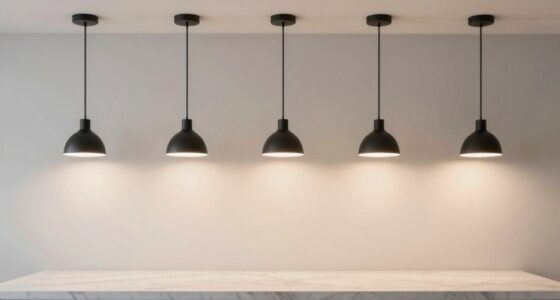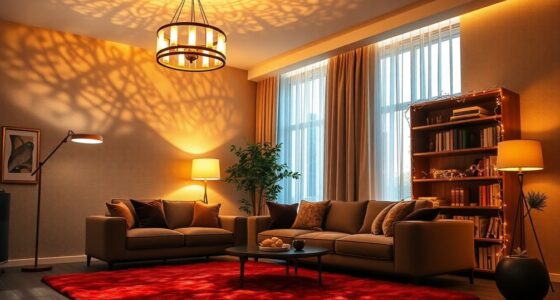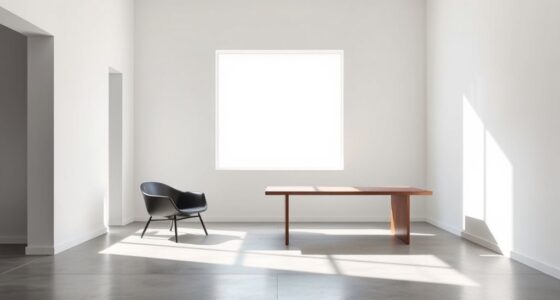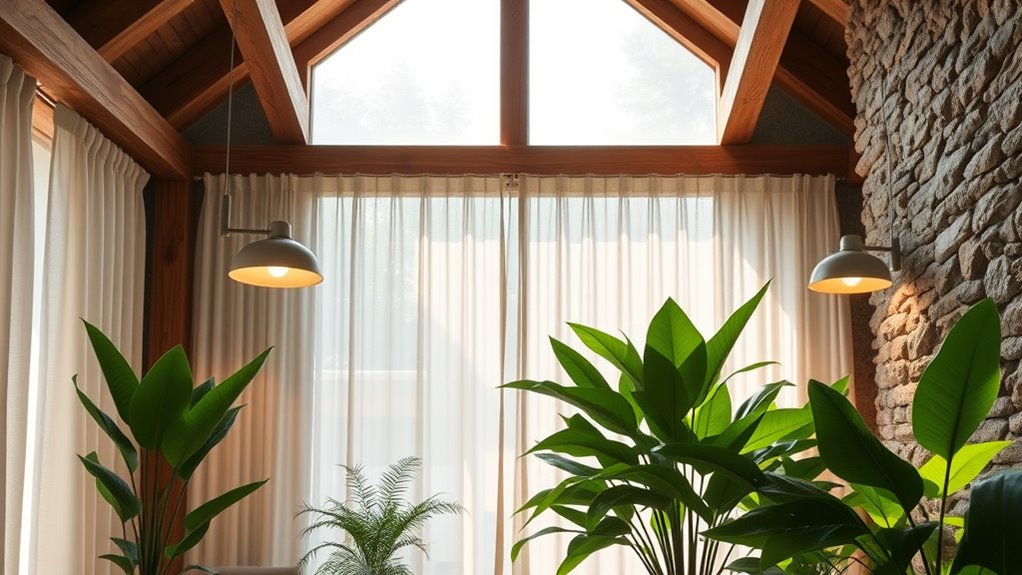

Biophilic lighting design combines natural materials like wood, stone, and fabrics with soft, diffuse light to create calming, inviting spaces. By maximizing natural daylight through careful window placement and reflective surfaces, you can enhance well-being and visual comfort. Using textures and colors inspired by nature promotes a strong connection to the outdoors and supports mental health. Exploring these elements further reveals ways to craft environments that nurture both body and mind.
Key Takeaways
- Incorporate natural materials like wood, stone, and fabrics to reflect outdoor textures and enhance biophilic qualities.
- Use soft, diffuse lighting to create calming environments that promote relaxation and visual comfort.
- Maximize daylight through strategic window placement and reflective surfaces to connect indoor spaces with nature.
- Balance natural light and materials to support circadian rhythms and boost mental well-being.
- Design spaces that feel alive and harmonious by blending natural elements with gentle, ambient lighting.

Biophilic lighting design integrates natural elements into indoor environments to enhance well-being, productivity, and comfort. When you focus on nature integration, you’re creating spaces that feel more alive and connected to the outdoors. This approach isn’t just about aesthetics; it’s about improving how you experience and interact with your environment daily. One of the essential aspects of biophilic lighting is daylight optimization, which involves maximizing natural light to reduce reliance on artificial sources and foster a healthier, more inviting space. By carefully designing windows, skylights, and open layouts, you can guarantee that daylight floods your environment during the day, supporting your circadian rhythms and boosting your mood.
Maximize natural light with strategic design to boost well-being and create inviting, sustainable indoor environments.
Thinking about how to implement nature integration, you might consider large, strategically placed windows that allow ample sunlight to pour into your space. These windows can be complemented by features like light shelves or reflective surfaces that bounce daylight deeper into your interior. Such elements not only enhance visual comfort but also make the environment feel more connected to the outside world. When daylight is optimized, it reduces the need for artificial lighting during daytime hours, which can save energy and create a more sustainable space. Additionally, the quality of natural light—its color temperature, intensity, and distribution—plays a fundamental role in how you perceive and feel within the environment. Soft, diffuse daylight tends to be more relaxing and helps prevent eye strain, making your space more comfortable.
Incorporating natural materials alongside daylight optimization further enhances the biophilic experience. Using materials like wood, stone, and natural fabrics reflects nature’s textures and colors, strengthening the sense of connection to the outdoors. These materials can also modulate light, absorbing or diffusing it gently, which complements the soft lighting design. When you combine nature integration with daylight optimization, you’re not just illuminating a space—you’re shaping an environment that nurtures your well-being. The goal is to create a harmonious balance where natural light and materials work together to foster a calming, energizing atmosphere. Additionally, understanding the benefits of natural light can help you appreciate how daylight influences mood, health, and overall comfort within your space.
Ultimately, biophilic lighting design encourages you to think beyond traditional fixtures. It’s about designing environments that breathe with natural light and materials, making your indoor spaces more vibrant, healthier, and aligned with your innate need for nature. By prioritizing daylight optimization and thoughtful integration of natural elements, you can craft spaces that support your physical and mental health while elevating the aesthetic appeal of your environment.

Livex Lighting 52136-92 Meridian Collection 4-Light Transitional Ceiling Mount Fixture with Oatmeal Color Fabric Hardback Shade, English Bronze
- Design Style: Transitional and elegant design
- Material: High-quality steel construction
- Mounting Type: Ceiling mount for various spaces
As an affiliate, we earn on qualifying purchases.
As an affiliate, we earn on qualifying purchases.
Frequently Asked Questions
How Does Biophilic Lighting Affect Mental Health?
You’ll notice that biophilic lighting boosts your mental health by strengthening your connection to nature, which can substantially reduce stress. Soft, natural light creates a calming environment, helping you feel more relaxed and focused. This design approach encourages mindfulness and emotional well-being, making daily routines less overwhelming. As a result, you experience better mood, improved sleep, and enhanced overall mental health through this soothing, nature-inspired lighting.
Can Biophilic Lighting Reduce Energy Costs?
You might find it surprising, but biophilic lighting can actually reduce your energy costs. By mimicking natural light and utilizing energy-efficient fixtures, you promote better light distribution and lower electricity use. This translates to significant cost savings while supporting energy efficiency. As you incorporate more natural materials and soft lighting into your space, you’ll enjoy both a cozy atmosphere and decreased utility bills, making your environment more sustainable and budget-friendly.
What Are the Best Natural Materials for Lighting Fixtures?
You should choose eco-friendly woods like bamboo or reclaimed oak for lighting fixtures because they’re sustainable and add warmth. Recycled metals such as aluminum or copper are excellent for durability and eco-conscious design. These natural materials not only enhance the aesthetic appeal but also support environmental responsibility. Incorporating these options helps create a biophilic environment that feels inviting, natural, and sustainable, aligning with your goal of using eco-friendly and recycled materials.
How to Integrate Biophilic Lighting in Small Spaces?
You can integrate biophilic lighting in small spaces by choosing fixtures made from sustainable materials like bamboo or recycled wood, which add natural warmth. Opt for soft, diffused lighting to enhance comfort and mimic natural light patterns. Use space optimization techniques like wall-mounted or multi-functional fixtures to save room. Incorporate plants or natural elements nearby to boost the biophilic effect, creating a calming, sustainable environment that feels larger and more inviting.
Are There Specific Color Temperatures Recommended for Biophilic Lighting?
You should aim for a warm color temperature, around 2700K to 3000K, to create a calming, nature-inspired lighting ambiance that soothes your soul. Cooler temps might feel sterile, while warmer tones bring a cozy, inviting atmosphere that connects you to the outdoors. This perfect balance enhances your space’s natural beauty, making every moment feel like a gust of fresh air, so you can truly relax and recharge.
Conclusion
Embrace biophilic lighting as your guiding star, guiding you back to nature’s gentle embrace. Let soft, natural light be the dawn that awakens your space, and the warmth of natural materials the steady heartbeat of comfort. When you incorporate these elements, you create a sanctuary where light and life intertwine—a symbol of harmony, balance, and renewal. In this dance of shadows and shine, you find your connection to the world outside, reflected within your own sanctuary.