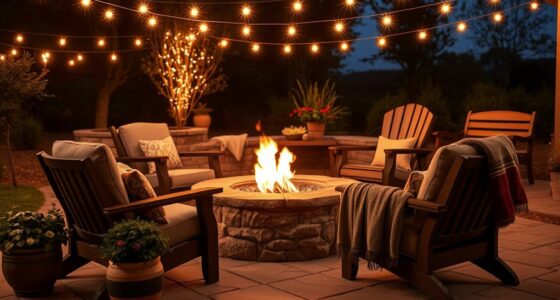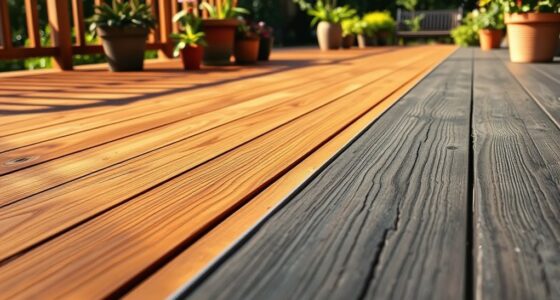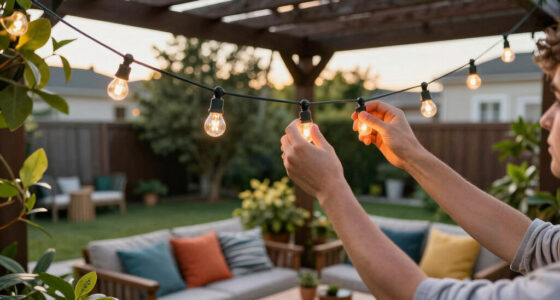
When choosing between a pergola and a gazebo for shade, consider their structural differences: pergolas have open lattice roofs that provide partial shade and breezy comfort, while gazebos offer solid roofs that deliver full protection and privacy. Think about your style preference, climate, and budget, as materials and design impact durability and appearance. To find out which suits your outdoor space best, explore more details that can help you make an informed decision.
Key Takeaways
- Pergolas provide partial shade with open lattice roofs, filtering sunlight, while gazebos offer full coverage with solid roofs for complete shade.
- Pergolas are lightweight, open structures ideal for aesthetic integration, whereas gazebos are sturdy, enclosed structures designed for privacy and protection.
- Material choices like wood or metal affect durability and shade quality; pergolas often use lighter materials, while gazebos use weather-resistant, solid materials.
- Pergolas create a semi-shaded, airy environment suitable for decorative climbing plants, while gazebos deliver a more enclosed, shaded retreat.
- Cost and maintenance vary: pergolas tend to be more affordable and easier to maintain, while gazebos offer long-term durability with more extensive upkeep.

Jocisland 10×12 FT Premium Cedar Wood Pergola with Trellis Roof & Weather-Resistant Support, Outdoor Pergola Kit with Stakes, Garden Gazebo for Patio, Backyard & Events, Reddish-Brown
- Premium Cedar Wood Frame: Weatherproof, durable cedar construction
- Trellis Roof Design: Maximizes sunlight and supports climbing plants
- Versatile Shade Options: Add lights or canopy for ambiance and rain protection
As an affiliate, we earn on qualifying purchases.
As an affiliate, we earn on qualifying purchases.
What Are Pergolas and Gazebos? Key Features and Differences

Pergolas and gazebos are popular outdoor structures that offer shade, aesthetic appeal, and a designated space for relaxation or entertaining. They serve as key garden accessories that enhance your outdoor area’s functionality and style. A pergola typically features an open lattice roof supported by columns, creating a semi-shaded space ideal for supporting climbing plants. Gazebos, on the other hand, are freestanding, pavilion-like structures with a solid roof, offering complete shelter. Both structures can complement outdoor furniture, turning your yard into a cozy retreat. While pergolas emphasize openness and partial shade, gazebos focus on providing full coverage. Understanding these key features helps you choose the right structure to suit your outdoor space and personal style. Additionally, selecting the appropriate material and construction can significantly impact durability and maintenance needs, especially when considering weather resistance and long-term upkeep. Moreover, considering the cost and installation process can influence your overall decision-making. When choosing between the two, also consider the privacy and enclosure each structure offers to match your outdoor living preferences. For example, weather-resistant materials are crucial for ensuring longevity in various climates.
How Do Pergolas and Gazebos Differ in Design and Structure
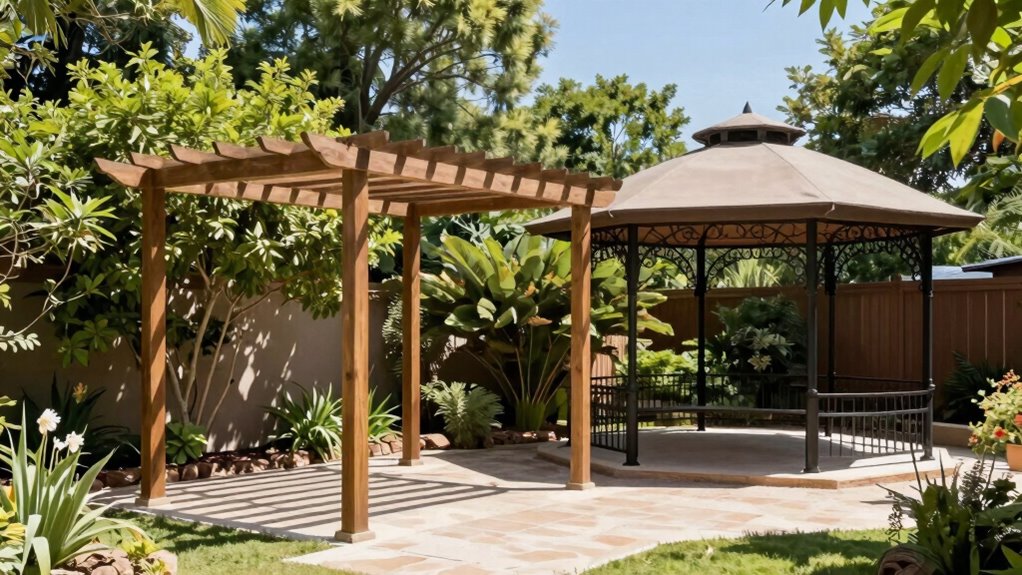
While both pergolas and gazebos serve as attractive outdoor structures, their designs and structures set them apart considerably. Pergolas feature open frameworks with ornamental design elements like beams, lattice, or arches, creating a semi-shaded space. They are usually supported by four or more posts, emphasizing their structural support through slender columns and crossbeams. Gazebos, on the other hand, have a more enclosed design with a solid roof and often a fully enclosed or partially open perimeter, providing complete structural support with sturdy walls or railings. The ornamental design of gazebos tends to be more intricate, with decorative trim and details. Overall, pergolas prioritize lightness and openness, while gazebos focus on stability and enclosure. Understanding structural differences helps in choosing the right outdoor shelter for your needs. Additionally, considering the material durability can influence longevity and maintenance requirements for either structure.
Which Provides Better Shade: Pergola or Gazebo?
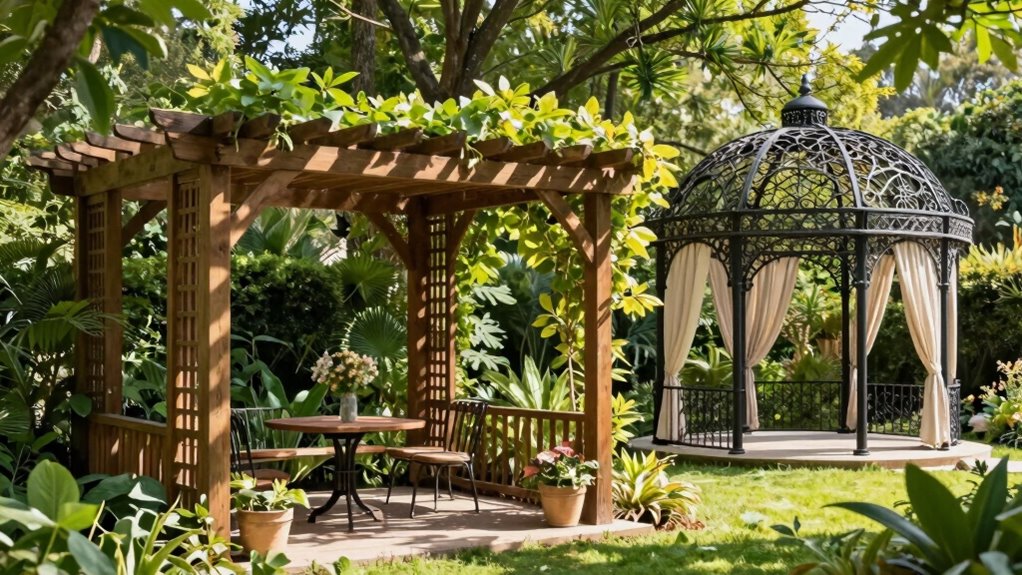
When comparing shade coverage, you’ll notice that gazebos often provide more complete protection, while pergolas offer partial shade. Material and design choices also influence how well each structure blocks sunlight, with heavier fabrics and solid roofs enhancing shade. Consider how sunlight filtering and your desired level of coverage align with each option to make the best choice for your space. Additionally, tax law updates can impact the costs and benefits of installing outdoor structures, so staying informed can help optimize your investment. Recognizing the benefits of curiosity in understanding different outdoor structures can also lead to better decision-making and enjoyment of your outdoor space. Exploring various design options can further help you tailor your outdoor area to fit your specific shading needs, especially as technology advances offer new materials and features for outdoor shading solutions. Being aware of regulatory considerations can ensure your project remains compliant with local codes and ordinances.
Shade Coverage Area
A key factor to consider when choosing between a pergola and a gazebo is their shade coverage area. Pergolas typically offer partial shade, as their open lattice design allows sunlight and breeze to pass through, which can limit outdoor privacy and wind resistance. Gazebos, on the other hand, usually provide full or nearly full coverage, creating a more enclosed space that enhances outdoor privacy and offers better wind resistance. If you need consistent shade for gatherings or relaxing without interruptions, a gazebo generally covers a larger area with more reliable shade. Pergolas are better suited when you want a light, airy structure that creates a semi-shaded environment. So, your choice depends on whether you prioritize complete shade and privacy or a more open, breezy feel. Understanding the opportunity to customize these structures can further help you create your ideal outdoor space.
Material and Design Variations
The choice of materials and design features considerably impacts the shade provided by pergolas and gazebos. With pergolas, fabric options like weather-resistant canopies or retractable shades allow you to customize sun protection, while their open lattice design offers partial shade and airflow. Music therapy can be incorporated into outdoor settings to create a relaxing atmosphere that complements the shade structure. Gazebos typically feature solid roofing materials such as shingles, metal, or fabric canopies, providing more consistent, full shade. Color choices also matter: darker fabrics and roofing materials absorb more heat, offering better shading but potentially increasing temperature underneath. Lighter hues reflect sunlight, keeping the area cooler but sometimes reducing shade effectiveness. Your selection of fabric options and color choices directly influences how much shade each structure provides and how comfortable your outdoor space feels throughout the day. Additionally, the material selection impacts durability and maintenance needs, which are important considerations for long-term shade quality. For example, choosing weather-resistant fabrics can significantly extend the lifespan of the shade structure in outdoor conditions. Moreover, UV resistance in fabric materials helps prevent fading and deterioration over time, maintaining both appearance and effectiveness. Incorporating proper ventilation can further enhance comfort by reducing heat buildup beneath the shade.
Sunlight Filtering Capabilities
Pergolas generally filter sunlight more selectively than gazebos, which often provide more consistent shade due to their solid roofs. With a pergola, sunlight filtering depends on the slats or beams, allowing you to enjoy dappled light and some UV protection. This makes it it ideal if you want a balance of shade and sunshine. Gazebos, on the other hand, offer better UV protection because their solid roofs block more sunlight directly, providing uniform shade. If your priority is maximizing shade and minimizing direct sunlight, a gazebo is the better choice. However, if you prefer filtered sunlight for a softer effect, a pergola’s sunlight filtering capabilities serve you well. Overall, gazebos deliver more consistent shade, while pergolas offer selective sunlight filtering. Additionally, vetted options like floating on water can enhance outdoor relaxation spaces.
What Are the Best Materials for Pergolas and Gazebos?
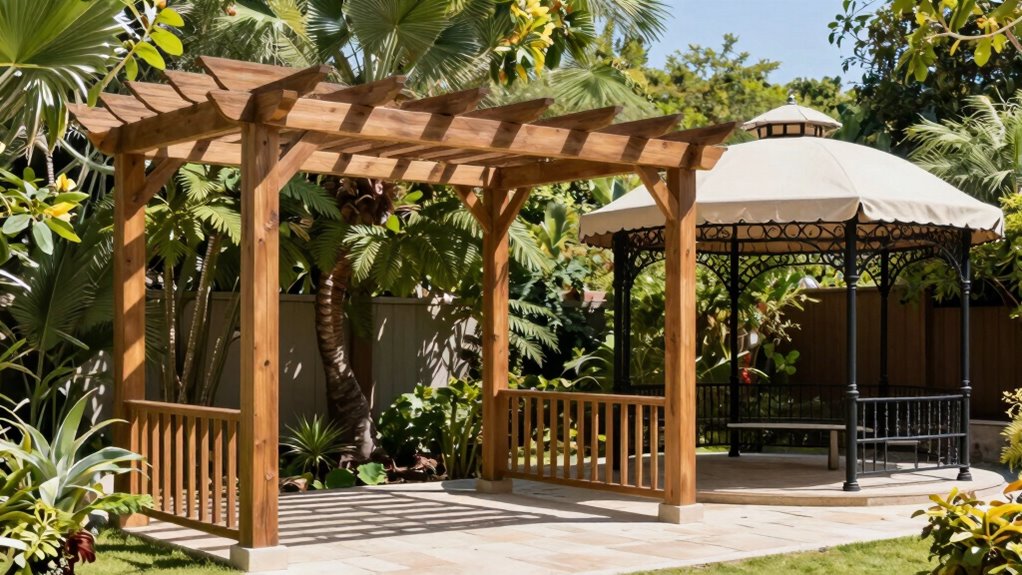
Choosing the right materials for your pergola or gazebo affects both durability and style. You want options that are strong enough to withstand the elements while also matching your aesthetic. Let’s explore the best materials that balance these key points. For instance, selecting weather-resistant materials can help maintain the structure’s integrity over time, especially in areas prone to extreme weather conditions. Incorporating sustainable textile care practices into outdoor furnishings can further enhance the longevity and eco-friendliness of your outdoor space. Understanding ethical consumer choices can guide you toward environmentally friendly and sustainable material options that align with your values. Additionally, opting for weather-resistant materials can significantly extend your outdoor structure’s lifespan, reducing maintenance needs and replacement costs. Considering proper installation techniques also plays a vital role in maximizing the longevity of your outdoor structures.
Durability and Strength
When selecting materials for your outdoor structure, durability and strength are key factors to guarantee it withstands the elements over time. Metal frames are highly durable, resisting rot, pests, and weather damage, making them ideal for long-lasting pergolas and gazebos. They offer excellent strength, supporting weight and maintaining stability even under harsh conditions. Wood, on the other hand, varies in strength depending on the type; hardwoods like teak or cedar provide higher durability and resistance to decay. Proper treatment and sealing can enhance wood’s lifespan, but it generally requires more maintenance. Choosing the right combination of materials ensures your structure remains sturdy and reliable for years, whether you prefer the robustness of metal or the natural strength of quality wood.
Aesthetic Appeal and Style
The materials you select for your outdoor structure greatly influence its visual appeal and overall style. For pergolas, wood offers a classic, warm look that complements flower patterns and natural surroundings, while metal provides a sleek, modern vibe with clean lines. Gazebos made of vinyl or painted wood can showcase vibrant color schemes, adding charm and personality. Consider how the materials’ textures and finishes match your preferred aesthetic—smooth paint or rustic grain can dramatically change the feel. If you want a romantic or vintage look, choose materials that highlight intricate details or decorative elements. Ultimately, your choice of materials shapes the mood and style of your outdoor space, so pick ones that align with your taste and the ambiance you wish to create.
How Do Pergolas and Gazebos Fit Your Outdoor Style?
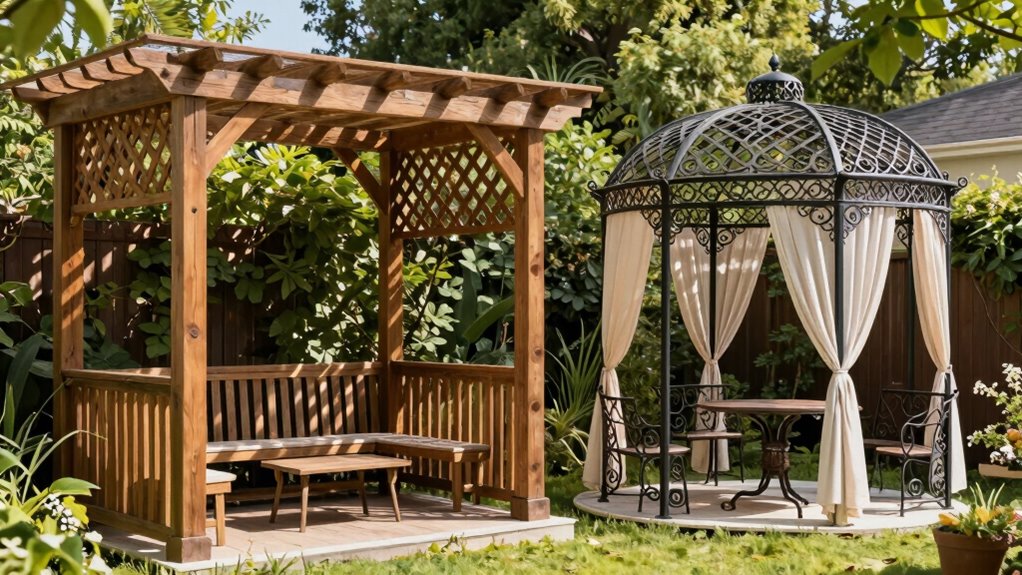
Your outdoor space can be transformed to reflect your personal style by selecting a pergola or gazebo that complements your existing landscape and design preferences. Pergolas offer a sleek, modern look with clean lines, perfect for minimalist or contemporary gardens, while gazebos provide a classic, cozy vibe that suits traditional or romantic styles. Decorative accents, like hanging lanterns, curtains, or climbing plants, help enhance their aesthetic appeal and make them uniquely yours. Consider how each structure integrates with your garden—whether you want a seamless blend or a standout feature. Both options can serve as focal points or functional extensions of your outdoor decor, allowing you to express your personality while harmonizing with your overall landscape.
How Durable Are Pergolas and Gazebos? Material and Climate Tips
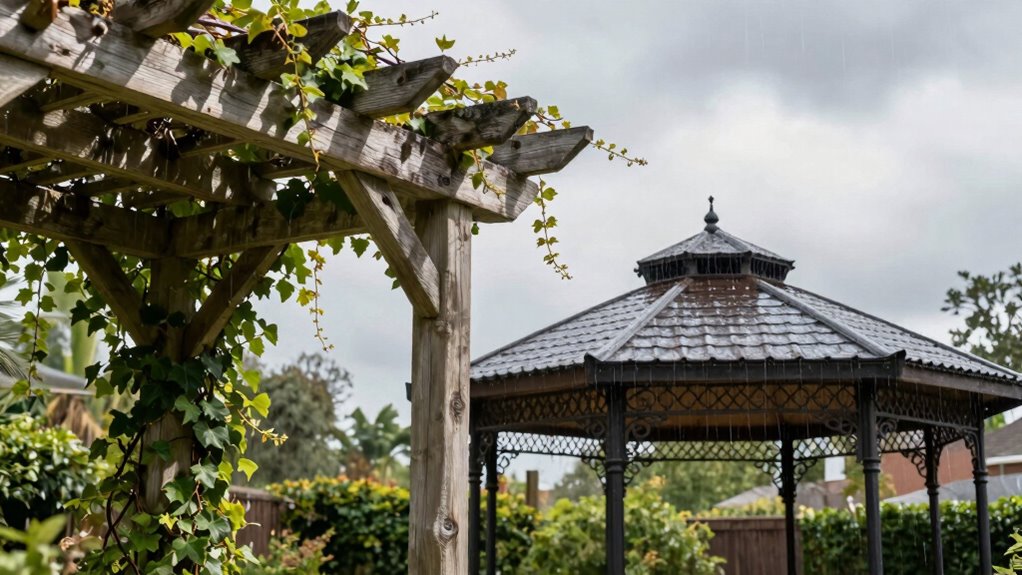
Choosing the right materials for your pergola or gazebo directly impacts their durability and ability to withstand the elements. Weather resistance varies depending on whether you choose wood, vinyl, metal, or composite materials. For example, treated wood offers good weather resistance but may require regular maintenance to prevent rot and insect damage. Vinyl and aluminum structures are highly resistant to weather and need minimal upkeep, making them ideal for harsh climates. Consider your local climate when selecting materials; heavy rain, snow, or intense sun can accelerate wear. Maintenance needs also differ: wood needs sealing and staining, while metal may need rust protection. Selecting durable, weather-resistant materials guarantees your outdoor structure remains sturdy and attractive for years to come.
What Do Pergolas and Gazebos Cost? Budgeting Tips
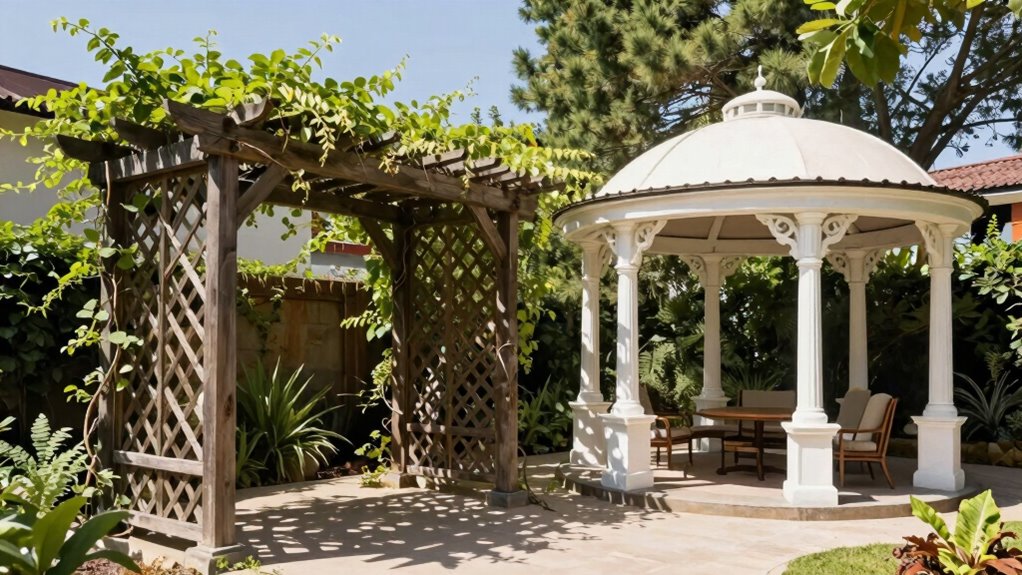
Pergolas and gazebos vary widely in cost, depending on factors like size, materials, design complexity, and installation requirements. When doing a cost comparison, you’ll find that pergolas generally cost less upfront, especially if you choose simple designs and less expensive materials like wood or vinyl. Gazebos tend to be pricier, especially for custom or elaborate structures, due to their often more complex design and larger size. For budget planning, consider not only the initial purchase price but also installation costs, maintenance, and longevity. A basic pergola might fit a tighter budget, but a high-end gazebo can add a luxurious touch if your budget allows. Knowing these differences helps you make a more informed decision that aligns with your financial plan.
Which Structure Is Right for You? Making the Best Choice
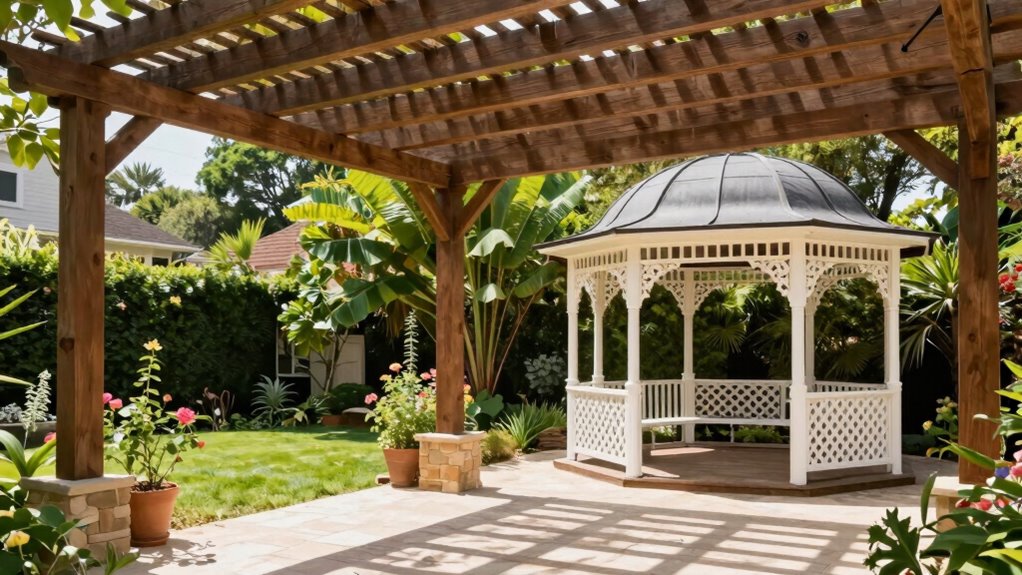
Deciding between a pergola and a gazebo depends on how you want to use your outdoor space and what style suits your home. If you prefer a structure with decorative accents like climbing plants or string lights, a pergola offers an open, airy feel perfect for enhancing your garden’s aesthetic. On the other hand, if you want a fully enclosed space for privacy or protection from the elements, a gazebo is ideal. Consider the maintenance requirements—pergolas usually need regular upkeep for wood or metal finishes, while gazebos might require periodic cleaning and minor repairs. Think about your budget, style preference, and how much time you want to dedicate to upkeep. Choosing the right structure guarantees your outdoor area becomes a functional, attractive retreat.
Frequently Asked Questions
Can Pergolas and Gazebos Be Customized for Specific Outdoor Spaces?
Yes, you can definitely customize pergolas and gazebos for your outdoor space. With design flexibility, you can choose from various styles, sizes, and layouts to fit your needs. Material options like wood, vinyl, or metal allow you to match your aesthetic and durability preferences. You can also add features like built-in seating, lighting, or climbing plants, making these structures uniquely suited to your outdoor area.
What Maintenance Is Required for Pergolas Versus Gazebos?
You’ll need to keep your pergola and gazebo in good shape with regular cleaning routines, like washing surfaces to prevent dirt buildup. Weather resistance varies; pergolas with wood may require sealing or staining to protect against moisture, while gazebos with metal or vinyl often need less upkeep. Check for rust or rot periodically, and cover or disassemble your structure during harsh weather to extend its lifespan.
Are Pergolas or Gazebos More Suitable for Year-Round Use?
You’ll find gazebos more suitable for year-round use because they typically offer better seasonal durability and material longevity. Gazebos often feature sturdier frames and weather-resistant materials, making them ideal for withstands snow, rain, and wind. Pergolas, while charming, usually focus on aesthetic appeal and provide less protection against harsh weather, so they’re better suited for seasonal or fair-weather use rather than year-round shelter.
How Do Pergolas and Gazebos Impact Property Value?
Coincidentally, your choice of a pergola or gazebo can boost your property value by enhancing landscaping benefits and aesthetic appeal. These structures attract potential buyers, making your outdoor space more inviting and functional. Pergolas add a modern touch, while gazebos offer charming elegance. Both increase curb appeal, which can lead to higher offers. Investing in one of these features not only elevates your yard’s beauty but also provides long-term value for your home.
Which Structure Offers More Privacy in a Backyard Setting?
A gazebo typically offers more privacy in your backyard because it provides a fully enclosed space with solid walls or lattice panels for visual screening. Pergolas, on the other hand, have open slats that offer less privacy and more airflow. If privacy is your priority, a gazebo’s enclosed design creates a higher privacy level, shielding you from neighbors and outdoor distractions better than a pergola.
Conclusion
Ultimately, choosing between a pergola and a gazebo comes down to your style and needs—sometimes, the perfect shade finds you when you least expect it. Whether you’re drawn to the open beams of a pergola or the cozy enclosure of a gazebo, your outdoor space will reflect your personality. After all, in the end, it’s the little details and happy surprises that turn your backyard into a personal retreat you didn’t know you were missing.