Start by defining the mood you want for your space—calm, vibrant, or cozy—and choose a cohesive color palette of 3-5 main colors. Gather inspiration images, textures, and patterns that fit your style, whether modern, rustic, or eclectic. Focus on balance, style cohesion, and thoughtful furniture choices. As you assemble your visuals, consider sustainability and eco-friendly options. If you keep these steps in mind, you’ll create a mood board that truly guides your design process.
Key Takeaways
- Define your overall aesthetic, mood, and color scheme to set a clear foundation for your mood board.
- Gather diverse visuals, textures, and color samples that reflect your desired style and atmosphere.
- Organize images thoughtfully to identify cohesive themes, gaps, or clashes early in the process.
- Incorporate design principles like balance and proportion to ensure your space feels harmonious and inviting.
- Include eco-friendly and sustainable elements to align your mood board with environmentally conscious choices.
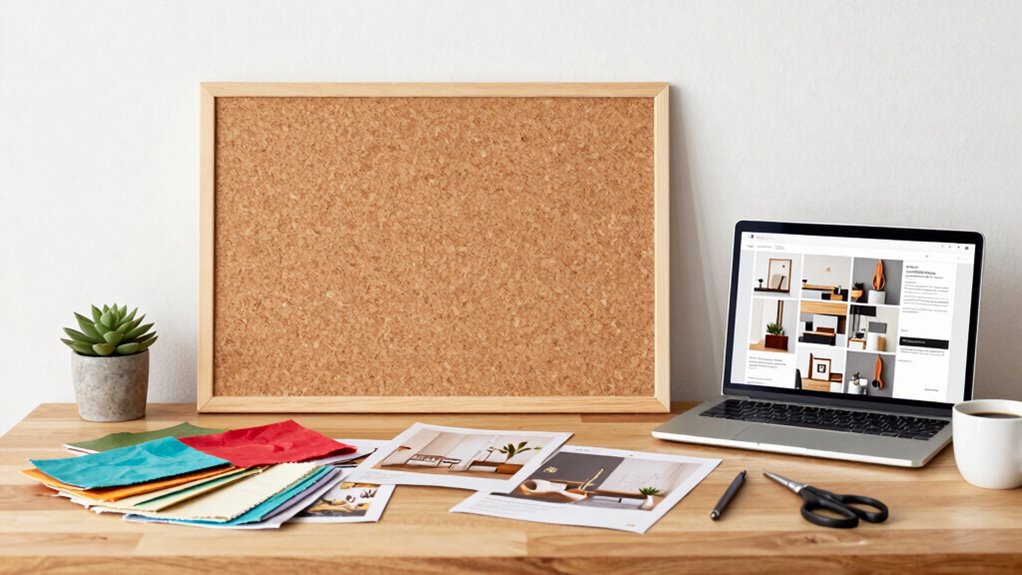
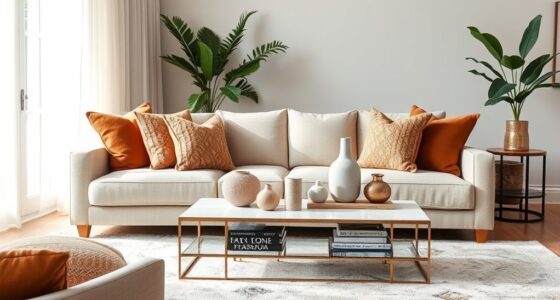
Creating a home mood board is a fun and effective way to visualize your interior design ideas. It helps you see how different elements come together before you commit to any major changes. When starting your mood board, focus on establishing your overall aesthetic by selecting a cohesive color scheme. Think about the mood you want to evoke—calm and serene, vibrant and energetic, or warm and cozy. Your chosen color scheme sets the tone for the entire space and guides your choices for furniture, decor, and accessories. Try to pick a palette with 3-5 main colors that complement each other well, and use shades and tones to add depth and interest.
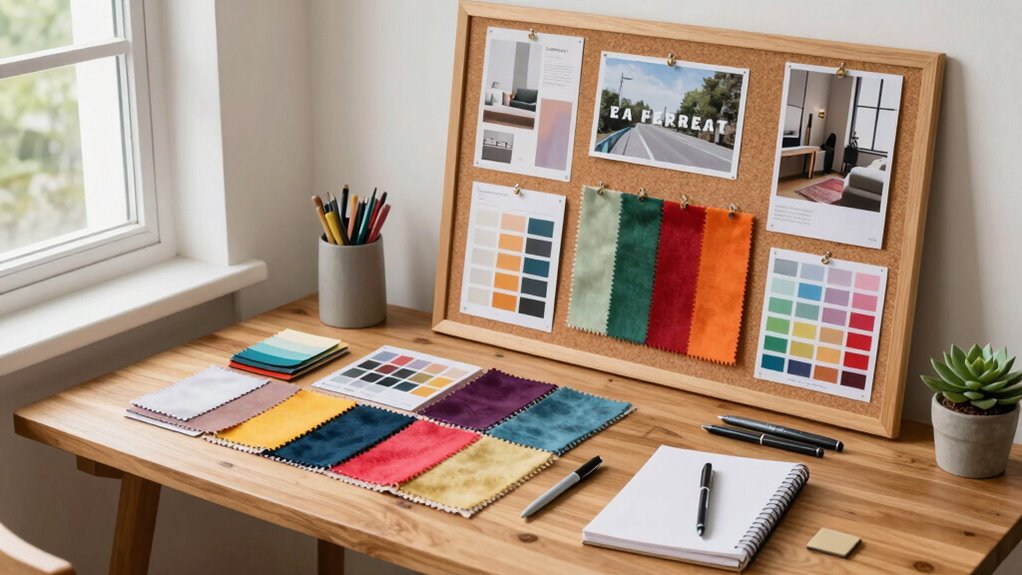
Creating a mood board helps visualize your style and set a cohesive color scheme for your home.
Next, consider the furniture styles that resonate with your vision. Do you prefer sleek modern lines, rustic charm, vintage pieces, or eclectic mixes? Gathering images of furniture styles that appeal to you will help you create a unified look. Don’t be afraid to mix styles if you love an eclectic vibe, but keep a harmony in the overall theme. As you collect inspiration, focus on key pieces like sofas, beds, tables, and storage units that will anchor the room. Including images of furniture helps you understand scale, proportion, and how different styles can coexist. Additionally, incorporating interior design principles can help guide your choices to create a balanced and harmonious space. Understanding these principles can help you make thoughtful decisions that enhance your overall aesthetic. Exploring design principles can also assist in creating a space that feels both functional and visually appealing. Moreover, considering visual weight can help you achieve a balanced and inviting environment.
Once you’ve got your color schemes and furniture styles in mind, start compiling images, swatches, and sketches into your mood board. You can do this physically with magazine cutouts, fabric swatches, and printed images or digitally using tools like Pinterest, Canva, or specialized interior design apps. Be sure to arrange your visuals in a way that reflects how you’d like your space to feel. Group similar colors together, place furniture styles in context, and add textures and patterns that fit your theme. This visual arrangement allows you to see potential clashes or gaps early on. Paying attention to biodiversity and sustainable living practices can further inspire eco-friendly choices within your design, encouraging the use of natural materials and environmentally conscious products. Incorporating environmentally friendly materials can also help you create a healthier and more sustainable environment in your home. Remember, the more intentional your selections, the more your mood board will effectively communicate your design vision.
As an affiliate, we earn on qualifying purchases.
Frequently Asked Questions
What Tools Are Best for Creating Digital Mood Boards?
You should use tools like Canva, Milanote, or Adobe Spark to create digital collages that serve as visual inspiration. These platforms offer user-friendly interfaces and plenty of templates, making it easy to compile images, color schemes, and textures into a cohesive mood board. They help you experiment with different styles and layouts, giving you a clear visual overview of your home design ideas.
How Often Should I Update My Home Mood Board?
You should update your home mood board seasonally or whenever your personal style evolves. Regular updates help keep your space fresh and aligned with your current tastes. During seasonal changes, incorporate new color schemes and decor ideas to reflect the mood of the season. By frequently revising your mood board, you guarantee your home design stays inspired, personal, and true to your evolving style.
Can a Mood Board Influence My Actual Home Decor Choices?
Yes, a mood board can influence your home decor choices, shaping your decor theme and reflecting your personal style. It acts as a visual guide, making ideas clearer and decisions easier. When you see colors, textures, and furniture laid out, you’re inspired to align your space with your vision. A mood board transforms abstract concepts into tangible plans, guiding you to create a cohesive, personalized home that truly feels like yours.
How Do I Choose a Cohesive Color Palette?
To choose a cohesive color palette, start by focusing on color harmony, which guarantees your colors complement each other. Look for a dominant hue and select secondary shades that enhance it. Use palette selection tools or inspiration from nature, art, or fabric swatches to find harmonious combinations. Keep your overall style in mind, and stick to a few core colors to maintain balance and consistency throughout your home.
Should I Include Specific Furniture Pieces in My Mood Board?
Yes, including specific furniture pieces in your mood board can be very helpful. It keeps your furniture focus clear and guides your piece selection, ensuring everything complements your chosen color palette and style. Choose representative items rather than every detail, so you get a solid visual idea of your space. This approach helps you visualize how different pieces work together, making your overall design more cohesive and easier to execute.
Conclusion
Now that you know how to start your home mood board, you’re ready to turn your space into a breathtaking masterpiece—faster than you can say “design genius”! Remember, your mood board is your magic wand, guiding every decision with confidence. Immerse yourself, get inspired, and watch your dream home come alive with just a few carefully chosen ideas. Before you know it, you’ll be living in a space so stunning, it’ll make even the most seasoned designers jealous!