
Built-in gas grills need more planning than cart models because they’re fixed installations that integrate with your outdoor kitchen layout. You’ll need to measure the space carefully, evaluate ventilation, and plan for gas and electrical lines. Proper placement is key for accessibility and safety, while cohesive design enhances the overall look. Plus, you’ll want to think about lighting for evening cooking sessions. There’s much more to contemplate to make your outdoor space truly functional and inviting.
Key Takeaways
- Built-in grills necessitate precise measurements to fit within the designated outdoor kitchen space, unlike portable cart models.
- Proper ventilation and gas line planning are critical for built-in grills, ensuring safety and efficiency during operation.
- Professional installation is often required for built-in grills to comply with building codes, whereas cart models are more user-friendly.
- Design aesthetics must be carefully considered for built-in grills, requiring cohesive materials and colors to match the overall outdoor space.
- Strategic placement of built-in grills enhances accessibility and social interaction, necessitating more planning than simply positioning a cart model.

When you’re looking to elevate your outdoor cooking experience, built-in gas grills offer a seamless blend of style and functionality. Unlike cart models, these grills require a bit more planning and forethought, especially when it comes to installation considerations and design aesthetics. You’ll find that the investment in a built-in grill not only enhances your cooking setup but also transforms your outdoor space into a culinary oasis.
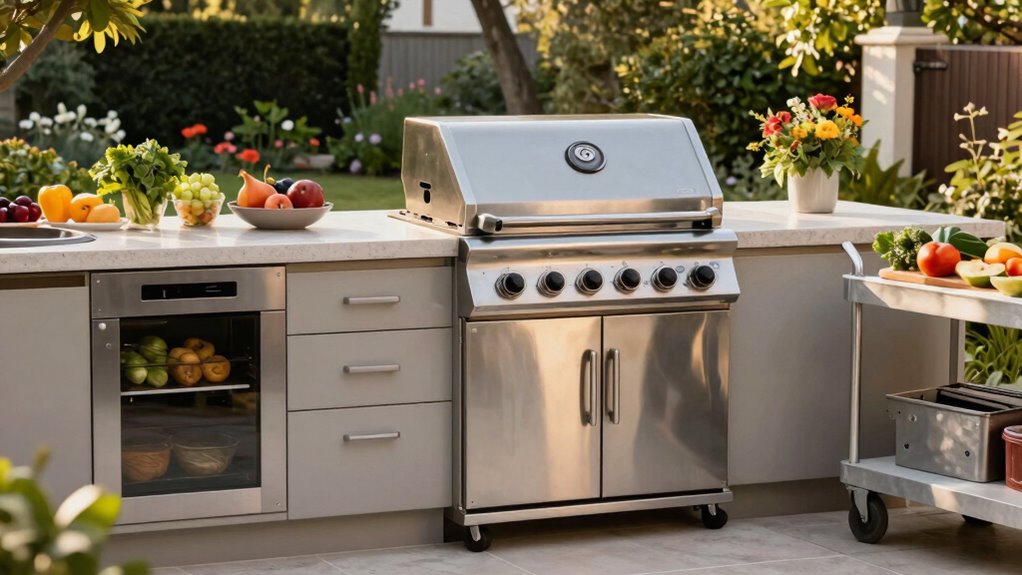
First, consider the installation. Unlike portable grills that you can easily move around, built-in models require a designated space, often within an outdoor kitchen setup. You’ll need to measure carefully to verify your grill fits well within your design. This means accounting for the surrounding cabinetry, countertop space, and ventilation, which are essential for safety and efficiency. You can’t just drop a grill into a pre-existing space; you need to think about gas lines, electrical requirements, and confirming that everything meets local building codes. A professional installation is often recommended to avoid potential hazards, guaranteeing that your grill functions efficiently and safely.
Consider the installation; built-in grills require careful planning to ensure safety, efficiency, and compliance with local codes.
Now, let’s talk about design aesthetics. Built-in gas grills can be a stunning centerpiece for your outdoor kitchen, but they need to harmonize with the overall look of your backyard. Whether you’re going for a modern, sleek finish or a more rustic vibe, the materials and colors you choose will play a significant role. Think about complementing your grill with stone or wood cabinetry that matches your home’s exterior. You want everything to flow cohesively, creating an inviting atmosphere for gatherings and barbecues. Proper planning also involves understanding outdoor kitchen design principles to ensure your setup is both functional and visually appealing. Considering gas line installation details early can help prevent costly adjustments later in the process. Additionally, familiarizing yourself with local building codes related to outdoor kitchens can save you time and potential legal issues down the line.
Another consideration is the placement of your grill. You’ll want it to be easily accessible, yet functional within the layout of your outdoor space. Positioning it near seating areas can enhance social interactions during cooking, while also maintaining a safe distance from flammable materials. Lighting is another key aspect; you’ll want to confirm that the grill area is well lit for evening cooking sessions.
built-in gas grill installation kit
As an affiliate, we earn on qualifying purchases.
As an affiliate, we earn on qualifying purchases.
Frequently Asked Questions
What Are the Installation Requirements for Built-In Gas Grills?
To install a built-in gas grill, you need to take into account ventilation requirements and gas line installation. Verify your grill’s location allows for proper airflow to prevent gas buildup. You’ll also need a professional to handle the gas line installation for safety and compliance with local codes. Make certain you have a suitable countertop or enclosure ready, and check for any additional electrical requirements if your grill has features like lights or rotisserie motors.
How Do I Choose the Right Size for My Grill?
Did you know that most home cooks need at least 72 square inches of cooking space per person? To choose the right size for your grill, consider your typical gathering size and desired grill dimensions. For small gatherings, a 30-inch grill might suffice, while larger groups might need 36 inches or more. Always guarantee you have enough cooking space to accommodate your favorite dishes without overcrowding, making your grilling experience enjoyable and efficient.
Can I Convert a Built-In Grill to Propane?
Yes, you can convert a built-in grill to propane, but it’s crucial to check fuel compatibility first. Most grills come with a conversion kit, but if yours doesn’t, you’ll need to purchase one separately. Make sure to follow the manufacturer’s guidelines closely during the propane conversion process. This will guarantee your grill operates safely and efficiently. Always consult a professional if you’re unsure about the conversion steps or compatibility issues.
What Materials Are Best for Grill Surround Construction?
For your grill surround construction, consider materials like stone, brick, or stainless steel. Each offers durability and complements outdoor kitchen design beautifully. Stone and brick can withstand the elements while adding a rustic charm, and stainless steel provides a sleek, modern look. Investigate local weather conditions to choose the best option for your climate. You’ll want a surround that not only looks good but also stands the test of time in your outdoor space.
Are Built-In Gas Grills Worth the Extra Cost?
Yes, built-in gas grills can be worth the extra cost if you value durability and aesthetics. When doing a cost comparison, consider the long-term benefits like increased home value and customization options. However, keep in mind that they require more maintenance. Follow maintenance tips like regular cleaning and protecting against the elements to guarantee longevity. If you’re ready for that commitment, a built-in grill can enhance your outdoor cooking experience considerably.
Conclusion
When it comes to built-in gas grills, you can’t just wing it! These culinary powerhouses demand a master plan—like drawing up blueprints for a rocket launch! From precise measurements to proper ventilation, every detail matters. Skimping on planning could turn your backyard BBQ dreams into a smoky disaster. So, roll up your sleeves, grab a notepad, and get ready to create the ultimate outdoor cooking oasis. Your taste buds (and neighbors) will thank you for it!



![10 Things To Do For This Saturday in L.A. [7-4-2026]](https://homeevaly.com/wp-content/uploads/2026/07/10-things-to-do-for-this-saturday-in-l-a-7-4-2026-featured-560x300.jpg)