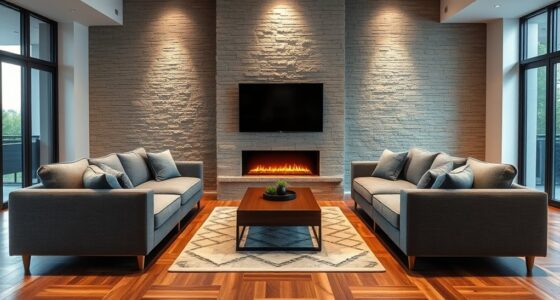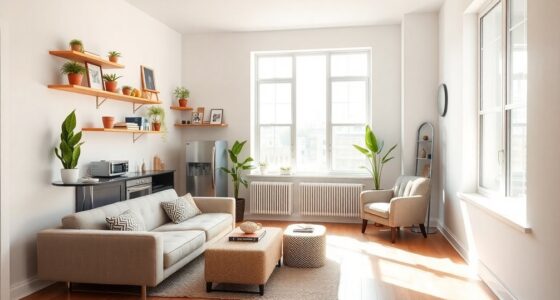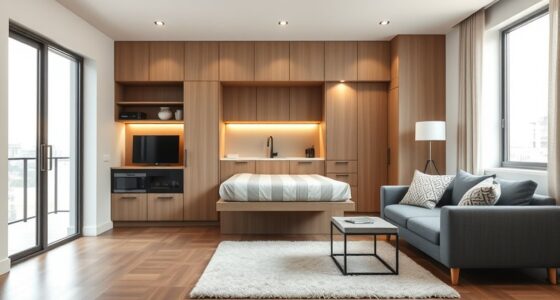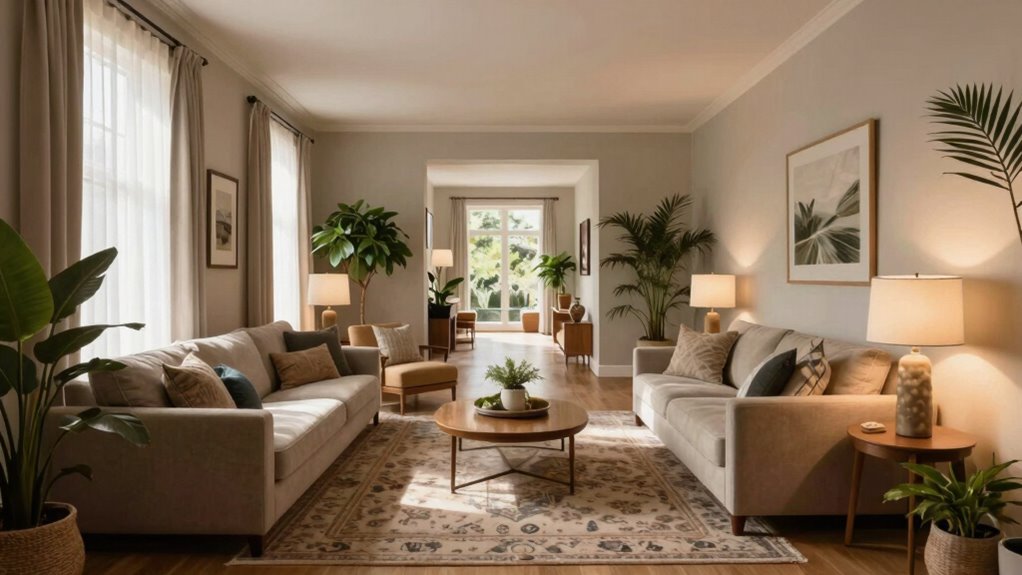

To make a long living room feel less like a hallway, choose light, neutral colors for walls to reflect light and create an airy vibe, while adding a bold accent wall to break up the space. Float furniture like sofas and armchairs to define zones, and use rugs to anchor each area. Incorporate angled furniture, vertical elements, and strategic lighting to add visual interest and balance. Keep exploring for more tips to transform your space.
Key Takeaways
- Use a bold or darker accent wall at one end to create a focal point and break up the length visually.
- Float furniture pieces like sofas and armchairs to define zones and avoid straight lines along the walls.
- Incorporate rugs and diagonal furniture placement to add visual interest and disrupt linear flow.
- Utilize vertical elements, such as tall bookshelves or artwork, to draw the eye upward and add dimension.
- Implement layered lighting with wall-mounted fixtures and lamps to create depth and divert attention from room length.
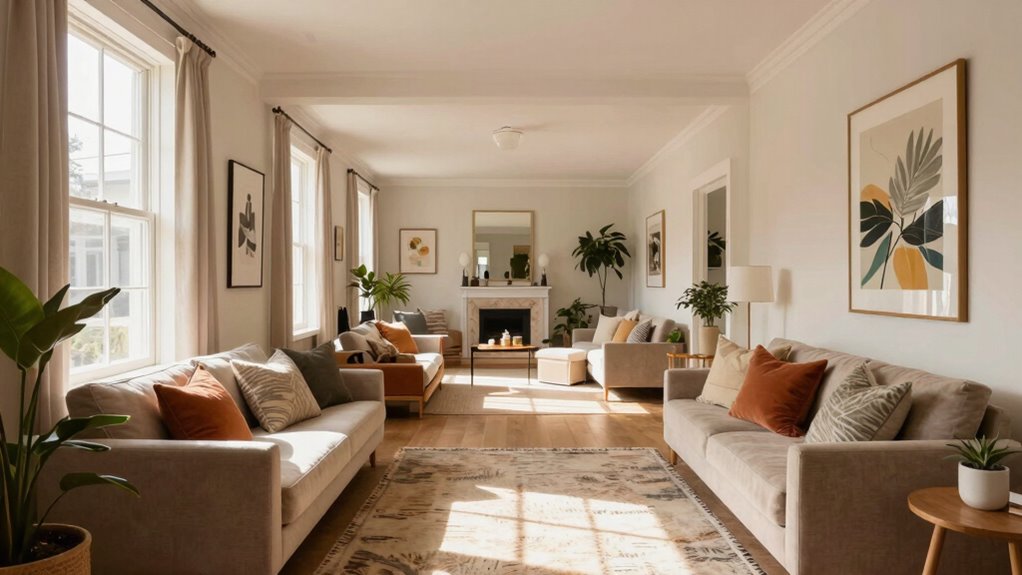
A long living room can often feel like a hallway, making the space seem narrower and less inviting. To counter this, you need to think strategically about how you use color schemes and furniture placement. Choosing the right colors can dramatically alter the perception of length and width. Light, neutral tones like beige, soft greys, or pastels reflect more light and create an open, airy atmosphere. You might consider painting the walls in a single cohesive color rather than contrasting shades that emphasize the room’s length. Adding darker accents or a bold feature wall at one end of the room can draw attention and break up the space visually, making it feel more balanced.
When it comes to furniture placement, your goal is to create a sense of intimacy and flow without crowding the space. Avoid lining up furniture directly against the walls, which can emphasize the room’s length. Instead, float key pieces like sofas and armchairs in the middle of the room, creating smaller zones that break the space into more manageable sections. Use rugs to define these zones; a large, centrally placed rug anchors the seating area and makes the room feel cozier. Keep furniture proportionate to the room’s size—oversized pieces can make the space feel cramped, while appropriately scaled furniture maintains openness. Incorporating spatial planning can further enhance how the space functions and feels. Additionally, paying attention to visual weight helps balance the room’s proportions and prevent it from feeling too long.
You should also think about how you arrange your furniture to guide the eye and create visual interest. Placing furniture at angles or diagonally can help to disrupt the linear flow and make the space seem more dynamic. Incorporating multi-functional furniture, such as ottomans or side tables with storage, to avoid clutter and keep the room feeling spacious. Additionally, consider the placement of lighting fixtures; wall-mounted lights or lamps on side tables can highlight different areas and add depth, which distracts from the room’s length. Using lighting techniques effectively can also help to create a warm, inviting atmosphere.
Finally, don’t forget to play with vertical space. Tall bookshelves, artwork, or plants draw the eye upward, adding dimension and making the room feel less elongated. By carefully selecting your color schemes and positioning your furniture with intention, you create a living room that feels warm, inviting, and perfectly proportioned—not like a never-ending hallway. Incorporating elements that emphasize vertical lines is also essential for creating visual interest and balancing the space. With these adjustments, your long living room will become a space that welcomes and comforts everyone who enters.
As an affiliate, we earn on qualifying purchases.
Frequently Asked Questions
How Can I Improve Natural Lighting in a Narrow Living Room?
To improve natural lighting in your narrow living room, start by choosing light, airy window treatments like sheer curtains that let in more sunlight. Consider installing a skylight to flood the space with additional natural light, making it feel brighter and more open. Keep windows unobstructed and use mirrors strategically to reflect light throughout the room, enhancing the overall brightness and creating a more inviting atmosphere.
What Color Schemes Make a Long Room Feel More Spacious?
Soft, cool hues like pale blues, gentle greens, and light grays create an airy feel and make your space seem larger. Using color psychology, these shades evoke calmness and openness. Apply wall paint techniques such as vertical stripes or ombré effects to add visual interest without overwhelming the room. Light, reflective surfaces and strategic accent walls also help transform a long room into a welcoming, spacious retreat.
Are There Furniture Arrangements That Maximize Space in a Long Living Room?
You should arrange your furniture to create defined zones, placing larger pieces against the walls to free up central space. Use furniture placement that encourages conversation, like a sectional or a cluster of chairs, to make the room feel cozier. Incorporate smart storage solutions, such as multi-functional furniture or built-in shelves, to keep clutter out of sight, maximizing the open feel and making your long living room more inviting.
How Can I Incorporate Artwork Without Making the Space Feel Cluttered?
You can incorporate artwork without clutter by choosing wall-mounted displays with minimalistic frames, which keep the look sleek and unobtrusive. Select a few large pieces instead of many small ones to create visual impact without overwhelming the space. Arrange the artwork thoughtfully along the walls, aligning with your furniture to maintain flow. This approach adds personality while preserving an open, airy feel in your long living room.
What Decorative Elements Help Break up a Long, Narrow Layout?
To transform your long, narrow living room, consider adding decorative room dividers that create visual interest and define spaces. Then, introduce statement lighting—think bold pendant lights or layered lamps—that draws the eye and breaks up the length. Combining these elements, you’ll disrupt the corridor-like feel, guiding the eye through the space with rhythm and style, making your living room feel inviting and balanced.
Conclusion
By embracing warmth and inviting elements, you transform your long living room from a mere hallway into a welcoming sanctuary. Think of your space as a river guiding friends and family gently home, where every detail is a stone that shapes its flow. When you add cozy touches and thoughtful decor, you’re not just decorating—you’re creating a haven where memories ripple outward, turning your hallway into a heartfelt journey rather than just a passage.