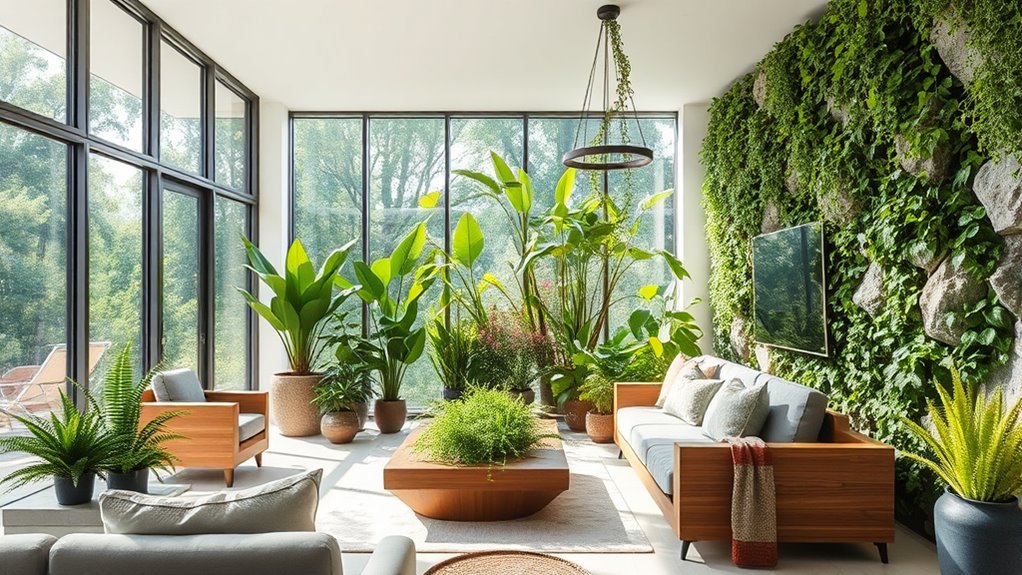

Biophilic design helps you bring natural elements into your modern home, creating a healthier and more inviting space. By incorporating plants, natural lighting, and sustainable materials, you can boost your well-being and improve indoor air quality. Letting in more sunlight and adding greenery helps reduce stress and enhance mood. If you want to discover simple ways to transform your home into a peaceful sanctuary connected to nature, there’s plenty more to explore.

Get furniture and decor delivered free with Prime
- Fast, free delivery on millions of items
- Prime Video, Amazon Music and more included
- Member-only deals all year
Key Takeaways
- Integrates natural elements like plants, daylight, and natural materials to create healthier, more inviting living spaces.
- Enhances indoor air quality through natural ventilation, air-purifying plants, and toxin-free materials.
- Maximizes natural lighting with large windows, skylights, and reflective surfaces to improve mood and reduce energy use.
- Promotes well-being and productivity by connecting indoor environments with outdoor nature.
- Focuses on sustainable design principles that support long-term health and environmental harmony.
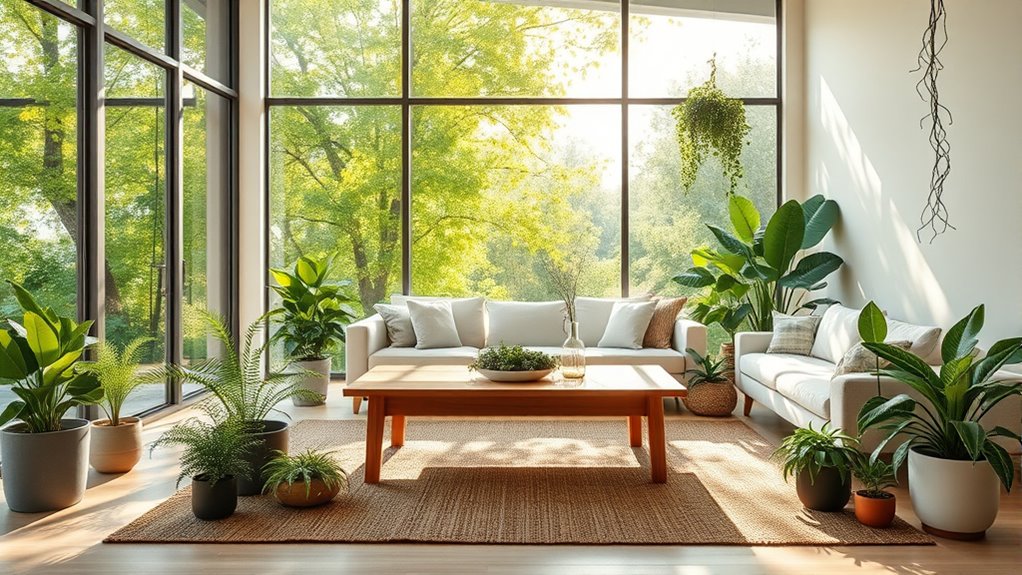
Biophilic design is a thoughtful approach that integrates natural elements into built environments to enhance well-being and productivity. When you incorporate this design philosophy into your home, you create a space that feels more alive and connected to nature. Two essential aspects of this approach are improving indoor air quality and maximizing natural lighting, both of which have a considerable impact on your health and comfort.
Indoor air quality is often overlooked but plays a critical role in creating a healthy living environment. Using natural ventilation, air purifying plants, and non-toxic materials can help reduce indoor pollutants and improve airflow. Plants like snake plants, pothos, and peace lilies not only add aesthetic appeal but also filter out toxins, releasing oxygen and boosting your indoor air quality. Ensuring good ventilation and avoiding synthetic fragrances or harsh chemicals helps create a space where you can breathe easily. When you focus on clean air, you reduce the chances of allergies, respiratory issues, and fatigue, making your home a sanctuary that supports your overall health.
Prioritize good ventilation and toxin-free plants to improve indoor air quality and support your health.
Natural lighting is another cornerstone of biophilic design. By opening up your space to more sunlight, you can considerably uplift your mood and energy levels. Large windows, skylights, and glass doors allow sunlight to flood your rooms, reducing the need for artificial lighting during the day. This not only cuts down on energy consumption but also creates a warm, inviting atmosphere that mimics the outdoors. Positioning your furniture to take advantage of sunlight, using light-colored walls, and incorporating reflective surfaces can help distribute natural light more evenly throughout your home. Beyond aesthetic benefits, natural lighting has been shown to regulate your circadian rhythms, improve sleep quality, and enhance your overall sense of well-being.
Incorporating these elements into your home isn’t just about aesthetics; it’s about creating a space that nurtures your body and mind. Think about how natural air and light can transform your daily routines, making your home a healthier, more energizing environment. Small changes, like adding a few indoor plants or installing larger windows, can make a noticeable difference. When you prioritize indoor air quality and natural lighting, you’re not only enhancing your living space but also investing in your long-term health. With biophilic design, you turn your home into a retreat that reconnects you to nature, elevating your quality of life every day.
Products Worth Considering

Philips Hue Festavia 130-Foot Indoor/Outdoor Smart String Lights, 500 LEDs

Levoit Eleva 300X Air Purifier for Home Bedroom

Levoit Vital 100S-P Air Purifier
As an affiliate, we earn on qualifying purchases.
Frequently Asked Questions
How Does Biophilic Design Improve Mental Health?
You might wonder how the environment impacts your mental health. Connecting with nature helps reduce stress and boosts your mood by fostering a sense of calm and relaxation. When your surroundings include natural elements, you feel more grounded and less anxious. This nature connection encourages mindfulness and improves overall well-being, making it easier to handle daily stressors. Incorporating natural features into your space enhances mental clarity and emotional resilience.
What Are Budget-Friendly Ways to Incorporate Biophilic Elements?
Did you know that incorporating natural elements can boost your well-being by up to 15%? To do this on a budget, try simple DIY projects like creating plant hangers or using natural materials such as bamboo or reclaimed wood for decor. You can also add small potted plants, which are inexpensive and easy to care for, to bring nature inside without breaking the bank. These small changes can make a big difference.
Can Biophilic Design Increase Property Value?
You might wonder if biophilic design can boost your property’s value. The answer is yes; incorporating natural elements enhances market appeal by making your home more attractive to buyers. When you add features like indoor plants, natural light, and organic materials, you create a healthier, more inviting space. These upgrades can increase your property’s value, making it stand out and appealing to modern buyers seeking eco-friendly, wellness-focused homes.
Are There Specific Plants Suitable for Indoor Environments?
You might think all plants thrive indoors, but choosing suitable greenery is key. For indoor plant selection, consider low-maintenance options like snake plants, pothos, or peace lilies—they handle lower light and less water well. These suitable greens not only enhance your space’s aesthetic but also improve air quality. With the right plants, you create a calming environment without extra effort, making your home healthier and more inviting.
How Does Biophilic Design Affect Energy Efficiency?
You might wonder how biophilic design impacts energy efficiency. By integrating natural elements like plants and natural lighting, you can achieve energy savings through reduced reliance on artificial lighting and climate control. Plants also provide insulation benefits, helping to regulate indoor temperatures. This approach not only enhances your home’s aesthetics but also lowers energy costs, making your living space more sustainable and comfortable year-round.
Conclusion
Embracing biophilic design transforms your home into a timeless sanctuary, where nature’s calming presence is always within reach. Just like the ancient Greeks sought harmony with their environment, you can create a space that nurtures your well-being today. So, don’t wait for a future utopia—bring the outdoors inside now, much like the concept of the flying car from tomorrow’s sci-fi. Your home can be a living, breathing haven, connecting you to nature every day.