
Transforming furniture and rooms with color lets you create a fresh, personalized space that reflects your style. Start by choosing hues that evoke the mood you want, like calming blues or energizing yellows. Prepare surfaces properly, use quality tools, and apply thin, even coats for a smooth finish. Perfectly executed paint updates can make your space feel new and vibrant. Keep exploring, and you’ll discover how to master color choices and application techniques for stunning transformations.
Key Takeaways
- Choose colors that evoke desired moods, such as calming blues for bedrooms or energizing yellows for kitchens.
- Prepare furniture and walls by cleaning, sanding, and priming for better paint adhesion and a professional finish.
- Use proper application techniques, including primer, smooth strokes, and multiple thin coats for durability and a polished look.
- Incorporate color psychology to select hues that enhance the space’s atmosphere and reflect your personal style.
- Update furniture with paint by carefully sanding, priming, and choosing complementary colors for a refreshed, cohesive look.
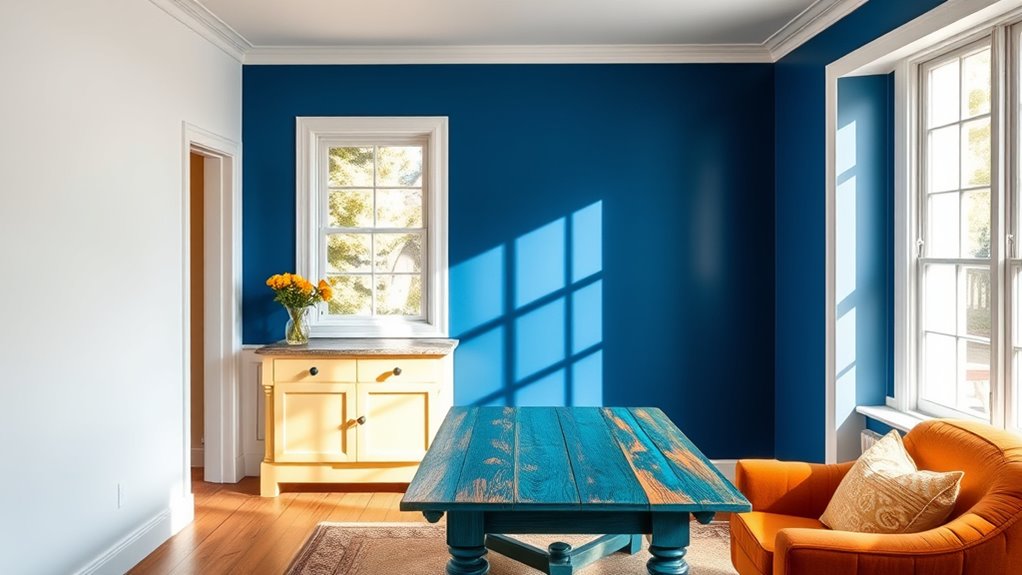
A fresh coat of paint can completely transform the look and feel of any space. When you’re ready for a change, it’s not just about choosing a new color — it’s about how that color influences the mood and atmosphere of your room. Understanding color psychology helps you select shades that evoke the feelings you want, whether it’s calming blues for relaxation or energizing reds for motivation. Once you’ve picked the perfect hue, mastering paint application techniques ensures your project turns out smooth and professional-looking.
Choosing the right paint color influences mood, so master application techniques for a professional, lasting finish.
If you’re repainting a room, start by preparing the space. Clear furniture or cover it with drop cloths, and clean the walls thoroughly to remove dust or grease. Applying painter’s tape around trim, outlets, and moldings creates clean edges and prevents accidental paint on surfaces you want to keep pristine. When it comes to paint application techniques, using the right tools makes all the difference. A high-quality roller can provide even coverage on large surfaces, while brushes are ideal for edges and detailed areas. For a flawless finish, use a brush to cut in around the edges first, then fill in the larger areas with a roller. Applying multiple thin coats, rather than one thick layer, yields a more durable and smooth finish.
Color psychology plays an essential role in how you perceive your space after painting. Soft, cool tones like light blue or mint can promote calmness and focus, perfect for bedrooms or home offices. Warm hues such as yellow or terracotta energize a room and create a welcoming vibe, making them ideal for kitchens or living areas. Darker shades like navy or charcoal can add sophistication or coziness but require careful application to avoid streaks or uneven patches. Remember, the way you apply paint influences not just the appearance but also the longevity of your work. Proper techniques like maintaining a wet edge and avoiding overloading your brush or roller help prevent streaks and drips. Additionally, understanding paint durability can help you select finishes that last longer and resist wear in high-traffic areas.
If you’re updating furniture, consider the same principles. Sand the surface lightly before painting to help the new coat adhere better. Use primer if you’re changing from a dark to a light color or if the piece has a shiny finish. Applying paint with consistent strokes and following the direction of the grain (if wood) ensures a smooth, professional look. Whether you’re transforming a vintage dresser or a tired table, selecting colors based on the mood you want to create and applying paint with care will give you results that truly stand out. With the right combination of color psychology and paint application techniques, your furniture and rooms will look refreshed and inviting, all while reflecting your personal style.
Frequently Asked Questions
How Do I Choose the Perfect Paint Color for My Space?
You should start by considering your room’s mood setting and color matching to your existing decor. Test small paint swatches on your walls to see how they look in different lighting. Trust your instincts and choose colors that evoke the atmosphere you want. Remember, a well-chosen color can transform your space and reflect your personality. Don’t rush—take your time to find the perfect hue that feels right for you.
What Type of Paint Is Best for High-Traffic Areas?
Did you know high-traffic areas experience more wear, so choosing the right paint is vital? For durability, opt for a semi-gloss or satin paint finish, as they resist scuffs and are easy to clean. Use proper paint application techniques like brushing or rolling evenly, and consider high-quality paints designed for durability. This guarantees your space stays vibrant and protected, even with constant use.
How Can I Prevent Paint From Peeling Over Time?
To prevent paint from peeling over time, you should focus on proper surface preparation and paint removal if needed. Clean and sand the surface thoroughly to guarantee good adhesion. Use a high-quality primer before painting, especially on problematic areas. Apply paint in thin, even coats, and allow each layer to dry completely. Proper surface prep and choosing durable paint will help your paint stay intact longer and resist peeling.
What Are Eco-Friendly Paint Options Available?
Coincidentally, choosing eco-friendly paint options can enhance your space’s beauty while caring for the environment. You should look for natural pigments and biodegradable paints, which contain fewer harmful chemicals and are safer for indoor air quality. These paints often come from sustainable sources, ensuring your decorating project aligns with eco-conscious values. By selecting these options, you make a positive impact and enjoy vibrant, healthy colors in your home.
How Do I Fix Mistakes or Uneven Paint Coverage?
To fix mistakes or uneven paint coverage, start by letting the paint dry completely. Use a small brush for touch-ups on uneven spots, blending carefully into the surrounding area. For larger areas, employ roller techniques like feathering and light overlapping to smooth out inconsistencies. Always work in the same direction and avoid applying too much paint at once. This approach guarantees a seamless finish and minimizes visible brush or roller marks.
Conclusion
With a fresh coat of paint, you hold the brush that can turn a dull room into a vibrant haven. Each stroke is like a magic wand, revealing new possibilities and breathing life into your space. Remember, paint is more than just color—it’s a tool to express your personality and transform your environment. Embrace the process, and soon your home will shine brighter than a star, reflecting your unique style and vision.