
You can transform your space easily with low-cost DIY decor projects by repurposing household items and natural elements. Think about creating wall art from scrap paper or fabric, or turning old jars into lanterns or planters. Personalize your decor by combining textures and colors that reflect your style—it’s budget-friendly and fun. Keep experimenting with simple ideas, and you’ll discover clever ways to refresh your home without breaking the bank—there’s plenty more inspiration to explore.
Key Takeaways
- Use household items like magazines, fabric scraps, and scrap paper to create personalized wall art and decor pieces.
- Repurpose pallets, vintage window frames, and jars into rustic frames, mirrors, lanterns, or planters for unique accents.
- Incorporate natural elements such as pressed flowers and leaves to add organic texture and visual interest inexpensively.
- Focus on quick, straightforward projects that require minimal tools and materials, perfect for spontaneous decorating.
- Experiment with textures, colors, and storytelling through upcycled items to craft distinctive, meaningful space enhancements.

Are you looking for a creative way to personalize your space without breaking the bank? If so, diving into DIY decor projects is the perfect solution. One of the most satisfying approaches is exploring upcycling ideas, which not only save money but also give new life to items you might otherwise toss out. When you combine upcycling with wall art crafts, you discover endless possibilities to transform plain walls into captivating focal points. Think about repurposing old pallets into rustic art frames or turning leftover fabric scraps into vibrant wall hangings. These projects allow you to showcase your creativity while reducing waste.
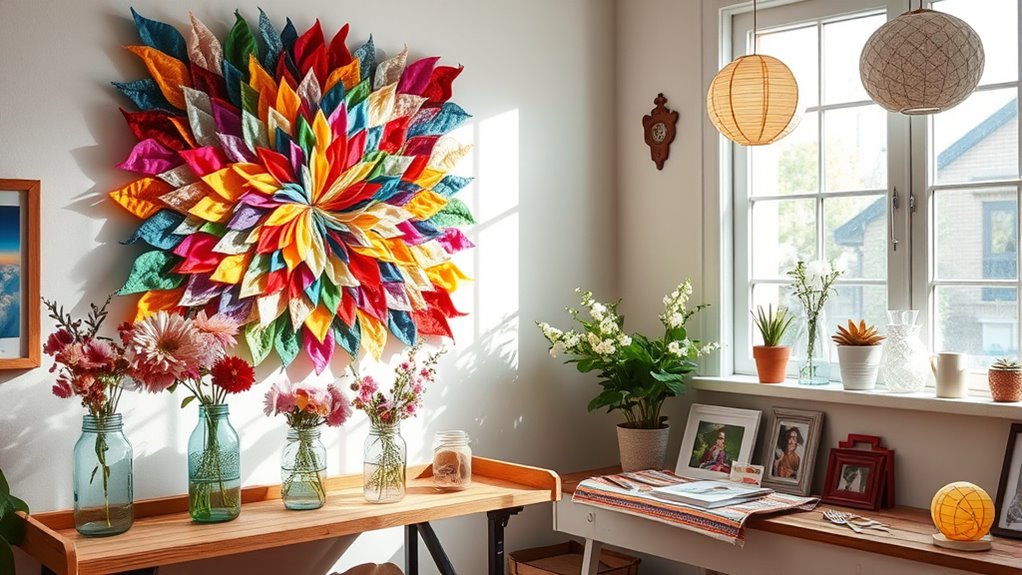
Getting started with wall art crafts doesn’t require a lot of expensive supplies. Instead, gather materials from around your house—old magazines, discarded wood, scrap paper, or fabric—and see how they can be transformed into eye-catching decor. For example, you could create a collage of vintage postcards or photographs to craft a personalized gallery wall. Or, stretch a piece of fabric over a frame to make a textile wall hanging that adds texture and color. Using natural elements like pressed flowers or leaves can also bring a fresh, organic feel to your decor. The key is to think outside the box and experiment with different textures, colors, and materials you already have.
Create stunning wall art using everyday household materials and natural elements.
Upcycling ideas are particularly effective because they give new purpose to items you’d usually discard. Old jars can become stylish lanterns or planters, while broken ceramics can be turned into mosaic art pieces. Repurposing items not only saves money but also infuses your space with a story. For instance, a vintage window frame can serve as a charming photo display or mirror frame. The beauty of these projects lies in their simplicity and the personal touch they bring. Plus, many of these upcycled wall art crafts are quick and straightforward, making them perfect for weekend projects or even spontaneous creative bursts.
As you set out on your DIY decor journey, focus on combining functionality with aesthetics. Use your upcycling ideas to craft wall art crafts that reflect your personality and style. Whether you’re creating a bold statement piece or a subtle accent, your efforts will result in a space that feels uniquely yours. The best part is that with just a little imagination and some basic supplies, you can achieve stunning results without spending a fortune. So, gather your materials, get inspired by your surroundings, and start transforming your space today—because beautiful, personalized decor is just a few creative steps away.
Frequently Asked Questions
How Do I Choose the Right Materials for My DIY Decor Project?
You should choose materials based on their durability and how well they match your aesthetic. Consider where you’ll use the decor; for high-traffic areas, pick durable options like wood or metal. For a cohesive look, select materials that complement your existing style and color scheme. Think about how easy they are to work with and whether they’ll stand up over time. Balancing durability with aesthetic compatibility helps guarantee your project looks great and lasts.
What Safety Precautions Should I Take During DIY Decorating?
You should prioritize fire safety by keeping a fire extinguisher nearby and avoiding open flames near flammable materials. When handling tools, wear protective gear like gloves and goggles, and always follow the manufacturer’s instructions. Confirm your workspace is well-ventilated, and keep your area organized to prevent accidents. Taking these precautions minimizes risks and helps you work safely while transforming your space with low-cost materials.
How Can I Customize DIY Decor to Match My Personal Style?
Think of your space as a blank canvas waiting for your unique brushstrokes. To align DIY decor with your style, use personalization tips like choosing colors, patterns, and textures that resonate with you. Incorporate your favorite motifs or meaningful objects for style integration. Don’t be afraid to experiment and let your personality shine through, turning simple projects into reflections of your individuality and creating a space that feels truly yours.
What Are Some Eco-Friendly Low-Cost Materials for Home Decor?
You can use recycled plastics and natural fibers as eco-friendly, low-cost materials for home decor. Recycled plastics, like bottles and containers, can be transformed into stylish planters, wall art, or decorative bowls. Natural fibers such as jute, hemp, or cotton are perfect for rugs, pillow covers, or wall hangings. These materials are sustainable, affordable, and add a unique, earthy touch to your space, helping you decorate responsibly and creatively.
How Long Do DIY Decor Projects Typically Take to Complete?
DIY decor projects usually take anywhere from a few hours to several days, depending on complexity. You should start with project planning to set realistic goals and allocate enough time. Good time management helps you stay organized and avoid rushing, ensuring quality results. Break larger projects into manageable steps, and don’t forget to factor in drying or curing times for certain materials. This way, you’ll finish confidently and with satisfying results.
Conclusion
Remember, every small DIY project you undertake is like planting a tiny seed—it may seem simple at first, but with patience and care, it can grow into a beautiful, personalized space. I once transformed a dull corner with just a painted crate and some fairy lights, and now it’s my favorite spot. Don’t underestimate the power of low-cost materials; they’re your tools to turn everyday spaces into something truly special. Keep creating, and watch your home flourish.