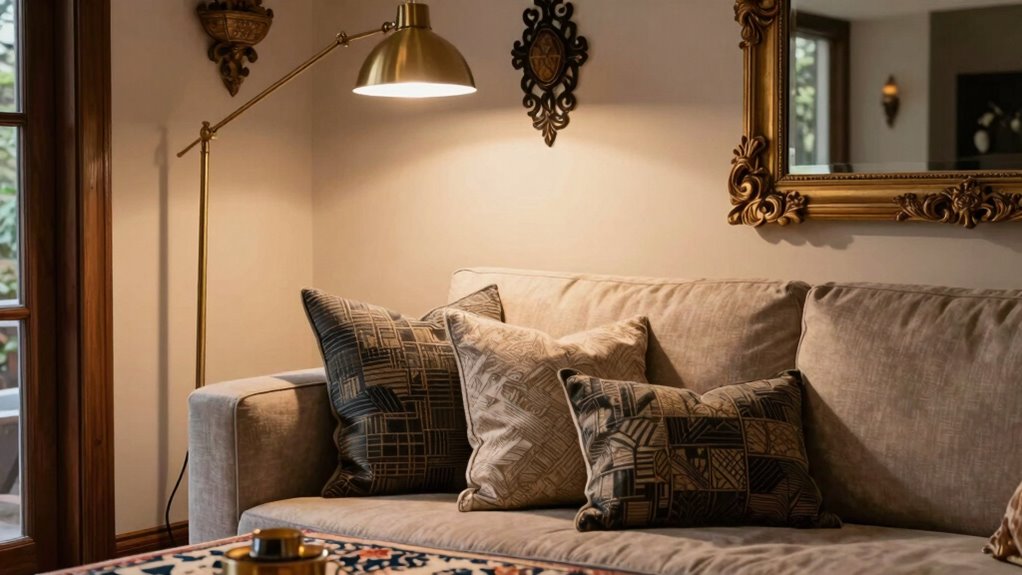

You can effortlessly add architectural interest without a renovation by incorporating decorative moldings, such as crown or wainscoting, which instantly elevate your room’s character. Use statement lighting like bold chandeliers or pendant lights to create focal points, and add color or textured accents to introduce depth and texture. Stylish accessories like mirrors, faux columns, or arches reflect light and build visual layers. Keep exploring to discover more simple ways to transform your space with impactful details.

Get furniture and decor delivered free with Prime
- Fast, free delivery on millions of items
- Prime Video, Amazon Music and more included
- Member-only deals all year
Key Takeaways
- Install decorative moldings like crown molding or wainscoting to instantly add architectural detail.
- Use statement lighting such as bold chandeliers or pendant lights to create focal points.
- Apply contrasting paint colors or textured wallpaper to highlight architectural layers.
- Incorporate decorative accessories like mirrors, faux columns, or arches to add structure.
- Focus on strategic placement of elements to create depth and visual interest without extensive renovations.
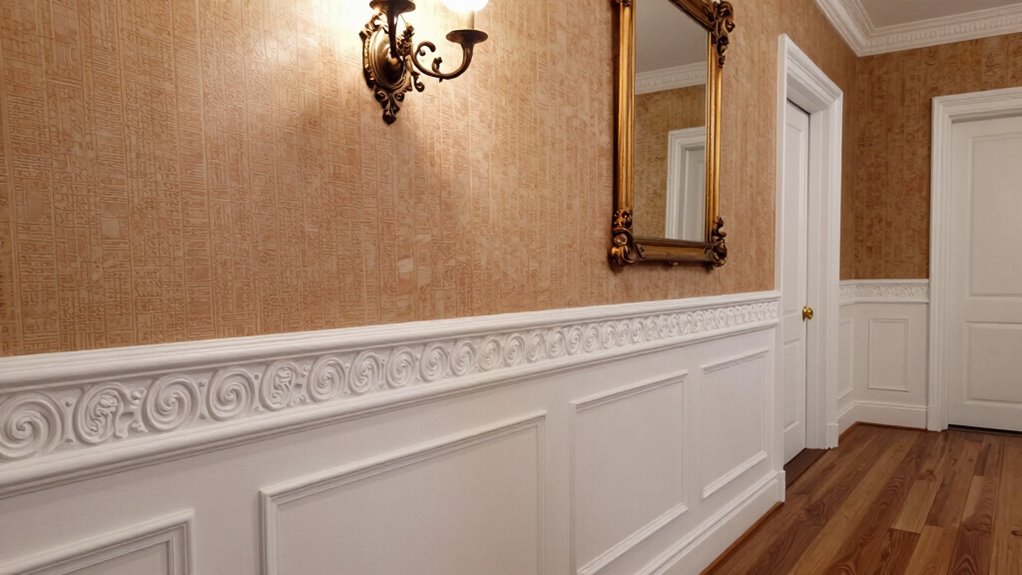
Have you ever wondered how to make your home stand out? You don’t need a full renovation to add those architectural touches that elevate your space. Small, strategic changes can create a dramatic impact, and incorporating decorative moldings is one of the easiest ways to do this. Think about crown moldings along the ceiling or wainscoting on the walls—these details add depth and character without overhauling your entire decor. You can choose from a variety of styles, from sleek modern profiles to intricate, traditional designs. Installing decorative moldings is straightforward and affordable, yet it instantly enhances the architectural interest of any room.
In addition to moldings, statement lighting can transform your space without the need for major construction. A bold chandelier or an eye-catching pendant light becomes a focal point that draws attention upward and adds personality. These pieces are more than just illumination—they become art that defines your style. You don’t have to stick with standard fixtures; opt for statement lighting that complements your decor and creates a sense of grandeur or intimacy. Placing a large, decorative fixture in the dining room or foyer instantly adds architectural interest and makes your home feel more curated.
Another way to add architectural interest is through the strategic use of color and texture. Painting a single wall a different hue or adding wallpaper with unique patterns can create visual depth. When combined with decorative moldings, these painted accents stand out even more, giving the illusion of architectural layers. Consider also adding textured wall panels or shiplap to bring in a tactile element that breaks up plain surfaces and adds richness. Incorporating architectural features like textured wall panels or faux beams can also significantly enhance the overall aesthetic. Understanding design principles such as balance and contrast can help you craft a cohesive and engaging look. Being intentional with your choices ensures a harmonious and polished result.
Mirrors are another simple yet effective tool. Framed mirrors with detailed moldings reflect light and expand the space visually. Positioning mirrors near statement lighting enhances their effect, creating a more dynamic and inviting environment. You can also experiment with architectural accessories like columns, arches, or faux beams made from lightweight materials. These elements give a sense of structure and heritage without the need for structural modifications. Additionally, exploring decorative architectural elements can evoke a timeless elegance or modern edge, depending on your style preferences. Incorporating visual interest through these small touches can make a big difference in overall ambiance.
Ultimately, the key is to focus on details that catch the eye and create a sense of depth. With decorative moldings, statement lighting, and thoughtful color choices, you can craft a home with architectural interest that feels fresh and sophisticated. These updates don’t require a renovation—you simply need to know where to add these elements for maximum impact. And in doing so, you’ll find that your space becomes more engaging, stylish, and uniquely yours.
As an affiliate, we earn on qualifying purchases.
Frequently Asked Questions
Can Furniture Placement Enhance Architectural Appeal?
Yes, furniture placement can definitely enhance architectural appeal. By carefully considering your furniture arrangement and spatial organization, you draw attention to key architectural features like moldings or built-ins. Positioning furniture to frame or highlight these elements creates visual interest and depth. Experiment with different layouts to see how movement and flow influence the space, making your home feel more cohesive and architecturally engaging without needing a renovation.
How Do Color Choices Affect Architectural Interest?
Ever wonder how color choices can transform your space? You realize that color psychology influences mood and perception, so selecting shades strategically adds architectural interest. Bright, bold hues highlight features, while softer tones create subtle depth. Using varied paint finishes, like matte or gloss, emphasizes textures and details. By thoughtfully choosing colors, you draw attention to architectural elements, making your space feel more dynamic and engaging without needing a renovation.
Are Decorative Accessories Effective in Architectural Enhancement?
Decorative accessories and architectural embellishments are highly effective in enhancing your space. You can add character with statement pieces like ornate mirrors, unique sculptures, or vintage lighting fixtures. Architectural embellishments such as moldings, trims, or decorative panels also create visual interest without major renovations. These elements draw attention to key areas, add texture, and define your style, transforming your environment into a more inviting and architecturally rich space effortlessly.
What Lighting Techniques Highlight Architectural Features?
You highlight architectural features by layering lighting techniques. Use natural lighting to emphasize daytime beauty and create a warm, inviting atmosphere. Incorporate accent lighting to draw attention to specific details like moldings or archways, using spotlights or wall sconces. Balance these methods to enhance depth and texture, ensuring each feature stands out clearly. With strategic placement, your space gains visual interest without any renovation, simply through thoughtful lighting choices.
Can Rugs and Textiles Add Architectural Depth?
Yes, rugs and textiles can definitely add architectural depth to your space. You do this through textile layering, which combines different textures and sizes to create visual interest. Pattern mixing in rugs and textiles also emphasizes architectural features by highlighting contrasts and depth. By thoughtfully choosing and arranging these textiles, you draw attention to architectural details, making your space feel more dynamic and inviting without needing a renovation.
Conclusion
By incorporating details like bold moldings, unique fixtures, or vintage-inspired accents, you can transform your space without a costly renovation. Think of it as giving your home a fresh coat of paint—simple, yet impactful. With a little creativity, your space can feel as charming as a Dickens novel, full of character and history. So go ahead, add that quirky door knocker or ornate mirror—you’re crafting a story that’s uniquely yours.
Halloween Picks
halloween
As an affiliate, we earn on qualifying purchases.