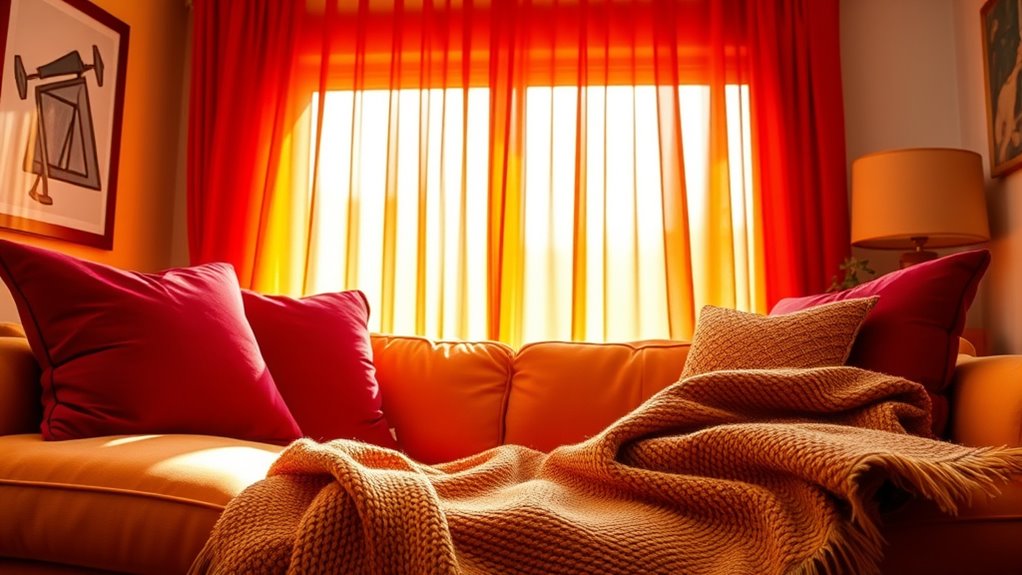

Warm colors like red, orange, and yellow can energize your home and influence your mood positively. Red stimulates passion and urgency, perfect for motivating spaces, while orange fosters enthusiasm and friendliness, ideal for social areas. Yellow radiates happiness and optimism, creating a cheerful atmosphere. Using these hues thoughtfully can enhance your space’s vibe, but their effects vary across cultures and individuals. Exploring how to balance these colors can help you craft spaces that feel just right for you.
Key Takeaways
- Warm colors like red, orange, and yellow influence mood by evoking energy, enthusiasm, happiness, and positivity in home environments.
- Red stimulates alertness and passion, making it suitable for motivating spaces but should be used carefully to prevent overstimulation.
- Orange fosters social interaction and creativity, ideal for gathering areas such as kitchens and living rooms.
- Yellow promotes optimism and warmth, enhancing relaxation and uplifting spirits with its cheerful, sunny vibe.
- Understanding cultural differences and emotional impacts helps select warm hues that align with desired home atmosphere and psychological effects.
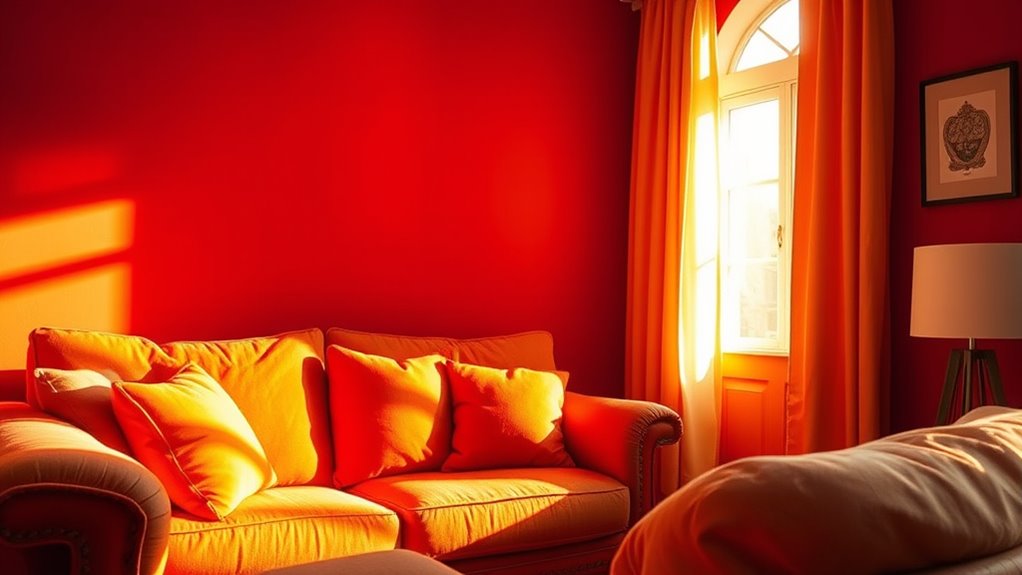
Warm colors like red, orange, and yellow do more than just brighten a space—they influence your mood and behavior in subtle but powerful ways. This is the essence of color psychology, the study of how colors impact human emotions and actions. When you choose warm hues for your home, you’re not just selecting a style; you’re intentionally shaping the atmosphere and how you feel within it. Red, for instance, is often associated with energy, passion, and urgency. It can invigorate a room and stimulate your senses, making it an excellent choice for spaces where you want to feel motivated or alert. However, because of its intensity, too much red can become overwhelming or even induce feelings of agitation, so balance is key.
Orange, on the other hand, combines the warmth of red with the cheerfulness of yellow. It’s known to evoke enthusiasm, creativity, and friendliness. When you incorporate orange into your home, you create an inviting environment that encourages social interaction and positive energy. This color has a playful and lively emotional impact, making it a popular choice for kitchens and gathering areas. Yellow, often considered the most optimistic of the warm colors, radiates happiness and warmth. It can brighten your mood and foster a sense of optimism and clarity. Bright yellow accents might lift your spirits on a gloomy day, while softer shades can create a calm, sunny atmosphere. The emotional impact of yellow is profound, as it often triggers feelings of joy and positivity.
Understanding the emotional impact of these warm colors allows you to design spaces that align with your desired mood. If you want to energize a room, using reds and oranges might be your best bet, especially in areas where activity and stimulation are needed. For spaces meant to relax and uplift, yellows can be effective without being overstimulating. Additionally, color associations can vary across different cultures, so it’s important to consider personal and cultural contexts when selecting hues. Keep in mind that the psychological effects of color are highly personal and can vary depending on individual experiences and cultural associations. Still, the general principles of color psychology suggest that warm hues have a natural tendency to evoke feelings of warmth, comfort, and vitality.
When you thoughtfully apply warm colors, you’re harnessing their emotional impact to create a home environment that feels lively, welcoming, and emotionally resonant. These hues influence more than just the look of your space—they shape your emotional experience within it. So, choose your warm colors intentionally, knowing they’re powerful tools for influencing mood and setting the tone for your daily life.
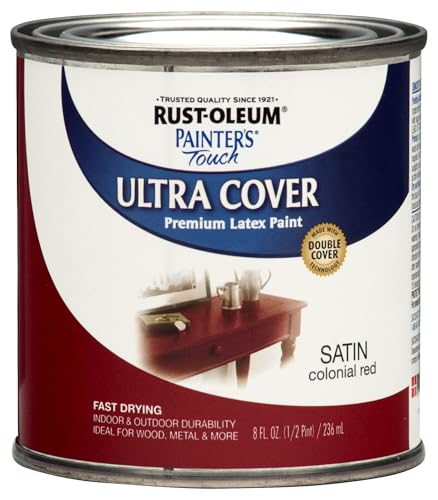
Rust-Oleum 267312-Painter's Touch Latex Paint, 1 Half Pint, Satin Colonial Red
Apply to metal, wood, plaster, masonry and unglazed ceramic
As an affiliate, we earn on qualifying purchases.
As an affiliate, we earn on qualifying purchases.
Frequently Asked Questions
How Do Warm Colors Influence Mood Over Time?
Warm colors can boost your mood initially, making you feel energized and welcoming, but over time, they might affect your emotional resilience and long-term comfort. You may find yourself craving more calming environments if these hues become overwhelming. To maintain balance, incorporate neutral tones alongside warm colors, allowing you to enjoy their uplifting benefits without sacrificing emotional stability or long-term comfort in your home.
Can Warm Colors Improve Productivity in Home Workspaces?
Ever wondered if warm colors can boost your productivity? They definitely can, thanks to color psychology. Reds, oranges, and yellows energize your workspace, encouraging focus and motivation. Incorporate these hues into your home office to create an environment that enhances productivity. By intentionally choosing warm tones, you activate a stimulating atmosphere that keeps you engaged and driven throughout your workday. Want to work smarter? Warm colors might be your answer.
Do Warm Colors Affect Sleep Quality?
Warm colors can negatively affect your sleep quality because they create an energetic, stimulating sleep environment. Bright reds and oranges, for example, may hinder relaxation and delay sleep onset. Using color therapy, you should opt for cooler, calmer hues like soft blues or muted neutrals to promote restful sleep. Adjusting your sleep environment’s colors helps signal your brain that it’s time to unwind, improving overall sleep quality.
How Do Warm Color Choices Vary Across Cultures?
Imagine you’re decorating a home in China, where red symbolizes luck and prosperity, so you might choose it for the living room to invite positive energy. In contrast, in Western cultures, orange often represents enthusiasm and creativity, influencing regional preferences. Cultural symbolism shapes warm color choices, making your selections deeply connected to regional traditions and beliefs, ensuring your designs resonate meaningfully across different cultural contexts.
Are Warm Colors Suitable for Small or Dark Rooms?
Warm colors can work well in small or dark rooms if you use light shades and keep saturation effects in mind. Lighter reds, oranges, and yellows help create small room illusions that make the space feel more open and inviting. Avoid overly saturated hues, which can make a room feel cramped. Instead, opt for softer tones and balanced color choices to brighten the area and enhance its sense of spaciousness.

GriNeed Fall Orange Throw Pillow Covers Decorative Velvet Set of 2 18×18 Inch Pillow Covers, Soft Burnt Orange Pillowcases for Couch Sofa Bed Living Room, Farmhouse Boho Decor, Accent Cushion Covers
SOFT VELVET : Grineed Pack of 2 Fall Burnt Orange 18*18 inch/45*45cm Throw Pillow Covers made of cozy…
As an affiliate, we earn on qualifying purchases.
As an affiliate, we earn on qualifying purchases.
Conclusion
By incorporating warm colors like reds, oranges, and yellows into your home, you can boost energy and create a welcoming atmosphere. Did you know that homes with warm color schemes tend to feel 20% more inviting, according to recent studies? So, don’t hesitate to add a splash of warmth to your space. It’s a simple change that can remarkably enhance your mood and make your home feel more lively and comfortable.

Glivpny Mushroom Lamp Table Lamp for Night Stands,Mid Century Modern Desk Lamps for Bedroom, Vintage Dimmable Bedside Small Lamps, Cute Cool Home Room Aesthetic Decor for Living Room (Orange)
Mid Century Modern Lamp— Its minimalist design with a cute egg tart glass lampshade and a solid chrome…
As an affiliate, we earn on qualifying purchases.
As an affiliate, we earn on qualifying purchases.

myusuar 3 Piece Large Abstract Framed Wall Art For Living Room, Smoke Texture Ink Warm Brown Terracotta Canvas Wall Art Modern Minimalist Art Prints Wall Décor For Bedroom Office 12x16in
Abstract Wall Art For Living Room: This set of modern prints features a trio of abstract canvas wall…
As an affiliate, we earn on qualifying purchases.
As an affiliate, we earn on qualifying purchases.