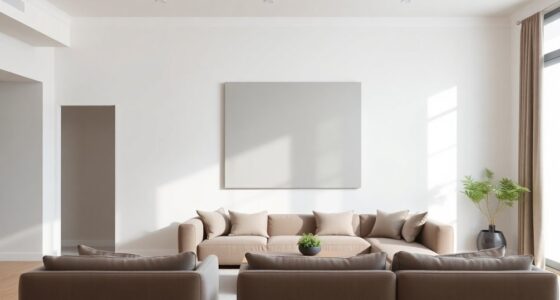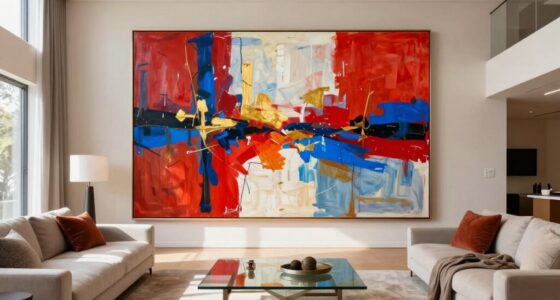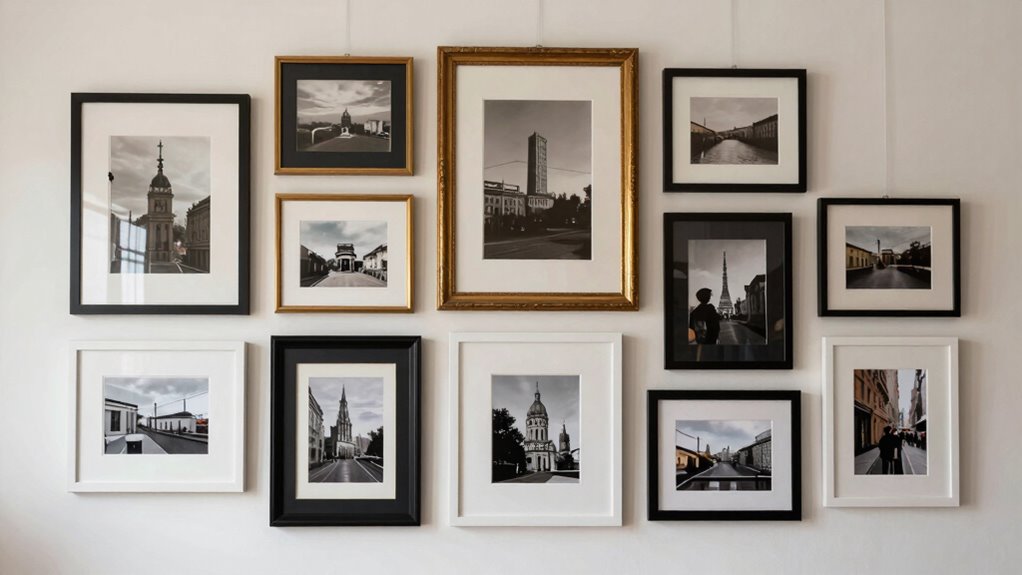

To make your gallery wall look collected, choose a cohesive style with matching frames and a consistent color palette. Plan your layout on the floor first, using painter’s tape to visualize spacing and arrangement. Leave enough negative space between pieces, and hang artwork at eye level for balance. Mix different sizes and shapes without overcrowding, creating harmony through thoughtful placement. Keep these tips in mind, and you’ll craft a polished, inviting display — with more details to guide you along the way.

Get furniture and decor delivered free with Prime
- Fast, free delivery on millions of items
- Prime Video, Amazon Music and more included
- Member-only deals all year
Key Takeaways
- Use varied frame styles and sizes to create visual interest without overwhelming the wall.
- Maintain consistent spacing and negative space around each piece for a breathable, curated feel.
- Choose a cohesive color palette to unify diverse artwork and avoid visual clutter.
- Hang artwork at eye level with a balanced layout to promote a natural, inviting flow.
- Limit the number of pieces and focus on quality over quantity for a deliberate, collected look.
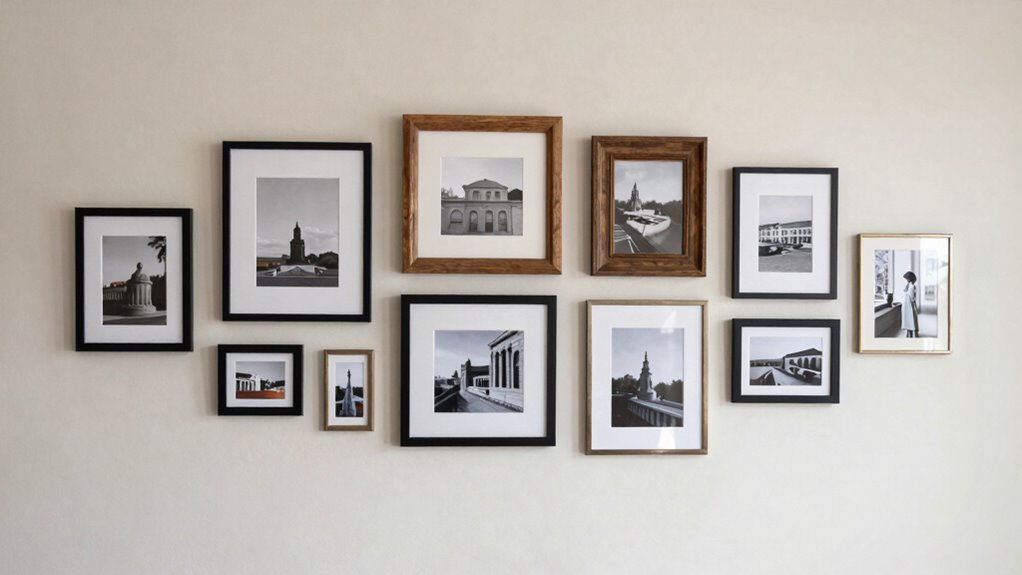
Creating a gallery wall can instantly transform a blank wall into a stylish focal point, but it can also feel overwhelming if you don’t have a clear plan. The key to making a gallery wall look collected rather than crowded lies in thoughtful arrangement and attention to detail. First, consider your framing options. You don’t need to match every frame exactly, but choosing a cohesive style—like all black frames or distressed wooden ones—can unify the display. Mix different frame sizes and shapes to add visual interest, but keep the overall palette consistent to avoid a chaotic look. If you prefer a more polished appearance, opt for frames with similar matting or borders. These small choices help balance variety with harmony, making your wall feel curated rather than cluttered.
Choose a cohesive frame style and mix sizes for a curated, harmonious gallery wall.
Color coordination plays a vital role in achieving a collected look. You want the artwork and photos to complement each other without clashing. Select a color scheme—neutral tones, monochromes, or a specific palette—that ties everything together. For instance, if you choose black-and-white photos, add in artwork with accents of the same color family to maintain cohesion. If you’re working with colorful pieces, pick shades that naturally go well together, and avoid overloading the space with every bright hue you have. Instead, focus on balancing vibrant pieces with more subdued ones, and consider how visual balance impacts the overall aesthetic. Incorporating a sense of visual rhythm** can help your gallery feel more harmonious and thoughtfully curated. Additionally, paying attention to color harmony can further enhance the overall cohesion of your display. Keep in mind that color blocking can also be a useful technique to create a striking yet balanced visual effect. Remember that understanding the fundamentals of color theory** can greatly improve the overall visual appeal of your gallery wall.
Spacing is another critical aspect. Instead of placing items too close together, give each piece room to breathe. Use painter’s tape to lay out your arrangement on the floor first, experimenting with different placements and spacing. Once you’re happy with the layout, transfer it to the wall. Aim for consistent spacing—about 2 to 4 inches between frames—so the collection looks unified. Avoid the temptation to fill every inch; a little negative space around each piece invites the eye to appreciate each item individually. This approach prevents the gallery from looking crowded and helps it develop a curated, collected feel.
Finally, consider the height at which you hang your gallery. Generally, the center of the display should be at eye level. This creates a natural flow and makes the collection feel approachable. When all these elements—framing options, color coordination, spacing, and placement—are thoughtfully combined, your gallery wall will look carefully curated and inviting, not cluttered or chaotic. It’s about creating a balanced display that reflects your personality without overwhelming the space. With patience and attention to detail, you’ll craft a gallery wall that feels like a true reflection of your style—collected, not crowded.
As an affiliate, we earn on qualifying purchases.
Frequently Asked Questions
How Do I Choose a Unifying Theme for My Gallery Wall?
To choose a unifying theme for your gallery wall, focus on color coordination and style consistency. Pick a color palette that ties all the pieces together, whether it’s monochrome or complementary hues. Guarantee the artwork or photos share a similar style or era, creating harmony. This approach helps your gallery wall feel curated and intentional, making it look collected rather than crowded. Keep these elements in mind for a cohesive, stylish display.
What Are the Best Frame Styles for a Cohesive Look?
Choose frame styles that complement each other to create a cohesive look. Opt for custom framing options that match your overall color scheme, whether it’s sleek black, classic white, or warm wood tones. Mixing frame styles can add interest, but keep a consistent color coordination to unify the display. This balance guarantees your gallery wall feels curated and collected, rather than chaotic or crowded.
How Much Space Should I Leave Between Frames?
Don’t put all your eggs in one basket—leave about 2-3 inches of frame spacing to balance your gallery wall. Measure your wall carefully before hanging, considering the total wall measurement and the size of your frames. This gap prevents the display from feeling crowded while keeping it cohesive. Use a ruler or painter’s tape to mark spots, ensuring consistent spacing that enhances the collected look you’re after.
Can I Mix Different Art Styles in One Gallery Wall?
Absolutely, you can mix different art styles in one gallery wall. Embrace art diversity by combining contemporary, vintage, abstract, and photographs to create visual interest. To keep it cohesive, balance the styles with consistent framing or a unifying color palette. Mixing styles adds personality and depth, making your gallery wall feel curated and collected rather than crowded. Trust your eye and have fun experimenting with different combinations.
How Do I Update or Change My Gallery Wall Over Time?
To update your gallery wall over time, embrace gallery wall evolution by periodically swapping out or adding new pieces. Incorporate seasonal updates to keep it fresh and relevant, like changing artwork or photos to reflect holidays or seasons. Rearrange frames for variety, and consider changing matting or frame styles for a new look. Regular updates keep your gallery wall dynamic, personal, and visually engaging without overcrowding.
Conclusion
By choosing diverse frames, balancing sizes, and maintaining thoughtful spacing, you create a gallery wall that feels curated, not cluttered. Embrace variety while keeping cohesion, mix different artwork with personal photos, and step back regularly to evaluate your layout. With these tips, you’ll craft a gallery wall that invites curiosity, sparks conversation, and showcases your style—all while maintaining harmony and avoiding chaos. Ultimately, it’s about creating a space that feels intentional, inviting, and uniquely yours.
Halloween Picks
halloween
As an affiliate, we earn on qualifying purchases.