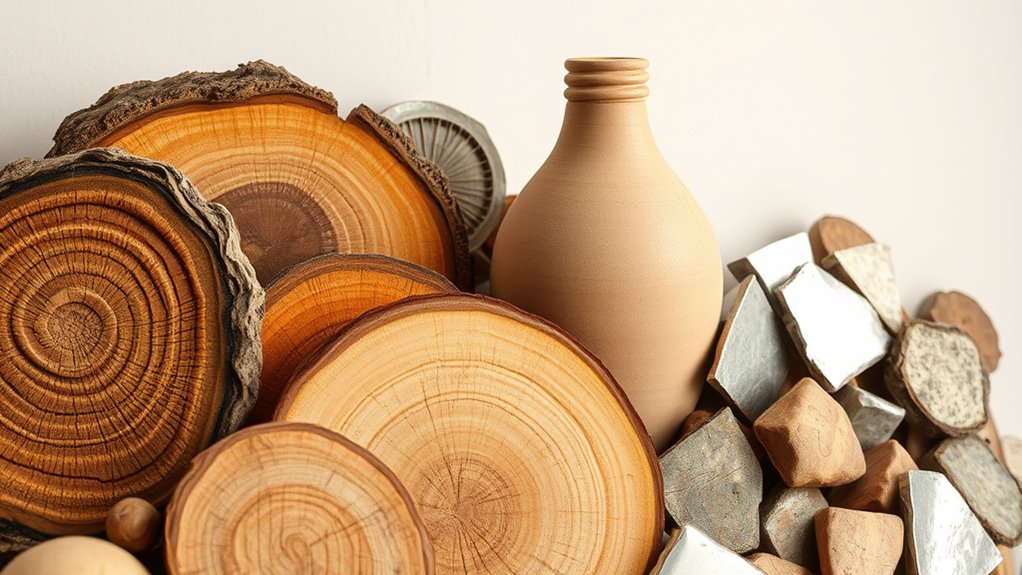

Natural materials like wood, clay, and recycled elements are eco-friendly choices that help you create sustainable art. You can work with responsibly sourced wood and traditional techniques that honor craftsmanship while reducing environmental impact. Using clay connects you to ancient traditions, supporting local economies and emphasizing patience. Recycled materials allow you to turn waste into meaningful art, inspiring environmental awareness. If you keep exploring, you’ll discover even more ways these materials foster creativity and sustainability.

Get furniture and decor delivered free — and shop member deals
- Fast, free delivery on millions of items
- Access to Prime Big Deal Days deals on October 6–7
- Prime Video, Amazon Music and more included
Key Takeaways
- Artists prioritize sourcing responsibly managed wood and clay to reduce environmental impact and promote ecological sustainability.
- Traditional techniques like marquetry and wheel-throwing honor cultural heritage and demonstrate mastery of natural materials.
- Wood’s natural grain and form are used to create versatile sculptures and furniture that embody harmony with nature.
- Clay, sourced locally, connects artists to ancient practices while supporting sustainable land use and reducing transportation emissions.
- Recycled elements such as metal and plastic are repurposed into artworks, promoting waste reduction and environmental consciousness.

Have you ever wondered how artists use natural materials to create stunning works of art? The answer lies in their ability to harness materials like wood, clay, and recycled elements, all while embracing sustainable sourcing and traditional craftsmanship. When artists choose to work with natural materials, they often prioritize sustainable sourcing, ensuring that their creations don’t harm the environment. This means selecting materials from responsibly managed forests or sources that renew themselves quickly, reducing ecological impact. It’s a conscious choice that aligns with a growing awareness of environmental issues and a desire to keep the planet healthy. By doing so, artists connect their work to a larger tradition of craftsmanship that values patience, skill, and respect for nature. Additionally, many artists incorporate traditional techniques that honor the history and cultural significance of their chosen mediums. In working with wood, artists tap into a versatile, renewable resource. They carve, sculpt, or assemble pieces, transforming raw timber into intricate sculptures or functional furniture. The beauty of using wood lies in its natural grain, which adds depth and character to each piece. Many artists honor traditional craftsmanship by mastering techniques passed down through generations, like marquetry or woodturning, which require patience and precise skill. These methods emphasize the importance of working with nature rather than against it, emphasizing sustainability and respect for the material. When sourced responsibly, wood becomes more than just a medium—it’s a symbol of harmony between human creativity and the environment.
Artists embrace sustainability and craftsmanship by using natural, responsibly sourced materials to create timeless, eco-friendly works of art.
Clay offers another avenue for natural expression, and its use connects artists to ancient traditions. Working with locally sourced clay reduces transportation emissions and supports local economies, reinforcing sustainable practices. Artists mold, shape, and fire clay into a variety of forms, from delicate pottery to bold sculptures. The process often involves traditional craftsmanship, where techniques like hand-building or wheel-throwing are passed down through generations. These methods require patience and skill, emphasizing the value of manual labor and craftsmanship. Because clay is abundant and easily replenished through natural processes, it exemplifies sustainable sourcing, encouraging artists to respect the land that provides this versatile material.
Recycled elements take natural materials a step further by repurposing waste into art. Artists transform discarded objects—metal, glass, plastic—into compelling visual statements, promoting sustainability. This approach not only reduces waste but also challenges the notion of material permanence. It’s a modern take on traditional craftsmanship, where artists carefully select and manipulate recycled materials, showcasing creativity and environmental consciousness simultaneously. By blending sustainable sourcing with skillful craftsmanship, they create works that inspire viewers to reconsider waste and resourcefulness, making their art both meaningful and eco-friendly.
In all these cases, natural materials become a bridge between tradition and innovation, highlighting how sustainable sourcing and craftsmanship can produce timeless art that respects and celebrates the environment.
As an affiliate, we earn on qualifying purchases.
Frequently Asked Questions
How Do Artists Ensure the Longevity of Natural Material Artworks?
To guarantee your natural material artworks last, you should focus on preservation techniques and understanding material durability. Seal or treat materials like wood and clay to protect against moisture, pests, and decay. Store your pieces in controlled environments, avoiding extreme temperature changes or humidity. Regular maintenance, like cleaning and inspecting for damage, also helps prolong their life. By applying these strategies, you preserve the beauty and integrity of your natural art over time.
What Are the Environmental Impacts of Using Recycled Materials in Art?
Like Pandora’s box, recycling in art presents challenges but also immense ecological benefits. When you use recycled materials, you reduce waste and lower environmental impact. However, recycling challenges such as contamination or energy use can arise. Still, embracing recycled elements helps conserve resources and minimizes pollution, making your artwork more sustainable. You actively contribute to environmental preservation while inspiring others to think creatively about sustainability in art.
How Do Natural Materials Influence the Emotional Expression of Artworks?
You feel that natural materials bring a deep emotional resonance to your art, making it more authentic and organic. When you use wood, clay, or recycled elements, they add a tactile warmth and a sense of connection to nature that viewers can sense and respond to. These materials help you express raw, genuine emotion, creating artwork that feels alive and emotionally compelling, inviting others to share in your authentic creative experience.
Are There Specific Techniques for Working With Clay and Wood Together?
Think of working with clay and wood as orchestrating a duet. You’ll want to master joint techniques like scoring and slipping to connect these materials seamlessly. Surface treatments, such as carving or applying finishes, help unify their textures and appearances. With patience and practice, you create harmonious pieces where clay’s fluidity complements wood’s warmth, making your artwork a balanced symphony of natural elements.
How Can Beginners Start Incorporating Natural Materials Into Their Art Projects?
To start incorporating natural materials into your beginner art projects, focus on natural material sourcing by exploring local parks, gardens, or recycling centers for wood, clay, and other elements. Keep projects simple — like clay pinch pots or wooden picture frames — and experiment with combining these materials to develop your skills. Use basic tools and techniques, and don’t be afraid to embrace imperfections; they add unique character to your artwork.
Conclusion
By choosing natural materials like wood, clay, and recycled elements, you connect more deeply with the environment and create authentic art. Did you know that over 70% of artists worldwide prefer using eco-friendly materials? Embracing these sustainable options not only enhances your creativity but also helps protect our planet. So, next time you create, consider the beauty and impact of natural materials—they’re truly timeless and inspiring.
Evergreen bestsellers Picks
bestsellers
As an affiliate, we earn on qualifying purchases.