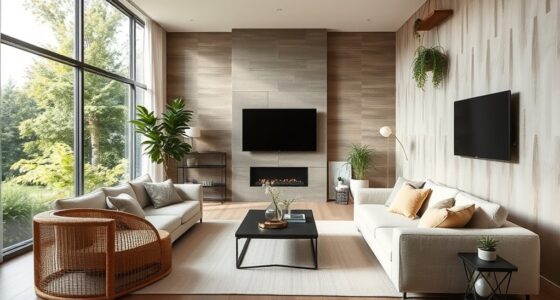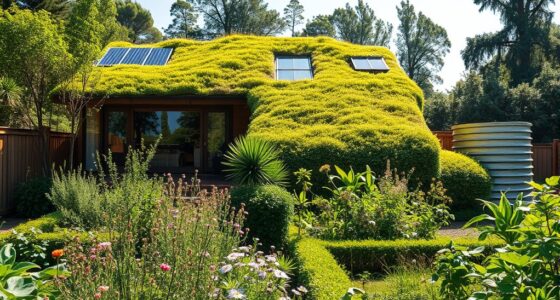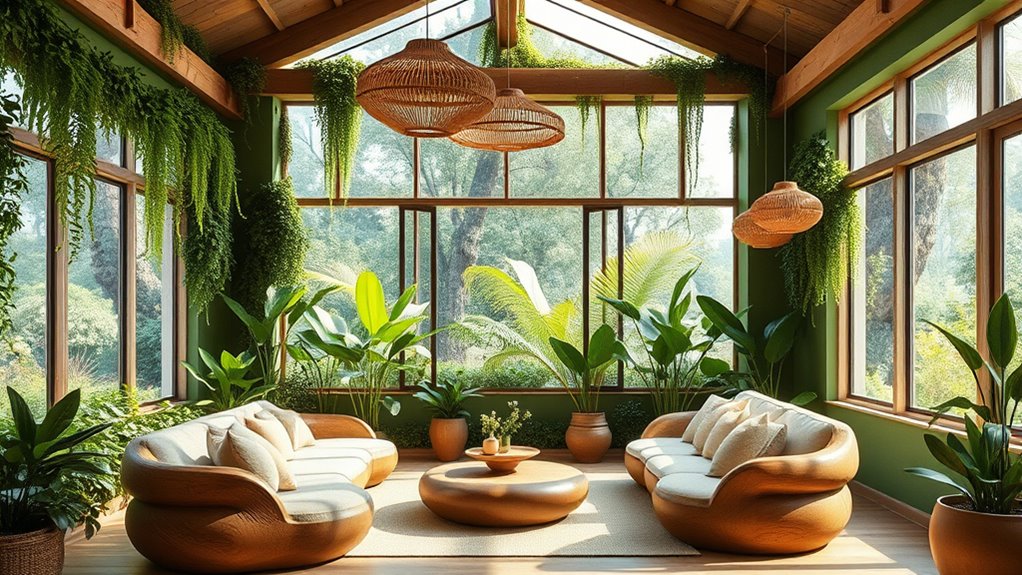

Sustainable and biophilic design helps you create eco-friendly, nature-inspired interiors by using renewable materials like bamboo and reclaimed wood, reducing waste and energy use. Incorporating urban greenery such as living walls, indoor gardens, and natural light not only enhances aesthetic appeal but also improves indoor air quality and well-being. These approaches foster healthier, more productive spaces that connect you with nature. Keep exploring to discover how to transform your environment into a sustainable sanctuary.
Key Takeaways
- Incorporate urban greenery like living walls and indoor plants to improve air quality and create calming environments.
- Use renewable materials such as reclaimed wood and recycled metals to reduce ecological impact and enhance sustainability.
- Design interiors that maximize natural light and integrate modular planters for flexible, eco-friendly spaces.
- Promote well-being and productivity through biophilic elements that reconnect occupants with nature.
- Implement sustainable practices that minimize waste, improve thermal insulation, and support environmentally responsible living.

Sustainable and biophilic design are transforming the way we create spaces that benefit both people and the environment. When you incorporate urban greenery into your interior spaces, you not only enhance aesthetic appeal but also improve air quality and foster a calming atmosphere. Think of living walls, indoor gardens, or potted plants strategically placed around your home or office—these elements bring nature directly inside, making the environment more inviting and healthier. Urban greenery serves as a essential component of biophilic design because it reconnects occupants with nature, reducing stress and boosting productivity.
Urban greenery enhances aesthetics, improves air quality, reduces stress, and fosters a calming, nature-connected environment indoors.
In addition to greenery, choosing renewable materials is *indispensable* to creating truly sustainable spaces. You can opt for bamboo flooring, reclaimed wood, or recycled metal fixtures to minimize your ecological footprint. These materials are not only eco-friendly but also offer durability and unique character to your interiors. Using renewable materials demonstrates your commitment to reducing waste and conserving natural resources, aligning with the core principles of sustainable design. When you select these resources, you support environmentally responsible manufacturing processes and help drive demand for greener industry practices.
The integration of urban greenery and renewable materials goes beyond aesthetics. It influences the entire lifecycle of your space, from construction to daily use. For example, incorporating recycled or biodegradable materials reduces landfill waste, while planting indoor gardens or green walls improves thermal insulation, decreasing energy consumption. This synergy creates a space that is both visually appealing and environmentally conscious. As you make these choices, you contribute to a broader movement toward sustainable living, where every detail reflects a respect for the planet.
Furthermore, sustainable and biophilic design encourages you to think creatively about space utilization. You might include modular planters, vertical gardens, or natural light solutions that amplify the connection to nature. These elements foster a sense of well-being and promote a healthier indoor environment. Plus, choosing renewable materials often means selecting products that are non-toxic and free of harmful chemicals, ensuring a safer space for everyone. Your attention to these details makes your environment not just beautiful but also functionally sustainable.
Ultimately, embracing urban greenery and renewable materials in your design is a powerful way to align your space with eco-friendly principles. It’s about creating environments that nurture the earth while providing comfort and inspiration for those who use them. By doing so, you’re helping to build a future where sustainable and biophilic design become the standard, transforming everyday spaces into sanctuaries that support both human well-being and ecological balance.
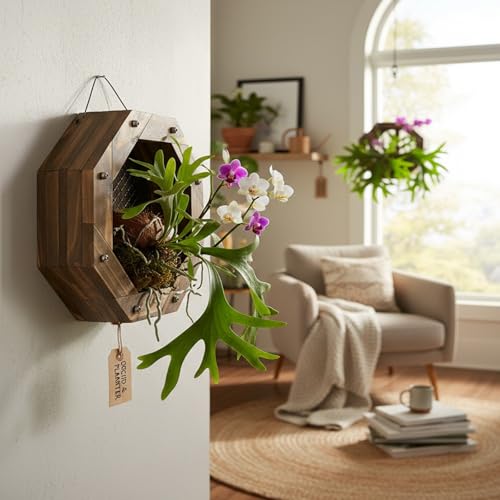
Dranvosk Staghorn Fern Mounting Kit Hanging Planting Frame Wood Wall Planter Plant Holder for Orchids and Herbs
Versatile Stylish Wall Decor:Perfect for kitchens, dining rooms, and hallways, this wood wall planter adds a natural touch…
As an affiliate, we earn on qualifying purchases.
As an affiliate, we earn on qualifying purchases.
Frequently Asked Questions
How Does Biophilic Design Affect Indoor Air Quality?
Biophilic design improves indoor air quality by increasing natural ventilation, allowing fresh air to circulate and remove indoor pollutants. You benefit from cleaner indoor air when you incorporate plants and open spaces that promote airflow. Natural ventilation reduces indoor pollutants, humidity, and odors, creating a healthier environment. By connecting with nature through design, you not only enhance aesthetics but also guarantee better indoor air quality for your well-being.
Can Sustainable Materials Be Cost-Effective for Large Projects?
Yes, sustainable materials can be cost-effective for large projects. You should do a cost comparison early, considering material sourcing options that might offer bulk discounts or local availability. While some eco-friendly materials have higher upfront costs, their durability and lower maintenance expenses can save you money over time. By carefully evaluating options, you’ll find sustainable choices that fit your budget and contribute to greener, more efficient project outcomes.
How to Incorporate Local Flora Into Interior Spaces?
You can incorporate local flora into your interior spaces by selecting native plants that thrive in your regional landscapes. Use potted native plants as focal points or create living walls with regional species to connect indoors with nature. Choose plants suited to your climate to guarantee sustainability and low maintenance. Incorporating regional landscapes fosters a sense of place and supports local ecosystems, making your space both beautiful and environmentally conscious.
What Are the Maintenance Requirements for Eco-Friendly Interiors?
You’ll find that eco-friendly interiors require gentle cleaning protocols to preserve their natural charm. Focus on using non-toxic cleaners and avoiding harsh chemicals. Material durability plays a key role, so choose resilient, sustainable materials that age gracefully. Regular maintenance isn’t burdensome; it’s an opportunity to nurture your space’s liveliness. With mindful care, your eco-friendly interior remains fresh and inspiring, reflecting a deeper commitment to harmony with nature.
Are There Any Health Risks Associated With Biophilic Design Elements?
Biophilic design elements generally pose minimal health risks, but you should be mindful of biophilic symbolism that might cause allergies or sensitivities, like certain plants or natural materials. Prioritize natural light optimization to reduce eye strain and improve well-being. Guarantee proper ventilation and choose non-toxic materials to minimize any potential health issues. With careful selection, you can enjoy the benefits of biophilic design without compromising your health.

Livelynine Reclaimed Wood Vinyl Flooring Roll Waterproof Vinyl Plank Flooring Peel and Stick Wood Planks for Walls Kitchen Bathroom Floor Desk Countertop Covers Accent Wall Stick on Shiplap 15.8×78.8
🏠DETAILS: 15.8×78.8 Inch, total 8.65 sq.ft (40cmX2m) Made of durable thin vinyl, thickness: 0.015 In (0.4MM). Peel and…
As an affiliate, we earn on qualifying purchases.
As an affiliate, we earn on qualifying purchases.
Conclusion
You might think eco-friendly and biophilic designs are costly or complicated, but they actually save you money and boost well-being over time. By choosing sustainable materials and bringing nature indoors, you create a healthier, more inspiring space without sacrificing style. Embracing these designs isn’t just good for the planet—it’s a smart move for your comfort and happiness. So, why not start transforming your space today and enjoy the benefits of a greener, more vibrant environment?

Ogrmar 36 Pockets Vertical Wall Garden Planter Plant Grow Bag for Flower Vegetable for Indoor/Outdoor (36 Pockets, Black)
MEDIUM SIZE: 39.4" X 39.4" (100 cm x 100 cm), Built Well Enough For Growing Season, Can Match…
As an affiliate, we earn on qualifying purchases.
As an affiliate, we earn on qualifying purchases.
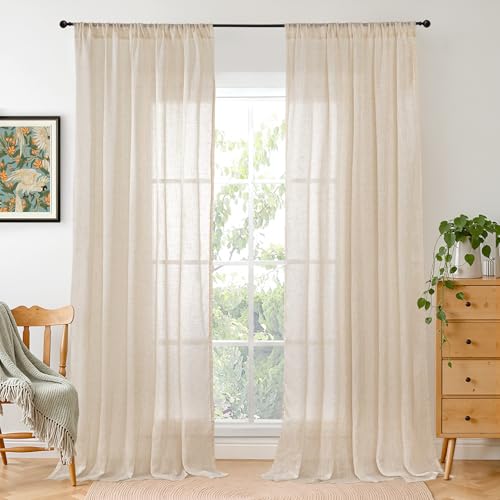
BGment Burlap Linen Curtains 84 Inch Length for Living Room – Tan Light Filtering Semi Sheer Natural Drapes with Rod Pocket Lightweight Window Treatments for Bedroom Farmhouse, 2 Panels, 52 X 84 Inch
PACKAGE INCLUDES: Each package includes set of 2 natural linen curtains. Each panel is 84 inches long and…
As an affiliate, we earn on qualifying purchases.
As an affiliate, we earn on qualifying purchases.