
TL;DR

Get furniture and decor delivered free with Prime
- Fast, free delivery on millions of items
- Prime Video, Amazon Music and more included
- Member-only deals all year
Design Milk has published a Friday Five interview with Toast CEO Suzie de Rohan Willner, covering five artistic and architectural influences and several Toast projects. Her selections include Anni Albers, Ruth Asawa, Philip Johnson’s Glass House, Isamu Noguchi and the sculptural doors at Liverpool Metropolitan Cathedral; the interview also describes projects focused on community, experimentation and garment reuse.
Toast CEO Suzie de Rohan Willner has shared five artistic and architectural influences, along with recent projects from the clothing and lifestyle brand, in a Friday Five interview published by Design Milk. The selections range from textile artist Anni Albers and sculptor Ruth Asawa to Philip Johnson’s Glass House, and connect Willner’s personal interest in craft with Toast’s work on repair and reuse.
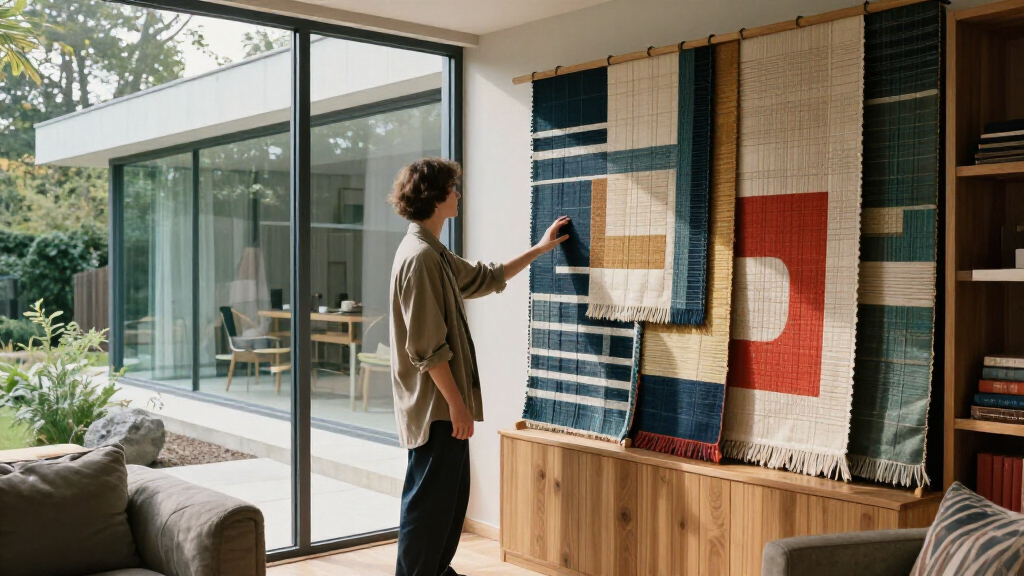
Willner says Albers’s approach to textiles inspires her because the artist helped establish textile work as a respected art form and began with experimentation. In the interview, she describes Albers as asking what a material wants to do before deciding how it should look. She also points to Asawa’s looped-wire sculptures, which turn an industrial material into forms that appear both light and strong.
The other influences are the Glass House in New Canaan, Connecticut; Isamu Noguchi, whose work crossed sculpture, furniture, lighting and public gardens; and the sculptural doors at Liverpool Metropolitan Cathedral. Willner identifies the cathedral doors with her stepfather, William Mitchell, and says his use of concrete and attention to a place’s history shaped her view of artistic courage.
The interview also describes Toast projects and collections. For Spring/Summer 2026, the brand held a locally produced luncheon on farmland around Llansteffan Castle in Wales, its birthplace. A separate Spring/Summer 2025 event at Somerset House in London featured installations and a dance performance. The piece also highlights a Toast Renewed capsule by Dutch textile artist Meta Struycken: eight full-size designs made from returned or damaged Toast garments and fabric remnants.
Craft and Repair in Toast’s Work
The interview links Willner’s creative references to a practical question for a clothing brand: how can existing materials be used again? She draws a parallel between Lee Krasner’s practice of reworking fragments of earlier paintings and Toast’s Repair, Renewed and Reworn initiatives, which the source describes as ways to mend, alter and reuse garments. This is the interview’s clearest connection between personal inspiration and the company’s activities.
The projects also show how Toast presents craft beyond the finished garment. The Renewed capsule uses embroidery, appliqué and quilting to make repair visible, while the Wales luncheon and Somerset House event bring the brand’s collections into settings involving landscape, performance and community. These examples offer readers a view of the company’s creative direction, though the article does not provide sales, participation or environmental-impact figures.
As an affiliate, we earn on qualifying purchases.
The People and Projects Behind the Interview
Design Milk’s Friday Five format asks a guest to share five sources of inspiration. In this installment, Willner’s choices span modern and contemporary art, architecture and a family connection. The source says her interest in art, design and craftsmanship began in a creative family, and describes Toast creative director Laura Shippey introducing her to Krasner’s work.
The article places the interview alongside projects connected with named collection seasons. It describes A Lightness of Being as a Spring/Summer 2025 celebration at Somerset House, where dancers Francesca Matthys and Masumi Saito performed in the collection. It also outlines Marking the Turn, a Fall/Winter 2026 collection concept drawing on seasonal rituals, folk traditions, handcraft, color and functional forms. These are details supplied by the interview, not independent assessments of the projects.
“She asked what the material wanted to do before asking how it should look.”
— Suzie de Rohan Willner on Anni Albers
What the Interview Does Not Measure
The source is a profile of Willner’s influences and Toast projects, not an independent review or company performance report. It does not give figures for how many garments Toast Repair, Renewed or Reworn handle, how much material those initiatives reuse, or what measurable environmental effects they have. The article also does not specify the date of publication in the supplied material, nor provide further operational details for the collection launches and events.
Toast’s Seasonal Projects Ahead
The source describes Toast’s Fall/Winter 2026 collection, Marking the Turn, through its theme and design references, but does not state when or where the collection will be released or outline future events. It also offers no announced next milestone for the Renewed capsule. Further details on those plans, and any reported results from the repair and reuse initiatives, would be needed to assess how the projects develop beyond the examples in the interview.
Key Questions
What did Suzie de Rohan Willner discuss with Design Milk?
She discussed five artistic and architectural influences, including Anni Albers, Ruth Asawa, the Glass House, Isamu Noguchi and the sculptural doors at Liverpool Metropolitan Cathedral, as well as recent Toast projects.
What is Toast Renewed by Meta Struycken?
According to the interview, it is a capsule of eight full-size pieces designed by Dutch textile artist Meta Struycken using returned or damaged Toast items and fabric remnants.
How does Willner connect art with garment repair?
Willner compares Lee Krasner’s reuse of fragments from earlier paintings with Toast initiatives that repair, alter and reuse garments. The article presents this as her perspective; it does not report measured environmental outcomes.
Who was William Mitchell?
Willner identifies Mitchell as her stepfather and describes him as an artist who used concrete as a sculptural medium. She cites the doors at Liverpool Metropolitan Cathedral as an example of his work.
Source: rss
Halloween Picks
halloween
As an affiliate, we earn on qualifying purchases.