
Radiant floor heating offers your home consistent, gentle warmth directly under your feet, eliminating the need for bulky radiators or vents. It’s energy-efficient, helping you save on utility bills while creating a cozy environment. With even heat distribution, your space stays comfortable and clutter-free. Proper installation guarantees silent operation and long-lasting performance. Want to discover how different systems and materials can maximize your comfort and save energy? Keep exploring to learn more.
Key Takeaways
- Radiant floor heating provides consistent, even warmth directly underfoot, enhancing comfort throughout the space.
- It operates silently and efficiently, reducing energy costs compared to traditional heating methods.
- Proper installation, including insulation and system type, maximizes warmth and energy efficiency.
- Suitable flooring materials like tile and stone optimize heat transfer for better performance.
- Regular system testing and maintenance ensure long-lasting, reliable warmth and efficiency.
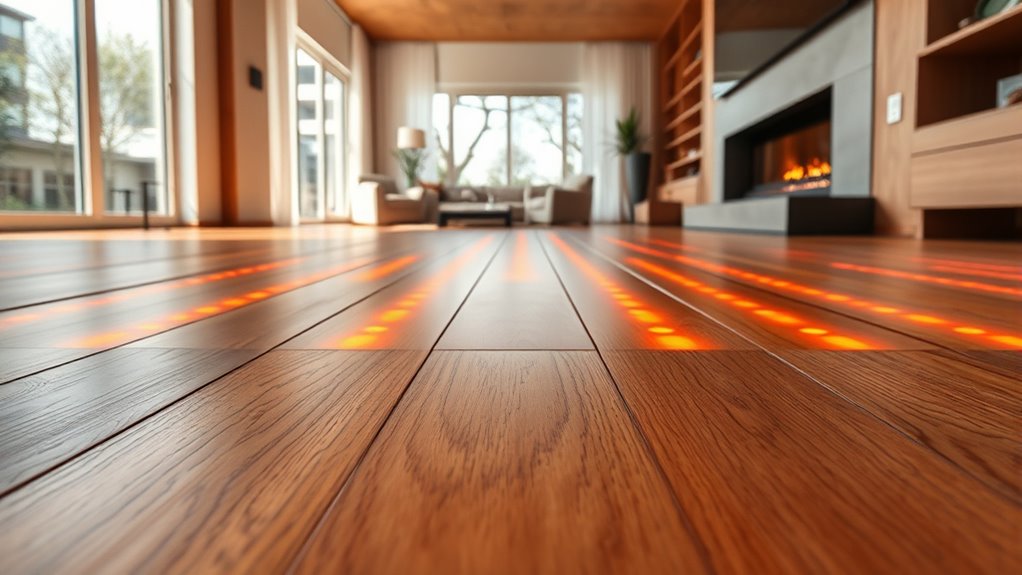
Have you ever wondered how to keep your home warm evenly and efficiently? If so, radiant floor heating might be just what you need. Unlike traditional systems that rely on radiators or vents, radiant floor heating provides consistent warmth directly underfoot, creating a cozy environment without the clutter of bulky radiators. This system works by installing heating elements beneath your flooring, which then emit gentle, even heat across the entire surface. Not only does this enhance your comfort, but it also offers significant energy savings. Because the heat is distributed uniformly, you can lower your thermostat without sacrificing comfort, leading to lower energy bills over time. Plus, radiant heating minimizes heat loss through walls and windows, making it a highly effective choice.
Radiant floor heating offers uniform warmth and energy savings by installing discreet heating elements beneath your floor.
When considering installation tips for radiant floor heating, proper planning is essential. First, evaluate your existing flooring type and subfloor to guarantee compatibility. Some materials, like tile and stone, conduct heat more effectively, while carpeted floors may require additional adjustments. Next, decide whether you want a hydronic system, which uses heated water, or an electric system, which employs electric cables or mats. Electric systems tend to be easier to install and are ideal for smaller spaces or retrofit projects, while hydronic systems are more energy-efficient for larger areas but involve more complex installation steps.
Before installation, make sure your subfloor is clean, dry, and level. This foundation is imperative for ideal heat transfer and to prevent future issues. When laying down the heating elements, follow manufacturer instructions carefully, ensuring even spacing to avoid cold spots and maximize efficiency. Insulation beneath the heating system is essential to prevent heat loss downward, directing warmth upward into your living space. This not only enhances comfort but also improves energy savings, as less energy is wasted heating the subfloor. Additionally, understanding the types of systems available can help in choosing the most suitable option for your home.
During installation, it’s best to work systematically, checking connections and testing the system before covering it up with flooring material. Once the heating elements are in place, you can proceed with your chosen flooring—be mindful that some materials, like laminate or engineered wood, may require specific adhesives or underlayment to work effectively with radiant heat. When complete, a properly installed system can operate silently, with minimal maintenance, and provide consistent warmth for years to come.
Frequently Asked Questions
How Long Does It Take to Install Radiant Floor Heating?
It typically takes about one to three days to install radiant floor heating, depending on your home’s size and the system type. Your installation timeline also depends on planning considerations like existing flooring removal or subfloor modifications. You should coordinate with your contractor to guarantee proper setup, and expect some additional time for testing and finishing touches. Proper planning helps ensure a smooth, efficient installation process.
Can Radiant Floor Heating Be Used With All Types of Flooring?
You can enjoy radiant floor heating with many flooring types, but some material limitations exist. Hardwoods, tiles, and vinyl often work well, creating a cozy, warm surface underfoot. However, carpets and thick rugs can insulate the heat, reducing efficiency. Always check flooring compatibility to confirm your chosen material won’t trap heat or get damaged. With proper selection, you’ll experience consistent warmth that transforms your space into a cozy retreat.
What Is the Typical Lifespan of Radiant Floor Heating Systems?
Your radiant floor heating system typically lasts 20 to 30 years with proper system maintenance. Regular maintenance guarantees efficiency and prolongs lifespan, helping you maximize energy savings. Over time, components like thermostats or pumps might need replacement, but the core system remains durable. By keeping up with maintenance, you enjoy consistent warmth and energy-efficient operation, making your investment worthwhile over the long term.
Is Radiant Floor Heating Suitable for Both New and Existing Homes?
Yes, radiant floor heating suits both new and existing homes. For existing structures, retrofit options make installation easier, often with minimal disruption. You’ll appreciate the zoning flexibility it offers, allowing you to control temperatures in different rooms for maximum comfort and energy efficiency. Whether you’re building anew or upgrading, radiant heating provides a seamless, comfortable solution that adapts to your home’s needs.
How Does Radiant Floor Heating Impact Indoor Air Quality?
Radiant floor heating improves your indoor air quality by reducing dust and allergens, since it doesn’t circulate air like traditional systems. This can lead to allergen control and fewer respiratory issues. You’ll notice cleaner air and less irritation, especially if you’re sensitive to airborne particles. Overall, this system creates a healthier environment, promoting better air quality benefits and comfort for everyone in your home.
Conclusion
Ultimately, embracing radiant floor heating offers a gentle refinement to your home’s comfort, subtly elevating your everyday experience. As you tread softly upon this warming foundation, you’ll discover a quiet elegance in the way it transforms your space into a sanctuary of cozy sophistication. With its discreet efficiency and inviting warmth, this system becomes a refined touch that elevates your living environment, making every step feel like a subtle indulgence in understated luxury.