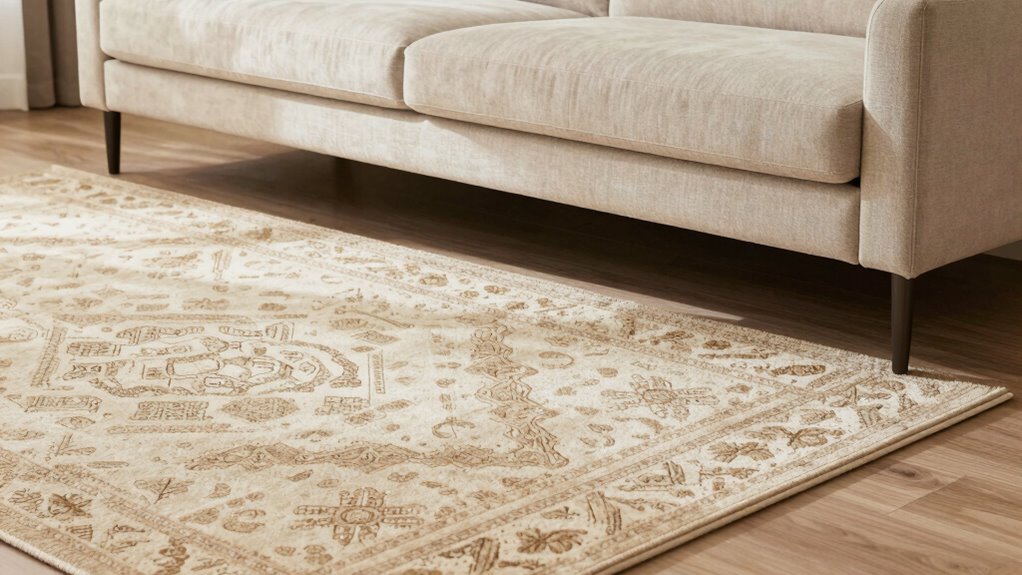

To create a balanced, cohesive look, place the front legs of your furniture on the rug, following the “front legs on” rule. This anchors the space and unifies your furniture and decor. You can break the rule by playing with colors, textures, or placement for added style, but be mindful of maintaining visual harmony. To get it just right, test different arrangements and consider room size and layout—more tips await if you keep exploring.
Key Takeaways
- The “Front Legs On” rule creates visual cohesion by ensuring furniture front legs sit on the rug, anchoring the space.
- Proper rug size and placement enhance balance, defining zones and unifying furniture arrangements.
- Breaking the rule with contrasting colors or textures adds visual interest and personalized style.
- Testing rug placement with templates or tape helps avoid size and positioning mistakes before finalizing.
- Adjust the rule based on room layout, furniture, and design goals to achieve a harmonious, stylish space.

AMADA HOMEFURNISHING 8×10 Washable Area Rug, Low-Profile with Non-Slip Backing & Durable Edge Binding, Vintage Large Rugs for Living Room, Bedroom, Dining Room, Blue
Machine Washable: The short pile design of this washable rug is easy to maintain using an upright vacuum…
As an affiliate, we earn on qualifying purchases.
As an affiliate, we earn on qualifying purchases.
Why the “Front Legs On” Rule Matters for a Cohesive Look
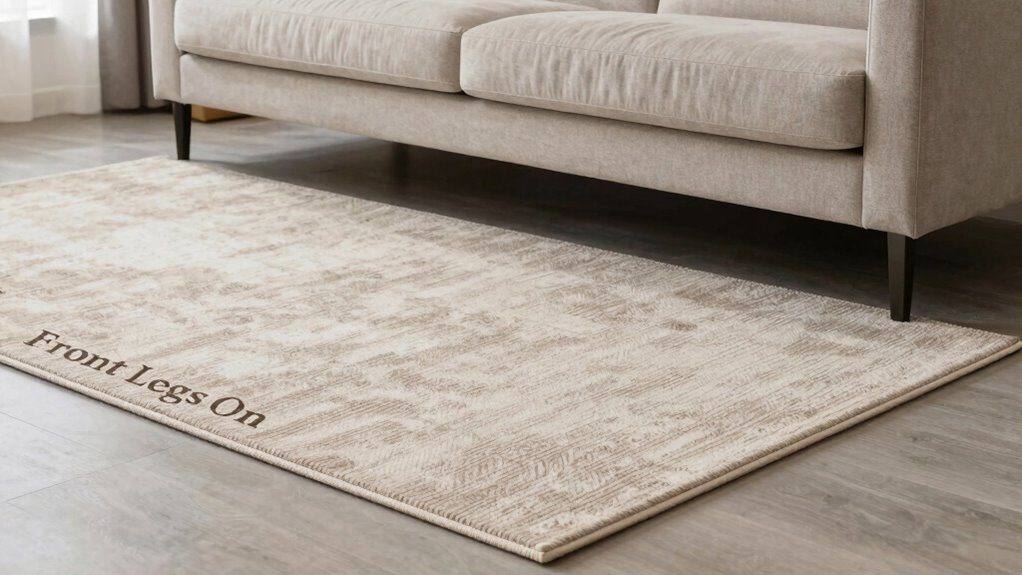
The “Front Legs On” rule is essential because it creates a balanced and cohesive look for your rug arrangement. When you follow this rule, you ensure rug symmetry, which helps unify the furniture and space. It prevents your rug from appearing disconnected or floating awkwardly, making the room feel intentional and well-designed. Additionally, this rule allows you to play with style contrast—such as pairing modern furniture with a traditional rug—without sacrificing harmony. By keeping the front legs of your furniture on the rug, you anchor the space visually, guiding the eye smoothly across the room. Incorporating visual balance principles can also help in creating flexible and dynamic layouts that adapt to your space. This simple principle enhances your overall decor, making everything look coordinated and thoughtfully curated, and embracing design consistency can further elevate the cohesiveness of your room. Recognizing when to break the rule can also introduce a sense of intentionality and creativity, adding personality to your decor.

UERMEI 8×10 Area Rug Living Room Rugs – Washable Neutral Modern Abstract Soft Thin Large Rug Indoor Floor No Slip Rug Carpet for Bedroom Under Dining Table Home Office Decor – Brown Grey
NEUTRAL ABSTRACT RUG: This rug features a unique neutral abstract design that combines the brown and grey color,…
As an affiliate, we earn on qualifying purchases.
As an affiliate, we earn on qualifying purchases.
How to Use the Front Legs On Rule in Different Rooms
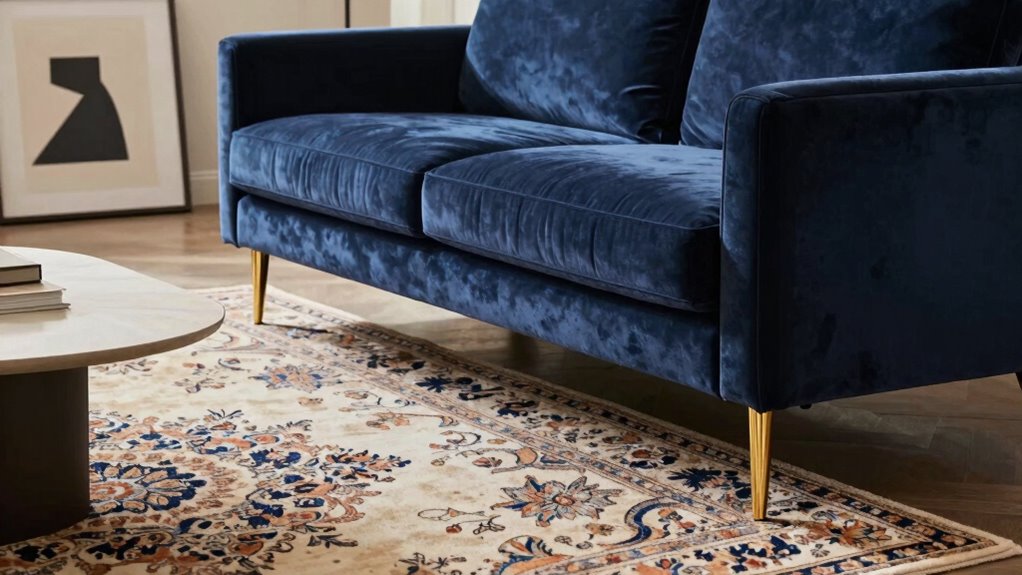
Wondering how to apply the “front legs on” rule across different rooms? This rule works well with various area rug styles, from traditional to modern, helping anchor your furniture and create visual cohesion. In the living room, place the front legs of sofas and chairs on the rug to define the seating area. For dining rooms, ensure all table chairs are on the rug when pulled out. In bedrooms, position the front legs of your bed and bedside tables on the rug for a balanced look. When choosing rugs, consider color coordination—matching or complementing your room’s palette enhances harmony. Adjust the rule based on room size and furniture placement, but always aim for a unified, inviting space. Embracing diversity in design choices can also inspire unique and personalized arrangements that reflect your style. Recognizing different furniture arrangements can help you adapt the “front legs on” rule effectively to suit your space.

GENIMO 8×10 Area Rug Machine Washable Boho Rug for Living Room,Ultra-Thin Low Pile Carpet,Lightweight Indoor Printed Rug,Non Slip Floral Area Rug for Bedroom, Dining Room, Home Office,Brownish Green
Vintage Design: This boho design area rug with vintage-inspired pattern is digitally printed which details can’t be replicated…
As an affiliate, we earn on qualifying purchases.
As an affiliate, we earn on qualifying purchases.
Signs It’s Okay to Break the Rule for a Better Style

While following the “front legs on” rule generally helps create a cohesive look, there are times when breaking it can enhance your space’s style. If your rug’s color contrast or texture adds visual interest, pulling it away from the furniture can make it a focal point. For example, a bold rug color or a textured rug can stand out more if it’s not fully anchored by the furniture. You might also break the rule if your furniture and rug are similar in color, creating a more layered, eclectic look. In these cases, allowing the front legs to sit off the rug can emphasize the rug’s unique texture or vibrant hue, giving your room a more dynamic and stylish appearance. Incorporating rug placement principles can further help you make intentional design choices that elevate your space. Additionally, incorporating car protection and accessories can help preserve your rugs and furniture from everyday wear and tear. Understanding cold sensation and vibration therapy can also inform your approach to creating a comfortable and inviting environment in your home. Moreover, knowing how to properly address water damage issues is essential for maintaining both the aesthetic and longevity of your rugs. Recognizing environmental factors that affect your rug’s condition can help you keep it looking its best over time.

Ophanie Small Rug Upgrade Non Slip Throw Bedside Area Rugs, Fluffy Soft Grey Mini Bedroom Carpet, Affordable Door Entryway Indoor Inside Front Entrance Dog 2×3 Mat, Home Decor Aesthetic, Nursery
Ultra Soft & Non-slip: Featuring a shaggy carpet surface, the Ophanie soft area rug is highly soft with…
As an affiliate, we earn on qualifying purchases.
As an affiliate, we earn on qualifying purchases.
Creative Ways to Break the Front Legs On Rule and Keep Balance

Breaking the front legs on your rug doesn’t have to disrupt harmony if you do it thoughtfully. To maintain balance, consider strategic rug anchoring by placing furniture or decorative objects at the corners or edges. This helps create a visual flow that guides the eye smoothly across the space, even if the rug doesn’t follow the traditional “front legs on” rule. You can also use layered rugs or add a border of smaller mats to anchor the main rug, providing stability and visual interest. Play with asymmetry intentionally—positioning furniture slightly off-center or at angles—to keep the room feeling balanced. These creative tweaks allow you to break the rule while preserving the overall aesthetic and ensuring your space remains cohesive and inviting. Additionally, incorporating dog-friendly design elements can help ensure your space remains functional and safe for your furry friends. Moreover, understanding precious metals can be beneficial if you’re considering alternative investments to diversify your assets and enhance your financial security. Exploring sustainable interior materials can further support eco-conscious living while maintaining style. Being mindful of interior harmony can further help you create a space that feels both dynamic and balanced.
Common Mistakes When Applying the Front Legs On Rule: and How to Avoid Them

One common mistake is misjudging the right rug size, which can make your space look off balance. Overlooking floor flatness can also cause uneven placement and instability. To avoid these issues, measure carefully and check your floor before positioning your rug. Additionally, consulting flooring considerations can help ensure your setup remains secure and properly aligned during installation. Being aware of rug placement techniques can further improve the overall appearance and stability of your arrangement. Incorporating proper installation methods can also help prevent shifting or damage over time. Recognizing DIY safety tips during installation can help prevent accidents and ensure a smooth process.
Misjudging Rug Size
Misjudging the size of your rug is a common mistake that can throw off the entire room’s balance. When it comes to rug placement, choosing an area rug that’s too small or too large can make the space feel awkward or cramped. An undersized rug won’t anchor your furniture properly, while an oversized one can overwhelm the room. To avoid this, measure your space carefully and visualize how the rug will fit before buying. A good rule of thumb is to select a rug that extends beyond the front legs of your furniture, but not so much that it dominates the entire room. Proper rug size guarantees your furniture and the rug work together, creating a cohesive and inviting area. Understanding spatial proportions can help you choose the right rug size for any room. Additionally, considering room layout and furniture placement can further enhance your overall design. Paying attention to visual balance ensures the rug complements your furniture arrangement rather than competing with it.
Overlooking Floor Flatness
Have you ever placed a rug using the front legs on rule only to find it doesn’t sit flat? Floor unevenness is often the culprit. If your subfloor isn’t level, the rug may lift or ripple despite following the rule. Ignoring this can make your rug look unprofessional and create a tripping hazard. To fix this, consider adding rug padding or a rug pad specifically designed for uneven surfaces. Padding helps distribute weight evenly and stabilizes the rug, preventing it from shifting or bunching. Before placing your rug, check the floor for dips or bumps. Address unevenness with a suitable padding solution, ensuring your rug sits flush and looks polished. Don’t overlook floor flatness—it’s key to achieving a clean, safe, and stylish rug placement.
When to Follow the Front Legs On Rule for a Well-Balanced Room

Knowing when to follow the front legs on rule helps create a balanced room that feels cohesive. Consider your room’s layout, the size of your rug, and how your furniture is arranged to determine the best approach. When these elements align, your space will look intentional and well-designed.
Room Layout Balance
The front legs on rule is a helpful guideline for creating a balanced room layout, but knowing when to follow it can make a big difference. When arranging furniture around an area rug, consider how the rug influences room harmony. If the rug anchors the seating area, aligning furniture so the front legs sit on the rug helps unify the space visually. However, if your room feels cluttered or uneven, breaking the rule by pulling furniture slightly away from the rug can improve flow and balance. Focus on creating a comfortable, inviting atmosphere rather than strict adherence. Ultimately, the goal is a cohesive look where furniture and the rug work together to enhance the room’s overall harmony.
Rug Size Selection
Choosing the right rug size is essential for creating a balanced room, especially when deciding whether to follow the front legs on rule. A properly sized rug anchors your furniture and defines the space. For a cohesive look, select a rug that extends enough to accommodate all front legs of your seating, ensuring visual balance. Consider rug thickness; thicker rugs add comfort but may visually shorten the space, so choose accordingly. Color contrast also plays a role—using a rug that contrasts with your flooring can make your furniture stand out more effectively, especially if you follow the front legs on rule. Keep in mind that a larger rug can unify the room, while a smaller one might highlight specific areas. Select a size that complements your room’s proportions and style.
Furniture Arrangement Tips
Follow the front legs on rule when arranging furniture to create a cohesive and balanced look, especially in open-concept spaces. Proper furniture alignment enhances flow and comfort while anchoring your area rugs. Use these tips:
- Anchor with area rugs: Align furniture so the front legs sit on the rug, grounding the space visually.
- Create symmetry: Position matching pieces with their front legs on the same line for harmony.
- Define zones: Use furniture placement to delineate different areas, maintaining front-leg contact for unity.
- Break the rule thoughtfully: When space feels cramped or asymmetrical, adjusting furniture placement can add personality and improve flow without sacrificing balance.
Following these tips ensures your furniture aligns perfectly, creating a welcoming, well-balanced room.
How to Test and Visualize Rug Placement Before You Finalize

Before committing to a rug placement, conducting a test to see how it will look in your space is essential. Use visualization techniques like laying out paper templates or tape to mark the rug’s outline, giving you a clear picture of its size and position. Placement tools such as painter’s tape or masking tape help you visualize boundaries without committing permanently. Move the rug around, trying different positions to see what feels right. Take photos from different angles to compare options easily. This process allows you to assess how the rug interacts with furniture and flow of the room. Testing beforehand guarantees you’re confident in your decision, avoiding costly mistakes and creating a balanced, cohesive look that suits your space perfectly.
Frequently Asked Questions
Can the “Front Legs On” Rule Apply to Non-Rectangular Rugs?
Yes, the “front legs on” rule can apply to irregular shapes and textured surfaces, but you might need to modify it. For irregular shapes, focus on anchoring the front legs to create balance and flow. On textured surfaces, guarantee the rug stays stable and visually appealing without overwhelming the space. Flexibility is key—break the rule when it enhances the overall look and feel of your room.
How Do Rug Sizes Influence the “Front Legs On” Placement?
Your rug size directly impacts how you apply the “front legs on” rule, especially considering the rug shape and furniture style. Smaller rugs may only accommodate the front legs of your furniture, while larger ones can support all legs, creating a cohesive look. For irregular shapes, focus on proportion and flow with your furniture style, adjusting placement to maintain balance and guarantee the rug complements the room’s overall aesthetic.
Is the Rule Suitable for Open-Concept or Multi-Use Spaces?
The “front legs on” rule works well in open-concept layouts and multi-use zones, helping define spaces without overwhelming them. You should consider breaking it if the area feels cluttered or if you want a more relaxed, informal look. Flexibility is key; use the rule as a guideline, but don’t hesitate to deviate when it enhances the flow and functionality of your open spaces.
How Do I Adjust the Rule for Uneven or Textured Flooring?
Think of uneven surfaces and textured flooring as a tricky dance partner. You should adjust the rule by anchoring your rug securely with non-slip pads or rug grippers to prevent slipping. For uneven surfaces, guarantee the rug’s edges lay flat, and consider using a rug pad that molds to the floor’s contours. This way, you maintain the “front legs on” look while safely maneuvering the textured terrain.
Can the Rule Be Adapted for Outdoor or Patio Rugs?
Yes, you can adapt the rule for outdoor or patio rugs. Focus on outdoor durability by choosing weather-resistant materials like polypropylene or synthetic fibers, ensuring your rug withstands the elements. To enhance patio aesthetics, position the front legs of furniture on the rug, but allow for a slight overhang if needed. This approach keeps your space looking inviting while maintaining practicality for outdoor conditions.
Conclusion
Think of your rug as the heartbeat of your room, grounding everything in harmony. When you follow the “front legs on” rule, you’re anchoring your space with steady rhythm. But sometimes, breaking the rule adds a spark of creativity, like a sudden note in a melody. Trust your eye, balance, and intuition—let your style dance freely, knowing that every choice shapes the symphony of your home.