Living with nature means choosing sustainable flooring materials like cork and stone, which help you create a healthier and more eco-friendly home. Cork flooring is made from renewable bark, and eco-friendly finishes guarantee low VOCs, promoting better indoor air quality. Reclaimed stone reduces quarrying impacts while offering durability and natural beauty. Opting for these materials supports recycling and environmentally responsible practices. Keep exploring to discover how these eco-friendly options can transform your living space effortlessly.
Key Takeaways
- Sustainable cork and stone flooring reduce environmental impact through renewable resources and eco-friendly manufacturing practices.
- Cork is harvested sustainably without harming trees, and both materials can be recycled or repurposed at end-of-life.
- Eco-friendly finishes on these floors emit low or no VOCs, promoting healthier indoor air quality.
- Reclaimed stone and recycled cork scraps support waste reduction and circular economy efforts.
- Choosing natural, durable materials aligns with environmentally conscious living and enhances home aesthetics sustainably.

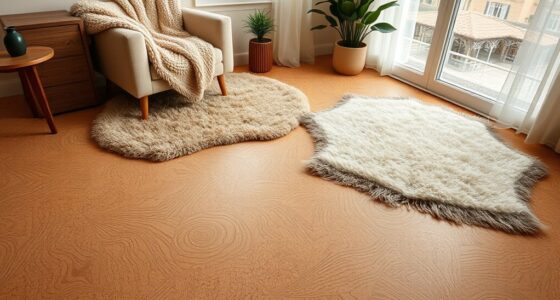
Choosing sustainable flooring materials is an effective way to reduce your environmental impact while enhancing your home’s appeal. When you opt for eco-friendly options like cork or stone, you’re making a conscious decision to support environmentally responsible practices. These materials often come with recycling options that allow you to extend their lifespan or repurpose them at the end of their use, minimizing waste. For example, cork flooring is made from the bark of cork oak trees, which can be harvested sustainably without harming the trees. This renewable resource ensures you’re investing in a material that’s both natural and responsible. Additionally, many cork floors are finished with eco friendly finishes that contain low or no volatile organic compounds (VOCs), reducing indoor air pollution and promoting healthier living spaces. Understanding the Vortex of sustainable choices can further enhance your connection to environmentally conscious living.
Opt for sustainable cork and stone flooring with eco-friendly finishes to reduce waste and support responsible practices.
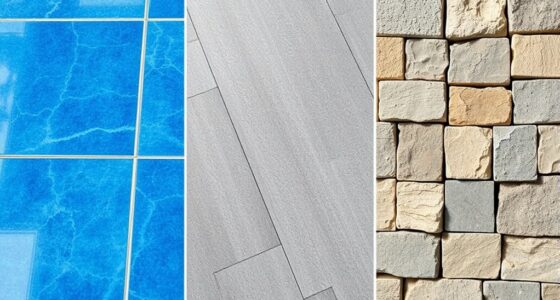
Stone flooring, such as slate or reclaimed marble, is another sustainable choice that emphasizes durability and natural beauty. Because stone is long-lasting, it doesn’t need frequent replacement, reducing the environmental footprint over time. Reclaimed stone, in particular, is an excellent option for those seeking to reuse existing materials rather than contributing to quarrying and mining. When you choose stone, look for options that come with eco friendly finishes—these are coatings or sealants that are free from harmful chemicals, ensuring that your home remains safe and environmentally conscious. Many manufacturers now offer finishes derived from natural ingredients, which not only preserve the stone’s appearance but also align with your sustainable values.
By selecting flooring materials with recycling options, you’re also contributing to a circular economy. Some cork and stone products can be recycled or repurposed at the end of their lifespan, reducing landfill waste. For example, crushed stone can be reused in other construction projects, while cork scraps can be processed into insulation or other products. This approach keeps materials in use longer and lessens your home’s overall ecological footprint. When shopping for sustainable flooring, always inquire about the availability of recycling options and eco friendly finishes. Doing so ensures that your choice supports responsible manufacturing practices and promotes environmental preservation.
Ultimately, sustainable flooring isn’t just about choosing attractive materials; it’s about making a broader impact through informed decisions. Cork and stone exemplify natural, durable options that, when paired with recycling options and eco friendly finishes, offer a thorough approach to environmentally conscious living. This way, you create a beautiful home that respects the planet, enhances your space, and aligns with your values of sustainability.

Eco Cork Foam Floor Underlayment – Floor Padding for Vinyl Plank Flooring, LVP Flooring, Hardwood Flooring, Insulation Roll for Flooring Planks – 250Sq Ft
Waterproof Flooring Underlayment: Features a built-in 6 mil vapor barrier, ideal for underlayment for vinyl plank flooring, laminate…
As an affiliate, we earn on qualifying purchases.
As an affiliate, we earn on qualifying purchases.
Frequently Asked Questions
How Eco-Friendly Are Cork and Stone Flooring Options?
Cork and stone flooring are highly eco-friendly choices because of their recyclability benefits and renewable sourcing. Cork is harvested from cork oak trees without harming them, making it a sustainable resource. Stone, especially when locally sourced, reduces transportation emissions. Both materials help lower your environmental impact, offering durable, natural options that support conservation efforts. By choosing cork or stone, you’re making a positive move toward greener living with sustainable flooring options.
What Maintenance Is Required for Natural Stone Floors?
You need to keep your natural stone floors looking their best with regular cleaning routines, like sweeping and using a damp mop. Avoid harsh chemicals that could damage the stone. When repairs are needed, you should use appropriate repair techniques, such as filling cracks with compatible filler or resealing surfaces to prevent stains. Proper maintenance guarantees your stone floors stay durable, beautiful, and eco-friendly for years to come.
Are Cork Floors Suitable for High-Traffic Areas?
You might worry about durability concerns, but cork floors are surprisingly resilient, making them suitable for high-traffic areas. Imagine walking barefoot on a soft, yet sturdy surface that absorbs sound and adds warmth. Thanks to their design versatility, cork floors blend seamlessly with modern or rustic styles. With proper sealing and maintenance, they can withstand daily wear, offering a sustainable, attractive choice for busy spaces in your home.
How Do Cork and Stone Compare in Cost?
Cork flooring typically costs less than stone, making it a budget-friendly option for many. When you compare the cost, cork usually has lower material prices and easier installation expenses, saving you money upfront. Stone can be more expensive due to higher material costs and complex installation processes. If budget is a concern, cork offers a cost-effective, sustainable choice, while stone adds a luxurious, durable touch with higher investment.
Can These Materials Be Used in Outdoor Applications?
Yes, cork and stone can be used outdoors, but their outdoor durability and weather resistance vary. Cork is naturally resistant to moisture and mold, making it suitable for covered outdoor areas, though it may need sealing for added weather resistance. Stone is highly durable and resistant to weather, making it ideal for exposed outdoor applications. Guarantee proper installation and maintenance to maximize their longevity outdoors.

Art3d Peel and Stick Floor Tile Vinyl Wood Plank 36-Pack 54 Sq.Ft, Brown Stone, Rigid Surface Hard Core Easy DIY Self-Adhesive Flooring
Stylish – Authentic wood looking and grain texture, adding timeless features to your home
As an affiliate, we earn on qualifying purchases.
As an affiliate, we earn on qualifying purchases.
Conclusion
Choosing sustainable flooring like cork and stone means you’re not just making a smart style statement, but also doing your part for the planet. These natural materials are durable, eco-friendly, and add a unique touch to your home. Remember, when it comes to going green, it’s often the little steps that make a big difference. So, don’t wait for a sign—take the plunge and let nature be your guide to a greener, more beautiful living space.

Vermont Natural Coatings PolyWhey Floor Finish – Matte – Quart
ULTRA-DURABLE: High durability proven to protect your floor against chemicals, mar and scratches
As an affiliate, we earn on qualifying purchases.
As an affiliate, we earn on qualifying purchases.

Building Small: Sustainable Designs for Tiny Houses & Backyard Buildings
As an affiliate, we earn on qualifying purchases.
As an affiliate, we earn on qualifying purchases.