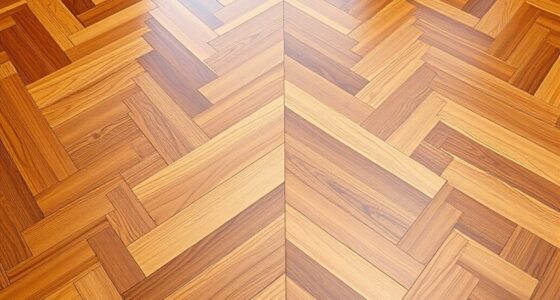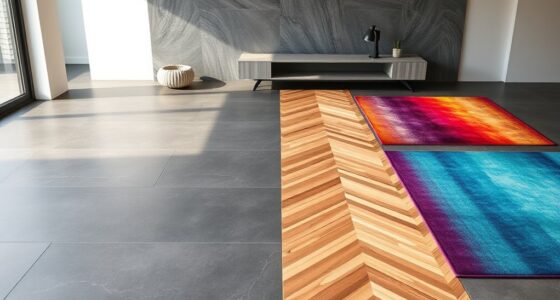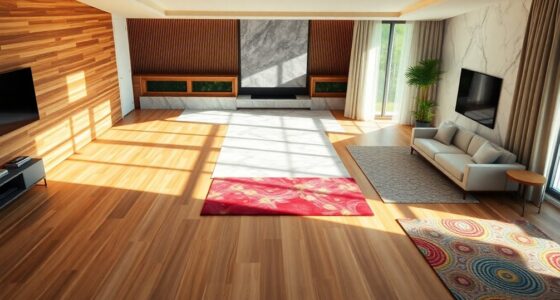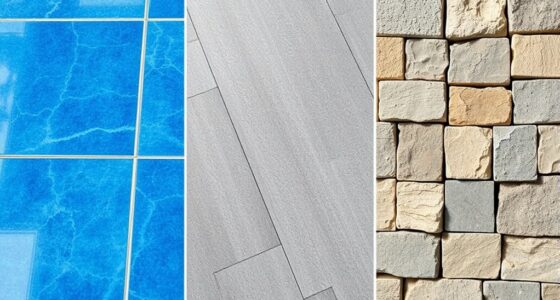
Exploring tile patterns beyond the traditional checkerboard lets you create dynamic and personalized spaces. Geometric arrangements like herringbone, chevron, or honeycomb add movement and visual interest, making small areas look larger or serving as eye-catching focal points. Alternatively, a random layout offers an organic, eclectic vibe by mixing shapes and sizes, perfect for casual or outdoor settings. Discovering these patterns can elevate your design, and if you continue exploring, you’ll find ways to make your space truly unique.
Key Takeaways
- Explore diverse geometric patterns like herringbone, chevron, and honeycomb for dynamic visual effects.
- Incorporate random layouts with mixed tile sizes and shapes for an organic, eclectic look.
- Use precise measurement and dry-laying techniques to ensure accurate and cohesive pattern installation.
- Geometric arrangements can visually expand small spaces and serve as striking focal points.
- Random layouts effectively mask imperfections and add movement, perfect for casual or outdoor settings.

While the classic checkerboard pattern remains a popular choice, there are countless other tile arrangements that can transform your space. Exploring geometric and random layouts opens up a world of design possibilities that go beyond traditional patterns. When you consider these options, it’s essential to understand mosaic artistry and tile installation techniques to achieve a stunning result. Geometric patterns, such as herringbone, chevron, or honeycomb, create a sense of movement and visual interest. These arrangements can make a small room appear larger or add a dynamic focal point to a larger area. By carefully selecting tile shapes, sizes, and colors, you can craft intricate designs that reflect your personal style. The key is to plan your layout meticulously, guaranteeing precise cuts and alignments. Using tile installation techniques like dry-laying tiles beforehand helps visualize the final look and catch potential issues early. Proper surface preparation is vital; a level, clean substrate assures a seamless application, especially when working with complex geometric patterns.
Additionally, understanding architectural significance and preservation techniques can help ensure your tile installation complements the historical context of your space, especially when working in heritage properties.
On the other hand, random layouts embrace a more organic and spontaneous look. Instead of following a strict pattern, tiles are arranged in a seemingly haphazard manner—yet this approach requires expert mosaic artistry to create a cohesive and balanced appearance. When implementing a random layout, you’ll want to select tiles that complement each other in color and texture, avoiding overly uniform or repetitive designs. Mixing different tile sizes and shapes can add depth and visual intrigue, but it also demands precise cutting and fitting. Tile installation techniques such as using spacers and measuring tools become invaluable in maintaining consistent grout lines and avoiding uneven surfaces. Random layouts work beautifully in areas aiming for a relaxed, eclectic vibe, such as kitchens, bathrooms, or outdoor patios. They can mask imperfections and create a sense of movement that draws the eye across the space.
Ultimately, whether you choose geometric precision or a more freeform approach, mastering mosaic artistry and tile installation techniques is imperative. These skills guarantee your chosen pattern is executed flawlessly and stands the test of time. With careful planning, attention to detail, and the right tools, you can create a stunning tiled surface that elevates your space beyond the ordinary. Embrace the challenge, and let your creativity guide you to innovative designs that reflect your unique taste. The possibilities are endless, and with a bit of effort, your space can become a true showcase of tile artistry beyond the traditional checkerboard.
Frequently Asked Questions
How Do I Choose the Right Pattern for Small Spaces?
To choose the right pattern for small spaces, focus on pattern scaling and color coordination. Opt for smaller, simpler geometric or random patterns that won’t overwhelm the room. Light colors can make the space feel larger, while darker hues add depth. Keep the pattern balanced with your room’s color scheme, and avoid overly busy designs. This approach helps create a visually appealing, spacious feel without cluttering your small area.
What Materials Work Best for Intricate Geometric Tile Designs?
You should opt for materials like porcelain or ceramic tiles, as they offer excellent durability for intricate geometric designs. These materials resist chipping and staining, making them ideal for detailed patterns. When choosing colors, coordinate with your existing decor to create a cohesive look. Matte or glossy finishes work well, but guarantee the surface provides enough grip. Overall, selecting durable, color-coordinated materials helps showcase your intricate tile pattern beautifully.
Can Random Layouts Be Customized to Fit Specific Room Shapes?
Yes, you can customize random layouts to fit specific room shapes. You’ll want to create a personalized layout that considers your room’s irregular shape, ensuring the tiles adapt seamlessly. Measure carefully and plan your pattern to accommodate unusual edges or corners. With thoughtful design, you can achieve a cohesive look that complements your space, making the random layout both functional and visually appealing, perfectly tailored to your room’s unique dimensions.
Are There Maintenance Tips for Complex Tile Patterns?
A stitch in time saves nine, so maintain your complex tile patterns by regularly cleaning them with gentle techniques to prevent dirt buildup. Use a soft brush or mop with mild cleaning solutions, avoiding harsh chemicals that can damage the design. Don’t forget to reseal grout periodically to keep it protected and easier to clean. Proper maintenance guarantees your intricate tiles stay vibrant and last longer, saving you time and money.
How Do I Mix Different Tile Patterns Without Clashing?
To mix different tile patterns without clashing, focus on color coordination and pattern contrast. Choose a unifying color palette to tie the patterns together, ensuring they complement rather than compete. Use contrast in pattern size or style to create visual interest, but keep it balanced. You can also add solid-colored tiles as breaks to give the eye a rest. This approach creates a harmonious, eye-catching design that feels intentional and cohesive.
Conclusion
Exploring beyond the checkerboard opens a world of endless possibilities, like revealing a vibrant garden of patterns waiting to bloom. With geometric precision or spontaneous layouts, you can transform any space into a visual symphony. Embrace the diversity and let your creativity dance across the tiles, turning ordinary floors into enthralling stories. Remember, each pattern is a brushstroke—your unique masterpiece in the art of design, waiting to be discovered beneath your feet.