
Before replacing your main living room rug, consider its durability, style, size, and how it fits your indoor environment. Think about fiber options like synthetic or natural, which impact longevity and eco-friendliness. Match the rug’s style to your decor and measure carefully for the right size. Also, factor in maintenance needs and your budget. Paying attention to these details guarantees you choose a rug that lasts and enhances your space—there’s more to discover as you explore further.

Get furniture and decor delivered free — and shop member deals
- Fast, free delivery on millions of items
- Access to Prime Big Deal Days deals on October 6–7
- Prime Video, Amazon Music and more included
Key Takeaways
- Assess your current rug’s durability and whether it withstands daily wear in high-traffic areas.
- Ensure the new rug complements existing furniture, wall colors, and overall decor style.
- Measure your space carefully to choose the right size and consider pile height for maintenance and comfort.
- Prioritize eco-friendly fibers to improve indoor air quality and align with sustainability goals.
- Balance your budget with desired durability and style, and plan a maintenance routine to extend your rug’s lifespan.
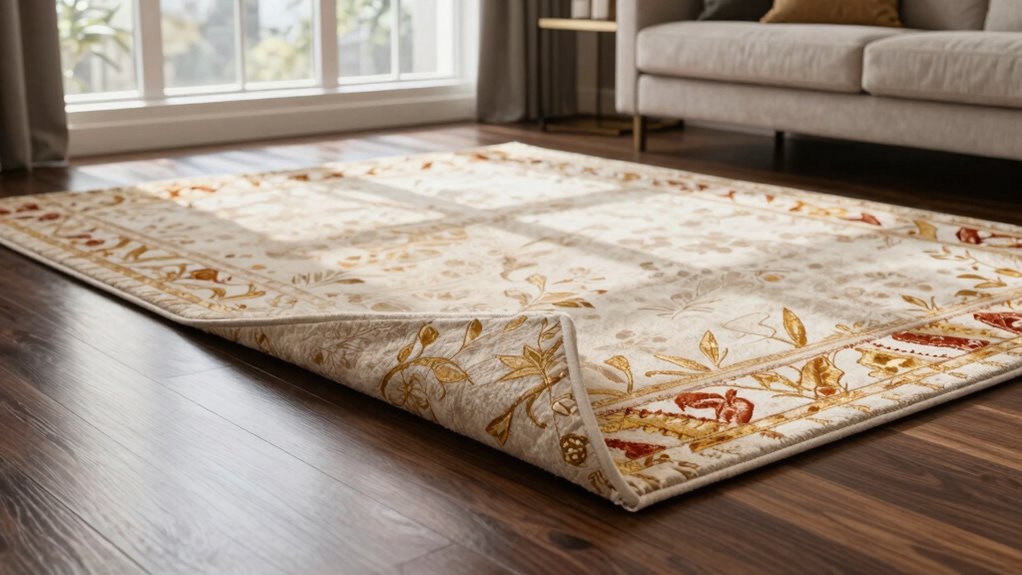
Replacing your main living room rug can refresh the entire space, making it feel new and inviting. Before you head out to pick a replacement, it’s vital to consider a few key factors to make sure your new rug fits perfectly into your home. One of the first things to evaluate is fiber durability. Since your living room is a high-traffic area, you want a rug that can withstand daily wear and tear without looking worn out quickly. Synthetic fibers like nylon and polypropylene are known for their durability and stain resistance, making them ideal options for busy households. Natural fibers like wool offer resilience and a plush feel but might require more maintenance. Knowing how each fiber type performs helps you select a rug that will stay beautiful over time, saving you money and effort in the long run. Additionally, understanding fiber durability can help you choose a rug that aligns with your lifestyle and environmental values.
Choosing durable fibers like nylon or wool ensures your living room rug stays beautiful in high-traffic areas.
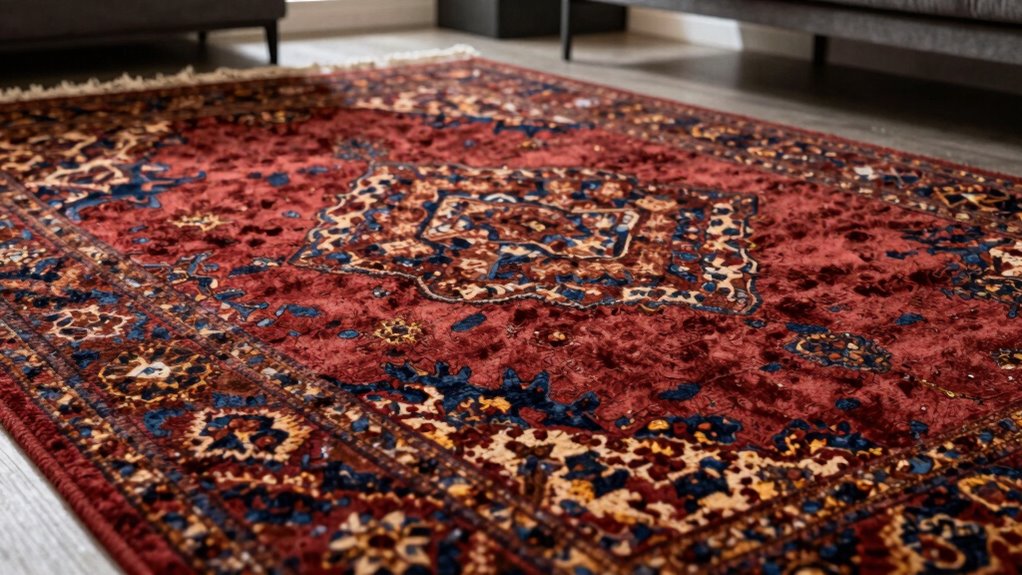
Next, think about style coordination. Your new rug should complement your existing furniture, wall colors, and overall decor style. If your living room features modern, sleek furniture, opt for a rug with clean lines and contemporary patterns. For a more traditional space, ornate designs or Persian patterns might be a better fit. The color palette of the rug should harmonize with your room’s hues to create a cohesive look. If your furniture is neutral, you can add a splash of color with a vibrant rug, or choose a subtle pattern for a more understated effect. Remember, the rug is a foundation piece that can either anchor your decor or serve as a statement, so selecting one that aligns with your style ensures a balanced, inviting atmosphere. Considering kitchen air quality is also worthwhile, as rugs can impact indoor air if not chosen carefully, especially in homes with pets or allergies. Choosing rugs made from eco-friendly fibers can contribute to healthier indoor environments and sustainability. Furthermore, opting for natural fibers can often enhance the overall aesthetic and comfort of your living space.
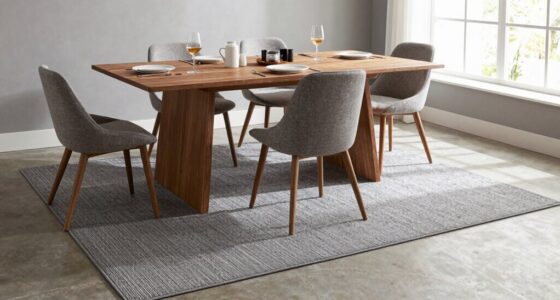
Size is another vital aspect to consider. A rug that’s too small can make your space appear disjointed, while one that’s too large might overwhelm the room. Typically, you want the rug to extend under key furniture pieces like the sofa and chairs, creating a unified look. Measure your space carefully before shopping, and consider how much of your flooring you want to showcase. Additionally, think about the rug’s pile height and texture. Low-pile rugs are easier to clean and are less likely to trap dust, making them suitable for households with allergies or pets.
Finally, don’t forget about budget and maintenance. While investing in a high-quality rug can pay off in durability and style, it’s important to balance your desires with what’s practical. Regular vacuuming and prompt stain removal can extend your rug’s life, regardless of its fiber type. By keeping these considerations in mind, you’ll be well-equipped to choose a new living room rug that not only updates your space but also stands the test of time.
durable high-traffic living room rug
As an affiliate, we earn on qualifying purchases.
As an affiliate, we earn on qualifying purchases.
Frequently Asked Questions
How Often Should I Replace My Living Room Rug?
You should replace your living room rug every 5 to 15 years, depending on its material and maintenance. For example, wool rugs tend to last longer with proper care, while synthetic ones may wear out sooner. Regular maintenance tips like vacuuming, spot cleaning, and rotating the rug can extend its lifespan. Keep an eye on signs of wear, stains, or odors to decide when a replacement is necessary.
What Is the Best Way to Clean a New Rug?
To clean your new rug effectively, start by vacuuming regularly to remove dust and maintain its appearance. For stain removal, act quickly with a gentle blot using a mixture of mild detergent and water; avoid rubbing, which can damage fibers. Always test cleaning solutions on a small area first. Proper vacuum maintenance and prompt stain removal help keep your rug looking fresh and extend its lifespan.
How Do I Choose the Right Rug Size for My Space?
Think of Goldilocks choosing her porridge—your rug size should feel just right. Measure your living room’s dimensions, leaving at least 18 inches of space around the edges. Opt for a rug material suited to your lifestyle, and choose a color that complements your furniture for seamless color coordination. A properly sized rug anchors the space, making it feel balanced and inviting without overwhelming or underwhelming the room.
Can I Layer a New Rug Over My Old One?
Yes, you can layer a new rug over your old one, but use rug padding to prevent slipping and add cushioning. Make certain the old rug is clean and flat to avoid bumps. Use layering techniques by choosing a rug with a complementary size and style to create visual interest. Just confirm the bottom rug is secure and flat, and the overall setup adds to your room’s aesthetic without feeling cluttered.
Are There Eco-Friendly Rug Options Available?
Yes, eco-friendly rug options are available. You can choose rugs made from sustainable fibers like jute, seagrass, or organic wool, which reduce environmental impact. Look for rugs dyed with eco-friendly dyes, avoiding harsh chemicals and toxins. These choices help minimize your carbon footprint and support sustainable practices. By selecting eco-conscious rugs, you contribute to a healthier planet while enjoying stylish, durable flooring in your living room.
Conclusion
Replacing your main living room rug can instantly refresh your space, making it feel new and inviting. Remember to think about size, material, and style to match your decor and lifestyle. Did you know that a well-chosen rug can improve indoor air quality by trapping dust and allergens? Investing in the right rug not only elevates your home’s aesthetic but also contributes to a healthier environment. So, take your time and choose wisely—you’ll enjoy your updated space for years to come.
Fall Picks
fall essentials
As an affiliate, we earn on qualifying purchases.