
TL;DR
Interior designer Yoko Kloeden describes four Japanese-inspired sofa features that can make a room feel less crowded: a low seat, visible space beneath the frame, slimmer cushions and a form sized to the room. The advice is design guidance, not a guarantee that a particular sofa will make every space look larger.
Interior designer Yoko Kloeden has outlined four features of Japanese-inspired sofas that can lend a room a cleaner, more open appearance: low seating, an open base, slimmer upholstery and a form scaled to the space. The advice is aimed particularly at small living rooms, where a sofa’s height and visual bulk can affect how much of the room remains visible.

Get furniture and decor delivered free with Prime
- Fast, free delivery on millions of items
- Prime Video, Amazon Music and more included
- Member-only deals all year
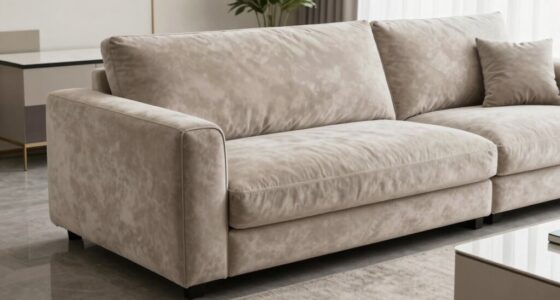
Kloeden says Japanese sofas often sit lower than Western-style models, at about 38 centimetres (15 inches) from floor to seat. She argues that a lower seating position leaves more wall visible above the sofa and can make a ceiling seem higher. She also connects the low profile to Japanese traditions of living close to the floor on tatami. The height figure is a general description, not a standard that applies to every sofa.
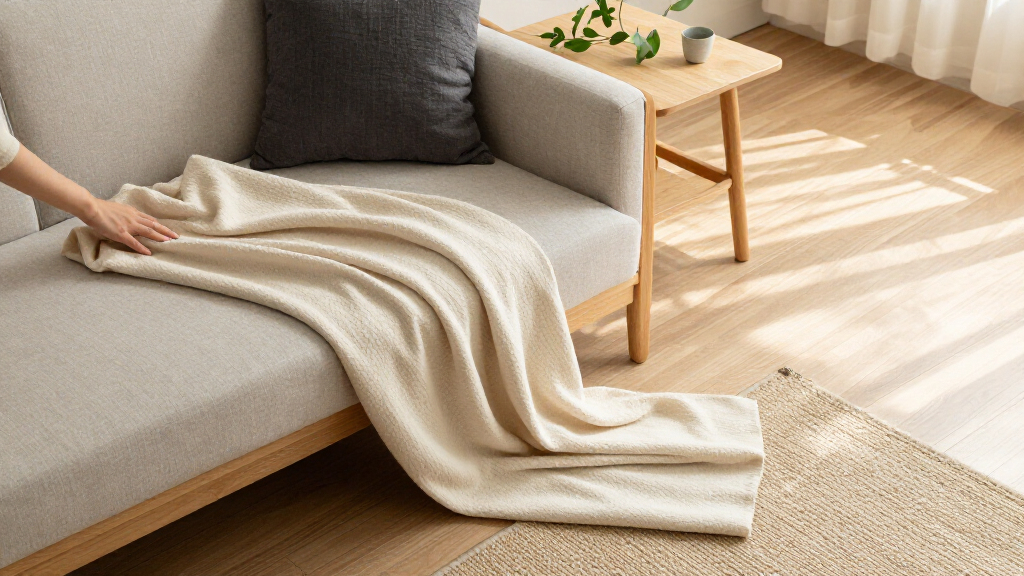
A second feature is clearance beneath the sofa. Kloeden says some open-base sofas from Time & Style leave about 14 to 15 centimetres between the frame and floor. Seeing flooring and light continue beneath the furniture can make it appear less like a solid block, she says. She also recommends looking at the upholstery: thinner seat and back cushions, with shaped rather than heavily padded arms, can reduce a sofa’s visual bulk.
The remaining guidance concerns back height and overall footprint. A low back can preserve a sightline across a room, while a taller one may work as a divider in an open-plan layout. Kloeden favors choosing a single sofa over a sectional or multiple smaller pieces when that better suits the room, while noting that modular designs can help when a more complex arrangement is needed.
Sofas for a cleaner feel Four proportions to consider
Interior designer Yoko Kloeden outlines features that may help small rooms feel more open. They are design considerations, not a guarantee that a room will look larger.
Four features to compare
Check how the sofa’s proportions affect visible floor, sightlines and the room’s overall balance.
Keep more wall visible
A lower profile may leave more wall above the sofa and make the ceiling seem higher.
Let the floor show
Visible flooring and light beneath the frame can make it feel less like a solid block.
Reduce visual bulk
Thinner cushions and shaped arms can give upholstery a less bulky appearance.
Fit the layout
A low back can preserve sightlines; a taller one may divide an open-plan area.
Choose the right arrangement
Consider what the room needs before settling on a sofa shape.
- May create a more balanced composition.
- Can suit a room where several pieces would feel crowded.
- Can help when a more complex arrangement is needed.
- Options may include different arms, backs or an extended side table.
Before you buy
Compare real dimensions and how each model feels in the intended room.
- Measure the space and compare sofa height, width and floor clearance.
- Check cushion depth and whether the back suits the room’s sightlines.
- Test comfort where possible and consider who will use the sofa.
How Sofa Proportions Change a Room
The advice matters for people furnishing small or open-plan rooms, where a bulky piece can interrupt sightlines or take up a large share of the visible floor. Lower seating and an open base may help a sofa feel less imposing; choosing an appropriate back height can also preserve views or create separation between areas.
These are design considerations, not measured guarantees. A low, narrow sofa will not automatically make a room feel larger, and comfort, the number of people using it, access, and the room’s layout remain relevant. The practical point is to consider the sofa’s proportions and role before selecting its width or style.
Products Worth Considering

Samsung 65-Inch S90H OLED 4K Smart TV Bundle with HW-B630F Soundbar, Subwoofer, and Screen Cleaner (2026)

Samsung 55-Inch S90H OLED 4K UHD Smart TV Bundle with Full-Motion Mount and Surge Protector

Shark PowerPro Reveal Plus Cordless Stick Vacuum, Charcoal (IZ376H)
As an affiliate, we earn on qualifying purchases.
Four Features to Check Before Buying
Kloeden’s recommendations begin with the base. A sofa on legs allows more of the floor to remain visible beneath it than one whose frame reaches the floor around its perimeter. She cites Time & Style designs with roughly 14 to 15 centimetres of clearance, but that measurement describes examples rather than every Japanese-inspired model. Buyers can compare actual floor clearance and frame proportions in person or in product specifications.
Next, compare cushion depth and the sofa’s overall height. Kloeden gives approximate dimensions of 11 centimetres for a seat cushion and 16 centimetres for a back cushion as examples of slimmer upholstery. These measurements are not presented as universal specifications. She says a low back suits a room where an open view is wanted, whereas a taller back can help define a zone when the sofa is not against a wall.
Finally, consider whether the room needs one complete sofa or a modular arrangement. Kloeden says a single sofa can make for a more balanced composition than fitting in several pieces. She points to Time & Style’s Horizon of the Floating Layer as an example of modular choices, including configurations with or without arms, a back or an extended side table. Product names and examples illustrate the advice; they do not establish that one model is suitable for every home.
“They sit lower than Western ones at around 38 cm (15 in) from floor to seat, and those few centimetres change the room.”
— Yoko Kloeden, interior designer
What the Design Advice Cannot Establish
The guidance does not provide comparative testing showing how much larger a room appears with a Japanese-inspired sofa, or how many buyers find slimmer cushions equally comfortable. The sofa heights and cushion measurements are presented as examples, not a definition or required specification for the category.
It is also not clear that all models described as Japanese-inspired share these traits. The right dimensions depend on a room’s measurements, the sofa’s intended use and personal preferences. No independent product evaluations, prices or availability details are included.
Measure the Room and Compare Models
For shoppers, the next step is to measure the intended space and compare seat height, overall height, cushion depth and clearance beneath each frame. Check whether a low or high back better fits the room’s sightlines, and test seating comfort where possible. Product specifications and showroom examples can help establish whether a particular design fits both the room and its occupants.
No product launch or follow-up announcement is described. The immediate takeaway is a set of criteria to use during sofa selection, rather than a report of a new design standard or a change to the furniture market.
Source: rss
Key Questions
What makes a sofa Japanese-inspired in this advice?
The features discussed are low seating, an open base, slimmer cushions and proportions suited to the room. They are design traits, not stated requirements for every sofa described as Japanese-inspired.
How high is the seat on the examples discussed?
Kloeden gives about 38 centimetres (15 inches) from floor to seat as a typical comparison. The article does not say that all Japanese-inspired sofas use this height.
Why leave space under a sofa?
Kloeden says visible floor and light beneath an open-base sofa can make its frame look less like a solid block. The effect will depend on the room, sofa and lighting.
Should I choose a low-backed sofa?
A low back may keep sightlines open, while a higher back can help divide an open-plan space. The choice depends on the sofa’s position and the role it needs to play.
Does one sofa always work better than a sectional?
No. Kloeden recommends considering a single sofa when it creates a more balanced fit, but modular or sectional seating may be appropriate when the room needs a different shape or more seats.
Source: livingetc.com