TL;DR

Get furniture and decor delivered free with Prime
- Fast, free delivery on millions of items
- Prime Video, Amazon Music and more included
- Member-only deals all year
A Hunker report describes a beginner-friendly craft that covers empty prescription bottles with twine to make small decorative containers. The project uses hot glue and a lighter to finish loose fibers; it is intended for faux flowers, potpourri or seasonal decor, not for storing medicine or food.
A Hunker craft report describes a video by YouTube creator @lolidscreations that turns empty prescription bottles into small, twine-wrapped decorative containers. The project repurposes an otherwise disposable plastic item for display with faux flowers, potpourri or seasonal decor; the report presents it as a simple craft for beginners, not as a method for making containers safe for medicine or food.
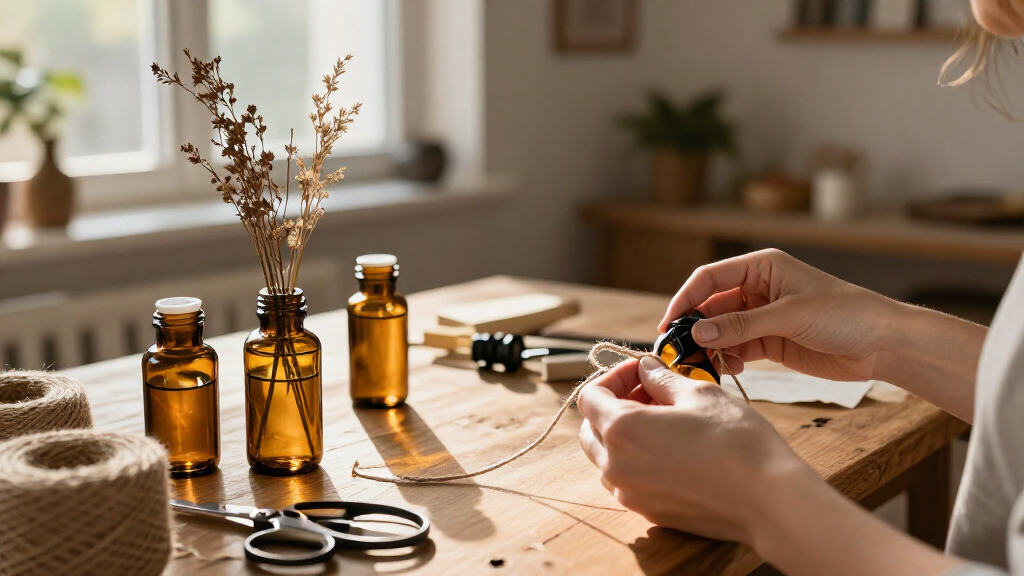
The materials listed are an empty prescription bottle, jute twine, hot-glue gun and lighter. Before wrapping, the tutorial calls for removing the bottle’s label and adhesive residue, using a solvent such as rubbing alcohol or nail polish remover. The twine is then glued at the center of the bottle’s base and wound outward in a spiral, with additional glue applied as the wrapping moves up the sides.
The report says the creator advises using small amounts of glue to limit seepage and pressing the strands close together to avoid gaps. At the bottle opening, the twine can be wrapped around the inside edge to conceal the plastic. The remaining end is cut and glued down inside the neck, and a lighter is used to singe stray fibers.
For a decorative finish, the tutorial adds a braided length of twine around the neck, secured with hot glue. Hunker also describes optional additions such as ribbon, lace, charms, pompoms, buttons or faux flowers. The report suggests combining twine colors for a multicolored or ombré appearance, but does not specify measurements, a completion time or a cost for the materials.
A Small-Scale Reuse Craft
The project offers a way to reuse an empty plastic bottle as a display item instead of immediately placing it in the recycling or waste stream. Its modest scale and short list of supplies may appeal to people looking for a low-cost craft using materials they already have, though the source does not provide a price comparison or measure how much waste the project diverts.
The finished container is described for decorative contents, including artificial flowers and potpourri. The twine covering changes the bottle’s appearance, but it does not make the underlying plastic suitable for other uses. Readers should not treat the craft as a way to store medication, food, liquids or items that require a clean, sealed container.
There are also practical safety considerations: the steps use hot glue, a solvent and an open flame. The source gives craft instructions but does not detail safety precautions. Anyone attempting it should work in a ventilated area when using solvent, follow product labels, protect hands and work surfaces from hot glue, and keep the flame away from glue, paper, fabric and other flammable materials.
prescription bottle craft supplies
As an affiliate, we earn on qualifying purchases.
As an affiliate, we earn on qualifying purchases.
From Medicine Container to Ornament
The supplied Hunker report is about a DIY tutorial, rather than a new product, policy or formal recycling initiative. It identifies the creator’s YouTube video as the source of the wrapping method and describes a bottle being covered from its base to its neck, then finished with a braided twine band.
The original container is a prescription bottle, so it may have held medication and may carry a patient’s name or pharmacy details on its label. The report instructs readers to remove labels and residue but does not describe a particular privacy or medication-disposal procedure. A safer preparation step is to make sure the bottle is empty and remove or obscure identifying information; unused or expired medicines should be handled according to local pharmacy or public-health disposal guidance rather than poured out or placed loose in household waste.
The report mentions that jute twine is available in different colors and that other embellishments can be added. Those are customization suggestions, not requirements of the tutorial. No testing, durability claim or environmental assessment is supplied.
“The project is presented as a simple craft suitable for a beginner DIYer.”
— Hunker’s report, describing the tutorial by @lolidscreations
Limits of the Craft Instructions
The supplied material does not give the video’s publication date, a direct transcript, exact bottle dimensions, twine length, glue quantity or an estimated project duration. It also does not say whether the finished item has been tested for durability, moisture exposure or repeated handling. The instructions support describing it as decorative storage, but not as a watertight vase or a container for food, drink or medicine.
The report does not explain how to dispose of medication that may remain in a bottle, or offer detailed safety guidance for using solvents, hot glue and a lighter. Those points should not be inferred from the craft directions. The most appropriate disposal option for unused medication can vary by location and product, so readers should consult a pharmacist or local disposal program.
Before Making the Bottle Decor
The report describes an individual craft tutorial and does not announce a follow-up, product launch or broader program. A reader wishing to try the project can follow the creator’s video as presented by Hunker, first making sure the bottle is empty and free of personal information. Any remaining medication should be dealt with through locally recommended disposal channels before the bottle is reused.
For the craft itself, prepare the work area before using adhesive or flame, follow the labels on all products, and keep children and flammable materials away from the lighter and hot glue. Once wrapped, the bottle is best treated as a dry decorative holder. The source does not establish how the covering will hold up over time or whether the finished item can be cleaned safely.
Key Questions
What is the craft shown in the report?
It covers an empty prescription bottle with twine and adds a braided band around the neck to create a small rustic-style decorative container.
What supplies does the project use?
The listed supplies are an empty bottle, jute twine, a hot-glue gun and a lighter. Optional decorations include ribbon, lace, charms, buttons or faux flowers.
What can the finished bottle hold?
The report suggests faux flowers, potpourri or seasonal decor. It does not establish that the bottle is watertight or suitable for food, drink or medicine.
How should a bottle be prepared before reuse?
Make sure it is empty and remove label residue as the instructions describe. Remove or obscure personal information, and follow pharmacist or local guidance for disposing of any unused medicine rather than reusing the bottle with medication inside.
Are there safety concerns?
The method uses solvent, hot glue and an open flame. Follow product instructions, work with ventilation when using solvent, protect hands and surfaces, and keep flame away from flammable materials and glue.
Source: rss
Halloween Picks
halloween
As an affiliate, we earn on qualifying purchases.