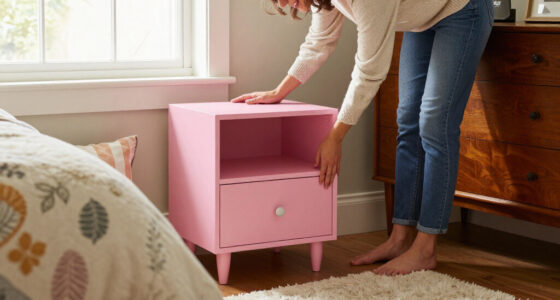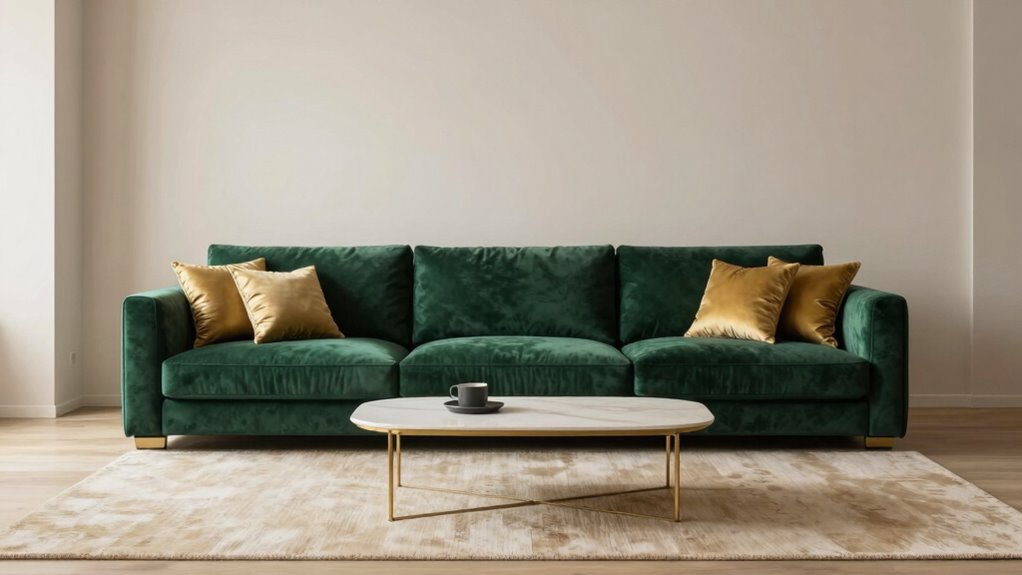

To prevent statement furniture from overpowering your room, focus on color coordination, balancing bold pieces with neutral or subdued tones. Use strategic placement and scale pieces appropriately for your space, avoiding clutter and competition. Incorporate complementary accessories like rugs or artwork that echo the statement item’s colors, and highlight it subtly with well-placed lighting. Maintaining visual harmony guarantees your statement piece enhances your space rather than dominates it—discover more tips on achieving perfect balance.

Get furniture and decor delivered free — and shop member deals
- Fast, free delivery on millions of items
- Access to Prime Big Deal Days deals on October 6–7
- Prime Video, Amazon Music and more included
Key Takeaways
- Balance the statement furniture with neutral or subdued surrounding decor to prevent visual overpowering.
- Use appropriate scale and placement to ensure the piece complements rather than dominates the space.
- Incorporate cohesive color accents that echo the statement piece to create harmony.
- Keep other furniture and accessories simple to highlight the statement item without clutter.
- Use targeted lighting to draw attention subtly without making the statement furniture feel overwhelming.
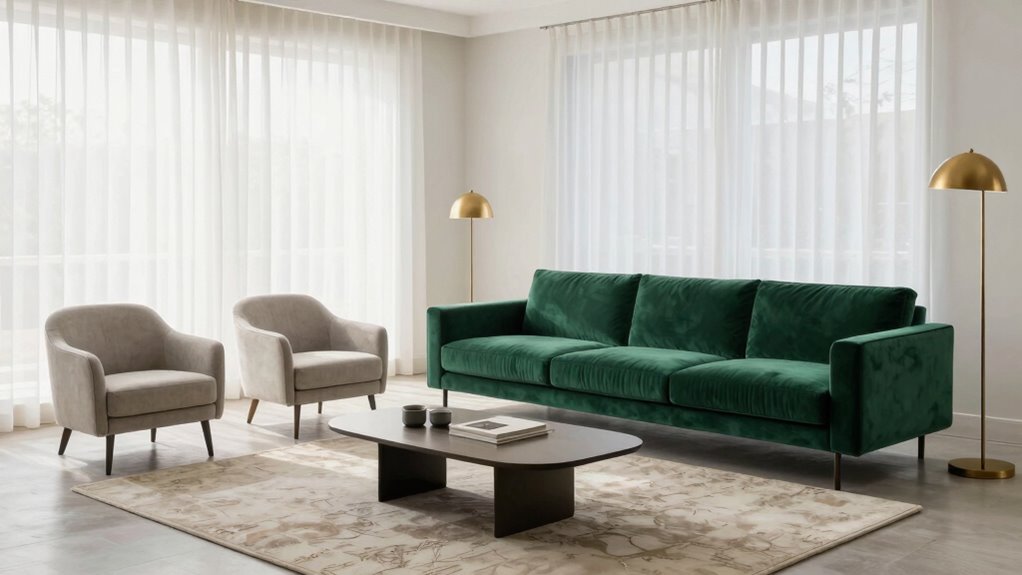
Statement furniture can add bold character to a room, but if you’re not careful, it can also overwhelm the space. The key to balancing its impact lies in thoughtful color coordination and effective space planning. You want your statement piece to stand out, not dominate, so start by choosing colors that complement the rest of the room. If your walls and other furniture are neutral, a statement chair or sofa in a vibrant hue or striking pattern can become the focal point without clashing or creating visual chaos. Conversely, if your room already has bold colors, opt for a statement piece with a more subdued palette to avoid overwhelming the space.
Space planning plays an essential role in integrating statement furniture seamlessly. Before bringing the piece in, consider the room’s size and layout. For smaller rooms, a large statement piece can feel cramped, so scale matters. Position the furniture where it naturally draws the eye, but also leave enough open space around it so the room doesn’t feel crowded. You want to create a visual balance where the statement piece anchors the room without blocking pathways or feeling overpowering. Sometimes, placing a statement piece off-center or at an angle can help it serve as a focal point while maintaining harmony. Additionally, understanding room proportions can guide you in choosing the right size and placement for your statement furniture. Being mindful of visual weight can further help in creating a balanced and inviting space. Incorporating visual hierarchy can also enhance the overall cohesion and prevent the statement piece from overshadowing other elements. Paying attention to spatial relationships ensures that the furniture complements rather than competes with other features. Adding some proportionate accessories or decorative elements can further reinforce the balance.
Another way to prevent statement furniture from taking over involves layering and accessorizing strategically. Use rugs, throw pillows, or artwork that echo the color scheme of the statement piece. These accents create a cohesive look, softening the boldness and guiding the eye smoothly across the space. Keep other furniture simple and understated. Minimalist designs and neutral tones in tables, chairs, and storage allow your statement piece to shine without creating competition.
Lighting also influences how your statement furniture fits into the room. Proper lighting accentuates its features without casting harsh shadows or making it feel out of place. Use spotlights or accent lamps to highlight the piece, but avoid overly bright or direct lighting that can make the furniture seem even more prominent. Thoughtful lighting design can transform the space, creating a welcoming ambiance that balances the statement piece.
Ultimately, balancing statement furniture involves a mix of thoughtful color coordination, precise space planning, and subtle accessorizing. By making intentional choices about placement and color, you can enjoy a bold, eye-catching piece that enhances your room’s character without overwhelming it. This approach guarantees your statement furniture remains the star, but in a way that complements the overall harmony of your space.
statement furniture accent chair
As an affiliate, we earn on qualifying purchases.
As an affiliate, we earn on qualifying purchases.
Frequently Asked Questions
Can Statement Furniture Work in Small Rooms?
Yes, statement furniture can work in small rooms if you focus on minimalist decor and space optimization. Choose a bold piece that complements your overall decor without overwhelming the space. Keep surrounding furniture simple and uncluttered to balance the look. By carefully selecting and positioning your statement piece, you create a focal point that adds personality without sacrificing functionality or making your small room feel crowded.
What Colors Complement Bold Statement Pieces?
To complement bold statement pieces, choose subtle color palettes like soft neutrals or pastels that let the furniture stand out. Incorporate accent colors through accessories like cushions, rugs, or artwork to add visual interest without overwhelming the space. These choices create a balanced look, ensuring your statement furniture remains eye-catching yet harmonious within the room. Stick to a cohesive color scheme to keep the overall aesthetic stylish and inviting.
How Can I Balance Multiple Statement Furniture Items?
To balance multiple statement furniture pieces, focus on strategic furniture placement that creates harmony without clutter. Use room proportions to your advantage, ensuring each piece has enough space to stand out without overwhelming the room. Arrange furniture so that bold items are focal points, complemented by more subdued accessories and neutral backgrounds. This approach keeps the room feeling cohesive and prevents any one piece from dominating the space.
Are There Specific Styles That Clash With Statement Furniture?
Think of your statement furniture as the lead singer in a band—some styles, like ultra-modern or ornate Victorian, can clash if the rest of your decor acts like backup singers. To achieve style harmony, choose decor pairing that complements your statement piece’s design. Avoid mixing styles that scream for attention differently; instead, aim for a cohesive look where each element supports the star, creating a balanced, harmonious room.
How Often Should I Update Statement Furniture?
You should update your statement furniture every few years, especially if your style preferences change or the pieces show signs of wear. When considering furniture placement, guarantee the piece remains a focal point without overpowering the room. Also, pay attention to material durability; investing in sturdy materials means your statement furniture stays stylish longer, reducing the need for frequent updates and helping keep your space balanced and inviting.
Conclusion
By balancing bold statement furniture with subtle accessories and neutral tones, you naturally create harmony in your space. It’s funny how a simple lamp or a cozy rug can make all the difference, grounding your room and letting your statement piece shine without overwhelming. Sometimes, it’s these little touches that unexpectedly bring everything together, reminding you that style and comfort go hand in hand. After all, your perfect room isn’t just about what stands out, but what feels just right.
Evergreen bestsellers Picks
bestsellers
As an affiliate, we earn on qualifying purchases.