TL;DR
An Apartment Therapy article by Sarah Lyon reports that three interior designers identified five common decorating habits that can make a home feel less personal or poorly styled. Their suggestions focus on scale, quality, function and choosing objects that reflect the people who live there.
Apartment Therapy has published a guide outlining five decorating habits that three interior designers say can make a home feel less considered or less personal, including hanging many small artworks, using limp throw pillows and turning book spines toward the wall. The designers recommend making choices around scale, comfort and personal meaning rather than filling every surface with similar or generic objects.

Get furniture and decor delivered free with Prime
- Fast, free delivery on millions of items
- Prime Video, Amazon Music and more included
- Member-only deals all year
The article, written by Sarah Lyon, draws on comments from designers Mariella Cruzado, Tiffany Skilling and Pallavi Kale. Its advice is presented as professional opinion about styling, not as a measured assessment of how homes are decorated or how visitors respond to them.
Cruzado says a wall crowded with small art can feel out of scale. She suggests using fewer, larger pieces as focal points and considering paint if art is being used to compensate for a wall color the homeowner dislikes. Skilling says thin pillow fabrics and underfilled inserts can make cushions look limp. Her alternative is to use fewer, better-filled pillows while keeping enough room for people to sit comfortably.
Skilling also recommends mixing personal or original art with other work instead of relying entirely on mass-produced prints. Kale argues against hiding book titles, saying visible spines make shelves more useful and can reveal a homeowner’s interests. For shelf objects, Kale and Skilling advise mixing personal items with decor instead of repeating the same trendy formula across every shelf.
Is Your Home Making These 5 Decorating Mistakes? <span class=”hz-grad>Five habits to rethink
Three interior designers share ways to make rooms feel more comfortable, useful and personal. Their advice is professional opinion, not a measured survey.
Give art room to anchor
Consider the wall’s scale before filling it with small pieces.
- Many small artworks scattered across a wall
- Choose fewer, larger focal pieces
- Consider paint if the wall color is the concern
Make comfort count
Thin fabric and underfilled inserts can look limp.
Use fewer, well-filled cushions while leaving room to sit.
Choose art with meaning
A room need not rely entirely on mass-produced prints.
Build gradually
Look to flea markets, craft fairs, local galleries or online marketplaces.
Show what matters
A child’s drawing or a small original work can add character.
Let shelves work for you
Useful displays reveal interests instead of repeating a formula.
| Habit | Alternative |
|---|---|
| Turn books backward | Show titles so books are easy to find |
| Repeat the same trendy setup | Mix books and decor with meaningful objects |
How Personal Choices Shape a Room
The advice matters to readers because it treats decorating as a set of practical decisions rather than a requirement to buy a complete new room. Several suggested changes involve editing what is already on display: taking down some small pictures, replacing or restuffing worn pillows, showing book titles and changing how shelf objects are arranged.
The designers’ shared point is that a home can feel generic when its objects appear chosen only to fill space or follow a repeated trend. Personal art, a useful bookshelf and objects tied to a memory or interest can make a room feel more connected to the people who live there. That does not mean every item must be expensive or rare: Skilling specifically says a child’s drawing or a small original work can bring more character than a generic print.
The piece also leaves room for individual taste. Its recommendations are not formal design rules, and a homeowner may prefer small art, minimalist shelves or a coordinated set of accessories. The practical test implied by the designers is whether the arrangement suits the room, functions as intended and feels personal to its occupants.
Products Worth Considering

Roborock Q10 S5+ Robot Vacuum and Mop with Self-Emptying Station

Levoit Core 600S-P Smart Air Purifier for Large Rooms up to 2933 ft²

Levoit Eleva 300X Air Purifier with Fully Sealed HEPA Filtration and Smart Control
As an affiliate, we earn on qualifying purchases.
The Five Styling Habits Identified
The article groups the advice into five areas. First, Cruzado cautions against displaying too many small artworks without variation in scale. She says that scattered small pieces may not anchor a wall, particularly if the homeowner is trying to avoid repainting. Her suggested fix is to consider paint and then choose fewer, more substantial works.
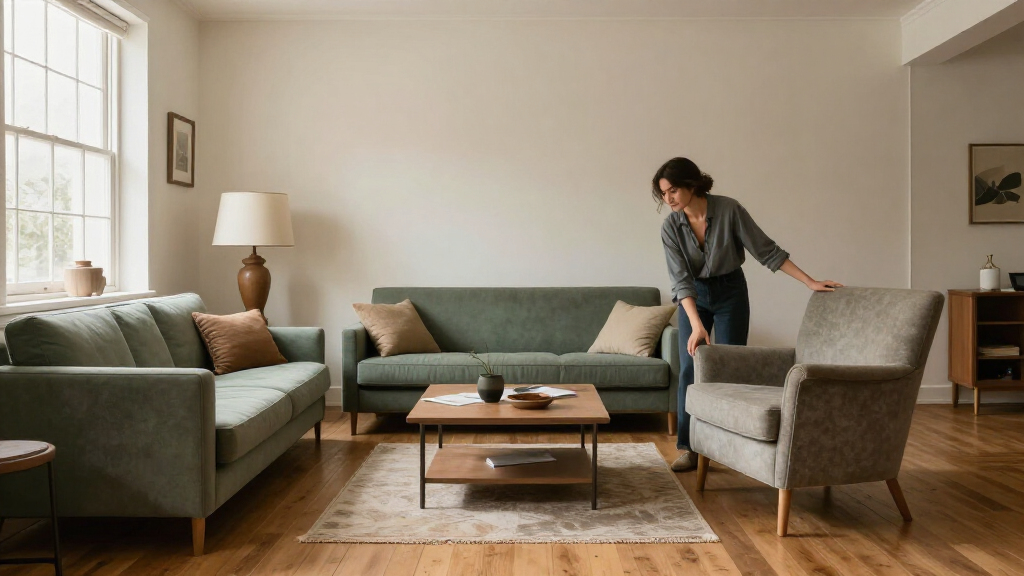
Second, Skilling points to thin, lifeless pillows and inserts that do not fill their covers. She favors a smaller number of substantial cushions over a sofa crowded with pillows that offer little comfort or leave no room to sit. The article gives one sizing example: a 20-inch insert in an 18-inch cover, though this is a suggestion rather than a universal requirement.
Third, Skilling advises against making every artwork a mass-market print. She suggests collecting gradually and looking at flea markets, craft fairs, local galleries or online marketplaces for work with personal meaning. Fourth, Kale says turning books backward can make them look like props and makes their titles harder to find. She notes that stylists sometimes hide covers for publisher-rights reasons in professional photo shoots, but says that practice is not needed in an ordinary home.
Fifth, Kale warns against repeating an identical arrangement of trendy items on every shelf. She and Skilling suggest mixing books and decorative pieces with objects that carry individual significance, such as travel pottery or something a child made. The article does not report a study, survey or product test; it is a design-advice feature based on interviews with the three professionals.
“She prefers a few pieces that can serve as “large focal points” over “small pieces of art scattered around.””
— Mariella Cruzado, founder of Splendor Style, as quoted by Apartment Therapy
Advice, Not a Design Survey
The source does not identify a publication date beyond saying the article was published recently, and it provides no data on how common the five habits are. The designers’ judgments about what makes a room feel dated, impersonal or visually balanced are professional opinions, not findings from a survey or controlled study.
The article also does not specify one right choice for every room. The appropriate size of art, number of pillows or mix of shelf objects will depend on the space and the homeowner’s preferences. Its examples are options, not requirements, and it makes no claim that following the advice will raise a home’s value or produce a measurable change in how visitors respond.
Try Changes One Room at a Time
The article does not announce a follow-up, product launch or scheduled next step. For readers applying its advice, a practical starting point is to review one wall, sofa or bookshelf at a time: check whether art suits the wall’s scale, whether cushions remain comfortable, and whether displayed objects reflect personal interests rather than a repeated formula.
Some changes may involve purchases, but the designers’ suggestions also include editing an arrangement, using existing personal objects or collecting art gradually. Any result will depend on the room and the homeowner’s taste; the source offers no guarantee that a particular swap will work in every home.
Key Questions
What five decorating habits does the article identify?
They are displaying too many small artworks, relying on limp or underfilled pillows, using only mass-market art, turning books backward and repeating the same trendy decor arrangement on every shelf.
Do the designers say decorating mistakes have been scientifically proven?
No. The article presents advice from three interior designers. It does not cite a survey, experiment or other research measuring how common the habits are or how people react to them.
Does the article say art or decor needs to be expensive?
No. Skilling suggests that a small original work, vintage sketch or framed drawing by a child can feel more personal than a generic print. The article also recommends looking at flea markets, craft fairs, local galleries and online marketplaces.
Why do the designers recommend showing book spines?
Kale says visible titles make it easier to find a book and can give guests a glimpse of the homeowner’s interests. She says turning books around can make them look like props.
Source: apartmenttherapy.com