TL;DR

Get furniture and decor delivered free with Prime
- Fast, free delivery on millions of items
- Prime Video, Amazon Music and more included
- Member-only deals all year
A Hunker report describes conversation-first living room design as a modern alternative to building a sunken conversation pit. The approach uses inward-facing furniture and a central focal point to make socializing easier, though its effects depend on the room and household.
A Hunker report describes conversation-first living rooms as a way to bring the intimacy associated with conversation pits into a home through furniture placement, rather than building a permanent sunken area. The approach turns seating inward, away from a television, and can be tried by rearranging existing furniture.
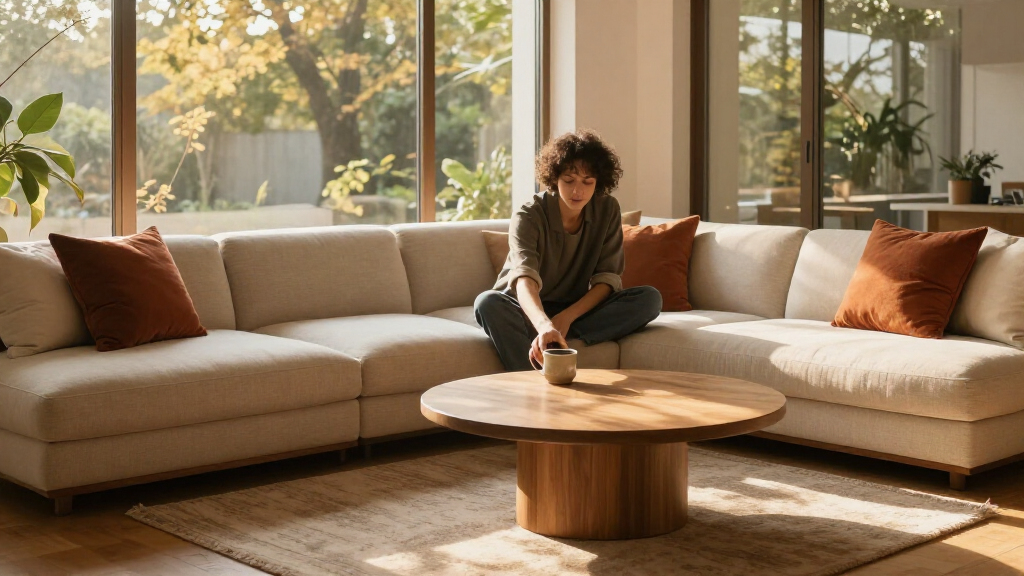
The design centers on arranging sofas and chairs so people face one another, creating a shared area for talking and spending time together. The Hunker report says a coffee table or rug can act as the focal point around which the seating is organized. A table can also provide a surface for drinks, snacks or games.
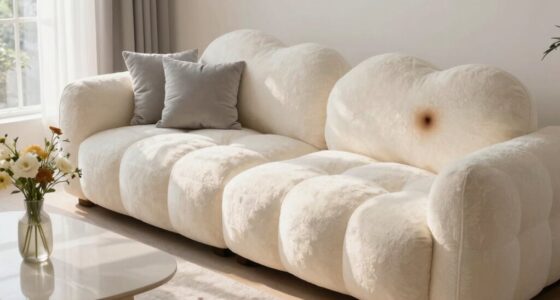
Furniture choices can help establish the shape of the seating area. The report suggests angling armchairs and smaller sofas inward, or using U-shaped couches and curved sectionals to form an enclosure. Bookshelves, library tables or a sideboard can mark the edge of the zone without requiring construction.
The report contrasts this flexible arrangement with a traditional conversation pit: a sunken, cushion-lined area, often built around a central table. Such pits can require changes to the floor and remain fixed in place. The Hunker article also notes potential tripping hazards associated with a change in floor level. By comparison, a furniture-based layout can be altered as a household’s needs change.
The idea offers homeowners and renters a way to test a more social living room layout without committing to a structural renovation. Because it relies on movable furniture, residents can adjust the arrangement for different activities, room sizes or access needs. That adaptability also avoids the permanence of a sunken floor feature.
The shift is also a change in what the room is organized around. Rather than placing every seat toward a screen, an inward-facing group makes conversation the focus. The source presents this as a design choice, not as proof that people will socialize more or use screens less. How well it works will depend on the room, the furniture and the people using it.
modular sectional sofa for conversation area
As an affiliate, we earn on qualifying purchases.
As an affiliate, we earn on qualifying purchases.
From Sunken Pits to Moveable Seating
Conversation pits became widely used in the 1950s, according to the Hunker report. They typically consist of a lowered living-room area lined with cushions, sometimes with a table in the middle, intended to bring people together in a defined seating space. The feature’s construction and fixed dimensions can limit later room changes.
The report places the newer layout within a broader interest in human-centered interior design, describing a trend toward spaces that support interaction rather than orienting everything toward screens. It cites furniture expert Monika Puccio, who spoke to House Beautiful about the approach. The source does not provide survey data or other measurements showing how widespread the trend is.
“Conversation-first living rooms are all about designing a space that encourages people to connect with one another, rather than focusing everything around a screen.”
— Monika Puccio, furniture expert, speaking to House Beautiful
How the Layout Works at Home
The source offers design guidance, not evidence from a controlled study or measured data on whether inward-facing furniture increases conversation. It does not specify a single ideal distance between seats, a layout suited to every room, or how the arrangement should accommodate televisions, mobility needs and other household routines.
It is also unclear how broadly homeowners are adopting the approach. The Hunker report describes conversation pits as returning to design discussions, but supplies no sales figures, adoption data or dates that would establish the scale or pace of that revival. Readers should treat the layout as an adaptable design suggestion rather than a universal solution.
Try the Arrangement Before Committing
No construction project or formal next step is required to test the idea. The report’s practical suggestion is to choose a focal point, such as a rug or coffee table, then reposition chairs and sofas to face inward. Residents can assess whether people can move comfortably through the room and whether the seating works for everyday tasks as well as social visits.
Because the arrangement is movable, it can be revised if it obstructs circulation or fails to suit the household. The source does not identify a new product launch, industry announcement or scheduled follow-up; the development is a reported design approach that readers can try with furniture they already own.
Key Questions
What is a conversation-first living room?
It is a living room arranged with seats facing one another, rather than all pointing toward a television, to make conversation a central use of the space.
Does this design require construction?
No. The approach in the Hunker report uses movable furniture and can be tested by rearranging existing chairs and sofas.
What should be the focal point?
The report suggests a coffee table or rug. A coffee table can provide a shared surface for drinks, snacks and games.
How is it different from a conversation pit?
A traditional conversation pit is a sunken, fixed area that may require floor construction. The modern alternative creates an inward-facing seating zone without lowering the floor.
Is there evidence that the layout leads to more conversation?
The supplied report describes the design’s intended effect but provides no measured evidence that it increases conversation. Results will vary by room and household.
Source: rss
Columbus Day / Indigenous Peoples' Day Picks
long weekend sales
As an affiliate, we earn on qualifying purchases.