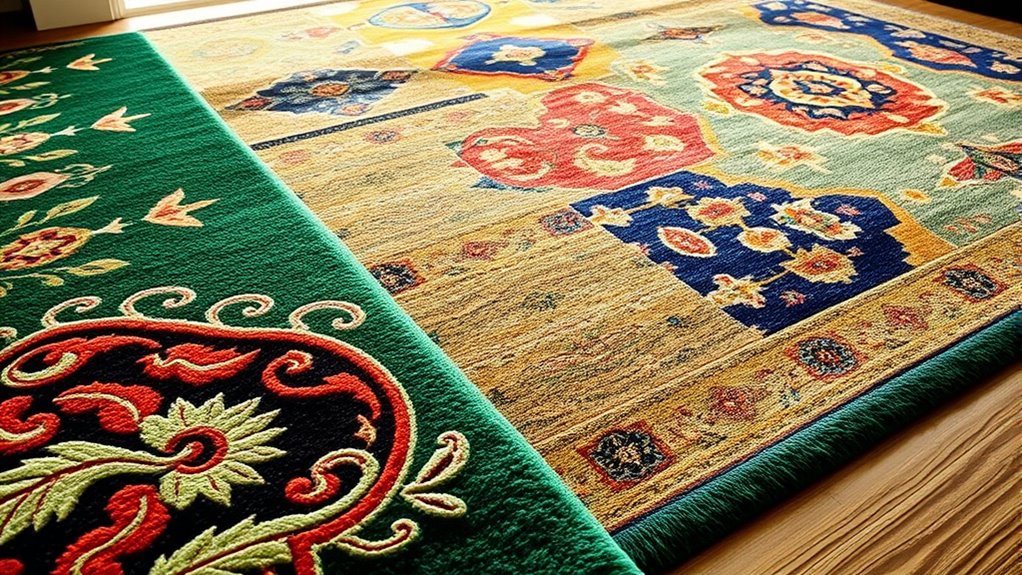

When selecting a rug, focus on durable materials like wool, nylon, or polypropylene for longevity, especially in high-traffic areas. Choose patterns that complement your room’s style—simple or neutral designs for calm spaces, bold patterns for energy, and guarantee pattern scale suits your room size and furniture. Size and placement matter; for example, a large rug under a dining table should extend beyond the chairs. Keep these tips in mind to find the perfect match; your space will thank you for it.
Key Takeaways
- Choose durable materials like wool, nylon, or polypropylene for high-traffic areas to ensure longevity.
- Match pattern styles and scales with existing décor to create visual harmony and prevent clutter.
- Select rug sizes that adequately anchor furniture and define the space for balanced room proportions.
- Opt for patterns that complement the room’s color palette and style, whether subtle or bold.
- Consider pile type (flatweave, plush, etc.) based on comfort, maintenance, and room function needs.

Choosing the right rug can instantly transform a room, adding warmth, texture, and style. When you’re selecting a rug, one of the most important factors to consider is rug durability. You want a piece that can withstand daily wear and tear, especially if you have kids or pets. Opt for high-quality materials like wool, nylon, or polypropylene, which are known for their resilience. These fibers resist stains and maintain their appearance longer, saving you money and effort over time. It’s also wise to think about the rug’s construction; tightly woven rugs tend to last longer and hold up better against foot traffic. If you’re placing a rug in a high-traffic area, prioritize durability to ensure it remains beautiful and functional for years. Considering merchant services can also help you find reliable suppliers of durable rugs with high-quality materials.
Choose durable, high-quality rugs like wool, nylon, or polypropylene for lasting beauty and resilience.
Pattern coordination plays a crucial role in how your rug complements the rest of your décor. When choosing a pattern, think about the existing elements in the room, such as furniture, curtains, and wall art. If your space already features bold patterns or vibrant colors, a more subdued rug with simple designs or neutral tones can create balance and prevent visual clutter. Conversely, if your room’s decor is mostly neutral, adding a patterned rug with geometric, floral, or abstract designs can bring energy and focal interest. Matching or contrasting patterns intentionally helps tie the room together, making it feel cohesive and thoughtfully styled. Don’t be afraid to experiment with mixing patterns, but keep in mind the scale and style to avoid overwhelming the space.
Additionally, consider the size and placement of the rug in relation to your furniture and room layout. A well-chosen rug anchors the space and enhances its overall harmony. For example, a large rug under a dining table should extend beyond the chairs to maintain visual balance and comfort. When layering patterns, ensure that the colors and motifs complement each other, creating a seamless look. Keep in mind that pattern coordination isn’t just about matching colors; it’s about understanding the rhythm and flow of your room’s design. A carefully coordinated rug pattern can serve as a statement piece or a subtle backdrop, depending on your style preferences.
Ultimately, selecting a rug involves balancing durability with aesthetic appeal. By considering how well the rug will hold up over time and how its pattern integrates with your décor, you’ll make a choice that enhances your space both functionally and visually. A thoughtfully selected rug can elevate your room, making it more inviting and stylish for years to come.

SAFAVIEH Blossom Collection Area Rug – 8' x 10', Green & Multi, Handmade Wool, Ideal for High Traffic Areas in Living Room, Bedroom (BLM402B)
Construction Type:Hand Tufted/Hooked. Product Note:Rugs may contain temporary creases upon arrival, allow time for creases to flatten and…
As an affiliate, we earn on qualifying purchases.
As an affiliate, we earn on qualifying purchases.
Frequently Asked Questions
How Do I Maintain and Clean Different Rug Types Effectively?
To maintain and clean different rug types effectively, start by regularly vacuuming to prevent dirt buildup. For rug fiber maintenance, follow specific care instructions for each material, like avoiding excessive moisture on wool. When stains occur, use gentle stain removal tips tailored to your rug’s fiber. Spot clean promptly and avoid harsh chemicals to keep your rug looking fresh and vibrant.
Which Rug Patterns Are Best for High-Traffic Areas?
For high-traffic areas, you should choose rug patterns that hide dirt and wear, like busy geometric or abstract designs. Durability considerations mean selecting patterns that don’t show stains easily. Pattern versatility is key—you want styles that match various decors and conceal signs of aging. These options keep your space looking fresh longer, requiring less frequent cleaning, and ensure your rug maintains its appearance despite daily foot traffic.
Are There Eco-Friendly Rug Options Available?
You bet there are eco-friendly rug options out there, and they’re worth your attention. You can opt for rugs made from sustainable fibers like jute, sisal, or recycled materials. Look for brands committed to eco-conscious manufacturing, ensuring your purchase supports environmental efforts. It’s a win-win—you get a beautiful rug that’s good for the planet, proving that style and sustainability can go hand in hand.
How Can I Prevent Slipping on My Rug?
To prevent slipping on your rug, you should use a non-slip pad underneath it, which provides extra grip and stability. Additionally, consider installing rug anchors or adhesive strips at the corners, especially in high-traffic areas. These methods keep your rug securely in place, reducing the risk of accidents. Regularly check the pad and anchors to guarantee they stay effective, and replace them if they become worn or loose.
What Are the Cost Differences Between Synthetic and Natural Rugs?
Imagine choosing between a plush wool rug and a vibrant synthetic one. Generally, natural rugs like wool or silk cost more due to higher material pricing and craftsmanship, while synthetic rugs are more budget-friendly, offering a cost comparison that favors affordability. Natural materials often come with a higher price tag, but they last longer and feel more luxurious. Synthetic options are cheaper upfront but may wear faster over time.

Garland Rug Sparta Non Slip Polypropylene 8 Ft. X 10 Ft. Black Area Rug- Ideal for Living Rooms & Hallways, Stylish & Durable for High-Traffic Areas
Design features a modern, geometric pattern that adds a bold, contemporary touch to any space.
As an affiliate, we earn on qualifying purchases.
As an affiliate, we earn on qualifying purchases.
Conclusion
Ultimately, choosing the perfect rug is about harmonizing your space and personal taste. Trust your instincts and consider how different patterns, textures, and sizes can subtly enhance your room’s ambiance. When you select a rug that resonates with your style, it gently elevates your environment, creating a welcoming and refined atmosphere. Remember, the right rug quietly completes your decor, offering both comfort and elegance without ever overwhelming your space.

Soalmost Washable Area Rug 8×10, Large Soft Rugs for Living Room Vintage Beige Carpet 8×10 Area Rugs for Bedroom Dining Room Non-Slip Stain Resistant Under Table Rug
PET FRIENDLY & NON-SLIP BACKING: 8×10 area rugs featuring simple of colors while promising a luxurious feel underfoot….
As an affiliate, we earn on qualifying purchases.
As an affiliate, we earn on qualifying purchases.

Delara Handwoven Jute and Cotton Area Rug – Natural Rug, Farmhouse Accent Rug for Living Room, Bedroom, or Entryway – Sustainable, Flatweave – (4×6 Ivory)
Handwoven with Natural Materials :- Crafted from 100% natural jute and cotton, each rug is handmade by skilled…
As an affiliate, we earn on qualifying purchases.
As an affiliate, we earn on qualifying purchases.