
Sustainable furniture uses eco-friendly materials like recycled plastics, bamboo, cork, and reclaimed wood. These materials are chosen for their rapid renewability and ability to be recycled, reducing waste and environmental impact. Responsible manufacturing processes ensure energy efficiency and fair labor practices. Combining these materials creates stylish, durable furniture that supports a circular economy. To discover how these innovative practices can transform your space, you’ll find more insights below.

Get furniture and decor delivered free with Prime
- Fast, free delivery on millions of items
- Prime Video, Amazon Music and more included
- Member-only deals all year
Key Takeaways
- Utilizes recyclable plastics and renewable textures like bamboo, cork, and reclaimed wood to reduce environmental impact.
- Promotes circular economy through furniture designed for reuse, recycling, and minimal waste.
- Sources materials responsibly, supporting natural regeneration and ecological conservation.
- Combines eco-friendly materials with ethical manufacturing practices, including energy efficiency and fair labor standards.
- Offers stylish, durable furniture that aligns with sustainability goals without compromising quality.

Sustainable furniture is transforming the way we design and decorate our homes by prioritizing eco-friendly materials and responsible manufacturing practices. When you choose sustainable pieces, you’re making a conscious decision to reduce environmental impact and support a healthier planet. One of the key innovations in this area involves the use of recyclable plastics, which are reshaping how furniture is produced. These plastics are designed to be repurposed repeatedly, so they don’t end up in landfills after a single use. By incorporating recyclable plastics into furniture design, manufacturers create durable, stylish pieces that can be recycled at the end of their lifespan, closing the loop in the lifecycle of the product. This approach markedly reduces waste and reliance on virgin materials, making your furniture choices more eco-friendly.
Beyond recyclability, sustainable furniture also emphasizes renewable textures—materials that are sourced responsibly and regenerate naturally. Think of bamboo, cork, or reclaimed wood, which grow quickly or are reused from older structures. These materials not only provide a warm, natural aesthetic but also minimize environmental degradation. When you select furniture made from renewable textures, you’re supporting practices that conserve resources and lessen the ecological footprint. These textures also tend to be more adaptable, offering a variety of styles that can fit into modern or rustic decor schemes, all while maintaining sustainability.
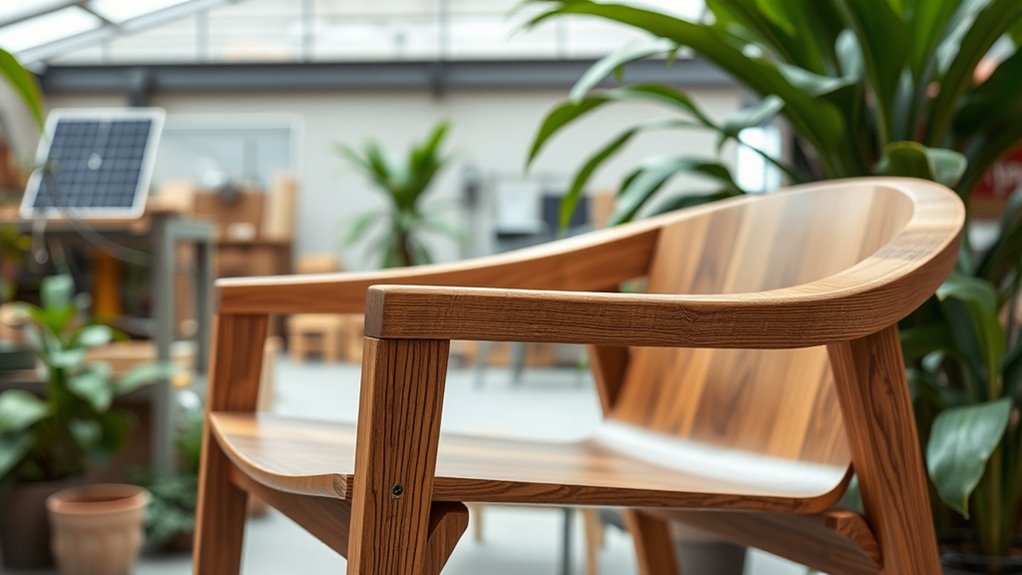
Choosing renewable textures like bamboo, cork, and reclaimed wood supports eco-friendly practices and enhances natural aesthetics.
Manufacturers committed to sustainability often combine recyclable plastics and renewable textures to craft innovative designs. For example, a dining chair might feature a seat made from recycled plastic, molded into a sleek, modern shape, paired with legs crafted from sustainably harvested wood. By choosing such pieces, you’re actively reducing waste and promoting a circular economy. This integration of materials showcases how eco-conscious design doesn’t have to sacrifice style or functionality. Instead, it offers a chance to personalize your space with furniture that aligns with your values.
Furthermore, sustainable furniture often involves responsible manufacturing practices, such as energy-efficient production processes and fair labor standards. When you buy from brands that prioritize transparency and ethical sourcing, you’re supporting a shift toward a more sustainable furniture industry. The combination of recyclable plastics and renewable textures demonstrates that eco-friendly options can be both innovative and beautiful. By making informed choices, you help foster a future where furniture is not just a functional element in your home but also a testament to your commitment to the environment. Additionally, recyclable plastics are increasingly being used in furniture, showcasing how innovative materials are shaping sustainable design.
eco-friendly recycled plastic furniture
As an affiliate, we earn on qualifying purchases.
As an affiliate, we earn on qualifying purchases.
Frequently Asked Questions
How Do Eco-Friendly Furniture Materials Compare in Durability?
Eco-friendly furniture materials often match or even surpass traditional options in durability. You’ll find they offer excellent material longevity and environmental resilience, ensuring your furniture lasts longer with less wear. Materials like reclaimed wood, bamboo, and recycled plastics are sturdy and resistant to everyday stress. By choosing eco-friendly options, you get durable furniture that’s better for the planet, providing lasting quality while supporting sustainable practices.
Are Sustainable Furniture Options Cost-Effective Long-Term?
Sustainable furniture options are generally cost-effective long-term because they offer significant cost savings through durability and reduced maintenance. While the initial investment value might be higher, you’ll benefit from eco-friendly materials that last longer, saving you money over time. Plus, choosing sustainable furniture supports environmentally responsible practices, making it a smart, cost-efficient choice that benefits both your wallet and the planet.
What Certifications Should I Look for in Eco-Friendly Furniture?
You should look for furniture with certification standards like FSC, GREENGUARD, or BIFMA, which assure eco-friendly practices. These eco labels verify that the materials are sustainably sourced, safe, and meet environmental standards. When shopping, check for clear certification labels on products, as they guarantee you’re choosing furniture that’s better for the planet and healthier for your home, making your eco-friendly choice more trustworthy and impactful.
How Does Manufacturing Waste Impact Sustainability?
Imagine a factory happily churning out waste, thinking it’s just excess, but really, it’s a big hit to sustainability. Manufacturing waste increases landfill mass and pollutes, undoing eco efforts. It also drives up energy consumption, making the process less efficient. Waste reduction is essential—by minimizing waste and optimizing energy use, you help protect the environment and create truly sustainable furniture. It’s about turning waste into a thing of the past.
Can Sustainable Furniture Be Easily Recycled or Repurposed?
Yes, sustainable furniture can often be recycled or repurposed, but recycling challenges and material reusability vary. You might find some pieces easier to recycle due to their eco-friendly materials, like bamboo or reclaimed wood. However, mixed materials or finishes can complicate recycling efforts. To maximize reusability, choose furniture designed with modular components and minimal toxic finishes, making it simpler to extend its life or repurpose it effectively.
Conclusion
By choosing sustainable furniture, you’re making a positive impact on the environment and supporting eco-friendly practices. With so many stylish and durable options available, why wouldn’t you want to make a smarter, greener choice for your home? Every piece you select can help reduce waste and conserve natural resources. Isn’t it time you furniture that reflects your values and helps protect our planet? Make the switch today and join the movement toward a more sustainable future.
Fall Picks
fall essentials
As an affiliate, we earn on qualifying purchases.