TL;DR
Audrey Fletcher refreshed her rental bathroom with brick-red paint to draw attention to its original 1950s green tile and fixtures. She says the one-day makeover used paint and secondhand finds, while her landlord’s rules and the lease shaped what she could change.
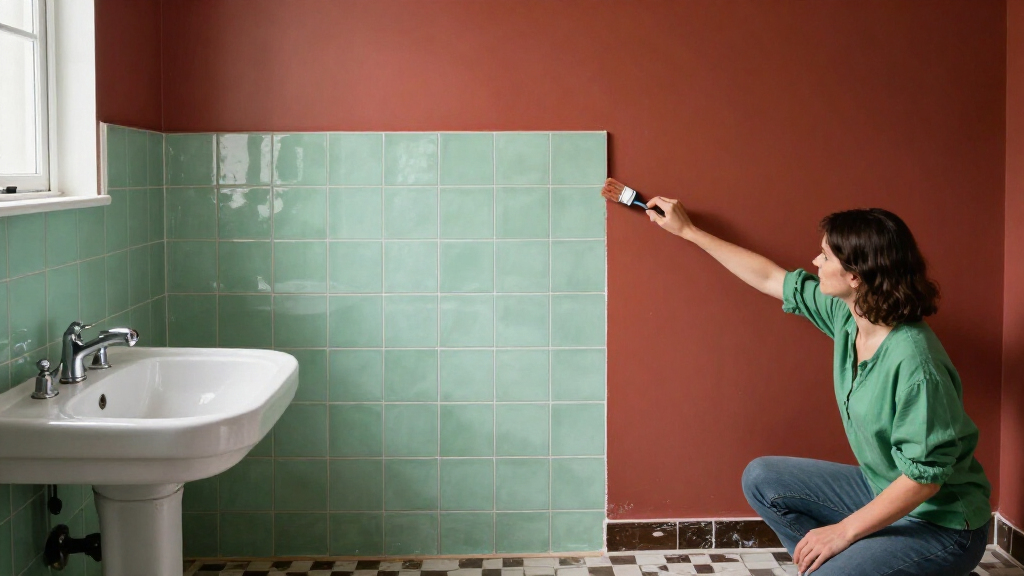
Audrey Fletcher refreshed the bathroom in her rental apartment with brick-red paint, setting off the room’s original 1950s green tiles rather than covering them. The one-day makeover offers a low-cost example of how paint can change a rental bathroom while preserving period details, though the account does not provide a total project cost.

Get furniture and decor delivered free with Prime
- Fast, free delivery on millions of items
- Prime Video, Amazon Music and more included
- Member-only deals all year
Fletcher, who shares home projects on Instagram as @lords_of_dickson, lives in an apartment inside a converted 1940s movie theater. She said the bathroom had beige finishes alongside green tile she considered worth emphasizing. The rest of the apartment had a conventional rental palette, and she wanted the room to better reflect the building’s history and remaining original features.
After finding inspiration online in bathrooms pairing green tile with brick-red accents, Fletcher chose a red paint she found at a local Habitat ReStore. She said selecting a color was the most difficult part: a couple of shades she tested from paint she already had did not feel right, but the green-and-red combination helped her settle on the final choice.
Before starting, Fletcher checked with her landlord. She said the landlord allowed changes that would add value, while her lease prohibited wallpaper, so she focused on paint. She also said she sealed some tiles with paintable caulk before rolling on the color. The makeover took one day, and she reused leftover paint and sourced the items for the project from ReStore, which she said saved her hundreds of dollars.
Red walls, green tile a renter’s refresh
Audrey Fletcher used brick-red paint to make her original 1950s green tile the bathroom’s focal point, while keeping her lease and landlord’s rules in view.
Keep the character
The update changed the room’s look while preserving its defining features.
Green tile stays
Fletcher kept the original tile and fixtures instead of replacing them.
Brick-red walls
A contrasting paint color draws attention to the green tile.
Rules shaped the plan
She checked with her landlord and chose paint because her lease prohibited wallpaper.
A budget-conscious refresh
Reuse helped keep the project focused, though no total cost was reported.
- Reused leftover paint
- Sourced project items from Habitat ReStore
- Used paintable caulk on some tiles before painting
- No itemized budget or exact paint shade
- No report on how the finish holds up
- No details on restoring the room when moving out
Before you paint
The approach may inspire renters, but permission and surface suitability depend on each home.
Look for rules about painting, wallpaper, and sealing surfaces.
Get any approval required before starting work.
Choose products suited to the room and its surfaces; the account does not specify the paint used.
Paint Lets the Green Tile Lead
The makeover highlights a practical choice for renters who want to personalize a room without removing its defining features. Instead of replacing the original tile and fixtures, Fletcher used a contrasting wall color to make them more prominent. That approach can preserve a bathroom’s existing character while changing the visual effect of a space dominated by beige.
It also shows why checking the lease and discussing plans with a landlord matter before work begins. Fletcher’s choices were shaped by a wallpaper restriction and permission to make certain improvements. Her result is a personal example, not evidence that red paint will suit every bathroom or that the same changes will be approved in other rentals.
The project’s cost-conscious details may be useful to readers weighing a small refresh. Fletcher reused supplies and shopped at a reuse center, but she did not give an itemized budget. Her statement that the shopping saved her hundreds is her estimate, not a verified comparison with retail prices.
Products Worth Considering

Philips Hue Play Floor Lamp, RGBWWIC LED, 53 Inch, Black

Dyson V12 Detect Slim Absolute Cordless Stick Vacuum

Hisense 55-Inch E6SR Series 4K UHD Hi-QLED Roku Smart TV (2026 Model)
As an affiliate, we earn on qualifying purchases.
A Theater Building’s Older Details
The apartment is in a building that Fletcher described as having served many uses over time. She said it retains almost all of its original fixtures and tiles, and she wanted her updates to acknowledge that history while giving the bathroom a more current look. The green tile, rather than a newly installed feature, became the starting point for the design.
Her plan developed through browsing images of 1950s-style bathrooms, especially examples that paired green tile with brick-red details. Once she found a similar paint color at Habitat ReStore, she moved ahead with the refresh. The account describes a targeted paint project, not a full renovation: it does not say that the tile, plumbing, or fixtures were replaced.
“I really wanted the tile to be the star.”
— Audrey Fletcher
Costs and Paint Details Not Listed
The account gives no itemized project budget, paint brand, exact shade, or quantity used. It says Fletcher believes shopping at ReStore saved her hundreds, but does not specify the items’ prices or what they would have cost elsewhere. The description also does not identify exactly which tiles were caulked, how the paint was selected for the bathroom’s surfaces, or whether any painted areas were exposed to direct water.
It is also unclear whether the landlord reviewed or approved the precise color and work plan, beyond Fletcher’s account that she had permission to make changes that add value and that wallpaper was barred by her contract. The story does not report how the finish has held up over time or whether the paint can be easily returned to its previous state when she moves out.
No Further Work Is Reported
Fletcher said she would not change anything about the result, and the account reports no additional renovation or follow-up project. Whether the paint finish remains durable with regular bathroom use, and what steps would be needed to restore the rental before moving out, are not reported.
For renters considering a similar update, the immediate next step is to check lease terms and get any required landlord approval before painting or sealing surfaces. The project’s reported approach—reusing paint, shopping secondhand, and keeping the existing tile—offers one example, but suitability depends on the room’s surfaces, the product used, and the property’s rules.
Source: rss
Key Questions
What colors did Fletcher use in the bathroom?
She used brick-red paint to contrast with the bathroom’s existing green 1950s tile. The account does not identify the paint brand or exact shade.
Did she remove or replace the green tile?
No tile replacement is reported. Fletcher said she wanted the original green tile to be the focal point, and the makeover description centers on painting the room.
How long did the makeover take?
Fletcher said the bathroom refresh took one day. The account does not give a detailed schedule or breakdown of preparation and painting time.
How much did the project cost?
No total cost is provided. Fletcher said she reused leftover paint and bought project items at Habitat ReStore, which she believed saved her hundreds of dollars.
Did her landlord approve the update?
Fletcher said she spoke with her landlord, who told her she could make changes that add value. She also said her lease prohibits wallpaper, which is why she focused on paint. The account does not detail approval of each specific step.
Source: apartmenttherapy.com