
Upgrading to energy-efficient windows and doors can make your home more comfortable and lower your energy bills. Choose options like double or triple glazing, low-emissivity coatings, and insulated frames to reduce heat transfer and drafts. Proper installation, including weatherstripping and seals, is essential for peak performance. When done right, these upgrades keep your home warmer in winter and cooler in summer. Keep exploring to discover how to maximize these benefits for your home.
Key Takeaways
- Upgrading to double or triple glazed windows with low-emissivity coatings enhances insulation and reduces energy costs.
- Selecting energy-efficient door options with insulated cores and weatherstripping prevents drafts and heat transfer.
- Proper installation of windows and doors ensures airtight seals, maximizing thermal performance and savings.
- Choosing materials like vinyl or composite frames improves insulation compared to aluminum or wood alone.
- Combining high-performance features with professional installation boosts indoor comfort and long-term energy efficiency.
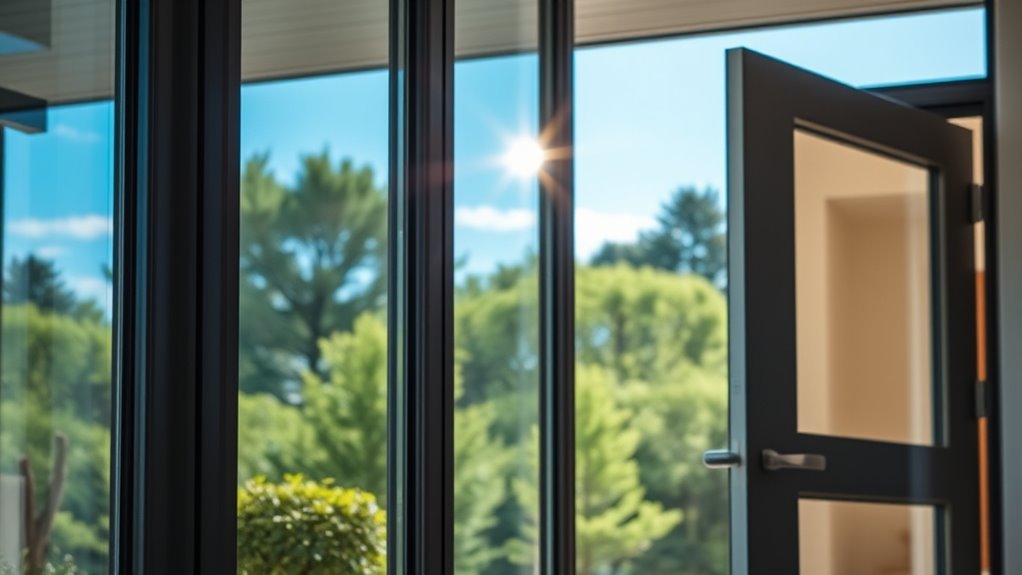
Are you looking for ways to reduce your energy bills and improve your home’s comfort? Upgrading to energy-efficient windows and doors is a smart move that can make a noticeable difference. One of the first steps is understanding how window frame materials influence insulation performance. You have several options, including vinyl, wood, aluminum, and composite frames. Vinyl and composite frames are popular because they naturally insulate better than aluminum, which conducts heat and cold more easily. Wood frames also offer excellent insulation but require more maintenance. Choosing the right window frame materials can help prevent drafts and heat transfer, keeping your indoor temperature stable and reducing the workload on your HVAC system.
Beyond selecting the best frame materials, door insulation techniques play a vital role in energy efficiency. Properly insulated doors prevent air leaks that can let cold drafts in during winter or hot air in during summer. Many energy-efficient doors come with core insulation, such as foam or other insulating materials, that fill the space inside the door panel. Installing weatherstripping around the door frame is equally important—look for high-quality, durable weatherstripping that compresses tightly when the door is closed. This provides an effective seal that keeps conditioned air inside and unconditioned air outside. Additionally, consider door sweeps or thresholds to block gaps at the bottom of the door, which are common sources of drafts.
Proper door insulation prevents drafts and enhances energy efficiency with core insulation, weatherstripping, and door sweeps.
When upgrading your windows and doors, pay close attention to their installation. Even the best window frame materials and door insulation techniques won’t perform well if they’re not installed correctly. Proper installation ensures a tight seal and prevents air leaks that undermine energy efficiency. Professional installation is often worth the extra cost because it guarantees that your upgrades will perform as intended, saving you money in the long run. Incorrect installation can lead to gaps and reduced energy savings, negating the benefits of your upgrades.
Another aspect to think about is the use of energy-efficient glass, such as double or triple glazing, low-emissivity coatings, and inert gas fills. These features complement your choice of window frame materials and further enhance insulation. For doors, look for models with insulated cores and energy-efficient glass panels if they include windows.
In short, reducing your energy bills and boosting your home’s comfort depends on a combination of smart choices: selecting the right window frame materials, applying effective door insulation techniques, and ensuring proper installation. These upgrades not only make your living space more comfortable year-round but also contribute to significant savings over time.
Frequently Asked Questions
How Do Energy-Efficient Windows Impact Home Resale Value?
Energy-efficient windows can boost your home’s resale value by enhancing market appeal and improving home valuation. Buyers appreciate the lower energy bills and increased comfort, making your property more attractive. Installing these windows shows you’ve invested in quality upgrades, which can set your home apart in a competitive market. Ultimately, energy-efficient windows can help you sell faster and at a better price, making them a smart investment for your home.
Are There Specific Brands Known for the Best Energy-Efficient Doors?
Your search for top energy-efficient doors shouldn’t be overwhelming, as some brands stand out like giants in quality. Andersen and Pella are renowned for their brand reputation, offering durable materials and innovative designs. They provide a variety of material options, including fiberglass, steel, and wood, ensuring you find a perfect fit for your home’s style and energy savings. Trust these brands to deliver doors that boost comfort and slash energy bills.
What Maintenance Is Required for Energy-Efficient Windows and Doors?
You need to regularly perform cleaning routines on your energy-efficient windows and doors with a gentle soap and water solution to keep them clear and functioning well. Additionally, inspect the sealant around frames periodically to ensure it’s intact and replace it if you notice cracks or gaps. This maintenance helps preserve their energy efficiency, prevents drafts, and extends their lifespan, keeping your home comfortable and saving you money.
Can Retrofit Energy-Efficient Windows Be Installed Without Major Renovations?
Yes, you can install retrofit energy-efficient windows without major renovations. The retrofit process involves replacing your existing windows with minimal disruption, focusing on installation considerations like guaranteeing proper sealing and compatibility with your current frames. This approach saves time and money, making it a practical upgrade for improved comfort and energy savings. Just ensure your contractor assesses your current setup to confirm a smooth, efficient retrofit process.
How Do Climate Zones Affect Window and Door Selection?
Climate zones markedly influence your window and door choices because regional insulation needs vary. In colder areas, opt for highly insulated, double or triple-pane windows to keep heat in. Conversely, in warmer regions, select options that reduce heat gain, like low-emissivity coatings. Considering climate considerations helps you choose energy-efficient windows and doors that enhance comfort and save energy, ensuring your upgrades are effective regardless of your regional insulation requirements.
Conclusion
Upgrading to energy-efficient windows and doors is a smart move that pays off in comfort and savings. You’ll notice a cooler home in summer and warmer in winter, all while slashing your energy bills. Don’t wait for problems to knock on your door—be proactive and seize the opportunity now. Remember, a stitch in time saves nine, so act today to enjoy a cozy, cost-effective home tomorrow. Your future self will thank you for it.