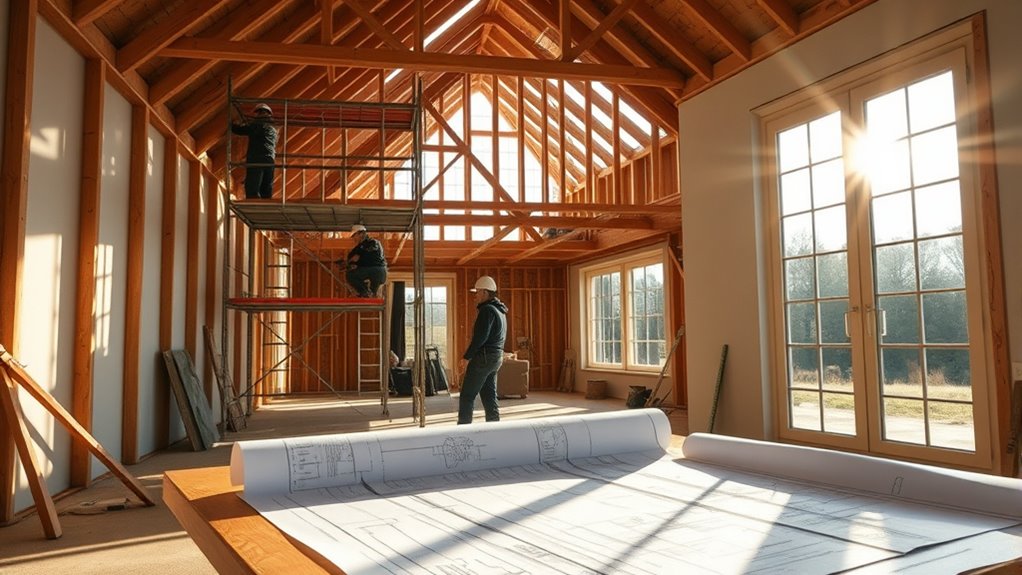

When building a home addition, start by understanding local zoning laws and securing necessary permits early to avoid costly delays. Work with experienced contractors who can help design a space that complies with setbacks, height limits, and permitted uses. Budget carefully, including costs for permits and potential modifications. Clear contracts and constant communication help keep your project on track. Continuing will guide you through the essential steps to plan, budget, and design successfully.

Get furniture and decor delivered free with Prime
- Fast, free delivery on millions of items
- Prime Video, Amazon Music and more included
- Member-only deals all year
Key Takeaways
- Understand local zoning laws and obtain necessary permits early to ensure compliance and prevent delays.
- Collaborate with experienced contractors to design a functional addition that adheres to zoning restrictions.
- Budget accurately by considering permits, design modifications, and potential unforeseen costs upfront.
- Formalize clear contracts covering scope, costs, timelines, and permit requirements to protect your investment.
- Engage professional guidance to optimize space, meet legal requirements, and enhance your home’s value.

Thinking about expanding your living space? Before diving into construction, it’s essential to understand how zoning regulations might impact your plans. Zoning laws are local rules that dictate what types of structures you can build and where. They can specify setbacks, height restrictions, and even the purpose of the addition, whether it’s a bedroom, office, or garage. To avoid surprises, start by researching your city or county’s zoning codes early in the planning process. Sometimes, you’ll need permits or variances to move forward, so knowing these rules upfront helps you plan realistically and avoid costly delays. Once you’ve confirmed that your intended addition complies with zoning laws, it’s time to choose a contractor. Selecting the right contractor is critical to ensuring your project runs smoothly. Look for someone experienced with home additions, and don’t hesitate to ask for references or review their portfolio. Interview multiple contractors to gauge their understanding of local regulations and their approach to design and construction. A trustworthy contractor will guide you through the permitting process, help you navigate zoning restrictions, and ensure your plans meet all legal requirements. They should also be transparent about costs, timelines, and potential challenges. A good contractor will listen to your needs, provide honest feedback, and work collaboratively to bring your vision to life while staying within your budget. When evaluating prospective contractors, verify their licensing and insurance, and check online reviews or ask for referrals. Once you’ve selected someone, it’s wise to formalize your agreement with a detailed contract that specifies scope, costs, permits, and timelines. This helps prevent misunderstandings and provides legal protection for both parties. Zoning regulations might influence your design choices, so collaborating closely with your contractor ensures your plans stay compliant while maximizing your space. Additionally, understanding the contrast ratio of your projectors can impact your choices during the planning phase, especially if you aim for a home cinema setup. Your contractor should also help you obtain necessary permits and guide you through any zoning-related modifications required. This proactive approach saves time and reduces the risk of costly rework later on. Remember, the contractor you choose will be your partner throughout the project, so trust and clear communication are key. Taking the time to understand zoning regulations and selecting a qualified contractor sets a solid foundation for a successful home addition. It ensures your project progresses smoothly, remains within legal bounds, and ultimately results in a functional, attractive space that enhances your home’s value. By staying informed and working with experienced professionals, you’ll be better equipped to handle challenges and turn your expansion ambitions into a reality that fits your lifestyle and budget.
Products Worth Considering

Roborock Robot Vacuum and Mop with LiDAR Navigation and 10,000 Pa Suction

Levoit Core 600S-P Smart Air Purifier for Large Rooms

Ring Battery Doorbell Plus (2nd Gen) and Indoor Cam Plus Bundle, Nickel Silver and White
As an affiliate, we earn on qualifying purchases.
Frequently Asked Questions
How Do I Choose the Best Contractor for My Home Addition?
You should start by checking the contractor credentials to make sure they’re licensed and insured. Then, look for someone with strong communication strategies, so you stay informed and your concerns are addressed promptly. Meet with potential contractors, ask for references, and review their past work. Trust your instincts and choose someone who listens well, communicates clearly, and has a solid reputation for quality and reliability.
What Permits Are Required for a Home Addition Project?
Did you know that over 60% of home addition projects face delays due to permit issues? You’ll need building permits and possibly zoning approvals before starting. Check with your local building department to make certain your project complies with building code and zoning laws. These permits ensure safety and legal compliance, preventing costly fines or work stoppages. Always secure the necessary approvals early to keep your project on track and within budget.
How Long Does a Typical Home Addition Take to Complete?
A typical home addition takes about 3 to 6 months to complete. You should consider a timeline estimation that includes planning, permits, and construction. Construction milestones like foundation, framing, and finishing help track progress. Factors such as project complexity and weather can influence the timeline. Staying in close contact with your contractor guarantees you’re aware of any delays and keeps your project on schedule.
What Are Common Unexpected Costs During Home Addition Construction?
You might face unexpected expenses during your home addition, like hidden structural issues or permit delays. To avoid surprises, plan for contingency costs—typically 10-20% of your budget. Keep a flexible budget, and stay in close contact with your contractor to catch issues early. This proactive approach helps you manage unexpected expenses smoothly, ensuring your project stays on track without draining your finances.
How Can I Ensure My Home Addition Matches My Existing Home’s Style?
To guarantee your home addition matches your existing home’s style, focus on matching design elements like materials, colors, and architectural details. Work closely with your contractor and designer to select finishes that complement your current structure, maintaining design consistency. Consider replicating window styles, rooflines, and trim work. By paying attention to these details, you create a seamless shift that blends your new space with your existing home beautifully.
Conclusion
Building a home addition transforms your space, blending new design with your existing lifestyle. While careful planning and budgeting shape your vision, it’s the unexpected challenges that test your patience and adaptability. Embrace these moments as opportunities to refine your goals, knowing that the final result will be a reflection of both your dreams and resilience. In the end, your expanded home isn’t just about square footage—it’s a tribute to your ability to grow and adapt amidst change.


![Bukit Bintang Hicks Flat: DBKL Orders Cleanup After Viral Video Exposes Dirty Conditions [WATCH] - NST Online](https://homeevaly.com/wp-content/uploads/2026/09/bukit-bintang-hicks-flat-dbkl-orders-cleanup-after-viral-video-exposes-dirty-con-featured-560x300.jpg)