TL;DR

Get furniture and decor delivered free with Prime
- Fast, free delivery on millions of items
- Prime Video, Amazon Music and more included
- Member-only deals all year
The best wired doorbell camera for your porch balances coverage, power reliability, smart detection, and local storage. Higher resolution alone isn’t enough—consider how it fits your home setup and needs.
Imagine opening your front door and seeing crystal-clear footage of who’s ringing the bell, even in the dead of night. Or catching a package thief in the act before they walk away. That’s the promise of a wired doorbell camera—security, convenience, and peace of mind, all in one.
But with dozens of models out there, how do you pick the best one for your porch? The answer isn’t just about resolution or bells and whistles. It’s about understanding what truly makes a doorbell camera reliable, clear, and easy to use in everyday life. This guide cuts through the noise and shows you exactly what to look for.
.Prioritize porch coverage—vertical, head-to-toe views beat wide-angle shots for facial recognition.
Reliable power and wired connectivity, especially PoE, reduce false alerts and improve footage stability.
Local storage options minimize ongoing costs and protect footage if the device is stolen or internet drops.
Smart detection with local AI reduces false alarms and makes alerts more actionable.
Weather resistance and proper mounting are essential for year-round performance.
What Makes a Wired Doorbell Camera Perfect for Your Porch?
Before diving into models, it’s crucial to understand what sets a great porch camera apart. The best wired doorbell camera offers a mix of excellent coverage, reliable power, smart detection, and smart storage options. You want a device that captures both visitors’ faces and packages, stays connected even during a power outage, and keeps your footage safe without locking you into ongoing fees.
For example, a camera that only shows a wide-angle shot might miss facial details but catch every package left on the porch. Conversely, a highly detailed 4K camera might focus too narrowly, missing the overall scene. Knowing your porch’s layout and your security priorities helps narrow down your choices.
Understanding these qualities helps you weigh the tradeoffs—such as choosing a camera with broader coverage but lower resolution versus one with high detail but limited field of view. The right balance depends on your specific security needs and environment.
wired doorbell camera with local storage
As an affiliate, we earn on qualifying purchases.
As an affiliate, we earn on qualifying purchases.
How to Find a Camera That Covers Your Porch Like a Pro
Coverage is everything, but it’s not just about how wide the lens can see; it’s also about how well the camera captures important details. A camera with a narrow field of view may seem impressive but can leave blind spots where critical events happen. Think about vertical coverage—mounting height and angle are crucial for capturing faces clearly and the area where packages land.
For instance, mounting a camera at 5-6 feet high provides an optimal angle to capture both the face of a visitor and the package below, enabling facial recognition and package verification. Using a corner mount or wedge can help expand your field of view, reducing blind spots and ensuring you don’t miss key details during events.
Choosing the right mounting position and understanding your porch’s layout allows you to optimize coverage. This means fewer blind spots, more reliable identification, and better overall security. It’s a tradeoff: a wider view may sacrifice detail, while a narrow focus might miss the broader scene. The goal is to find a balance that captures everything important without sacrificing clarity.
Why Image Quality Matters More Than Resolution Alone
Resolution is often touted as the main indicator of quality—4K sounds impressive, but it’s not the whole story. Why? Because lighting conditions, shadows, and low-light environments heavily influence how well an image captures details. A camera with high resolution but poor HDR (High Dynamic Range) may struggle in challenging lighting, resulting in washed-out or blurry footage.
For example, during sunset or backlit conditions, a high dynamic range sensor can retain facial details and scene clarity, whereas a high-resolution sensor without HDR might produce overexposed or underexposed images. This affects your ability to identify visitors or read license plates.
Additionally, higher resolution increases storage demands and bandwidth usage, which can lead to slower uploads or higher costs if cloud storage is involved. Smart processing features—like noise reduction, HDR, and low-light enhancement—often have a greater impact on image clarity and usefulness than pixel count alone. Balancing resolution with these features is essential for getting usable footage in real-world conditions.
Matching Power and Connectivity for Reliable Performance
Wired doesn’t just mean power—connectivity matters profoundly. A true PoE (Power over Ethernet) camera uses a single Ethernet cable for both power and data, which provides a stable, interference-free connection. This stability reduces lag, false alerts, and missed events, especially in environments with thick walls or electrical interference.
For example, if your porch is far from your Wi-Fi router, wireless signals may weaken, leading to choppy video or delayed alerts. A PoE system bypasses Wi-Fi entirely, transmitting data over a wired connection that’s less susceptible to interference. This results in more reliable, consistent footage and alerts, which is critical for security.
Most traditional wired models rely on low-voltage transformers, but the key is ensuring your wiring and power supply meet the camera’s voltage and wattage requirements. Upgrading to PoE offers a future-proof, robust solution—though it may involve initial installation complexity. The tradeoff is between ease of setup and long-term reliability, with wired PoE systems generally providing the best stability and security for critical monitoring.
The Truth About Storage: Cloud, Local, or Both?
Storage options are more than just a technical detail—they directly impact your security, privacy, and ongoing costs. Cloud storage offers remote access and long-term history, but it often comes with recurring subscription fees that can add up over time. Local storage—such as microSD cards or network video recorders (NVRs)—provides you with greater control and privacy, and can be more cost-effective in the long run.
However, each option has tradeoffs. Cloud footage is accessible from anywhere, which is convenient if you’re away, but it’s vulnerable to hacking or service outages. Local storage keeps data on your premises, making it immune to internet disruptions and theft of the device, but accessing footage requires physical access or local network connection.
Some models support pre-roll recording, capturing footage just before motion detection triggers, which gives you crucial context about events leading up to an incident. Deciding between these options depends on your security priorities—whether you value convenience, privacy, or cost savings—and how much control you want over your footage.
Smart Detection and Alerts That Actually Work
Smart detection is essential for minimizing false alarms and ensuring you only get alerts that matter. Many models now incorporate AI that recognizes people, packages, vehicles, and animals, which significantly reduces the nuisance of false notifications from passing cars, trees swaying, or insects crawling nearby. Why does this matter? Because false alarms can desensitize you to real threats, leading to ignored alerts or delayed responses.
For example, a camera that only detects human shapes helps ensure you’re notified only when someone is genuinely at your door. Fine-tuning detection zones and sensitivity settings further improves accuracy, preventing unnecessary alerts from shadows or distant movement. Subscription plans often expand detection capabilities with facial recognition and more advanced AI, but some models now embed this processing locally, reducing response times and dependency on cloud services. The key is finding a system that balances false alarm reduction with high detection accuracy, so your alerts are both timely and trustworthy.
Two-Way Talk and Smart Notifications That Feel Natural
Effective two-way audio isn’t just about having a microphone and speaker; it’s about clarity, responsiveness, and ease of use. A good doorbell camera should transmit your voice clearly, with minimal lag, so you can communicate naturally with visitors or delivery personnel. Noise cancellation and volume controls help maintain clear audio even in noisy environments, like during a lawnmower or traffic.
Imagine hearing your visitor’s voice crisp and loud, even if you’re inside with background noise. Quick, visual notifications with a preview image enable you to decide whether to answer, ignore, or use pre-recorded replies. Some models support pre-set messages you can send instantly, which is useful when you’re busy but want to acknowledge a visitor without engaging fully. The quality of audio and the speed of notifications directly impact your ability to respond promptly and effectively, making these features vital for a seamless user experience.
Privacy and Security: Protecting Your Front Door’s Footage
Security isn’t just about installing a camera; it’s about safeguarding your data and ensuring your footage remains private. Look for features like end-to-end encryption, two-factor authentication, and privacy zones that allow you to obscure sensitive areas, such as neighboring properties or windows. Some manufacturers store data locally, giving you greater control, while others rely on cloud services, which may introduce vulnerabilities if not properly secured.
For instance, privacy zones let you block out sections of the camera’s view—like a neighbor’s yard or your own garden—preventing unnecessary recording or alerts in those areas. Regular security updates from the manufacturer signal ongoing commitment to patch vulnerabilities. Enabling two-factor authentication adds an extra layer of protection, making unauthorized access much harder. Protecting your footage isn’t just about security; it’s about respecting your privacy and maintaining control over your home’s digital footprint.
Weather Resistance and Installation Tips for All Seasons
Outdoor cameras face the elements year-round, so durability is key. Look for IP ratings of at least IP65, which indicates resistance to dust and water jets, ensuring your camera survives rain, snow, and dust storms. Mounting height and angle are critical—placing the camera too high might reduce facial recognition clarity, while too low could expose it to damage or vandalism. Position it in a sheltered spot but avoid pointing it directly at reflective surfaces or direct sunlight, which can cause glare and overexposure.
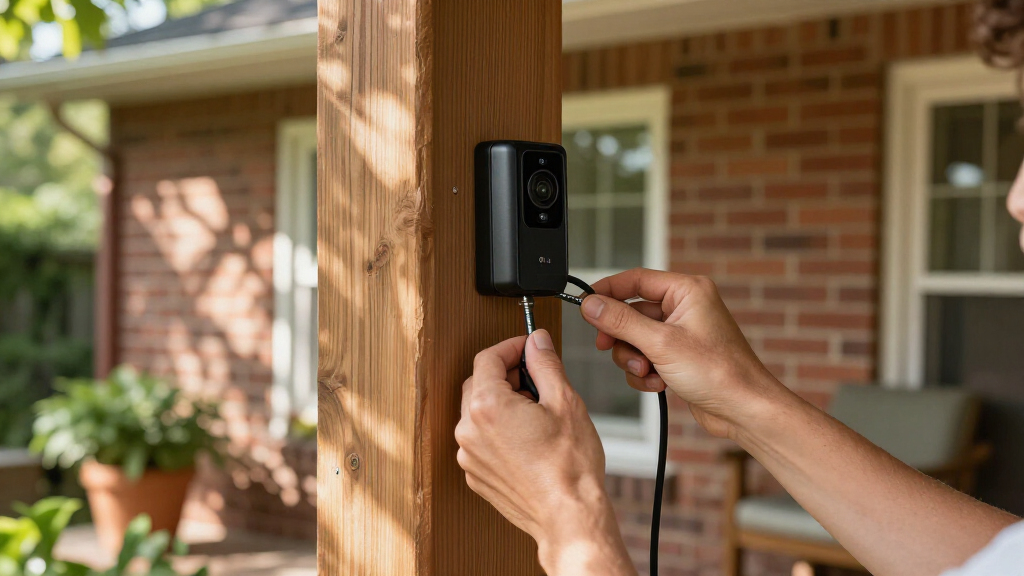
For example, a camera exposed to afternoon sun may overheat or produce washed-out images, compromising its effectiveness. Using a weatherproof mount and sealing all connections prevents water ingress. Before final installation, test the camera’s view from different angles, adjust as needed, and ensure the footage captures all critical areas. Proper installation not only extends the lifespan of your device but also guarantees consistent, high-quality footage regardless of season or weather conditions.
Total Cost of Ownership: What’s Really Worth It?
When comparing models, it’s vital to consider the long-term costs, not just the upfront price. Subscription fees for cloud storage, AI detection, and premium features can accumulate over time, making cheaper models more expensive in the long run. Conversely, models with local storage options—like microSD cards or NVRs—may have higher initial costs but eliminate ongoing fees, providing a more predictable budget.
Installation costs can vary too—professional wiring or transformer upgrades might add to your expenses, especially for high-end PoE systems. Accessories such as additional mounts or chimes also factor into the total investment. Balancing initial costs with ongoing expenses and your security priorities ensures you choose a system that’s both effective and financially sustainable. Think of it as a long-term investment in your home’s safety rather than just a purchase.
Latest Trends Shaping Wired Porch Cameras in 2024
Expect the integration of sharper sensors with enhanced dynamic range, allowing footage to remain clear across different lighting conditions. Dual-camera setups, with one wide-angle and one zoomed-in lens, are becoming common for capturing broad scenes and facial details simultaneously. On-device AI recognition is also gaining ground, offering faster alerts and increased privacy since processing occurs locally rather than in the cloud.
Local storage solutions like microSD cards and PoE systems are increasingly popular for their reliability and privacy benefits. Manufacturers are also expanding compatibility with smart home ecosystems—Google, Apple, Amazon—making it easier to create cohesive security networks. Features like pre-roll recording and richer, more detailed notifications help keep you informed with context, enabling quicker responses and better decision-making. Staying aware of these trends ensures you select a future-proof, comprehensive porch security system that adapts to evolving technology.
Frequently Asked Questions
Is a wired doorbell camera better than a battery-powered one?
Generally, yes—wired models respond faster, are more reliable, and support continuous or pre-roll recording. Battery-powered cameras are easier to install but may miss events during low battery or recharging times.
Does “wired” mean it doesn’t need Wi-Fi?
No. Most wired doorbell cameras still rely on Wi-Fi for remote viewing and alerts. The wiring usually supplies power, while data is transmitted over your wireless network unless it’s PoE, which uses Ethernet for both power and data.
Can I use my existing doorbell wiring?
Often, yes—but the transformer must meet the camera’s voltage and wattage needs. Check your current wiring’s compatibility before installing, and consider upgrading your transformer if needed.
Will a wired doorbell work with my existing chime?
It depends on the model. Some support traditional mechanical or digital chimes, while others require an adapter or a smart chime. Verify compatibility before purchase.
Do I need an electrician to install one?
Not always. For simple wiring replacement, a homeowner can often handle the install. However, if new wiring, transformer upgrades, or complex mounting is involved, hiring a professional is safer and ensures proper setup.
Conclusion
Choosing the best wired doorbell camera is about more than megapixels. It’s about how well it covers your porch, how reliably it stays connected, and how safely it stores your footage. A carefully selected model becomes a silent guardian—guarding your home and giving you peace of mind.
Don’t just chase resolution—think about coverage, power, and privacy. Your porch’s security depends on it. Now, go find the perfect doorbell camera that makes your front door smarter and safer.
Halloween Picks
halloween
As an affiliate, we earn on qualifying purchases.