If you want purified drinking water free of contaminants like bacteria, chemicals, and heavy metals, a reverse osmosis system is ideal. It effectively removes dissolved solids, microorganisms, and chemicals at the tap, ensuring safe, great-tasting water. If you’re looking to protect your entire home from sediment, chemicals, and scale, a whole-house filtration system is better suited. To find out which solution best fits your needs, explore the details further.
Key Takeaways
- Choose reverse osmosis for high-quality, great-tasting drinking water and removal of microorganisms and dissolved chemicals.
- Opt for whole-house filtration to protect your entire water supply from sediment, chlorine, and scale, ensuring appliance longevity.
- Combine both systems for comprehensive removal of contaminants, taste issues, and microbiological safety.
- Consider costs: RO has higher initial and maintenance expenses, while whole-house systems are more cost-effective and easier to maintain.
- Match the system to your needs: RO for drinking water purity; whole-house for overall water quality and appliance protection.

iSpring RCC7AK, NSF Certified, 75 GPD, Alkaline 6-Stage Reverse Osmosis System, pH+ Remineralization RO Water Filter System Under Sink, Patented Top-Mounted Faucet Design for Easy Installation
PATENTED DESIGN – The top-mounted fastener allows for easy countertop installation entirely from above, eliminating the hassle of…
As an affiliate, we earn on qualifying purchases.
As an affiliate, we earn on qualifying purchases.
What Common Water Problems Can Home Filtration Solve?
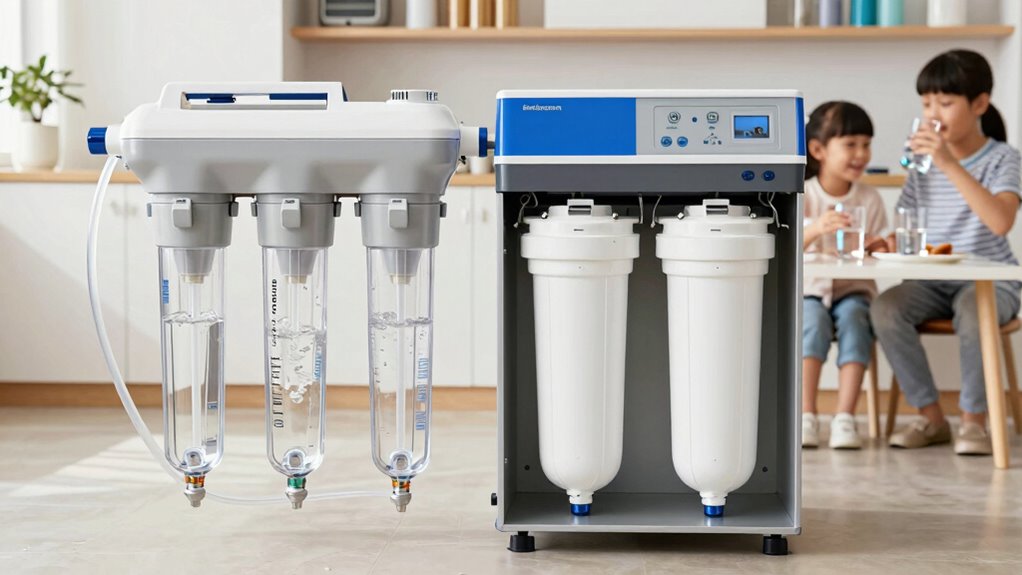
Many homeowners face water issues that affect taste, safety, and appliance longevity. One common problem is poor water taste, often caused by high mineral content or contaminants. These minerals, like iron or sulfur, can give water an unpleasant flavor and smell. Home filtration systems effectively reduce these minerals, improving the water’s taste and making it more enjoyable to drink. Additionally, filtration can remove harmful substances like chlorine, lead, or pesticides, ensuring your water is safer. By addressing mineral content, you also help protect your appliances and plumbing from buildup or corrosion caused by mineral deposits. Furthermore, understanding how microplastics in dust can impact indoor air quality highlights the importance of comprehensive home health strategies. Recognizing how water mineral levels influence water quality underscores the importance of proper filtration choices. Incorporating natural filtration methods can further enhance water quality without relying solely on mechanical systems. Exploring advanced filtration technologies can provide more tailored solutions for specific water issues. Overall, a good home filtration system solves multiple problems—improving taste, enhancing safety, and extending the life of your appliances.

Express Water 3-Stage Whole House Water Filter System, Reduces Heavy Metals, Scale, Chloramine, Chlorine, PFAs, Lead & Arsenic, Free-standing Stainless Steel Frame & 3 Pressure Gauges
WHOLE HOUSE WATER FILTRATION: Notice the difference immediately with 3-stage water filtration process throughout your home. From every…
As an affiliate, we earn on qualifying purchases.
As an affiliate, we earn on qualifying purchases.
How Do Reverse Osmosis and Whole-House Water Filtration Systems Work?
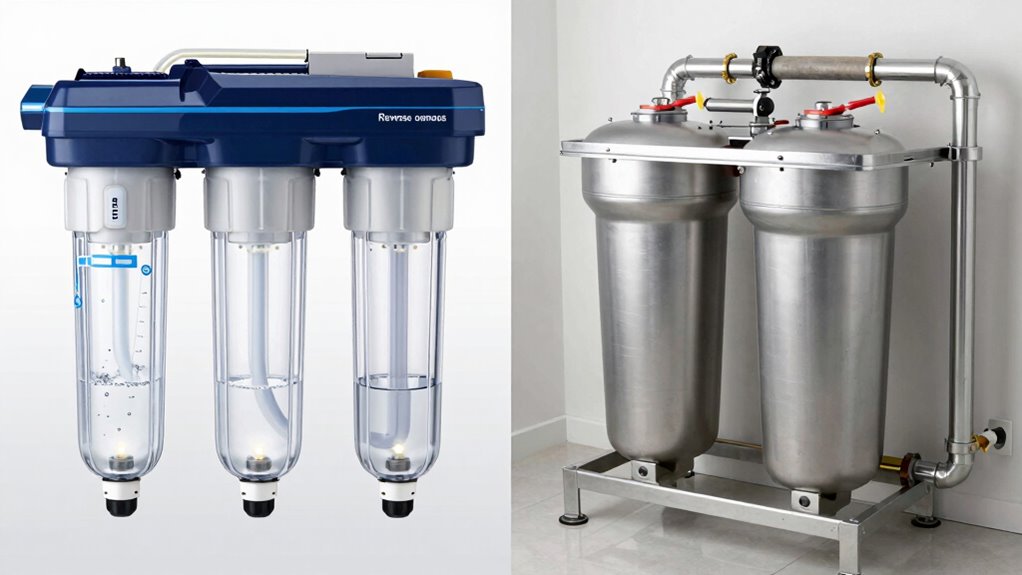
Understanding how reverse osmosis and whole-house systems work starts with their filter stages and key components. You’ll see how water moves through different layers to remove contaminants effectively. Reverse osmosis systems typically include a semi-permeable membrane that filters out impurities at the molecular level, providing very high purity water. You can also find high-quality filtration stages that enhance the removal of specific contaminants like heavy metals and chemicals. Let’s explore the purification process and the essential parts that make these systems work.
Filter Stages Explained
Reverse osmosis and whole-house filtration systems work through multiple stages to guarantee clean, safe water. Each system uses a series of filter stages designed to target specific contaminants. In reverse osmosis, water passes through pre-filters that remove sediment and chlorine, protecting the membrane. The main stage involves a semi-permeable membrane that traps dissolved solids and impurities, providing effective contaminant removal. Post-filters then improve taste and odor. Whole-house systems typically incorporate multiple filter stages, such as activated carbon filters, that adsorb chemicals, organic compounds, and chlorine. Some systems also include sediment filters to eliminate dirt and rust. These filter stages work together to ensure that contaminants are removed at each step, resulting in cleaner, safer water throughout your home. Effective contaminant removal is achieved by carefully designed filter stages to address specific impurities and improve overall water quality.
Water Purification Process
Water purification systems like reverse osmosis and whole-house filters work by guiding water through a series of specialized stages that remove contaminants. As water passes through these stages, impurities like chlorine, heavy metals, and sediments are eliminated, which substantially improves water taste. Reverse osmosis forces water through a semi-permeable membrane, trapping even microscopic particles and pollutants, ensuring pure, clean water. The membrane is a critical component that determines the effectiveness of the system in removing contaminants. Whole-house systems typically use multiple filters, including activated carbon, to target specific contaminants and enhance flavor. Additionally, the filter media used in these systems plays a vital role in their overall performance and longevity. Both systems are designed for durability, but their effectiveness depends on proper maintenance and component quality. Regular filter replacements keep the system running smoothly, maintaining water taste and ensuring long-term performance. Proper system maintenance practices are essential for sustained efficiency and contaminant removal. Understanding the content formats involved in these systems can help you choose the right solution for your water purification needs. Incorporating appropriate filtration media can further optimize contaminant removal and improve water quality.
System Components Overview
Both reverse osmosis and whole-house filtration systems rely on a series of specialized components working together to remove contaminants and improve water quality. In reverse osmosis systems, you’ll find a semi-permeable membrane that guarantees high filtration accuracy by blocking impurities down to the molecular level, while pre- and post-filters protect the membrane and maintain system durability. Whole-house systems typically include multi-stage filters, such as activated carbon and sediment filters, designed for broad contaminant removal and long-term system resilience. The design of these components ensures each system performs reliably over time, with durable materials reducing maintenance needs. By understanding these components, you can better appreciate how each system’s architecture influences filtration accuracy and overall system durability, ultimately helping you choose the right solution for your water quality needs.
iSpring RCC7AK, NSF Certified, 75 GPD, Alkaline 6-Stage Reverse Osmosis System, pH+ Remineralization RO Water Filter System Under Sink, Patented Top-Mounted Faucet Design for Easy Installation
PATENTED DESIGN – The top-mounted fastener allows for easy countertop installation entirely from above, eliminating the hassle of…
As an affiliate, we earn on qualifying purchases.
As an affiliate, we earn on qualifying purchases.
What Water Contaminants Do Reverse Osmosis Systems Remove?
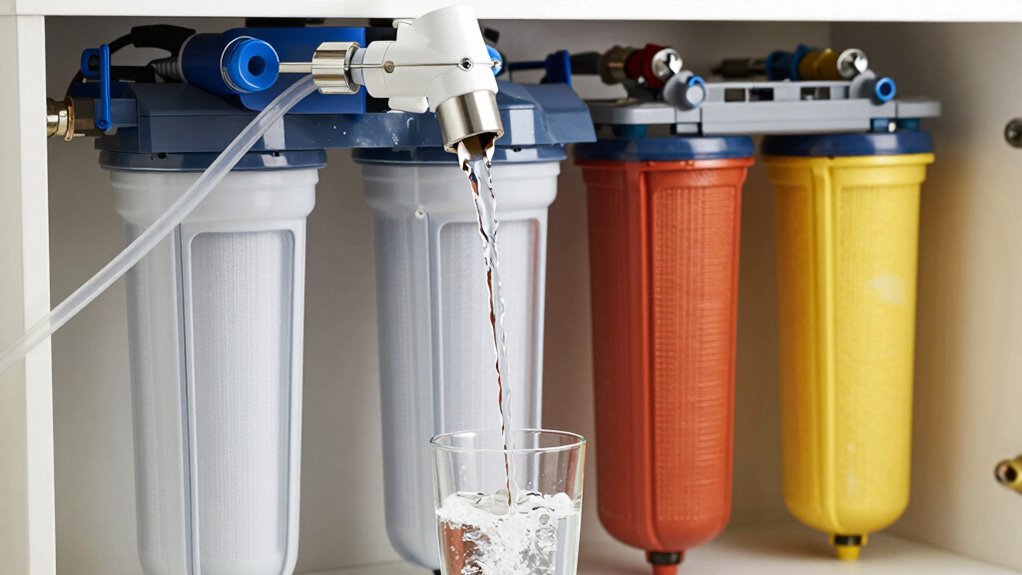
Reverse osmosis systems are effective at removing heavy metals like lead and arsenic from your water. They also eliminate microorganisms such as bacteria and viruses, making your water safer to drink. Additionally, they substantially reduce chemical pollutants like pesticides and chlorine, improving water quality overall. Moreover, reverse osmosis can remove certain symbols and shapes, revealing the hidden meanings behind contaminants and purification processes. Understanding the water purification process can help you make informed decisions about your water treatment options. Incorporating traditional techniques and materials in the manufacturing of filters can enhance their effectiveness and durability. Recognizing the importance of effective filtration methods can further optimize your water quality.
Removes Heavy Metals
Heavy metals like lead, mercury, and arsenic pose serious health risks, but a reverse osmosis system can effectively eliminate them from your water. These contaminants are dangerous because they accumulate in your body over time, affecting your nervous system and organs. By filtering out heavy metals, reverse osmosis enhances water safety, giving you peace of mind. The system’s semi-permeable membrane traps particles as small as 0.0001 microns, making it highly efficient at removing heavy metals. This process ensures that harmful elements don’t reach you or your family. If you’re concerned about contaminated water, a reverse osmosis system offers a reliable solution for reducing heavy metals and improving overall water quality. Proper system maintenance is essential to ensure optimal removal of contaminants and extend the lifespan of your filtration system. Protect your health by choosing a system that prioritizes removing these dangerous contaminants.
Eliminates Microorganisms
While reverse osmosis systems are highly effective at removing many contaminants, they also eliminate harmful microorganisms such as bacteria, viruses, and parasites. This makes them valuable for microorganism prevention and pathogen removal. By filtering out these tiny threats, you reduce the risk of waterborne illnesses. Here are three key benefits:
- They remove bacteria that can cause infections.
- Viruses are eliminated, preventing disease transmission.
- Parasites like Giardia are filtered out, ensuring safer drinking water.
- Additionally, reverse osmosis systems can help remove microorganism contaminants, providing an extra layer of safety.
This thorough removal process ensures your water is free from dangerous microorganisms. In doing so, reverse osmosis provides peace of mind knowing your water is microbiologically safe, especially in areas with questionable water quality.
Reduces Chemical Pollutants
Because reverse osmosis systems utilize a semi-permeable membrane, they effectively remove a wide range of chemical pollutants from your water. This process provides significant chemical reduction, ensuring harmful substances like pesticides, herbicides, and industrial chemicals are reduced or eliminated. You’ll notice improved water quality as common contaminants such as chlorine, volatile organic compounds (VOCs), and heavy metals are also targeted during pollutant removal. This all-encompassing filtration helps protect you from potential health risks associated with chemical exposure. By removing these pollutants, reverse osmosis offers a cleaner, safer water supply. The system’s ability to reduce chemicals makes it an excellent choice if chemical pollutants are your primary concern, providing peace of mind with reliable, high-quality drinking water. Additionally, chemical contaminants are often responsible for unpleasant tastes and odors, which reverse osmosis can effectively eliminate. Incorporating advanced filtration technology further enhances the removal of residual chemical pollutants, ensuring your water is as pure as possible.
Another benefit is that reverse osmosis can also prevent the formation of waterborne chemical byproducts, which may occur with other filtration methods.
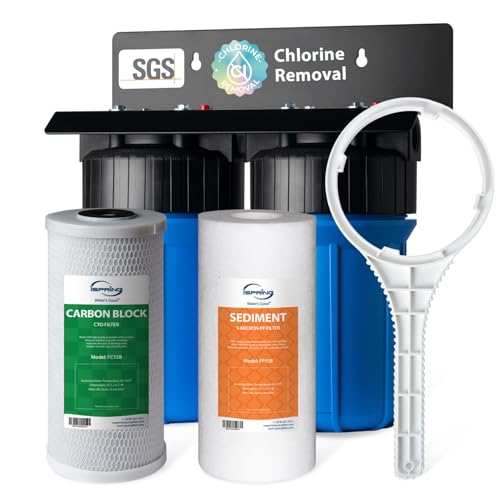
iSpring WGB21B 2-Stage Whole House Water Filtration System, with 10" x 4.5" Sediment CTO(Chlorine, Taste, and Odor) Filter, 1" Inlet/Outlet
[Two-Stage Effective Filtration] The whole house water filter has 1st-Stage premium 5-micron polypropylene sediment filter (FP15B) captures dirt,…
As an affiliate, we earn on qualifying purchases.
As an affiliate, we earn on qualifying purchases.
Which Contaminants Does Whole-House Filtration Eliminate?
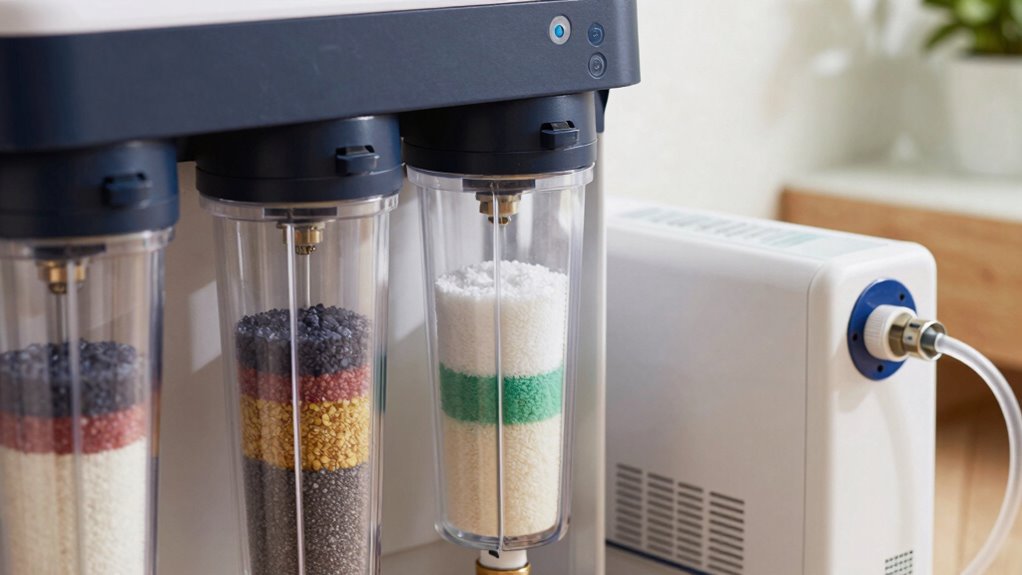
Whole-house filtration systems are designed to remove a wide range of contaminants from your water supply, providing cleaner and safer water for your entire household. They effectively target common issues like water hardness, sediment, and organic matter. For example:
Whole-house filtration systems ensure clean, safe, and high-quality water for your entire home.
- Water softening eliminates minerals like calcium and magnesium, preventing scale buildup.
- Sediment filtration captures dirt, sand, and rust particles, improving water clarity.
- Other contaminants, such as chlorine, volatile organic compounds (VOCs), and certain heavy metals, are also reduced or removed. Additionally, filtration efficiency ensures that a broad spectrum of pollutants is minimized, delivering consistently high-quality water. This all-encompassing approach ensures your water is free from sediments and softened for better appliance performance. Furthermore, contaminant removal is optimized through advanced filtration media, ensuring comprehensive purification. Incorporating advanced filtration media enhances the system’s ability to target a wider array of pollutants effectively. A focus on system maintenance ensures sustained performance over time.
How Do Costs and Maintenance Compare for Reverse Osmosis and Whole-House Systems?
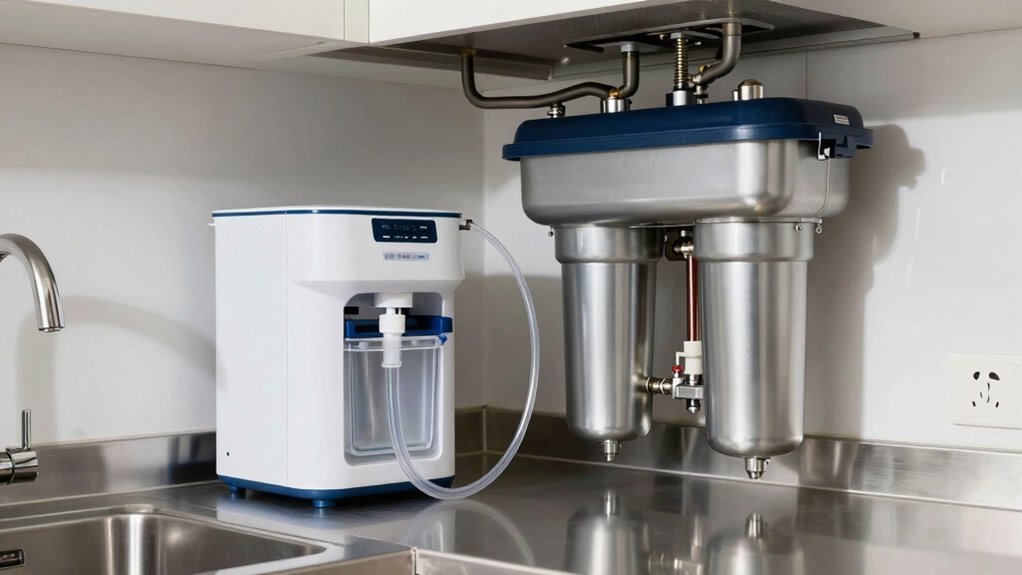
Comparing the costs and maintenance requirements of reverse osmosis (RO) systems and whole-house filtration involves understanding their initial investments, ongoing expenses, and upkeep. In a cost comparison, RO systems tend to have higher upfront costs due to their complex filtration stages and installation needs. Maintenance requirements for RO units include regular filter and membrane replacements, which can be somewhat costly over time. Whole-house filtration systems usually have lower initial prices and require less frequent maintenance, mostly limited to replacing filter cartridges annually. While RO systems produce wastewater and may increase water bills, whole-house filters typically don’t. Overall, your choice depends on your budget and willingness to handle maintenance; RO offers thorough purification but at higher ongoing costs, whereas whole-house systems are more economical and easier to maintain.
Who Should Install a Reverse Osmosis System?
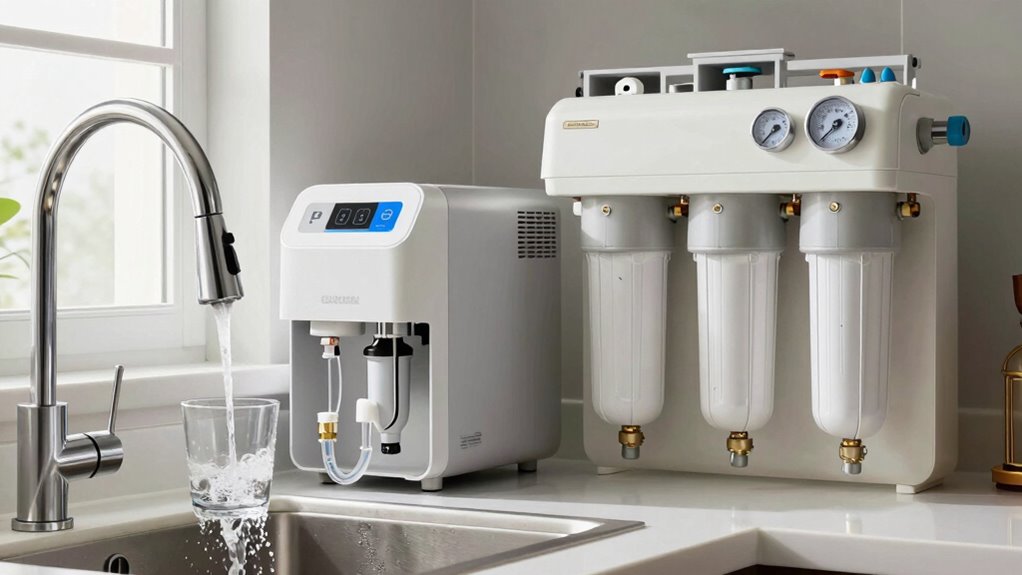
Installing a reverse osmosis system is best suited for homeowners who want high-quality drinking water and are comfortable with some level of maintenance. If you’re particular about water taste and pH balance, this system can markedly improve both. Consider installing one if:
Installing a reverse osmosis system ensures pure, great-tasting water with some maintenance effort.
- You notice undesirable flavors or odors in your water.
- You require consistent pH levels for health or appliance longevity.
- You prefer cleaner, clearer drinking water directly from your tap.
RO systems are ideal for those who prioritize purity and taste, but they do demand regular filter changes and system checks. If you’re willing to handle these responsibilities, you’ll enjoy better water quality and peace of mind knowing your drinking water is thoroughly purified.
When Is Whole-House Filtration the Better Choice?
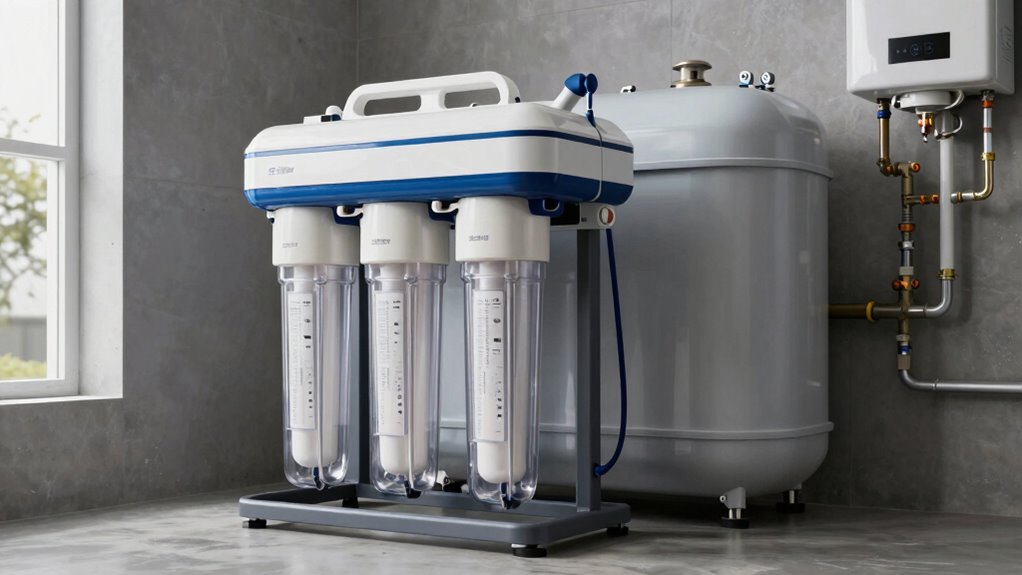
If you’re looking to protect your entire home’s water supply from contaminants, whole-house filtration becomes the better choice. It effectively manages issues like water temperature fluctuations and pH balance, ensuring consistent quality from every tap. This system handles large volumes of water, making it ideal for removing sediments, chlorine, and other impurities before they reach your appliances and fixtures. Imagine a setup that maintains ideal water temperature and pH levels across your home, preventing corrosion and scale buildup. Here’s a visual to help you picture it:
| Water Temperature | pH Balance |
|---|---|
| Maintains steady | Keeps water neutral |
| Prevents scaling | Reduces corrosion |
| Ensures consistency | Protects plumbing |
Can You Combine Both Systems for Better Water Quality?
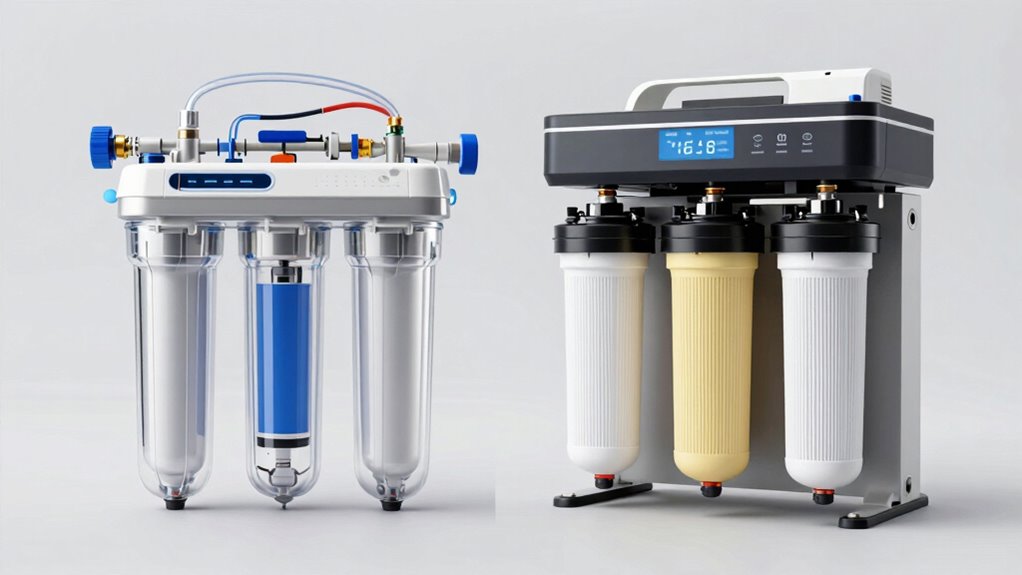
Combining reverse osmosis and whole-house filtration systems can substantially enhance your water quality by addressing a broader range of contaminants. This system integration guarantees cleaner, safer water for your entire home, tackling everything from sediments to dissolved chemicals. Here are three benefits of combining these systems:
- Improved removal of contaminants that may bypass one system alone
- Better taste and odor control across all water sources
- Protection of plumbing and appliances from sediment buildup and chemical damage
Frequently Asked Questions
How Long Does It Take to Install Each System?
Installation time varies: a reverse osmosis system usually takes about 2-4 hours, while a whole-house filtration system might take 4-8 hours or more. If you’re handy, DIY feasibility is higher for smaller RO units, but whole-house systems often require professional installation. Be prepared to allocate sufficient time and follow instructions carefully to guarantee proper setup and ideal performance of your water treatment system.
Are There Specific Water Quality Tests Recommended Before Choosing?
You should definitely conduct water testing to determine contamination levels before choosing a system. Many believe that standard tests are enough, but thorough water testing reveals specific pollutants like heavy metals, bacteria, or chemicals. Knowing these details helps you select the most effective filtration method. By understanding your water’s quality, you ensure your chosen system adequately addresses your needs, providing safer, cleaner water for your household.
Can These Systems Improve Water Taste and Odor?
Yes, these systems can substantially improve water taste and reduce odors. Reverse osmosis filters out impurities that cause bad taste and odors, leaving your water fresh and clean. Whole-house filtration systems also target contaminants that affect smell and flavor, providing consistent taste improvement throughout your home. Both options help you enjoy better-tasting water and a fresher smell, making daily use more pleasant and ensuring healthier drinking and bathing experiences.
What Is the Typical Lifespan of Each Filtration System?
You’ll find that reverse osmosis systems typically last 10 to 15 years with proper maintenance, but they require regular filter replacements every 6 to 12 months. Whole-house filtration systems usually have a longer lifespan of 10 to 20 years, depending on water quality, with less frequent maintenance. Both systems offer good durability; staying on top of filter changes guarantees peak performance and extends system longevity.
Do These Systems Require Professional Certification for Installation?
You don’t need professional certification for DIY installation of reverse osmosis or whole-house filtration systems, but it’s highly recommended to guarantee proper setup. Certification requirements vary by location, and some areas may require licensed professionals to comply with local codes. While you can install these systems yourself, understanding the complexities involved can prevent future issues. Always check your local regulations and consider expert help if you’re unsure about the process.
Conclusion
Ultimately, choosing between reverse osmosis and whole-house filtration is about finding the right fit for your water needs. Think of it as fine-tuning your home’s water experience—sometimes a gentle touch is enough, and other times, a full embrace is needed. By understanding what each system offers, you’ll naturally find the best way to enjoy clearer, better-tasting water every day. After all, a little careful planning can turn your water worries into revitalizing simple solutions.