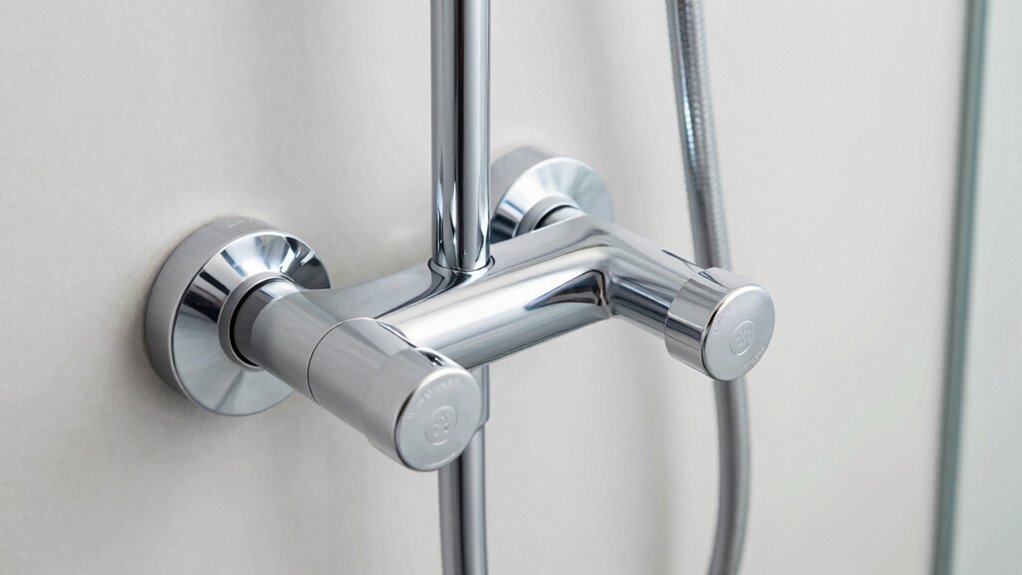

Understanding shower system terms like valves, diverters, and pressure-balanced mechanisms helps you choose and maintain your shower for safety and comfort. Valves control water flow and temperature, while diverters direct water to different outlets or spray features. Pressure-balanced systems ensure consistent temperature even with pressure changes. Knowing how each component works and their pros will help you make smarter upgrades or troubleshoot issues. Keep exploring to learn more about creating the perfect shower experience.
Key Takeaways
- Shower valves control water flow and temperature, with types like pressure-balanced and thermostatic for precise regulation.
- Diverters redirect water between outlets such as showerheads and hand-held sprayers, with various designs for ease of use.
- Pressure-balanced systems maintain consistent water temperature despite pressure fluctuations, enhancing safety and comfort.
- Regular maintenance of valves and diverters prevents leaks, blockages, and ensures optimal shower system performance.
- Key components include thermostatic valves, pressure-balancing valves, diverters, and piping, which work together for a safe, functional shower.

Moen M Pact PosiTemp Pressure Balancing Brass Tub and Shower Valve with IPS Connections, 2510
- M-PACT System Compatibility: Update faucet styles easily
- Connection Size: 1/2 inch IPS connections
- Number of Ports: Four ports for water flow
As an affiliate, we earn on qualifying purchases.
As an affiliate, we earn on qualifying purchases.
What Are Shower Valves and Why Are They Important?

Have you ever wondered how your shower controls the water temperature and flow? That’s the job of shower valves. These essential components regulate water flow by opening or closing to control how much water comes out. Proper valve maintenance guarantees smooth operation and prevents leaks or drips, which can waste water and increase your bills. Valves also mix hot and cold water to give you the perfect temperature. Without well-functioning valves, your shower might suddenly turn too hot or cold, making your experience less comfortable. Regularly checking and maintaining your shower valves helps keep water flow consistent and avoids costly repairs. So, understanding what shower valves do is key to enjoying a reliable, efficient shower every time. Additionally, using high-quality shower valves can enhance durability and performance, ensuring your shower system remains efficient over time. Properly functioning valves are also crucial for preventing leaks and drips, which not only conserve water but also protect your bathroom from potential water damage. Regular inspections can help identify issues early and extend valve lifespan, saving you money on repairs and replacements. Implementing preventive maintenance routines can further improve the longevity of your shower components and ensure seamless operation. Maintaining shower system components ensures your entire setup functions optimally and prolongs its lifespan.
How Do Diverters Help Switch Your Shower Settings?
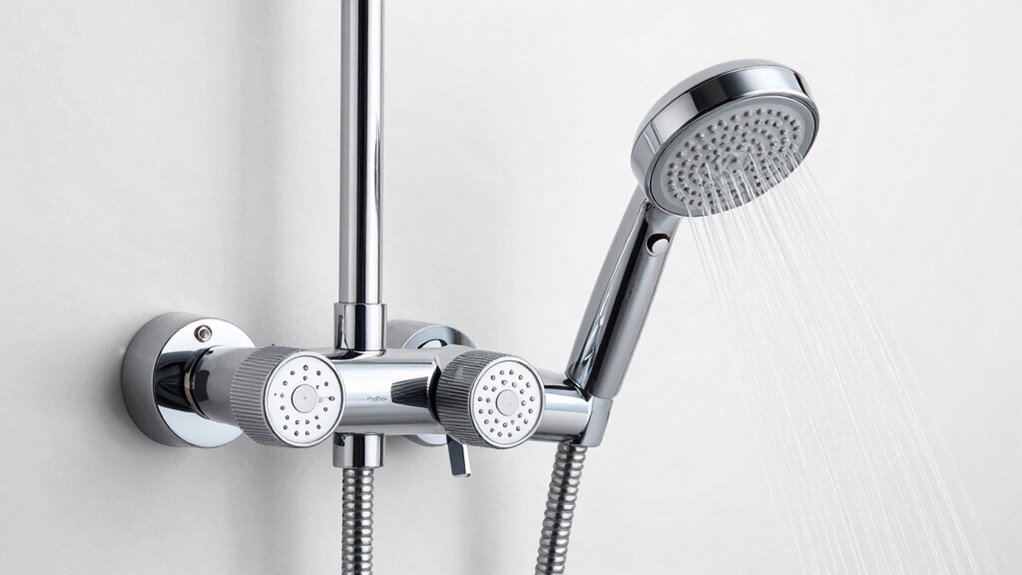
Diverters make it easy to switch between different shower settings, such as a showerhead, hand-held sprayer, or bathtub faucet. When you activate a diverter, it redirects water flow to your chosen outlet, allowing you to enjoy different experiences without hassle. For example, if you want to switch from the showerhead to the hand-held sprayer, the diverter adjusts the water flow accordingly. This change can affect the water temperature slightly, so it’s important to set your preferred temperature beforehand. Additionally, a diverter helps keep your shower curtain dry by directing water where you want it. Proper installation and maintenance of diverters ensure they function effectively and prolong their lifespan. Understanding the different types of diverters can help you select the right one for your needs. Knowing how diverters work is part of understanding water flow control, which is essential for effective shower system operation. For optimal performance, regular inspection and cleaning can prevent common issues like leaks or blockages. Being aware of pressure balancing can also help maintain consistent water temperature during use. Overall, diverters simplify changing shower settings, giving you control over your shower experience while maintaining water temperature consistency.
How Do Pressure-Balanced Shower Systems Work?
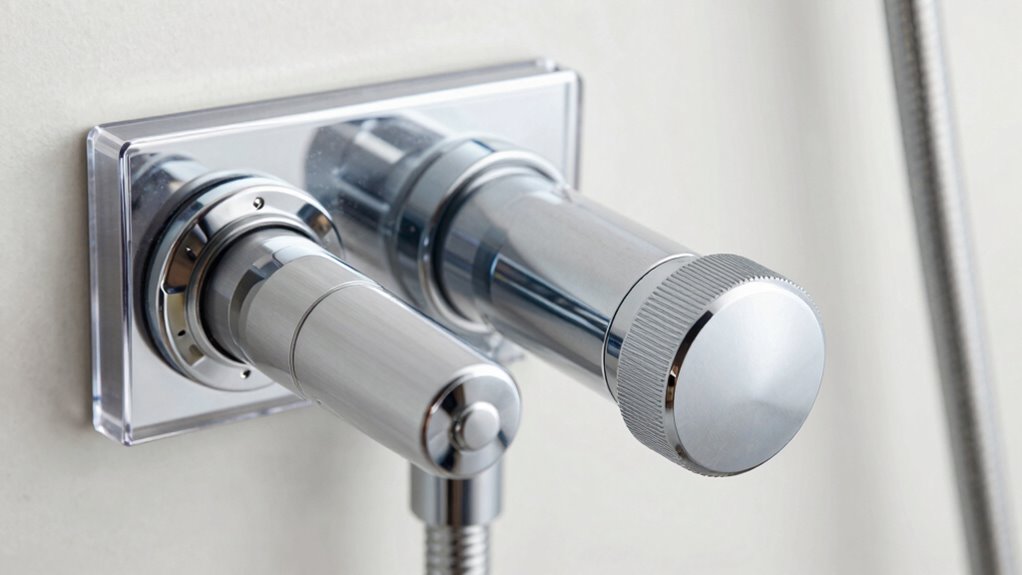
Pressure-balanced shower systems keep your water flow steady by automatically adjusting to changes in pressure. You’ll find components like a pressure-balancing valve and a thermostatic valve working together to maintain consistent temperature and flow. Understanding how these parts work helps you guarantee a safe, comfortable shower experience. Proper water purification systems are also essential for ensuring safe water quality in your home setup. Additionally, integrating indoor air quality solutions can help reduce contaminants like microplastics that may be present in dust and water sources. Research into sound healing science suggests that incorporating calming sounds during showers could enhance relaxation and well-being. Knowing how pressure fluctuations can affect your water flow allows you to better diagnose and troubleshoot issues with your system. Awareness of home water pressure variations can further assist in maintaining optimal shower performance.
How Pressure Is Balanced
To keep your shower comfortable and safe, pressure-balanced systems work by automatically adjusting the water flow when there’s a change in water pressure. This is achieved through a special valve installation that senses fluctuations in water pressure, often caused by other fixtures turning on or off. Inside the valve, a piston or diaphragm responds to these changes, balancing the hot and cold water supplies. When water pressure drops or surges, the valve moves to restrict or increase flow, maintaining a consistent temperature and pressure. This automatic adjustment prevents sudden temperature shifts, protecting you from scalds or cold shocks. Additionally, pressure fluctuations can be minimized with proper plumbing setup, further enhancing safety. Proper installation of pressure sensors is essential for optimal system performance. By effectively managing water pressure variations, pressure-balanced shower systems deliver a safer, more comfortable shower experience every time. Moreover, understanding how pressure regulation works can help homeowners troubleshoot and maintain their systems more effectively. Regular maintenance and checking for pressure stability can also prevent system malfunctions and extend the lifespan of your shower components. Properly designed systems may also include features that accommodate water flow variations, ensuring consistent performance under different household water demands.
Components of the System
Ever wondered what keeps your shower temperature steady even when water pressure fluctuates? It’s the shower system components working together to maintain comfort. In pressure-balanced shower systems, key parts include the thermostatic valve, pressure-balancing valve, diverter, cartridge, and piping. These components regulate water flow and prevent sudden temperature changes. When installing, consider factors like water pressure compatibility, space for valves, and ease of access for maintenance. Proper installation guarantees the system functions smoothly and reduces leaks or fluctuations. Understanding these components helps you choose the right setup for your bathroom. Keep in mind that quality shower system components ensure durability and safety, making your shower experience consistent and enjoyable every time. Additionally, incorporating Free Floating elements can help optimize water flow and temperature stability within your system. Recognizing the importance of system compatibility can also significantly enhance overall performance and longevity. Moreover, selecting components with reliable certifications can provide extra assurance of safety and quality. Being aware of pressure-balancing technology can further improve your system’s ability to adapt to pressure changes and maintain a consistent shower experience.
Which Type of Shower Valve Is Best for Your Bathroom?
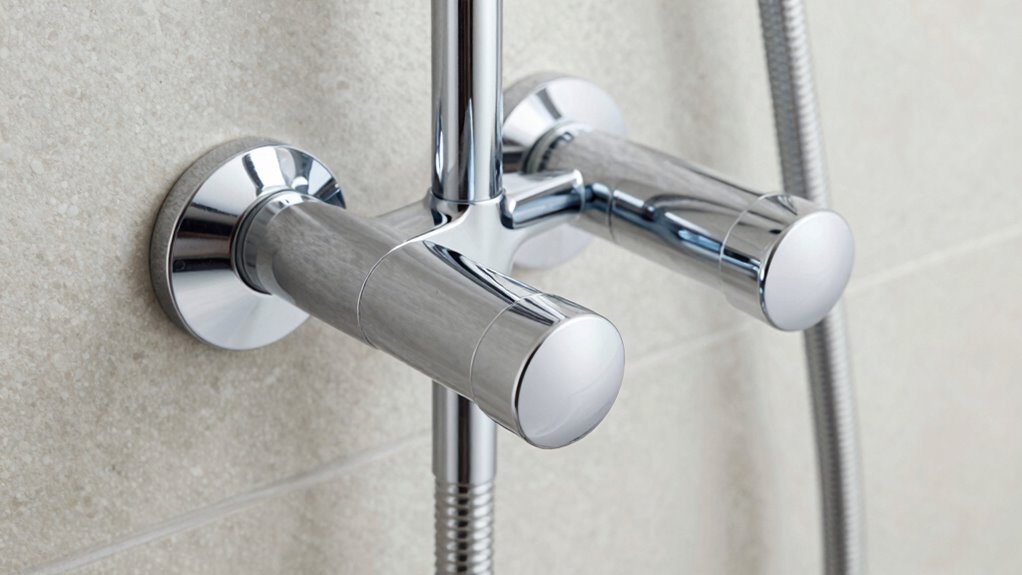
Choosing the right shower valve depends on your bathroom’s plumbing setup and your preferences for control and safety. If you want precise temperature control, a pressure-balanced or thermostatic valve is ideal. For simple upgrades, consider bathroom retrofit options that allow easier installation without major plumbing changes. Different shower valve types include single-handle, dual-handle, and thermostatic models, each offering varying levels of control and safety features. Single-handle valves are straightforward and easy to use, while dual-handle setups give you separate control over hot and cold water. Thermostatic valves maintain a consistent water temperature, preventing sudden shifts. Assess your existing plumbing and personal preferences to choose the best fit, ensuring your shower is both safe and convenient.
What Are Common Diverter Designs and Their Pros and Cons?
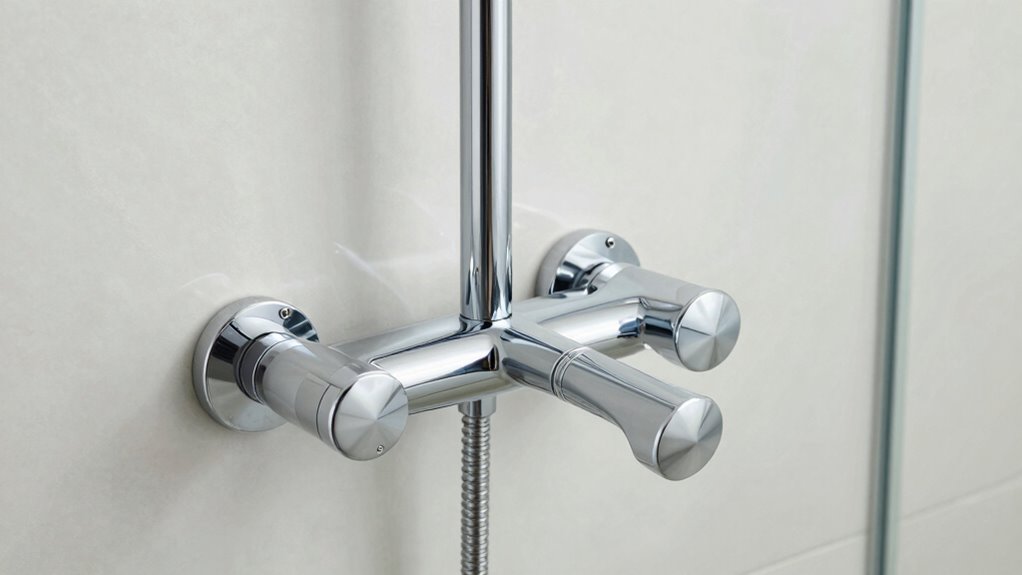
You’ll find that single-handle diverters are simple to operate and save space, but they might lack the precise control some users prefer. Multi-function diverters offer added convenience by switching between multiple outlets effortlessly. Knowing the benefits and limitations of each design helps you choose the best option for your shower setup.
Single-Handle Diverter Options
Single-handle diverters are popular choices for their ease of use and streamlined design. They allow you to switch water flow between outlets with a simple turn, making them convenient and intuitive. When exploring diverter options, you’ll find several common designs, each with pros and cons.
- Lever-style diverters: Easy to operate but may require more space.
- Push-button diverters: Compact and modern but can be harder to operate.
- Rotary diverters: Precise control, though they might feel stiff over time.
- Sliding diverters: Simple to use but may wear out faster.
- Integrated single-handle diverters: Clean look with fewer parts but limited customization.
Choosing the right single handle diverter depends on your preference for usability and style.
Multi-Function Diverter Benefits
Multi-function diverters offer the convenience of controlling multiple water outlets with a single valve, making them ideal for versatile shower setups. They allow you to switch easily between the showerhead, hand shower, or body jets, enhancing your bathing experience. Many models include water-saving features, helping you conserve water without sacrificing performance. When considering installation, choose a diverter compatible with your existing plumbing and follow the manufacturer’s tips to guarantee smooth operation. Multi-function diverters can be more complex, so proper installation is key to avoiding leaks or malfunctions. Their ability to manage multiple outlets from a single control can reduce the need for additional valves, simplifying your shower system. Overall, they offer flexibility, water efficiency, and streamlined functionality for a customized shower experience.
How Can You Troubleshoot Pressure Balance Problems?

Pressure balance problems in your shower system can lead to sudden temperature fluctuations and inconsistent water flow, making your shower less comfortable. To troubleshoot, start by checking your water pressure and flow rate—variations can cause pressure imbalance issues. Next, inspect the pressure-balancing valve for debris or buildup that might restrict water flow. Ensure your home’s main water supply isn’t fluctuating, as this affects pressure stability. Consider installing a pressure regulator if pressures are inconsistent. Finally, verify that other fixtures aren’t drawing excessive water, which can cause imbalance.
- Check for mineral buildup or debris in the valve
- Test water pressure at different fixtures
- Adjust or replace the pressure-balancing valve
- Reduce simultaneous water usage
- Consult a plumber if issues persist
How to Choose Leak-Free Shower Components
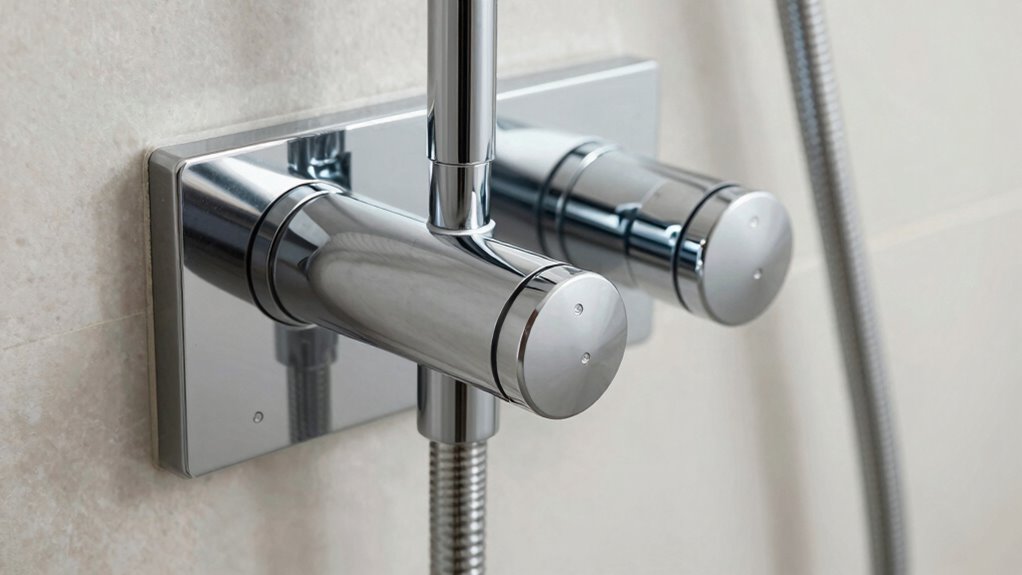
Choosing leak-free shower components starts with selecting high-quality, well-designed parts that fit your system perfectly. Look for products made from eco-friendly materials that promote water conservation, helping reduce your overall water usage. Opt for brass or stainless steel valves and fittings, as these are durable and less prone to leaks. Guarantee the components have tight seals and are designed for easy installation to prevent future leaks. Checking for certifications like WaterSense can also guide you toward water-efficient options. Properly matched components not only prevent leaks but also improve the shower’s performance and lifespan. By choosing reliable, eco-friendly materials, you’ll enjoy a leak-free shower experience that supports water conservation and reduces your environmental impact.
Key Terms You Should Know When Upgrading Your Shower
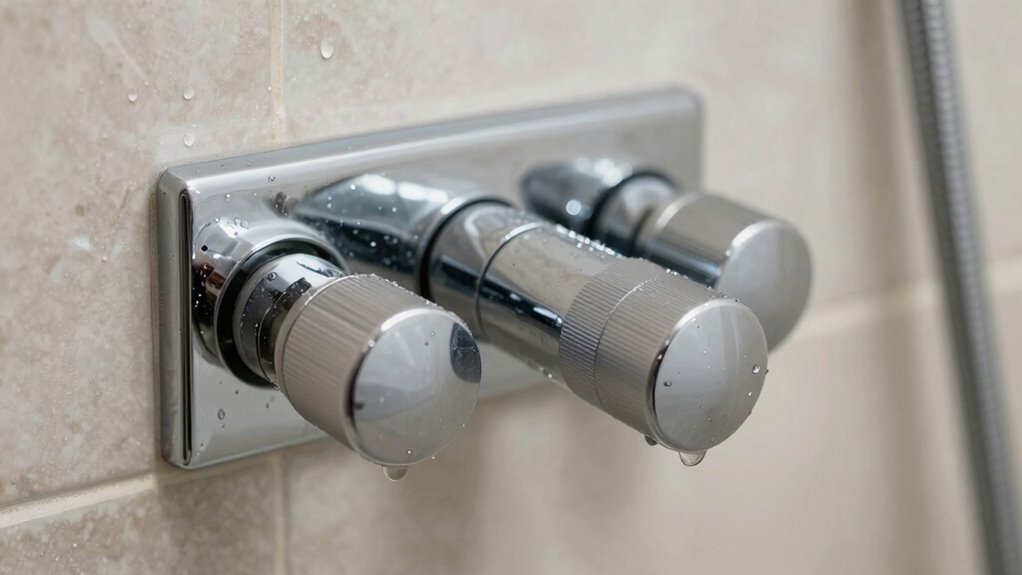
Are you familiar with the key terms that can help you make informed decisions when upgrading your shower? Understanding these terms guarantees you select the right components for your needs.
- Water Temperature: Controls how hot or cold your shower feels, often managed by thermostatic valves.
- Flow Rate: The amount of water delivered per minute, impacting shower intensity and efficiency.
- Pressure Balance: A feature that maintains consistent water temperature despite pressure fluctuations.
- Diverter: A valve that switches water flow between the showerhead, hand shower, or tub spout.
- Flow Control: Adjusts the water volume, helping you customize your shower experience and conserve water. Knowing these terms helps you choose the right system for comfort, safety, and efficiency.
Frequently Asked Questions
What Are the Latest Innovations in Shower Valve Technology?
You’ll find that the latest innovations in shower valve technology include smart thermostats and touchless controls. These advancements let you easily adjust water temperature and flow with a simple tap or voice command, enhancing convenience and safety. Some models even learn your preferences over time, ensuring a personalized experience. By integrating smart features, these new valves offer greater control, efficiency, and a touch of luxury to your shower routine.
How Does Water Temperature Regulation Affect Energy Efficiency?
Water temperature regulation improves your energy efficiency by maintaining temperature stability, reducing the need for reheating water. When you control water flow precisely, you conserve water, minimize energy waste, and lower utility bills. This balance ensures you enjoy consistent comfort without excess consumption. By managing temperature effectively, you contribute to water conservation efforts and achieve better energy savings, making your shower experience both eco-friendly and cost-efficient.
Can Different Shower Systems Be Integrated Seamlessly?
Yes, you can seamlessly integrate different shower systems by using smart shower controls and water-saving fixtures. These smart controls allow you to customize and synchronize multiple systems effortlessly, ensuring consistent water temperature and flow. Water-saving fixtures enhance efficiency while maintaining performance. With compatible components, you can enjoy a unified shower experience, reducing water waste and energy use, all while enjoying the convenience of advanced technology.
What Maintenance Is Required for Durable Shower Components?
Imagine your shower head styles shimmering like new stars each morning. To keep them shining, regularly clean the aerators and check for mineral buildup. Follow installation tips to guarantee proper sealing and prevent leaks, which can affect performance. Replace worn-out washers and tighten connections gently. With routine maintenance, your shower components stay durable, ensuring a consistent, invigorating experience every time you step in, just like the first day of installation.
Are There Eco-Friendly Options for Shower Pressure Systems?
Yes, you can choose eco-friendly fixtures and water-saving designs for your shower system. Look for low-flow showerheads and valves that limit water use without sacrificing pressure. These eco-friendly fixtures help reduce water consumption, saving you money and conserving resources. By installing water-saving designs, you guarantee a more sustainable shower experience, benefiting both the environment and your household budget.
Conclusion
Think of your shower system as a well-orchestrated symphony—each part must work in harmony. When valves, diverters, and pressure balance functions align, your shower delivers a smooth, invigorating experience every time. I once struggled with inconsistent water temperatures until I understood these terms, like tuning instruments for perfect harmony. Now, with the right knowledge, you can confidently upgrade or troubleshoot your shower, ensuring it performs flawlessly—making every shower feel like a personal spa retreat.


![Bukit Bintang Hicks Flat: DBKL Orders Cleanup After Viral Video Exposes Dirty Conditions [WATCH] - NST Online](https://homeevaly.com/wp-content/uploads/2026/08/bukit-bintang-hicks-flat-dbkl-orders-cleanup-after-viral-video-exposes-dirty-con-featured-560x300.jpg)