
Updating your electrical system is crucial for safety and meeting modern standards. You should replace outdated wiring that causes flickering, tripped breakers, or degraded insulation to prevent fire hazards and electrical shocks. Upgrading panels with circuit breakers, GFCIs, and AFCIs helps protect your home and devices. Proper installation by licensed electricians ensures compliance and durability. If you want to learn about the latest safety features and standards, keep exploring how these upgrades can improve your home’s safety.
Key Takeaways
- Upgrading outdated wiring reduces fire hazards and ensures compliance with current safety codes.
- Installing modern circuit breakers and GFCIs/AFCIs enhances safety by automatic fault detection.
- Regular inspections and panel upgrades improve durability, handle increased loads, and prevent electrical failures.
- Using insulated, up-to-date cables and components aligns with current standards for safety and reliability.
- Professional licensed electricians ensure proper installation, minimizing risks and ensuring long-term safety compliance.
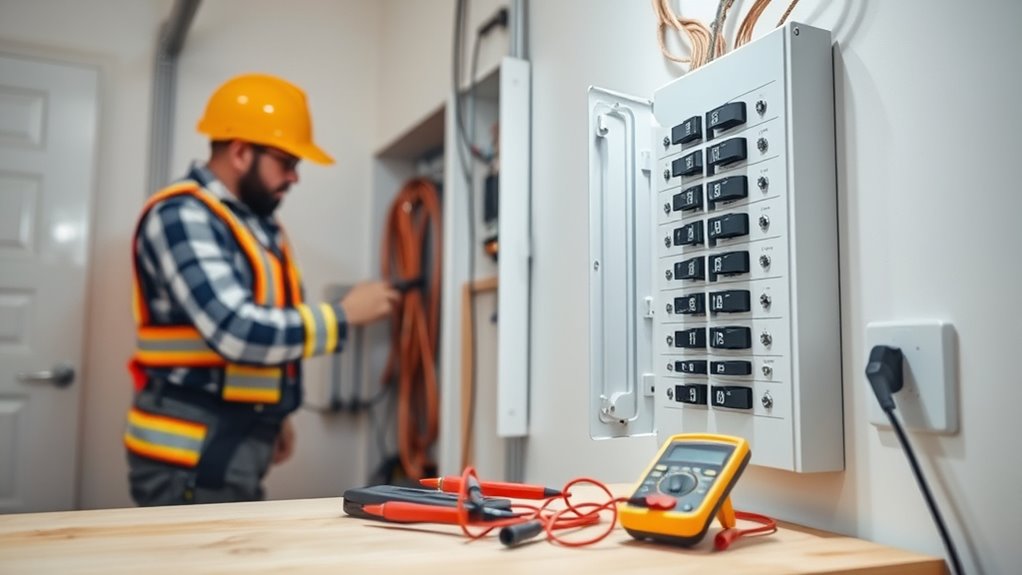
Are your electrical systems keeping up with your needs? If you’ve noticed frequent tripped breakers, flickering lights, or outlets that don’t work, it’s a clear sign that your wiring might be outdated. Modern homes and workplaces demand more power, and older electrical systems often can’t handle the load safely. This is where upgrading your wiring and focusing on circuit safety becomes essential. Upgrading your wiring isn’t just about adding more outlets or brighter lights; it’s about guaranteeing your entire system operates reliably and safely under current standards.
Outdated wiring signals safety hazards; upgrading ensures reliable, code-compliant electrical systems for your home or office.
When considering wiring upgrades, you need to evaluate the capacity of your existing system. Many older homes were built with wiring that’s no longer compliant with today’s safety codes. Over time, insulation degrades, and wires can become brittle or corroded, increasing the risk of shorts or electrical fires. Upgraded wiring improves circuit safety by reducing these hazards and providing a more stable power supply. This process involves replacing outdated wiring with modern, insulated cables that meet current electrical codes, offering better durability and protection. It also ensures your system can handle newer appliances and technology without overloading. Additionally, implementing modern safety devices like circuit breakers and GFCIs enhances overall electrical safety.
Improving circuit safety goes beyond just replacing wires; it involves installing essential safety devices like circuit breakers, ground-fault circuit interrupters (GFCIs), and arc-fault circuit interrupters (AFCIs). These devices automatically shut off power when they detect a fault, preventing potential fires or electric shocks. If you haven’t upgraded your circuit breaker panel in years, it’s time to do so. Modern panels can accommodate more circuits and include advanced safety features that protect your entire electrical system. Ensuring proper circuit safety also means checking wiring connections, outlets, and switches for signs of wear or damage. Faulty wiring or loose connections can cause sparks, shorts, or fires, so regular inspections are crucial. Staying informed about security zone info can help you understand how safety measures and modern technology work together to protect your home.
Upgrading your electrical system might seem like a formidable task, but it’s an investment in safety and efficiency. It guarantees that your system can meet your current demands while adhering to the latest safety standards. Remember, the goal is to prevent problems before they happen, which makes wiring upgrades and circuit safety enhancements invaluable. Working with licensed electricians ensures everything is done correctly and up to code. Don’t wait until minor issues turn into hazards—prioritize upgrading your electrical infrastructure now to enjoy peace of mind and a safer, more reliable power supply.

Ultimate 48 Circuit Electrical Panel Labels Kit with Cleaning Cloth, Waterproof Vinyl Breaker Labels & Directory Sheet, Tear Resistant Strong Adhesive, Easy Read Icons (Colors*48 Circuits (15 Sheets))
Complete Kit for up to 48 Circuits – Directory sheet, numbered tabs (1–48) with extra blanks, round number…
As an affiliate, we earn on qualifying purchases.
As an affiliate, we earn on qualifying purchases.
Frequently Asked Questions
How Often Should Electrical Systems Be Inspected for Safety?
You should inspect your electrical system at least every 3 to 5 years to guarantee safety. Regular inspections help catch issues like circuit overload or grounding problems before they cause hazards. If you notice flickering lights, frequent breaker trips, or warm outlets, schedule an inspection sooner. Staying proactive reduces risks and keeps your system compliant with modern safety standards, protecting both your property and loved ones.
What Are the Signs of Outdated Electrical Wiring?
Your electrical system might be crying out for help if you notice flickering lights, frequent blown fuses, or outlets that don’t work. Knob and tube wiring often shows signs of age, and an outdated fuse box struggles to keep up with modern power needs. If your wiring looks old, frayed, or mismatched with current standards, it’s time to think about upgrades to prevent hazards and ensure safety.
Are Smart Home Systems Compatible With Modern Electrical Standards?
Yes, smart home systems are compatible with modern electrical standards, but wiring compatibility varies. You need to make sure your wiring can support smart devices and integration features. If your wiring is outdated or not properly grounded, it might limit smart home integration. It’s wise to have a professional assess your electrical system to confirm compatibility and update wiring if necessary, ensuring safe and seamless smart home functionality.
What Permits Are Required for Electrical Upgrades?
Think of electrical upgrades like opening a treasure chest—you need the right keys. You’ll require electrical permits to guarantee safety compliance, which act as those keys. These permits verify that your project meets local codes and standards. Before starting, check with your city or county’s building department. Securing these permits keeps your home safe, avoids fines, and guarantees your upgrade aligns with modern safety standards.
How Does Upgrading Impact Home Insurance Policies?
Upgrading your electrical system can positively impact your home insurance policies by providing insurance benefits like enhanced safety and compliance. Insurance companies often view modern upgrades favorably, which may lead to premium adjustments—potentially lowering your rates. These upgrades reduce risks of electrical fires and damage, making your home safer and more insurable. Always inform your insurer about the improvements to guarantee you receive the appropriate coverage benefits.

Leviton GFCI Switch Outlet Combo, 15 Amp, Self Test, Tamper-Resistant with LED Indicator Light, Saves Space, GFSW1-W, White
Designed to improve immunity for reduced High Frequency (HF) nuisance tripping. providing increased compatibility with appliances and other…
As an affiliate, we earn on qualifying purchases.
As an affiliate, we earn on qualifying purchases.
Conclusion
As you update your electrical system, picture a safer, brighter home glowing with modern standards. Sparks of outdated wiring fade away, replaced by a sleek, secure network that powers your life smoothly. Imagine flickering lights giving way to steady, confident illumination, signaling peace of mind. With each upgrade, you create a sanctuary where safety and efficiency shine brightly, shielding you from future hazards. Embrace these changes, and watch your home become a well-lit haven of reliability and peace of mind.
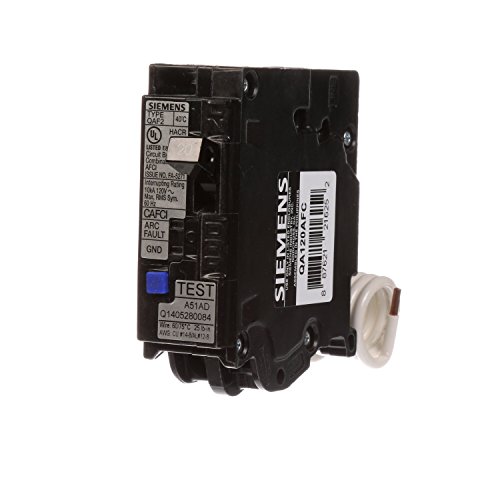
Siemens QA120AFC 20-Amp Single Pole 120-volt Plug-On Combination AFCI Breaker
Single pole, 20 Amp, Combination type AFCI circuit breaker
As an affiliate, we earn on qualifying purchases.
As an affiliate, we earn on qualifying purchases.

Skar Audio 1/0 Gauge OFC Big 3 Complete Upgrade Electrical Wiring Kit, SKBIG3-0GA
1/0 Gauge 99.99% Oxygen Free Copper Big 3 Wiring Upgrade Kit
As an affiliate, we earn on qualifying purchases.
As an affiliate, we earn on qualifying purchases.