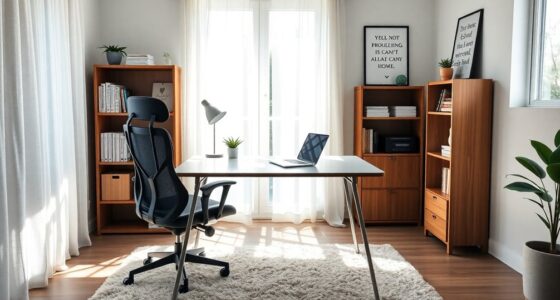

To install acoustic panels that don’t look like a studio, focus on placing them at key reflection points, such as walls opposite speakers or seating areas, and on high-traffic or sound-reflective zones. Opt for sleek, minimalist designs that match your wall color or blend into decor, and hide panels behind artwork or furniture. Avoid cluttered spots and uneven placement; instead, thoughtfully position panels for both soundproofing and style. Keep exploring for tips to seamlessly enhance your space.
Key Takeaways
- Install panels at reflection points like side walls and behind seating to optimize sound absorption discreetly.
- Choose sleek, color-matched panels that blend seamlessly with wall tones for a subtle appearance.
- Use decorative elements or artwork to conceal panels while maintaining acoustic effectiveness.
- Place panels at ear level and avoid cluttered areas for unobtrusive, functional placement.
- Distribute panels evenly across key sound-reflective surfaces to prevent hotspots and ensure balanced acoustics.

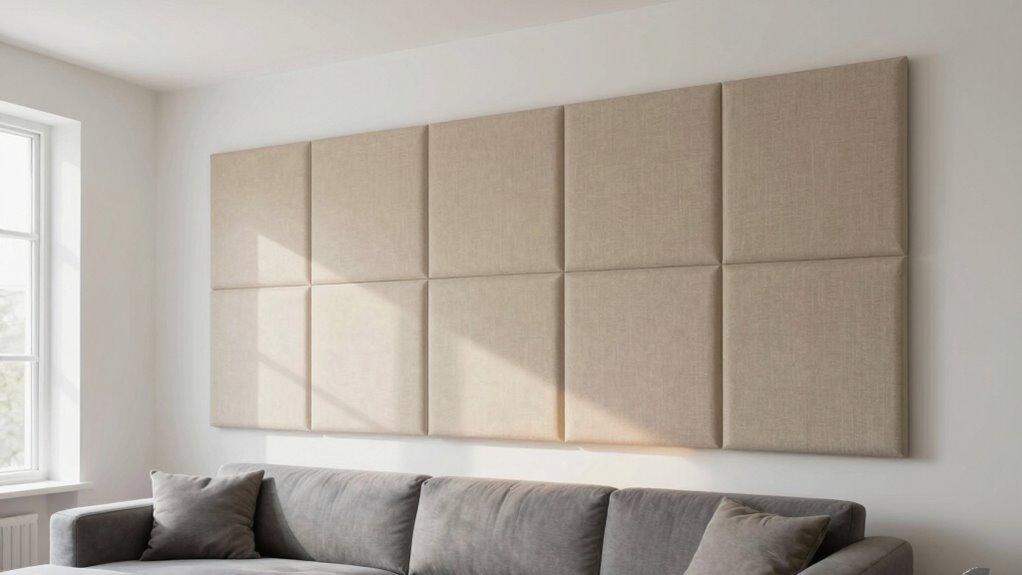
Soon Global Acoustical Wall Panels, 6-Piece 23.62 X 23.62 Inches Art Acoustic Panels, Decorative Acoustic Panels, Acoustic Wall Panels, Sound Absorbing Wall Art, Arcadian Vortex
Superior Acoustic Performance–Crafted from high-density polyester fiber, these groove-patterned panels are engineered for superior sound absorption. The linear…
As an affiliate, we earn on qualifying purchases.
As an affiliate, we earn on qualifying purchases.
Why Discreet Acoustic Panels Are a Game-Changer for Home and Office Sound
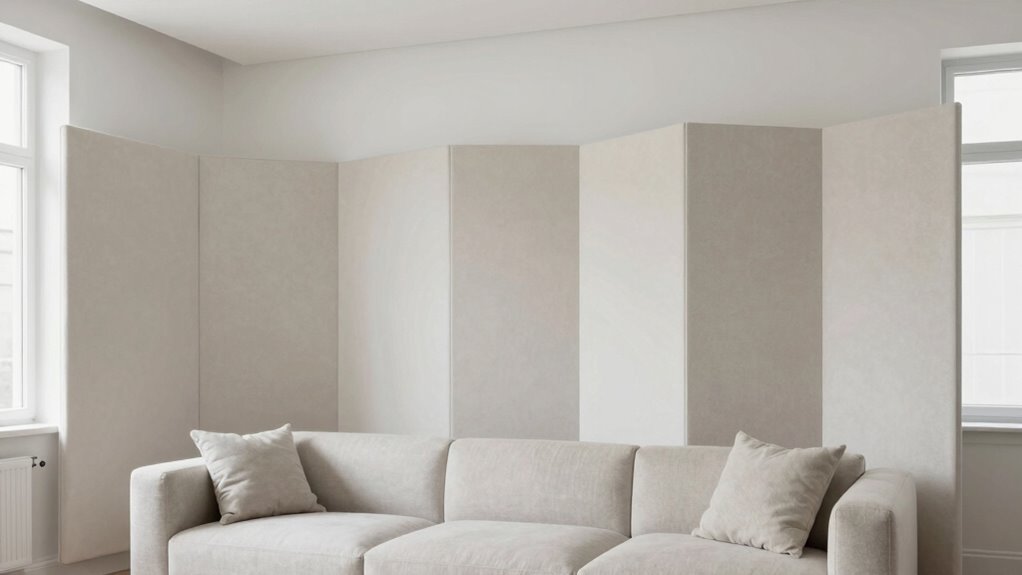
Discreet acoustic panels are transforming how we think about sound management in homes and offices. They effectively reduce background noise, making your space quieter and more comfortable. Unlike bulky, obvious panels, these discreet options blend seamlessly into your decor, so you don’t have to compromise style for function. They target sound reflection, which often causes echo and muddiness in rooms, improving clarity whether you’re working, relaxing, or hosting. By absorbing sound waves without drawing attention, they create a more balanced acoustic environment. This subtle enhancement allows you to enjoy better sound quality without the visual clutter of traditional panels. For optimal integration, consider how door swings and stair proportions contribute to the overall acoustics of your space. Additionally, understanding room dimensions and layout can help you strategically position panels for maximum effectiveness. Proper placement can also influence the contrast ratio of your audio environment, enhancing overall sound clarity. As a result, your space becomes more functional and inviting, all while maintaining a sleek, modern look.

Focusound 52 Pack Acoustic Foam Panels 1" x 12" x 12" Sound Proof Foam Panles Soundproofing Noise Cancelling Wedge Panels for Home Office Recoding Studio with 300PCS Double-Side Adhesive
Soundproofing – Acoustic foam panels triangular grooves structure for better noise absorption, helps to reduce and absorb unwanted…
As an affiliate, we earn on qualifying purchases.
As an affiliate, we earn on qualifying purchases.
How to Pick Stylish Acoustic Panels That Disappear
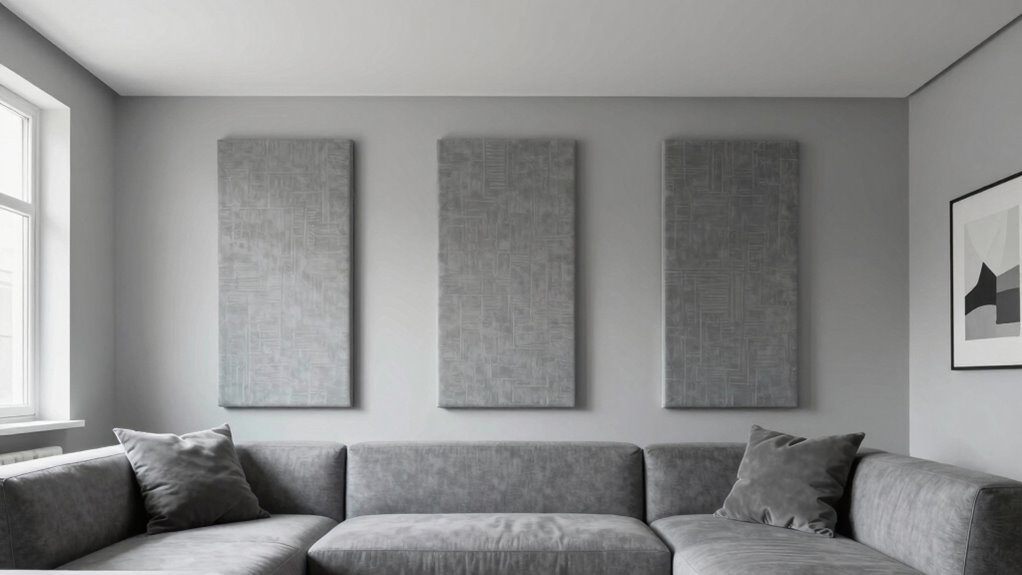
Choosing the right acoustic panels starts with considering the materials that blend seamlessly into your space. You should also think about color and patterns that match your decor while remaining subtle. Additionally, selecting panels with sound absorption qualities can significantly improve your room’s acoustics without compromising aesthetics. Incorporating battery-powered solutions or wireless options can also help maintain a clean, unobtrusive appearance. Proper installation techniques ensure these panels are both effective and discreet, enhancing your environment without drawing attention to themselves. To maximize their effectiveness, it’s important to consider room acoustics and how sound interacts within your space. Finally, strategic placement ensures these panels enhance sound quality without drawing attention to themselves.
Material Choices Matter
Selecting the right materials is key to guaranteeing your acoustic panels blend seamlessly into your space. The choice of fabric textures and acoustic fabric influences how well they integrate with your decor. Consider these options:
- Fabric textures: Choose smooth, woven, or textured fabrics that complement your room’s style.
- Acoustic fabric: Opt for specialized acoustic fabric designed to absorb sound without sacrificing aesthetics.
- Color matching: Pick neutral or matching tones to make panels disappear into the background.
- Material durability: Ensure fabrics are durable enough for your environment, especially in high-traffic areas. Incorporating cultural relevance into your material choices can enhance the aesthetic harmony and support a sense of community connection within your space. Additionally, understanding curiosity can inspire you to explore innovative design options that better suit your environment, especially when considering sustainable materials for eco-conscious projects. Being aware of free floating design elements can also help in creating a cohesive and unobtrusive acoustic solution. Exploring material innovation can further lead to discovering new fabrics that combine durability with visual subtlety.
Color and Pattern Options
When aiming for acoustic panels that blend seamlessly into your space, color and pattern play essential roles. Choosing the right color options helps panels fade into the background, matching wall tones or neutral shades. Neutral colors like gray, beige, or white are versatile, ensuring the panels don’t stand out. If you want a subtle touch of style, select panels with a pattern variety that complements your décor without overpowering it. Textured or patterned panels in subdued hues can add visual interest while remaining unobtrusive. The goal is to find options that enhance your room’s aesthetic without drawing attention. With thoughtful selection, your panels will serve their acoustic purpose while maintaining a clean, stylish look that feels integrated rather than intrusive. Additionally, understanding vinyl cutter settings can help you customize panel covers or patterns for a more personalized touch. Incorporating color-matching techniques can further ensure that your acoustic panels seamlessly blend into your décor. To optimize the aesthetic integration, consider experimenting with different pattern styles that align with your interior design theme. As seen in some trendy interiors, choosing zodiac-inspired motifs can subtly reflect personal style while remaining unobtrusive.
Strategic Placement Tips
To make your acoustic panels truly blend into your space, strategic placement is key. Proper positioning helps reduce background noise and improves room acoustics without sacrificing style.
Consider these tips:
- Place panels at ear level where sound reflections bounce, typically on side walls.
- Target hard surfaces like windows or bare walls to absorb sound effectively.
- Use multiple panels in key areas, such as behind your seating or near the source of noise.
- Avoid cluttered spots; instead, opt for discreet locations that still maximize sound absorption.
- Incorporate sound-absorbing materials into your placement plan to enhance overall effectiveness without compromising aesthetics.
- Keep in mind that acoustic treatment can be more effective when strategically integrated with your existing decor, ensuring both functionality and style.
- Additionally, consider room dimensions and layout to optimize panel placement for better acoustic performance.
- Utilizing room analysis tools can help identify the most effective spots for panel placement, ensuring optimal sound quality.

Soon Global 8-Pack Acoustical Wall Panels, 48 X 32 Inches Art Acoustic Panels, Decorative Acoustic Panels, Acoustic Wall Panels, Sound Absorbing Wall Art, Teal Aura
Superior Soundproofing: Constructed with high-density polyester fiber material, our panels excel in sound absorption, effectively reducing unwanted noise…
As an affiliate, we earn on qualifying purchases.
As an affiliate, we earn on qualifying purchases.
Where to Install Acoustic Panels for the Best Soundproofing

For the best soundproofing results, you should focus on installing acoustic panels in areas where sound naturally gathers and reflects. These spots include walls behind speakers, along side walls, and near corners where sound can bounce and amplify. Proper panel positioning is key to maximizing sound absorption. Place panels at ear level in listening areas and on reflective surfaces to reduce echo and improve clarity. Don’t forget to cover primary reflection points, such as the wall opposite your speakers and the ceiling above. Additionally, considering the room’s layout can help identify other high-reflectivity zones that benefit from acoustic treatment. Using eco-friendly materials for your panels can also contribute to an environmentally conscious setup. Understanding sound reflection principles can further optimize your panel placement for better acoustics. By strategically installing panels in these high-traffic and sound-reflective zones, you’ll enhance soundproofing without cluttering your space. This targeted approach ensures you get the most effective sound absorption, making your environment soundproof and acoustically balanced.

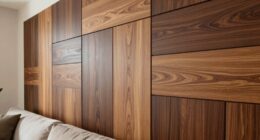
Art3d 4-Pack 12" x 93" Soundproof Wood Slat Panels, 31 sq.ft Acoustic Wall Panels, 3D Wall Panels with Wood Slat Design, Decorative Wood Wall Panel for Accent Walls-Deep Walnut
Efficient Full-Wall Solution: Just 4 panels deliver complete 31 sq. ft. coverage. Their 93-inch length is ideal for…
As an affiliate, we earn on qualifying purchases.
As an affiliate, we earn on qualifying purchases.
Common Placement Mistakes That Hurt Your Sound Quality
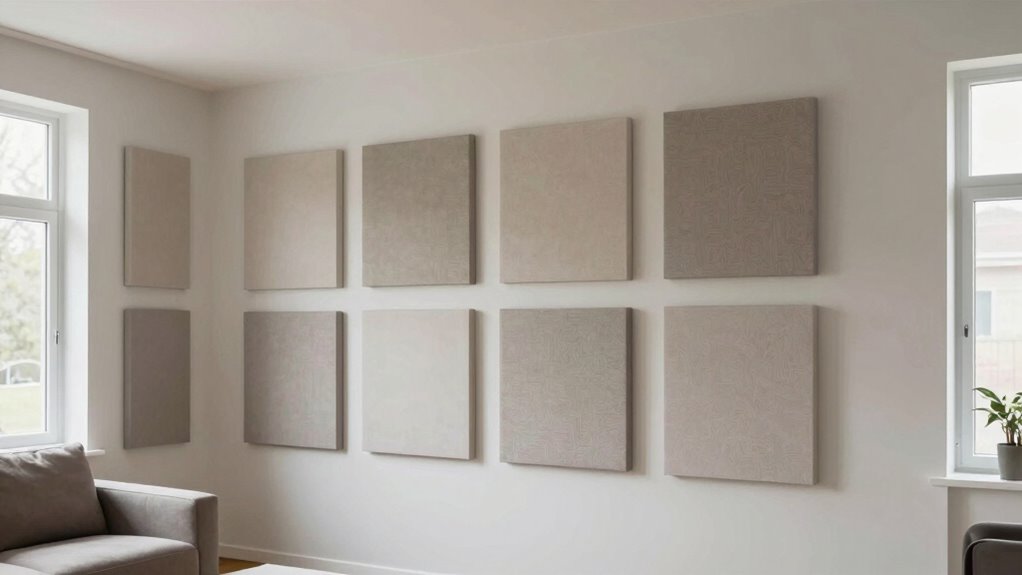
One common mistake that can undermine your sound quality is improper placement of acoustic panels, which often results in less effective sound absorption or even echo amplification. Poor placement can turn your space into an echo chamber or increase sound leakage, reducing clarity. To avoid this:
Improper acoustic panel placement can cause echoes, sound leakage, and reduced clarity.
- Avoid placing panels only on one wall; it creates unbalanced absorption.
- Don’t forget to cover reflective surfaces like windows and hard floors.
- Steer clear of placing panels too high or too low, missing key sound reflection points.
- Don’t ignore corners—bad placement here can trap sound or cause uneven absorption.
These mistakes can intensify echoes and sound leakage, degrading your audio experience. Proper placement is vital to truly improve sound quality without creating new issues.
Tips for Seamless Acoustic Panel Integration With Your Decor

Integrating acoustic panels seamlessly into your decor guarantees your space looks great while sounding its best. To achieve wall mounted aesthetics, choose panels that blend with your wall color or have sleek, minimalist designs. Position them strategically to avoid disrupting your room’s style, such as behind artwork or along architectural features. Furniture integration is also effective—consider placing panels near bookshelves, behind couches, or within custom-built cabinetry for a natural look. Keep the setup cohesive by matching materials and tones with your existing furniture and decor elements. This approach ensures your acoustic treatment enhances your space without drawing attention. The key is to make panels feel like a part of your interior design, not an afterthought.
How to Assess and Fine-Tune Your Acoustic Treatment
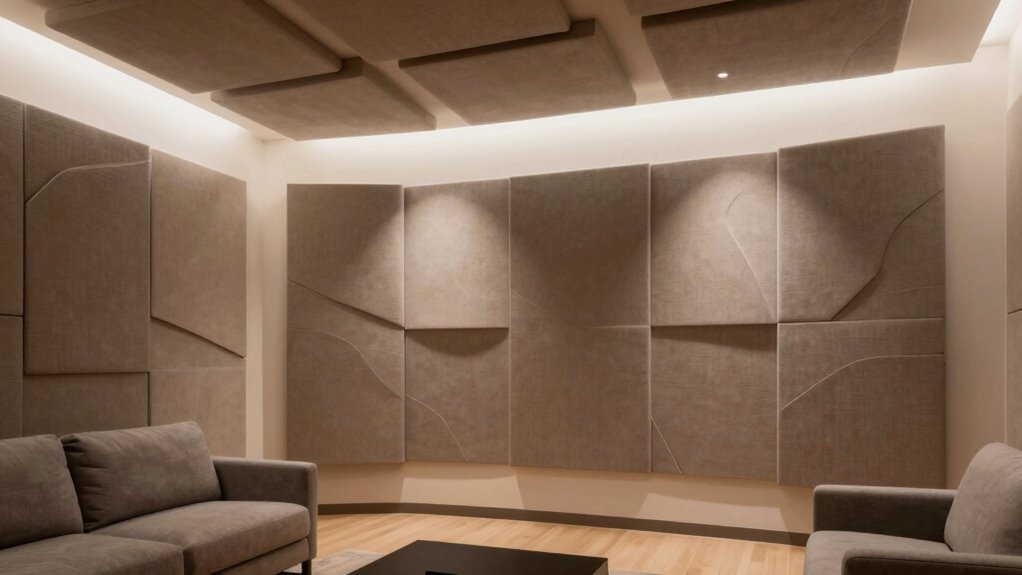
Evaluating and fine-tuning your acoustic treatment is essential to achieving ideal sound quality in your space. Start by listening critically and identifying problem areas where sound absorption may be lacking or excessive. Use a sound meter or app to measure frequency response and identify resonances. Adjust your setup by repositioning panels or adding more where needed. Regularly re-assess to guarantee superior acoustic optimization.
Here are key steps:
- Check for uneven sound absorption across the room.
- Identify spots with echo or dead zones.
- Move panels incrementally to improve sound diffusion.
- Confirm changes by listening and measuring again.
This process helps you fine-tune your treatment for balanced acoustics, ensuring your space sounds clear without looking like a studio.
Quick Checklist for Effective, Discreet Soundproofing

To achieve effective, discreet soundproofing, start by carefully placing your panels in key areas where sound escapes or enters. Choose materials that blend seamlessly with your decor, avoiding bulky or obvious solutions. Keep these tips in mind to enhance soundproofing without sacrificing style.
Strategic Placement Tips
Strategic placement is key to ensuring your acoustic panels work effectively without drawing attention. To maximize their impact, consider these tips for maintaining decorative design and acoustic aesthetics:
- Place panels at primary reflection points, such as walls opposite your speakers or seating areas.
- Use artwork or decorative elements to hide panels without compromising acoustics.
- Mount panels at ear level for better sound absorption and visual balance.
- Distribute panels evenly across the room to prevent sound hotspots and maintain a cohesive look.
Discreet Material Choices
Choosing the right materials can make all the difference when aiming for discreet soundproofing. Opt for fabric textures that blend seamlessly with your existing decor, avoiding bulky or industrial-looking options. Soft, plush fabrics or woven textiles help absorb sound without adding visual clutter. Wall integration is key—select materials that can be easily incorporated into your walls, such as fabric-covered panels or specialized wall coverings that conceal soundproofing layers. These choices prevent the appearance of traditional acoustic panels, maintaining a clean, understated look. Using discreet materials ensures your space remains stylish while effectively reducing noise. Focus on subtle, wall-integrated options that complement your interior design, so soundproofing becomes invisible yet highly functional.
Frequently Asked Questions
Can Discreet Acoustic Panels Improve Sound Quality in Large Rooms?
Yes, discreet acoustic panels can substantially improve sound quality in large rooms. You can choose decorative wall art with acoustic fabric choices that blend seamlessly into your decor. Proper placement, like mounting panels at reflection points, enhances sound absorption without sacrificing style. These panels reduce echo and noise, creating a more comfortable space. With smart placement and attractive fabric options, you get both aesthetics and improved acoustics without the typical studio look.
Are There Specific Materials That Enhance Both Aesthetics and Soundproofing?
Think of your space as a canvas; the right materials are your paintbrushes. You’ll find that fabric choices like linen, velvet, or woven textiles enhance both aesthetics and soundproofing. Opt for panels with dense, sound-absorbing cores wrapped in colorful fabrics, offering a variety of color options to match your decor. This combo creates a seamless blend of style and function, transforming your room into a stylish, sound-efficient sanctuary.
How Do Acoustic Panels Affect Room Acoustics Over Time?
Acoustic panels improve room acoustics over time by providing consistent sound absorption, reducing echo, and controlling noise levels. Their acoustic durability guarantees they maintain effectiveness despite regular use or environmental changes. As you position and maintain them properly, you’ll notice a lasting impact on sound quality, creating a more comfortable space. Over months, these panels continue to absorb sound and sustain their performance, enhancing your room’s acoustics sustainably.
Can DIY Installation Ensure Optimal Sound Absorption?
Yes, DIY installation can guarantee ideal sound absorption if you carefully follow instructions and use quality soundproof materials. You should choose the right placement and secure the panels firmly to maximize their effectiveness. Take your time to measure and position panels correctly, and consider using soundproof materials like foam or fabric-wrapped panels. This hands-on approach allows you to customize your space while improving acoustics without professional help.
Do Discreet Panels Require Special Maintenance or Cleaning?
Discreet panels generally require minimal maintenance, but you should consider panel durability and cleaning frequency. To keep them looking good, dust them regularly with a soft cloth or vacuum attachment. Avoid harsh chemicals, as they can damage the material. Typically, cleaning once every few months suffices unless they’re exposed to dirt or smudges more often. Proper upkeep guarantees your panels stay effective and discreet for years to come.
Conclusion
Remember, the best soundproofing blends into your space without sacrificing style. When you choose discreet acoustic panels and place them thoughtfully, you create a peaceful environment that feels natural and inviting. Don’t forget, it’s not just about noise reduction but about making your space work for you. As the saying goes, “A well-chosen accent speaks volumes,” so trust your instincts and enjoy a beautifully sound-balanced room.