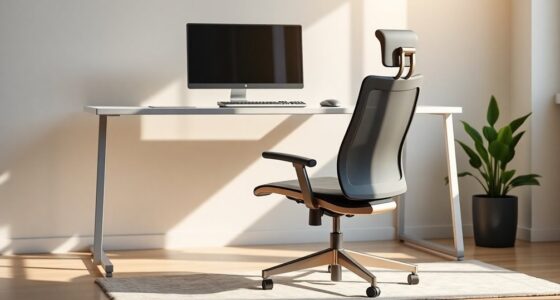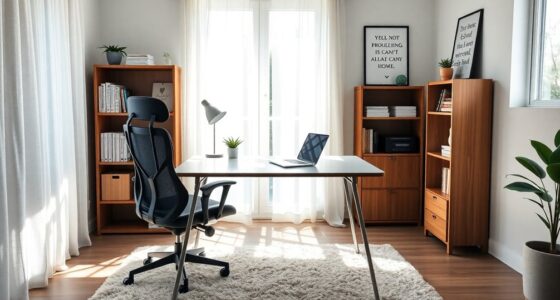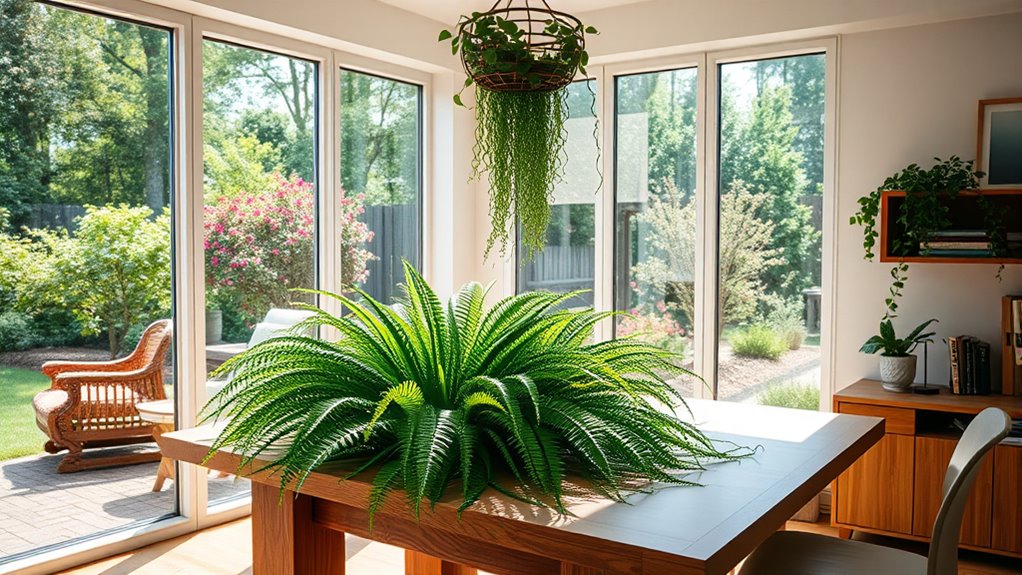

Incorporating biophilic design into your home office involves adding lush plants, natural materials like wood or stone, and maximizing views of nature through windows or artwork. These elements boost air quality, enhance your mood, and create a calming environment that supports focus and well-being. By connecting with natural textures, sights, and scents, you can transform your workspace into a restorative haven. Continue exploring to discover simple ways to enhance your home office with natural design.
Key Takeaways
- Incorporate indoor plants like pothos and snake plants to naturally purify air and add calming visuals.
- Use natural materials such as wood, stone, and rattan to create a warm, tactile, and eco-friendly workspace.
- Position desks near windows with views of nature to boost mood, focus, and reduce stress.
- Integrate natural decor elements like woven baskets, jute rugs, and cork boards to enhance biophilic aesthetics.
- Design with ample natural light and good ventilation to promote health, alertness, and a connection to the outdoors.

As more people work from home, incorporating biophilic design into your home office can considerably boost your well-being and productivity. Creating a space that connects you with nature isn’t just about aesthetics; it influences how you feel and perform throughout the day. One of the first steps is to focus on indoor air quality. Good air quality helps you stay alert and reduces fatigue, so ensure your space is well-ventilated. Use air purifiers with HEPA filters, open windows regularly, and incorporate plants that naturally filter toxins. Greenery like pothos, snake plants, or peace lilies can improve air quality while adding visual appeal. These plants not only purify the air but also serve as calming visual elements that strengthen your connection to nature.
Another essential aspect is choosing ergonomic furniture. When your workspace supports your body, it minimizes discomfort and helps maintain focus. Opt for a desk and chair that promote proper posture, reducing strain on your neck, back, and wrists. Adjustable desks, ergonomic chairs with lumbar support, and footrests can make a significant difference. When your body feels supported, you’re less likely to experience fatigue or distraction, enabling you to stay engaged longer. Combining ergonomic furniture with natural materials, like wooden desks or bamboo accessories, enhances the biophilic effect, making your workspace more inviting and aligned with nature.
Incorporating views of the outdoors also plays a crucial role. If possible, position your desk near a window that offers a view of trees, gardens, or natural landscapes. Even if you don’t have a direct view, adding large windows or glass doors can flood your workspace with natural light, which boosts mood and productivity. If natural views are limited, consider using nature-inspired artwork or photographs to evoke a sense of calm. These visual connections to nature help reduce stress and create a more restorative environment.
Lastly, integrating natural materials into your office space enhances the biophilic atmosphere. Use materials like wood, stone, and rattan for furniture and decor. These textures evoke a tactile connection to nature and create a warm, inviting environment. Adding elements like woven baskets, jute rugs, or cork boards can also reinforce the natural aesthetic. Additionally, natural materials can help improve indoor air quality by reducing synthetic emissions. When your home office incorporates these elements—improving indoor air quality, supporting ergonomic needs, and providing visual access to nature—you create a workspace that nurtures both your mental and physical health. This thoughtful approach ensures that your home office isn’t just a place to work but a sanctuary that energizes and sustains you.

PuroAir 240 HEPA Air Purifier for Home Large Rooms – Covers Up To 1,000 Sq Ft – Filters Up To 99.9% of Pollutants, Smoke, Pollen, Dust – Quiet HEPA Air Filter – Air Purifiers for Bedroom
Cleaner Air in Minutes: PuroAir is proven to filter the pollutants lurking in your home’s air. This large…
As an affiliate, we earn on qualifying purchases.
As an affiliate, we earn on qualifying purchases.
Frequently Asked Questions
How Does Biophilic Design Affect Mental Health in Home Office Workers?
Biophilic design helps you feel less stressed and more focused when working from home. By incorporating plants, natural materials, and views of nature, you experience stress reduction and cognitive enhancement. These elements create a calming environment that boosts your well-being and productivity. As a result, you can concentrate better, feel more relaxed, and maintain a healthier mental state while working in your home office.
What Are Cost-Effective Ways to Incorporate Natural Elements Into Small Home Offices?
Think of your small home office as a blank canvas waiting for a splash of greenery. To add natural elements cost-effectively, incorporate low-maintenance, budget-friendly greenery like succulents or pothos. Use natural decor tips like bamboo or cork accents, or hang simple nature-inspired artwork. These small touches boost your space’s connection to nature without breaking the bank, creating a calming atmosphere that enhances focus and wellbeing.
Can Biophilic Design Improve Productivity Beyond Aesthetic Benefits?
Yes, biophilic design can boost your productivity beyond just looking good. Thoughtful plant placement helps reduce stress and improve focus, while careful material selection creates a calming environment. By integrating natural elements, you can enhance your mood, increase alertness, and foster creativity. When you surround yourself with natural textures and greenery, you create a workspace that supports mental clarity and sustained energy, making you more efficient and motivated throughout your day.
What Are the Best Indoor Plants for Low-Light Home Office Environments?
Think of low-light plants like the resilient snake plant or pothos, thriving in dim corners of your home office. These plants are excellent for air purification and pest control, helping to improve your workspace environment. They require minimal sunlight, making them perfect for low-light conditions. Plus, their easy care means you can enjoy a touch of nature without extra effort, boosting your mood and focus every day.
How Can I Balance Technology Use With Natural Elements in My Workspace?
You can balance technology use with natural elements by intentionally integrating tech with your natural surroundings. Use tech integration tools like smart lighting that mimics natural daylight, or sound systems that play nature sounds. Keep a natural balance by placing indoor plants nearby your workspace and incorporating natural materials, such as wood or stone, into your desk setup. Regularly step outside to reconnect with nature, reducing digital fatigue and enhancing your overall well-being.
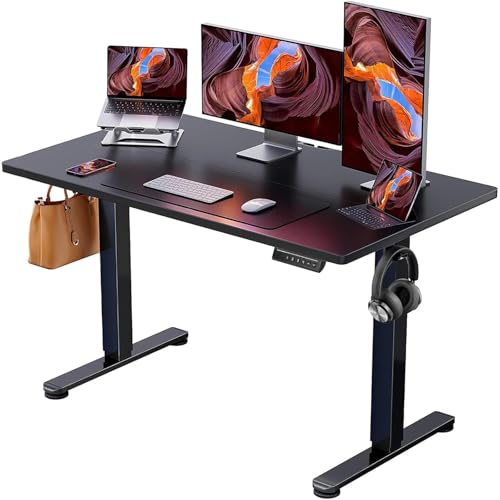
ErGear Height Adjustable Electric Standing Desk, 47.2 x 23.6 Inches Sit Stand up Desk, Memory Computer Home Office Desk (Black)
Outstanding Stability: This electric standing desk has a sturdy solid steel frame with aerospace-grade lifting column connectors (still…
As an affiliate, we earn on qualifying purchases.
As an affiliate, we earn on qualifying purchases.
Conclusion
Incorporating biophilic design into your home office isn’t just about aesthetics—it boosts your well-being and productivity. Some might think adding plants and natural views is too time-consuming or costly. But even small changes, like a few houseplants or a window view, can make a big difference. Embrace these simple, natural elements to create a workspace that feels calming and inspiring—your mind and body will thank you for it.

SEDETA Farmhouse 70.9" Executive Desk, Home Office Desk with File Drawers and Storage Cabinet, Computer Desk with Power Outlet for Home Office, Work Study Writing, Natural Oak
【Farmhouse Office Desk】Featuring vintage farmhouse design with elegant wood grain, it adds warm, cozy charm to your space….
As an affiliate, we earn on qualifying purchases.
As an affiliate, we earn on qualifying purchases.

Essential Houseplant Collection (4PK) Live Plants Indoor Plants Live Houseplants in Plant Pots, Easy House Plants Indoors Live, Snake Plant, Pothos in Potting Soil, Clean Air Plants by Plants for Pets
HOUSE PLANT BOX: Includes a rotating assortment of 4 greenhouse-grown, low-maintenance plants in 4.25" nursery pots
As an affiliate, we earn on qualifying purchases.
As an affiliate, we earn on qualifying purchases.