
When you’re choosing an ergonomic chair for neck pain, start with the headrest positioning. It’s essential to adjust the height so it supports your neck’s natural curve. If it’s too high or low, it can twist your head awkwardly, leading to discomfort. A well-placed headrest cradles the back of your head, reducing strain during long hours of sitting. Proper headrest positioning is just the beginning of achieving ultimate comfort, and there’s more to take into account for a pain-free experience.

Get furniture and decor delivered free with Prime
- Fast, free delivery on millions of items
- Prime Video, Amazon Music and more included
- Member-only deals all year
Key Takeaways
- Proper headrest height supports the natural curve of the neck, reducing strain and discomfort.
- A well-positioned headrest cradles the back of the head, promoting better alignment.
- Adjusting the headrest can alleviate awkward head positioning, enhancing overall comfort.
- Regular breaks combined with a properly adjusted headrest can significantly reduce neck tension.
- Investing in ergonomic chairs with adjustable headrests is essential for long-term neck pain relief.
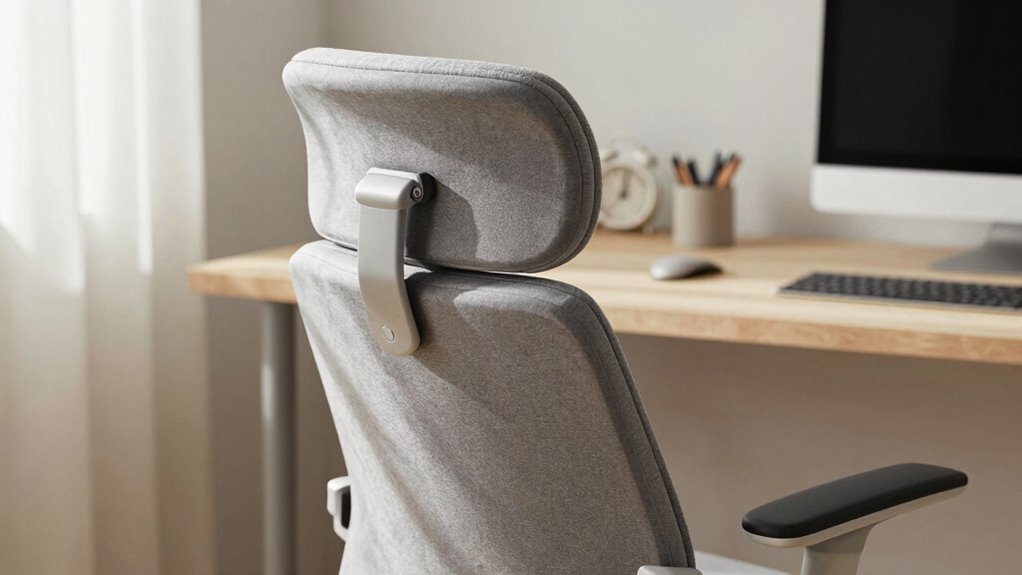
If you’ve ever spent hours hunched over a desk, you know how quickly neck pain can set in. You might not realize it, but the position of your headrest plays an important role in preventing that discomfort. An ergonomic chair with proper headrest adjustment can make a world of difference. If your chair’s headrest isn’t positioned correctly, it can strain your neck, leading to pain that distracts you from your work.
When you sit down, the first thing to check is the height of your headrest. It should support the natural curve of your neck, allowing your head to rest comfortably. If it’s too low, you’ll find yourself straining to keep your head upright. If it’s too high, it may push your head forward, which isn’t good for your posture. Take a moment to adjust it until it cradles the back of your head without forcing your neck into an awkward angle.
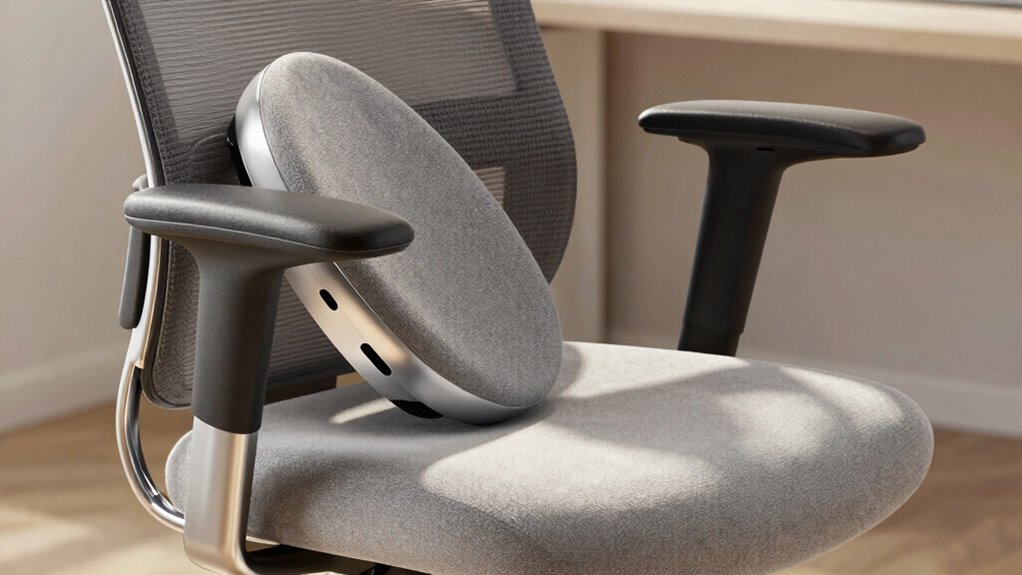
Don’t underestimate the importance of lumbar support, either. A chair designed with good lumbar support will help maintain the natural curve of your spine. When your lower back is well-supported, you’re less likely to slouch, which can lead to neck strain. Make sure the lumbar support aligns with the curve of your lower back. You should feel a gentle push against your lower spine, and not an uncomfortable pressure. Additionally, understanding ergonomic principles can help you make better adjustments for overall comfort. Proper posture is essential for avoiding musculoskeletal issues and ensuring long-term comfort.
Also, consider how you’re seated. Your feet should rest flat on the ground, with your knees slightly lower than your hips. This position helps maintain good posture, reducing the likelihood of tension building up in your neck. If your chair isn’t adjustable, you might want to use a footrest to achieve the right height. Paying attention to your overall seating alignment and ergonomic setup can prevent discomfort before it starts.
Remember to take breaks, too. Even the best ergonomic chair can’t replace the benefits of standing up and stretching periodically. A quick walk or some neck stretches can alleviate tension and keep you feeling refreshed.
Investing in an ergonomic chair that allows for headrest adjustment and provides solid lumbar support is vital for your long-term comfort. It’s not just a luxury; it’s a necessity, especially if you spend long hours sitting. Proper headrest positioning and ergonomic support are key components in preventing neck pain and promoting good posture. By making these adjustments, you’re taking proactive steps toward a pain-free work environment. Prioritize your comfort, and your neck will thank you.
ergonomic office chair with adjustable headrest
As an affiliate, we earn on qualifying purchases.
As an affiliate, we earn on qualifying purchases.
Frequently Asked Questions
How Do I Choose the Right Ergonomic Chair for My Height?
To choose the right ergonomic chair for your height, start by adjusting the seat depth so your back rests comfortably against the lumbar support. Make certain your feet are flat on the ground, and your knees are at a 90-degree angle. Check that the armrests align with your elbows for ideal comfort. Don’t forget to take into account the chair’s height range to guarantee it suits your specific needs. Your comfort’s key!
Can I Use a Regular Chair With a Headrest for Neck Pain Relief?
Sure, you can use a regular chair with a headrest for neck pain relief, but isn’t it ironic how something so simple can be so complicated? If the headrest height doesn’t align with your neck, it might just become another source of discomfort. You’ll want to guarantee it offers adequate neck support while you sit. Just remember, without proper ergonomics, your regular chair might not be the miracle solution you hoped for.
What Materials Are Best for Ergonomic Chair Cushions?
For the best ergonomic chair cushions, you can’t go wrong with memory foam and gel cushions. Memory foam conforms to your body, providing excellent support and relieving pressure points. Gel cushions add a cooling effect, making long hours in your chair more comfortable. Together, they help maintain proper posture and reduce discomfort. When choosing, look for high-density options to guarantee durability and support. You’ll notice a significant difference in your comfort level!
How Often Should I Adjust My Chair While Working?
You should adjust your chair every hour or so to maintain ideal chair alignment. Frequent adjustments help guarantee your posture stays correct, reducing strain on your neck and back. Pay attention to how you feel; if you notice discomfort, it’s a sign to tweak your setup. Regularly checking your adjustment frequency can make a big difference in your comfort and productivity while working, so don’t overlook it!
Are There Specific Stretches to Complement Ergonomic Chair Use?
Yes, there are specific stretches to complement your ergonomic chair use. Incorporate stretch routines like neck rolls, shoulder shrugs, and upper back twists to relieve tension. Remember to take breaks every hour to stand and stretch. Posture tips include keeping your feet flat on the ground and your back supported. Regularly practicing these stretches and maintaining good posture can enhance your comfort and productivity throughout the day.
Conclusion
To sum up, finding the right ergonomic chair with proper headrest positioning can feel like discovering a treasure chest of comfort. You’ll not only alleviate neck pain but also transform your workspace into a haven of productivity. Remember, a well-adjusted chair isn’t just furniture; it’s your partner in achieving peak performance. So, invest in your comfort today, and watch your aches fade away like a distant memory. Your neck will thank you!
Fall Picks
fall essentials
As an affiliate, we earn on qualifying purchases.