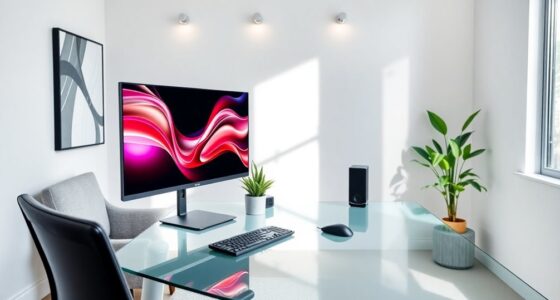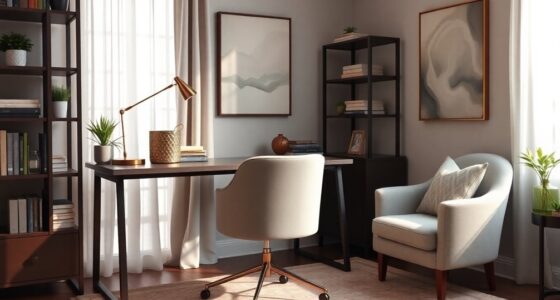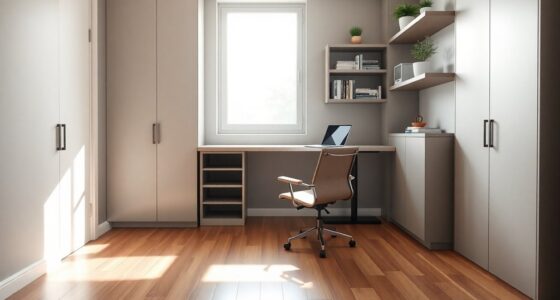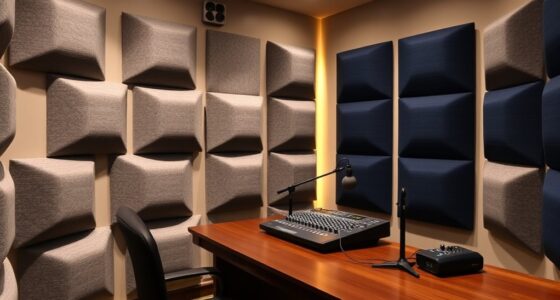

To plan for future flexibility in your home office design, choose multi-purpose furniture like wall beds with built-in desks or fold-away pieces that easily transform for different uses. Incorporate modular and reconfigurable setups that adapt to changing needs over time, ensuring durability and ease of operation. These strategies maximize small spaces while keeping your environment organized and inviting. Keep exploring how these versatile solutions can make your workspace adaptable as your requirements evolve.
Key Takeaways
- Choose furniture with multi-purpose functions like wall beds with built-in desks for space efficiency.
- Opt for modular and reconfigurable systems to adapt to changing needs over time.
- Prioritize durable, easy-to-operate designs that support quick environment adjustments.
- Incorporate hidden storage solutions to maintain an organized and clutter-free workspace.
- Plan flexible layouts that support various activities, from work to hobbies, ensuring long-term adaptability.
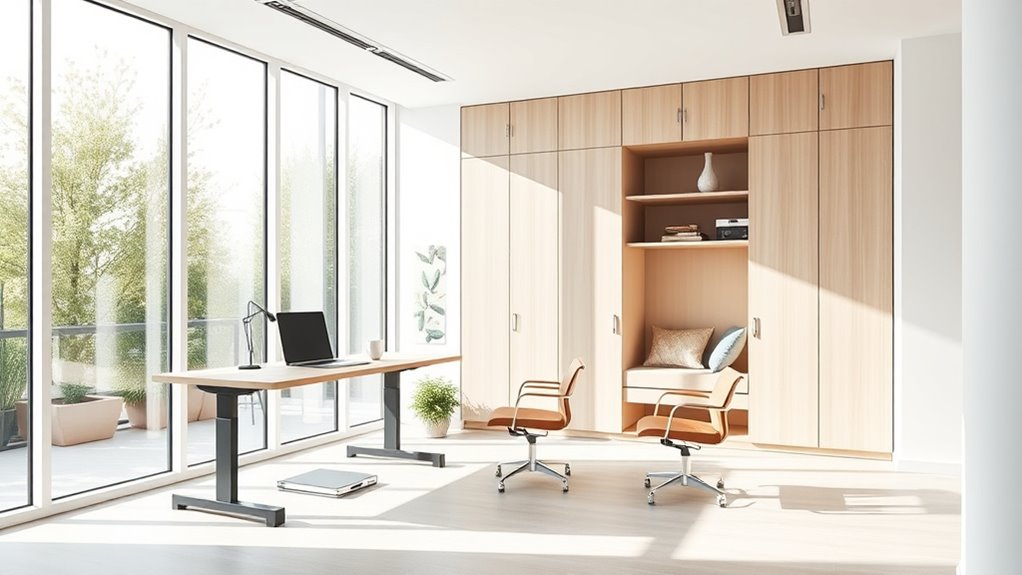
When space is limited, a convertible home office offers an efficient solution that adapts to your needs. Instead of dedicating an entire room to a workspace, you can optimize your existing area with furniture designed for versatility. Multi purpose furniture becomes your best friend here, allowing you to switch seamlessly between work, relaxation, or other activities without cluttering your space. These pieces are crafted to serve dual functions, such as desks that fold into walls or beds that transform into desks, helping you make the most of every square inch. Space saving solutions like wall-mounted desks, hidden storage compartments, and fold-away furniture empower you to create a flexible environment that can change with your schedule.
Maximize small spaces with versatile, multi purpose furniture that adapts to your changing needs.
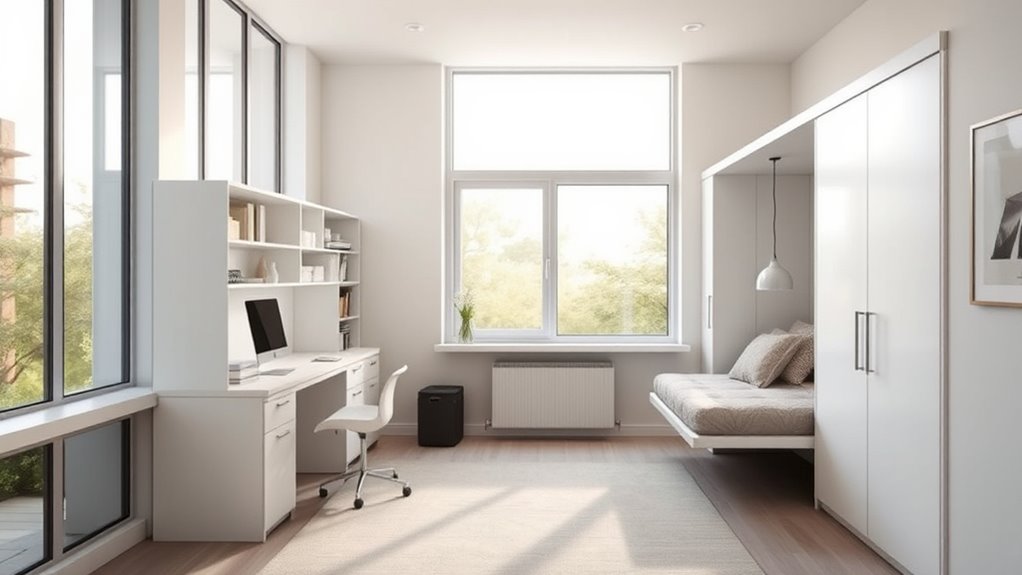
You’ll find that planning for future flexibility means choosing furniture that adapts to different needs over time. For example, a wall bed with a built-in desk provides a comfortable sleeping area overnight and transforms into a productive workspace during the day, saving room and reducing the need for multiple pieces of furniture. Modular furniture systems also give you the freedom to reconfigure your setup, whether you need a large desk for projects or a compact station for quick tasks. These adaptable pieces promote a clean, uncluttered look, which is essential in small spaces, and keep your environment organized without sacrificing functionality.
Investing in multi purpose furniture isn’t just about saving space; it’s about creating a dynamic environment that can evolve. As your needs change—perhaps you start working from home more often or need a dedicated spot for hobbies—you can adjust your furniture to fit. For instance, a fold-down wall desk can be tucked away when not in use, freeing up room for other activities. Similarly, storage ottomans or desks with built-in drawers help you keep clutter at bay, ensuring your space remains functional and inviting.
Thinking ahead about future flexibility also means considering ease of use and durability. Choose designs that are easy to operate and built to last, so you won’t have to replace them as your requirements shift. With the right mix of multi purpose furniture and space saving solutions, you can create a home office that’s not just functional today but adaptable for many years to come. This approach ensures your space remains efficient, comfortable, and ready for whatever the future holds. Understanding gold IRA options

Rotating Full Murphy Bed with Hidden Wall Cabinet, Dual 3-Tier Side Shelves, Convertible Desk, Extra Storage Racks, Space-Saving Multifunctional Wall Bed for Home Office &Small Rooms, Gray
💌【Easy to Contact Us】: If there is any problem with this wall murphy bed, please visit our website…
As an affiliate, we earn on qualifying purchases.
As an affiliate, we earn on qualifying purchases.
Frequently Asked Questions
What Are the Most Cost-Effective Materials for Convertible Home Offices?
You can choose budget-friendly options like plywood or MDF for your convertible home office, as they’re affordable and easy to work with. For sustainable materials, consider bamboo or reclaimed wood, which are eco-friendly and durable. These materials help you keep costs low while supporting sustainability. Using versatile and inexpensive materials guarantees your space adapts easily without breaking the bank, making your home office both functional and environmentally conscious.
How Can I Maximize Natural Light in Small Convertible Spaces?
Like a painter capturing sunlight on a canvas, you can maximize natural light in small convertible spaces through strategic lighting optimization and clever window placement. Install larger windows or add skylights to flood the area with daylight. Keep window treatments light and airy to reflect light better. Position your workspace near windows to harness the sun’s natural glow, making your space feel larger, brighter, and more inviting.
What Are Safety Considerations for Multi-Purpose Home Office Furniture?
You should prioritize ergonomic design to keep your multi-purpose home office furniture comfortable and supportive, reducing strain during long work hours. Always guarantee child safety by securing furniture to walls, choosing rounded edges, and avoiding small, detachable parts that kids might swallow. Regularly inspect your furniture for stability and wear. These steps help create a safe, functional workspace that adapts as your needs change while keeping everyone protected.
How Do I Maintain Privacy in Shared Living Environments?
Like a fortress guarding its treasures, you can maintain privacy in shared living environments by setting clear boundaries. Use room dividers, curtains, or furniture to create visual separation, and designate specific areas for work. Communicate openly with housemates about your privacy concerns and schedule quiet times. These small steps help establish shared space boundaries, making your home office feel secure and focused, even amidst shared spaces.
What Are the Best Storage Solutions for Flexible Office Spaces?
You should prioritize storage organization with modular solutions that adapt to your needs. Space-saving furniture like fold-out desks and multi-functional units help maximize limited areas. Incorporate vertical storage such as wall-mounted shelves or pegboards to keep essentials accessible yet out of the way. Using these strategies, you create a flexible office space that remains tidy, efficient, and easy to reconfigure as your work requirements evolve.

WOHOMO Folding Desk, Small Foldable Desk 31.5" for Small Spaces, Space Saving Computer Table Writing Workstation for Home Office, Easy Assembly, Oak
【Small Folding Desk for Small Spaces】Product dimensions is 15.75"D x 31.5"W x 29.52"H when it is unfold, which…
As an affiliate, we earn on qualifying purchases.
As an affiliate, we earn on qualifying purchases.
Conclusion
Just like a chameleon adapts to its surroundings, your home office should evolve with your needs. Embrace convertible designs that offer flexibility, transforming spaces seamlessly from work to leisure. By planning ahead, you create a sanctuary that’s as adaptable as the seasons, ready for whatever the future holds. Remember, a well-designed space isn’t just a workspace; it’s a reflection of your dynamic life—ever-changing, yet perfectly in tune with your rhythm.

Room Divider for Office Privacy – Modular Freestanding Partition with Whiteboard, PET Acoustic Panel, and Frosted Acrylic, Workflow Multi-Functional Wall, Gray Frame, Easy Assembly (70” x 70”)
Balanced Acoustics and Collaboration: This modular office room divider combines a magnetic whiteboard, sound-dampening PET acoustic panel (absorbing…
As an affiliate, we earn on qualifying purchases.
As an affiliate, we earn on qualifying purchases.

Photo Picture Frame Diversion Safe with Fireproof & Waterproof Money Bag, Valuable Storage, Home Security, ANZAKY Mini Box with Hidden Compartment to Shield your Money, Cash, 5"x7"
★ 【PICTURA FRAME DIVERSION SAFE + EXTRA FIREPROOF MONEY BAG – MORE SAFETY】: Anzaky picture frame diversion safe…
As an affiliate, we earn on qualifying purchases.
As an affiliate, we earn on qualifying purchases.