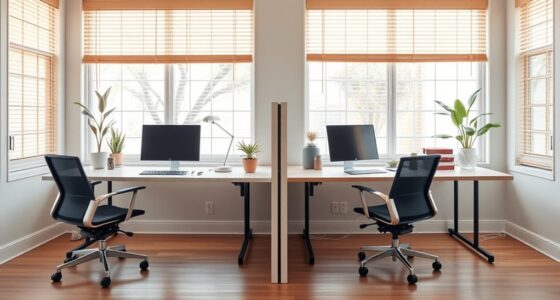
To create an effective home office, layer your lighting with task, ambient, and accent lights. Use task lighting with adjustable fixtures and higher color temperatures (4000K–5000K) for focused work, while ambient lighting provides overall brightness with warmer tones (2700K–3000K) to reduce eye fatigue. Add accent lighting to highlight features and add depth without causing glare. Keep these layers balanced for comfort and productivity—if you continue, you’ll discover how each layer improves your workspace even further.
Key Takeaways
- Use task lighting with 4000K–5000K bulbs for focused, glare-free illumination on work surfaces.
- Incorporate ambient lighting with warmer tones (2700K–3000K) to create a comfortable overall atmosphere.
- Position ceiling fixtures to evenly distribute light, reducing shadows and eye strain.
- Add accent lighting to highlight features and add visual interest without causing glare.
- Layer lighting for flexibility, adjusting each layer to suit different tasks and times of day.
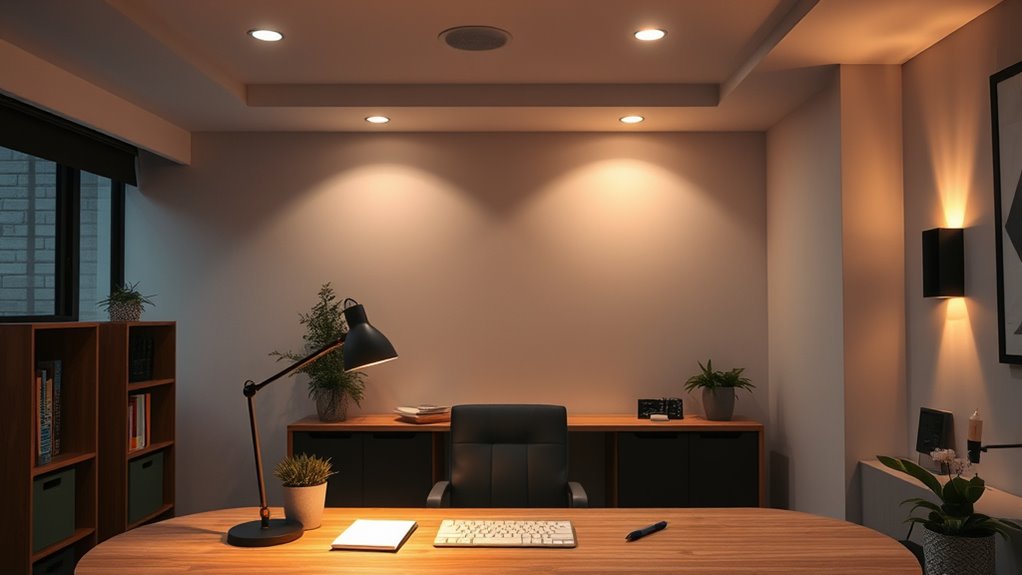
A well-lit home office is essential for productivity and comfort, especially since poor lighting can cause eye strain and fatigue. To achieve this, understanding the role of different lighting layers—task, ambient, and accent—is key. Starting with the basics, you’ll want to ensure your workspace has proper task lighting. This means choosing a light source with the right color temperature, typically between 4000K and 5000K, which mimics natural daylight. This range helps you see details clearly without causing eye strain. When selecting your task lights, focus on glare reduction. Position your desk lamp so that it illuminates your workspace directly without reflecting off screens or shiny surfaces, which can cause uncomfortable glare. Adjustable arms or dimmable options allow you to fine-tune brightness levels, reducing harsh shadows and glare that might strain your eyes over long periods.
Next, think about ambient lighting, which provides overall illumination to balance the brighter task lights. The goal is to create a warm, inviting atmosphere that prevents your eyes from constantly adjusting between bright and dark areas. Using overhead fixtures with diffuse covers helps distribute light evenly, reducing harsh contrasts and minimizing glare. When choosing ambient lighting, consider the color temperature as well; warmer tones around 2700K to 3000K promote relaxation and less fatigue, especially if you work during the evening. Proper placement of ceiling lights can prevent unwanted shadows and glare, making your entire workspace more comfortable. Additionally, contrast ratio plays a role by affecting how well you can distinguish details in your workspace, especially in areas with varying light levels.
Finally, accent lighting adds depth and personality to your home office. It highlights artwork, shelves, or architectural features, creating visual interest and reducing the starkness of uniform lighting. In this layer, you can use adjustable spotlights or wall-mounted fixtures, making sure they don’t produce glare or excessive brightness that could distract or cause eye discomfort. When selecting accent lights, pay attention to their color temperature to maintain a cohesive look and avoid jarring contrasts that could hurt your eyes or detract from focus.
adjustable desk lamp with glare reduction
As an affiliate, we earn on qualifying purchases.
As an affiliate, we earn on qualifying purchases.
Frequently Asked Questions
How Do I Choose the Right Color Temperature for Home Office Lighting?
You should choose a color temperature that matches your desired lighting mood and task needs. For a bright, energizing atmosphere, go for a cooler temperature around 5000K-6500K, which mimics daylight. If you want a cozy, relaxed vibe, opt for warmer tones between 2700K-3000K. Matching your color temperature to your activities helps create a comfortable, effective home office environment that boosts productivity and comfort.
What Are Energy-Efficient Lighting Options for My Home Office?
Oh, because who doesn’t want to save the planet while working from home? You should opt for energy-efficient lighting like smart bulbs and LED fixtures—they use less power and last longer. Not only will you cut your electricity bill, but you’ll also impress your eco-friendly friends. Switch to dimmable smart bulbs or energy-saving LED fixtures, and enjoy a well-lit, eco-conscious workspace without sacrificing brightness or style.
How Can I Reduce Glare on My Computer Screens?
To reduce screen glare, you should adjust your monitor brightness to match your room’s lighting, preventing excessive contrast. Position your monitor to avoid reflections from windows or lights, and consider using an anti-glare screen filter. Additionally, make certain your workspace has softer, ambient lighting rather than harsh, direct light sources. These steps help minimize screen glare, making it easier to work comfortably and reducing eye strain.
What Are the Best Lighting Practices for Small Home Offices?
You should prioritize ergonomic lighting that reduces eye strain, like adjustable desk lamps and soft ambient light. Incorporate decorative fixtures to add style without clutter. Position your light sources to minimize glare on screens and avoid harsh shadows. Use layered lighting—combining task and ambient light—to create a balanced environment. Keep the space versatile and well-lit, making sure you can easily adjust fixtures for comfort and productivity.
How Do I Balance Natural and Artificial Lighting Effectively?
Did you know that natural light can boost productivity by up to 20%? To balance natural and artificial lighting, you should prioritize lighting color and light positioning. Use daylight as your main source, placing your workspace near windows, and supplement with warm artificial light for comfort. Adjust the light positioning so glare is minimized, and the color temperature matches natural light to create a harmonious, eye-friendly environment all day long.
LED task light 4000K
As an affiliate, we earn on qualifying purchases.
As an affiliate, we earn on qualifying purchases.
Conclusion
Remember, good lighting transforms your home office from a dusty library to a bustling hub, much like the glow of a vintage Edison bulb in a modern loft. By layering task, ambient, and accent lighting, you create a space that boosts productivity and comfort. Don’t forget, even a humble oil lamp from centuries past can inspire the perfect ambiance today. So, light it right, and watch your workday shine brighter than ever.
warm white ambient ceiling light
As an affiliate, we earn on qualifying purchases.
As an affiliate, we earn on qualifying purchases.
accent wall spotlight for artwork
As an affiliate, we earn on qualifying purchases.
As an affiliate, we earn on qualifying purchases.