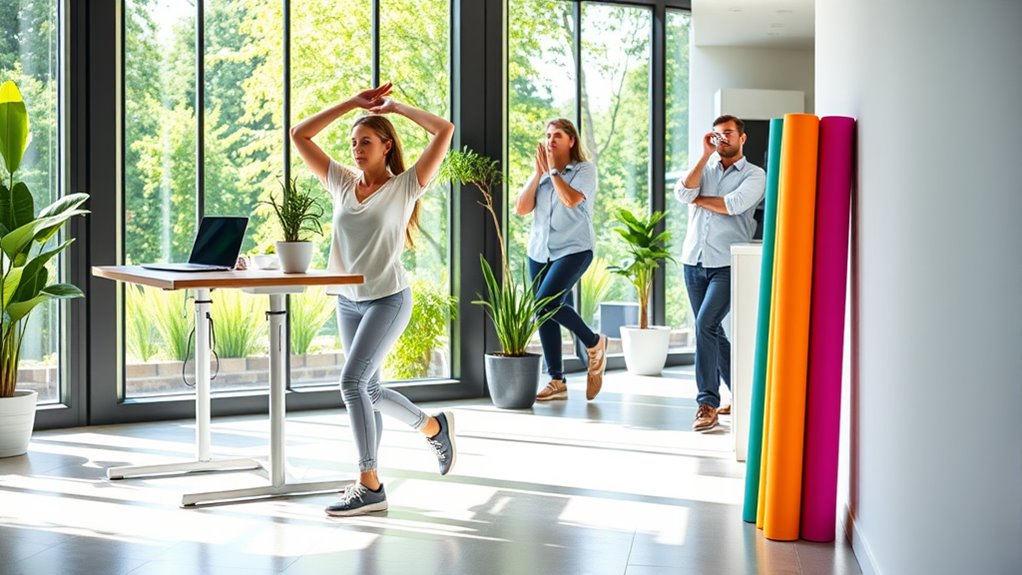

Incorporating movement breaks and standing desks into your routine helps boost your physical health and mental clarity. Take short breaks every 30 to 60 minutes to stretch, walk, or do light exercises, which improves circulation and energy. Using a standing desk allows you to alternate between sitting and standing, maintaining good posture and reducing discomfort. Small daily adjustments like these can lead to lasting benefits—stay with us to find out how to implement these habits effectively.
Key Takeaways
- Schedule regular movement breaks every 30-60 minutes to stretch, walk, or perform light exercises, boosting circulation and energy.
- Use standing desks to alternate between sitting and standing, reducing sedentary behavior and promoting proper posture.
- Adjust standing desk height for ergonomic comfort, ensuring elbows are at 90° and wrists are straight during use.
- Incorporate mindful breathing during breaks to reset mental focus and reduce stress while transitioning between sitting and standing.
- Combine movement and standing practices to foster overall wellness, improving physical health and mental clarity throughout the workday.

Incorporating wellness into your daily routine can transform your overall health and happiness. One simple but powerful way to start is by paying attention to how you breathe. Mindful breathing helps you stay grounded and reduces stress, especially during busy workdays. As you sit at your desk, take a few moments to focus on your breath. Inhale slowly through your nose, feeling the air fill your lungs, then exhale gently through your mouth. This practice can clear your mind, lower your heart rate, and improve your focus. Pairing mindful breathing with an ergonomic setup makes a noticeable difference. Ensure your workspace is arranged to support good posture—your monitor at eye level, your keyboard and mouse within easy reach, and your chair adjusted so your feet rest flat on the floor. When your workspace is ergonomically friendly, it’s easier to maintain proper posture and avoid discomfort that can distract you from your wellness goals. Additionally, color accuracy in your setup can enhance your visual comfort and reduce eye strain during long work sessions.
Start your wellness journey with mindful breathing and ergonomic workspace setup for a healthier, more focused day.
In addition to mindful breathing and an ergonomic setup, incorporating movement breaks into your day is vital. Sitting for long periods can lead to stiff muscles, poor circulation, and fatigue. Set a timer to remind yourself to stand up every 30 to 60 minutes. Use these breaks to stretch, walk around, or do light exercises. Even a quick two-minute stretch can boost circulation and energize you. During these breaks, focus on your breath again—deep, steady inhales and slow exhales can help reset your mental state. Movement not only benefits your body but also clears your mind, helping you return to work with renewed focus and clarity.
Standing desks are another effective tool to incorporate wellness into your routine. Switching between sitting and standing throughout the day reduces the negative impacts of prolonged sitting. When shifting to a standing desk, pay attention to your body’s cues. Adjust the height so your elbows are at a 90-degree angle and your wrists are straight while typing. Remember, even with a standing desk, maintaining proper posture is essential. Keep your shoulders relaxed, your neck aligned with your spine, and avoid leaning forward or slouching. Standing desks encourage movement and help break the cycle of sedentary behavior, making it easier to stay active and mindful of your body’s needs.
Ultimately, integrating mindful breathing, a supportive ergonomic setup, regular movement breaks, and standing desks creates an all-encompassing approach to wellness. These small adjustments can profoundly boost your physical health, mental clarity, and overall happiness. By making these practices a routine part of your day, you not only improve your well-being but also foster a more productive, balanced lifestyle. Remember, wellness isn’t a one-time effort; it’s about creating habits that support your health every day.
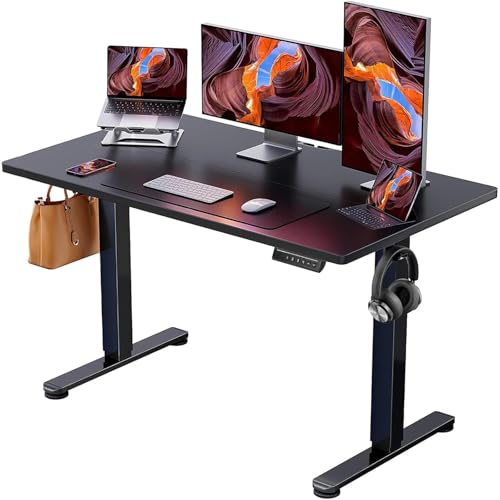
ErGear Height Adjustable Electric Standing Desk, 48 x 24 Inches Sit Stand up Desk, Memory Computer Home Office Desk, Black
Electric Height Adjustable Standing Desk for Comfortable Work – Switch effortlessly between sitting and standing with this electric…
As an affiliate, we earn on qualifying purchases.
As an affiliate, we earn on qualifying purchases.
Frequently Asked Questions
How Often Should Movement Breaks Be Scheduled During the Workday?
You should schedule movement breaks every 60 to 90 minutes during your workday. During these breaks, do stretching routines to prevent stiffness and boost circulation. Remember to stay hydrated with proper hydration strategies, such as drinking water regularly. These short pauses help reduce fatigue, improve focus, and keep you energized. Incorporating movement and hydration into your routine enhances overall wellness and productivity throughout the day.
What Are the Best Types of Standing Desks for Small Spaces?
For small spaces, opt for adjustable standing desks with ergonomic design to maximize comfort and flexibility. Look for desks with compact footprints and sturdy desk accessories like monitor risers or keyboard trays to optimize your workspace. These features help you maintain proper posture and organization, making it easier to switch between sitting and standing throughout your workday. Choosing the right ergonomic design guarantees you stay comfortable while enhancing productivity in limited areas.
Can Standing Desks Help Reduce Work-Related Back Pain?
Yes, standing desks can help reduce work-related back pain when used correctly. Pair your desk with ergonomic accessories like an adjustable monitor stand and a supportive anti-fatigue mat. Focus on posture correction by maintaining a neutral spine, keeping your monitor at eye level, and avoiding prolonged static positions. Incorporating regular movement and adjusting your setup guarantees you stay comfortable and minimize back discomfort during long work hours.
Are There Any Risks Associated With Prolonged Standing at Work?
Sure, standing all day sounds glamorous, but beware of muscle fatigue and circulation issues sneaking up on you. Prolonged standing can lead to tired muscles, swelling, and discomfort, turning your noble effort into a pain marathon. So, if you think standing is the answer to everything, remember that moderation matters—alternating between sitting, standing, and movement breaks keeps you energized without risking your health.
How Can Employers Encourage Employees to Adopt Movement Breaks?
You can encourage employees to adopt movement breaks by promoting ergonomic assessments that highlight the importance of regular activity. Use employee engagement strategies like reminders, incentives, and team challenges to make movement breaks routine. When you create a supportive environment that values well-being, employees are more likely to integrate movement into their day, reducing risks associated with prolonged sitting or standing and boosting overall productivity and health.

VIVO 32 inch Desk Converter, K Series, Height Adjustable Sit to Stand Riser, Dual Monitor and Laptop Workstation with Wide Keyboard Tray, Black, DESK-V000K
Create Instant Active Standing – VIVO’s desk riser provides on-demand standing throughout the day for the freedom to…
As an affiliate, we earn on qualifying purchases.
As an affiliate, we earn on qualifying purchases.
Conclusion
By adding movement breaks and standing desks, you boost energy, improve focus, and support your well-being. You take control of your health, you embrace small changes, and you create a more vibrant, productive day. You prioritize self-care, you foster better habits, and you transform your workspace into a space of vitality. Remember, every step you take toward wellness is a step toward a healthier, happier you. Make it happen—because you deserve it.

TRAILVIBER Walking Pad Treadmill with 12% 9-Level Auto Incline, 450 lbs Capacity RGB LED Screen, Bluetooth Speaker Under Desk Treadmill, Compact Treadmills for Home Hiking, Black
12% 6° 9-Level Auto Incline Treadmills for Home – Enhance Workout Efficiency: The Trailviber under desk treadmill has…
As an affiliate, we earn on qualifying purchases.
As an affiliate, we earn on qualifying purchases.

NEO Chair Office Desk Gaming Chair Computer High Back Mesh Seat with Rolling Wheels Ergonomic Adjustable Comfy Flip-up Armrests Lumbar Support Height for Home (Black)
All-Day Ease – Breathable mesh backrest provides targeted lower back support, encouraging healthy posture and lasting comfort through…
As an affiliate, we earn on qualifying purchases.
As an affiliate, we earn on qualifying purchases.