To effectively shift between work and relaxation in multifunctional spaces, create clear zones using rugs, furniture, or lighting to signal different mental states. Use visual and physical boundaries like bookshelves or plants to help switch gears easily. Incorporate ergonomic furniture for your work area and inviting, calming elements for relaxation zones. Moving between these spaces with intentional physical separation helps you disconnect and focus better. Keep exploring these strategies to improve your space’s functionality and comfort.
Key Takeaways
- Create visual and physical boundaries using rugs, furniture, or dividers to clearly separate work and relaxation zones.
- Use distinct lighting and color schemes to signal transitions and enhance mental separation between spaces.
- Incorporate natural materials and calming decor in relaxation areas to promote unwinding after work.
- Design ergonomic workstations with adjustable furniture to facilitate a smooth mental shift from focus to leisure.
- Use movement cues, such as leaving the desk or turning off work devices, to physically and mentally detach from work mode.
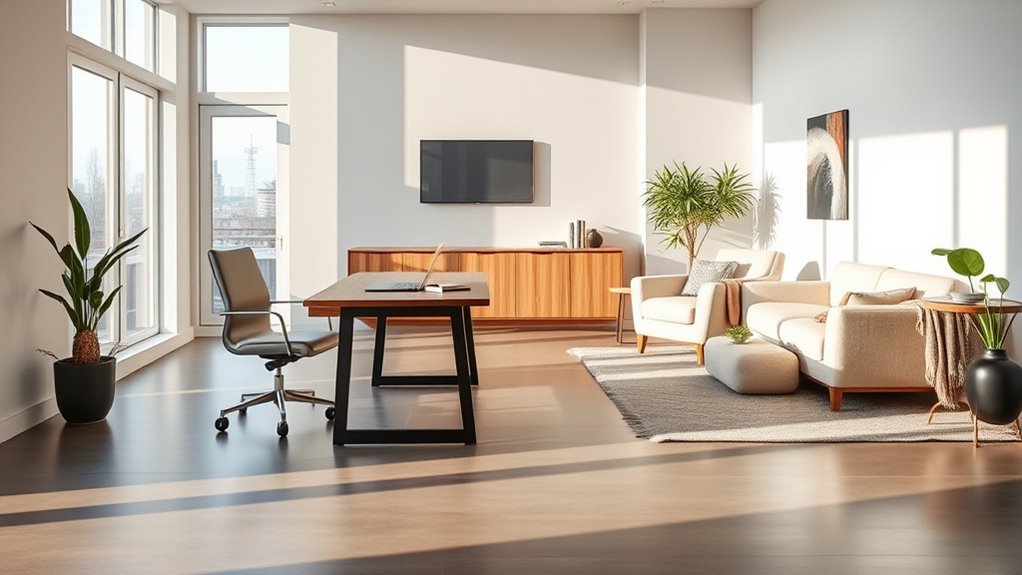
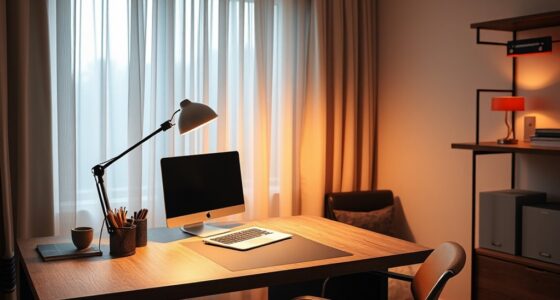
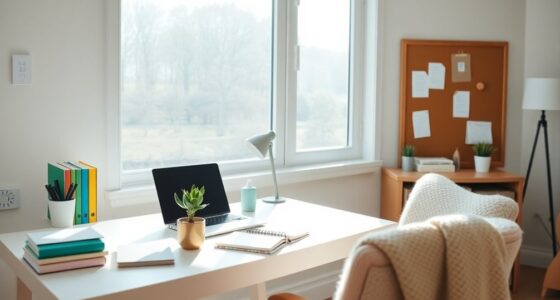
In today’s increasingly flexible living environments, shifting smoothly between work and relaxation in multifunctional spaces can boost your productivity and well-being. The key to making this transition seamless lies in effective workspace zoning and ergonomic design. When your space is thoughtfully divided, you create distinct zones that signal your brain whether it’s time to focus or unwind. This zoning can be as simple as using rugs, furniture, or even different lighting to differentiate areas. For example, a dedicated work corner with a desk and ergonomic chair immediately cues your mind to concentrate, while a plush sofa or lounge area invites relaxation once work is done.
Workspace zoning isn’t just about visual separation; it’s about establishing boundaries that help you switch mental gears. When you know where your work zone ends and your relaxation zone begins, it becomes easier to disconnect at the end of the day. Use tools like bookshelves, room dividers, or even plants to delineate these spaces without making your environment feel cluttered. Keep the work area optimized for productivity: an ergonomic design is essential here. Invest in an adjustable chair that supports your posture, and position your monitor at eye level to avoid strain. Proper lighting, like a desk lamp with adjustable brightness, helps reduce eye fatigue and keeps you alert during working hours. When your workspace is ergonomically sound, you not only work more efficiently but also prevent discomfort and injuries that can linger long after your workday ends. Additionally, adding natural materials such as wood or linen to your workspace can enhance comfort and reduce stress.
Once your work is done, shifting gears becomes more natural. You can simply move away from your designated work zone to your relaxation space, helping your mind transition from productivity to leisure. Keep your relaxation area inviting and comfortable, with soft seating, calming colors, and perhaps some gentle lighting. This physical separation and ergonomic focus mean you won’t feel tethered to your workspace, making it easier to detach mentally and fully enjoy your downtime. Remember, the goal is to create a fluid environment where each zone fulfills its purpose without sacrificing comfort or functionality. By thoughtfully zoning your space and prioritizing ergonomic design, you set yourself up for smoother transitions, improved focus during work, and truly restful relaxation afterward. With a little planning, your multifunctional space can become a flexible haven that supports your daily rhythms and boosts your overall well-being.
Frequently Asked Questions
How Can Lighting Enhance Transitions Between Work and Relaxation?
Lighting enhances shifts by using ambient lighting to create a calm, inviting atmosphere when shifting to relaxation. You can then switch to softer, warmer task lighting for focused work or activities. Dimming or adjusting lighting levels helps signal a change from work to leisure, making the transition smoother. By strategically using ambient and task lighting, you make it easier to switch between different functions without feeling abrupt or disruptive.
What Role Does Sound Masking Play in Multifunctional Spaces?
Sound masking plays a subtle role in creating a seamless flow in multifunctional spaces. It helps mask ambient noise, reducing distractions and making shifts more smooth. By enhancing acoustic privacy, sound masking allows you to move effortlessly from work to relaxation without feeling exposed or disturbed. This technology ensures that conversations stay private and ambient sounds stay controlled, fostering a calm environment where you can focus or unwind with ease.
How Can Furniture Be Optimized for Quick Space Transformation?
You can optimize furniture for quick space transformation by using modular furniture that’s easy to rearrange or fold away. Incorporate smart storage solutions like hidden compartments or under-seat storage to keep clutter out of sight. This allows you to swiftly switch from work to relaxation modes, creating a seamless environment. Prioritize versatile pieces that serve multiple functions, making your space adaptable without hassle or extensive effort.
Are There Specific Colors That Facilitate Seamless Transitioning?
Yes, choosing calming, neutral colors like soft blues, gentle grays, or warm beiges can make shifts smoother. These colors leverage color psychology to create relaxing atmospheres, while visual cues like subtle accents or contrasting shades help signal change. You’ll find that these hues reduce stress, enhance focus, and make shifting between work and relaxation effortless, turning your space into a versatile environment that adapts seamlessly to your needs.
How Does Technology Integration Support Flexible Space Usage?
Technology integration, like smart home systems, makes it easy to adapt your space for work or relaxation. You can instantly adjust lighting, temperature, and even furniture with a tap or voice command, creating a seamless shift. Plus, smart tech boosts energy efficiency by automating routines, reducing waste, and optimizing resources, so your space remains comfortable and functional whether you’re working or unwinding.
Conclusion
Think of your space as a chameleon, shifting colors with ease between work and relaxation. By using simple design cues and mindful routines, you become the artist, effortlessly blending productivity and calm. When you master this dance, your space transforms into a sanctuary—a place where you can seamlessly switch gears, like a river flowing smoothly from busy rapids to peaceful pools. Embrace this fluidity, and let your environment support your every mood and moment.