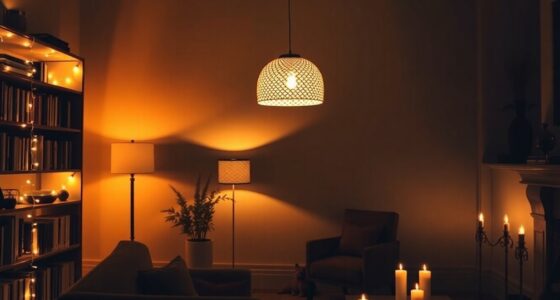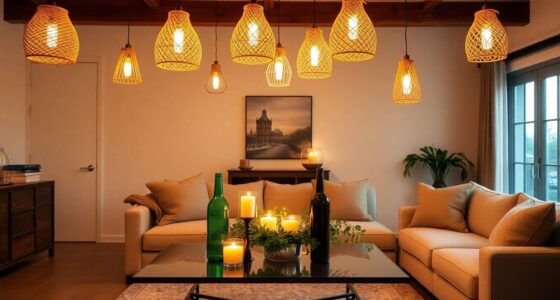
Switching to eco-friendly lighting with LED technology and sustainable materials helps you cut energy use and reduce waste. LED fixtures consume less power and last longer, while options like biodegradable or recycled materials lower environmental impact. Combining solar-powered lamps with eco-friendly fixtures boosts sustainability further. These choices support a healthier planet and smarter living. Keep exploring to discover how these innovations can make a real difference for your space and the environment.
Key Takeaways
- LED technology offers energy-efficient lighting that reduces electricity consumption and lowers carbon emissions.
- Sustainable materials like bamboo, bioplastics, and recycled components are used in eco-friendly fixtures.
- Combining LED lights with biodegradable or solar-powered fixtures promotes environmentally responsible illumination solutions.
- LED lighting has a long lifespan, decreasing waste and the need for frequent replacements.
- Innovative designs integrate LED technology with sustainable materials for stylish, eco-conscious lighting options.
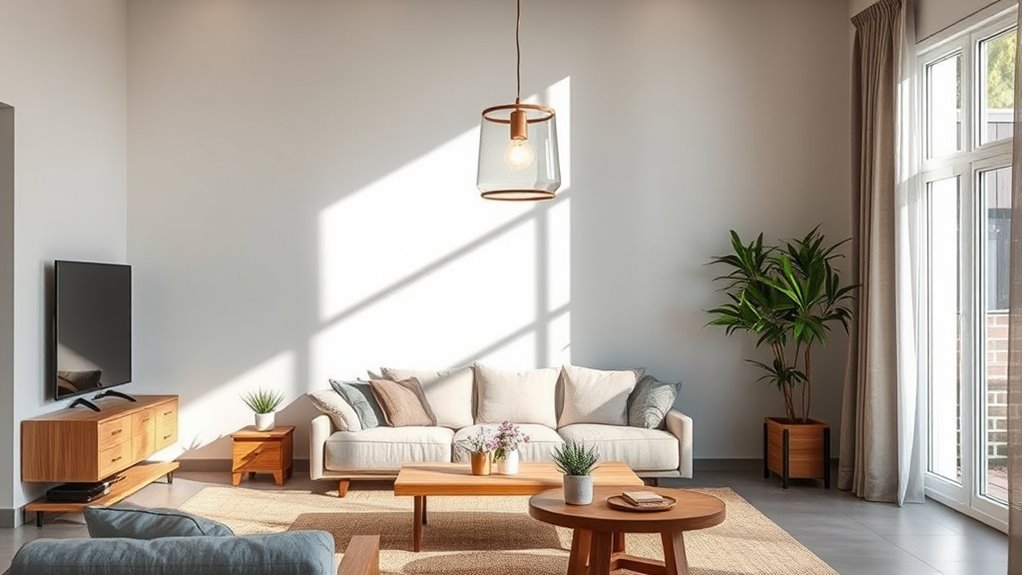
Have you ever wondered how your lighting choices impact the environment? Every time you turn on a light, you’re making a decision that can either support sustainability or contribute to unnecessary waste. One way to make a positive difference is by choosing eco-friendly lighting options, like fixtures made from biodegradable materials and solar-powered lamps. These alternatives help reduce your carbon footprint and promote a healthier planet. Biodegradable fixtures are crafted from natural, renewable resources such as bamboo, bioplastics, or recycled materials that break down safely after disposal. Using these fixtures means you’re not adding to the growing problem of plastic pollution or landfill waste. They offer a sustainable way to illuminate your home or outdoor space without sacrificing style or functionality. Solar-powered lamps are another excellent eco-friendly choice because they harness sunlight to provide illumination, eliminating the need for electricity generated from fossil fuels. During the day, these lamps absorb sunlight, storing energy in rechargeable batteries, so that they can light up your space at night. This not only reduces your energy bills but also minimizes reliance on non-renewable energy sources, helping combat climate change. Installing solar-powered lamps outdoors can dramatically lower your carbon footprint while enhancing your landscape with sustainable lighting. These lamps are easy to set up and require minimal maintenance, making them a practical and environmentally conscious solution for your outdoor lighting needs. When combined with biodegradable fixtures, solar-powered lamps create an extensive, environmentally friendly lighting system that aligns with your values. Think about switching your traditional fixtures to biodegradable ones, especially in outdoor settings where waste disposal can be challenging. These fixtures degrade naturally over time, preventing long-term environmental harm. Plus, their aesthetic appeal often matches or even enhances the design of your space. Using solar-powered lamps indoors might be less common, but advancements in technology have made them more versatile and attractive for various applications. They can be used in sheds, garages, or even as decorative accents. By integrating these eco-friendly options into your lighting setup, you’re making a conscious effort to reduce energy consumption and waste. It’s a simple, impactful way to contribute to the global effort of promoting sustainability. Your choices influence not just your immediate environment but also the broader ecological system. Every small action counts, and selecting biodegradable fixtures and solar-powered lamps is a powerful step toward creating a greener, cleaner future. Understanding sustainable materials and their benefits can help you make more informed decisions about your lighting options. Embracing these innovations doesn’t mean sacrificing quality or style; it means actively participating in a movement towards smarter, more sustainable living.

13 inch Flush Mount LED Ceiling Light Fixture, 2700K/3000K/3500K/4000K/5000K Adjustable Ceiling Lights, Brushed Nickel Saturn Dimmable Lighting for Hallway Bathroom Kitchen or Stairwell, ETL Listed
Sleek Modern Design: This contemporary flush mount ceiling light features a low-profile housing that sits neatly against the…
As an affiliate, we earn on qualifying purchases.
As an affiliate, we earn on qualifying purchases.
Frequently Asked Questions
How Do LED Lights Impact Indoor Air Quality?
LED lights have minimal impact on indoor air quality because they don’t emit indoor air pollutants like volatile organic compounds (VOCs) or particulate matter. This means you can enjoy better air quality while enhancing your lighting aesthetics. Unlike some traditional bulbs, LEDs don’t release harmful gases or fumes, helping you create a healthier indoor environment. So, switching to LEDs supports cleaner air and improves your overall comfort at home.
Are Recycled Materials Used in LED Manufacturing?
You’ll be amazed—many LED manufacturers now use recycled components and prioritize sustainable sourcing! This means they incorporate recycled materials to reduce waste and lessen environmental impact. By choosing LEDs made with recycled components, you’re supporting a greener future and encouraging sustainable manufacturing practices. It’s a small step with a huge impact, helping to conserve resources and promote eco-friendly innovation in lighting technology.
What Is the Lifespan of Eco-Friendly Lighting Compared to Traditional Options?
You’ll find that eco-friendly LED lighting generally lasts 25,000 to 50,000 hours, outlasting traditional bulbs considerably. This durability comparison means you won’t need to replace them as often, reducing maintenance requirements and waste. LEDs are more resilient, making them ideal for long-term use. So, investing in eco-friendly lighting saves you money over time and lessens your environmental impact, thanks to their extended lifespan and sturdy design.
Can LED Lighting Be Safely Disposed of or Recycled?
Did you know that over 80% of LED components are recyclable? You can safely dispose of or recycle LED lighting by following proper procedures. LEDs contain minimal hazardous waste, making them safer than traditional bulbs. During the recycling process, valuable materials like metals are recovered, reducing environmental impact. Always check local regulations, and consider dedicated e-waste recycling centers to guarantee your LED lights are properly handled and reused.
How Does Eco-Friendly Lighting Influence Energy Bills Long-Term?
Eco-friendly lighting, like LEDs, markedly reduces your energy bills long-term through energy cost savings due to their efficiency. They use less electricity and last longer, meaning fewer replacements and maintenance. Plus, by choosing sustainable materials, you contribute to environmental benefits, reducing your carbon footprint. Overall, switching to eco-friendly lighting offers both financial savings and positive impacts on the planet, making it a smart, sustainable choice for your home or business.

B&R Lighting Solar Outdoor Floor Lamp with Table – Cordless Outdoor Floor Lamp – Patio, Porch, Garden – Rattan Wicker Lights for Outside – Waterproof, Rechargeable, Weatherproof
Wire-Free Illumination: Say goodbye to tangled wires and power outlets. Our outdoor floor Lamp provides a brilliant 150…
As an affiliate, we earn on qualifying purchases.
As an affiliate, we earn on qualifying purchases.
Conclusion
Imagine walking into a room bathed in soft, sustainable light, knowing it’s powered by eco-friendly LED technology that saves energy and reduces waste. Just like a single candle igniting a dark room, choosing sustainable lighting can spark meaningful change. With LED lights lasting up to 25 times longer than traditional bulbs and using 75% less energy, you become part of a brighter, greener future—illuminating not just your space, but the path toward environmental responsibility.

Hchunqjor Bamboo Pendant Light Fixture One-Light Adjustable Boho Basket Handmade Woven Pendant Lighting for Kitchen Island Sink Farmhouse Dining Room
DESIGN: Bamboo, Metal, Elegant and unique design style
As an affiliate, we earn on qualifying purchases.
As an affiliate, we earn on qualifying purchases.

80W LED Corn Light Bulb 2-Pack ,5000K Daylight White Lamp,12000 Lumen LED Corn Bulbs, 600W Equivalent,E26/E39 Medium Mogul Base, Large Area Lights For Outdoor Indoor Garage Warehouse Factory Workshop
【90% Energy Savings】Replace traditional 80W Metal Halide or 600W incandescent bulbs with just 80W! Enjoy the same brightness…
As an affiliate, we earn on qualifying purchases.
As an affiliate, we earn on qualifying purchases.