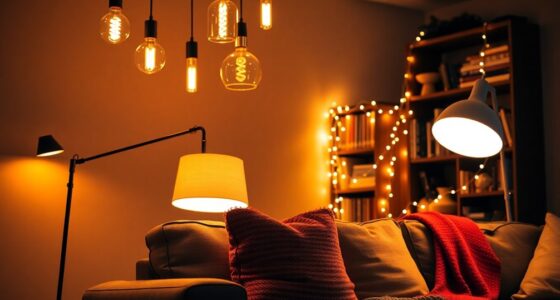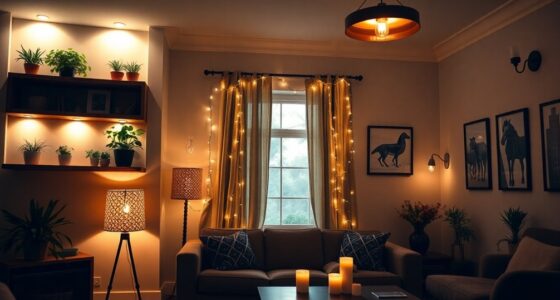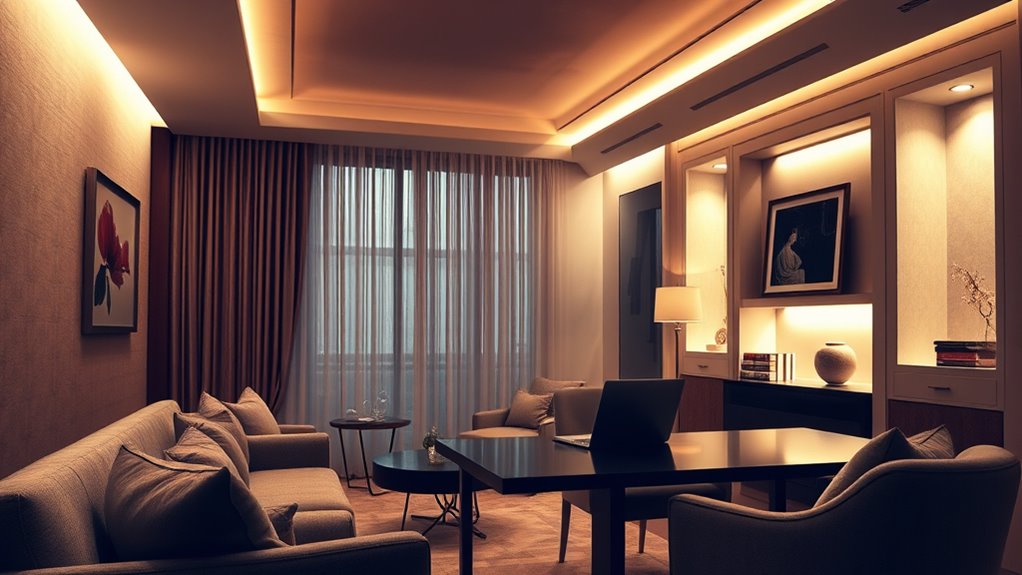

Layered lighting combines ambient, task, and accent layers to create a balanced and adaptable space. You can achieve this by using ceiling fixtures or recessed lights for overall illumination, adding focused task lighting for activities, and highlighting features with adjustable accent lights. Dimming controls and color temperature options help you tailor the mood and functionality for any occasion. If you keep exploring, you’ll discover how to finesse each layer for the perfect atmosphere.
Key Takeaways
- Layered lighting combines ambient, task, and accent lights to create a balanced, functional, and visually appealing space.
- Ambient lighting provides general illumination, serving as the foundation for the layered scheme.
- Task lighting focuses on specific activities, enhancing functionality with adjustable brightness and direction.
- Accent lighting highlights features or decor, adding depth and visual interest to the space.
- Using dimmers and adjustable fixtures across all layers allows customization of mood, atmosphere, and energy efficiency.
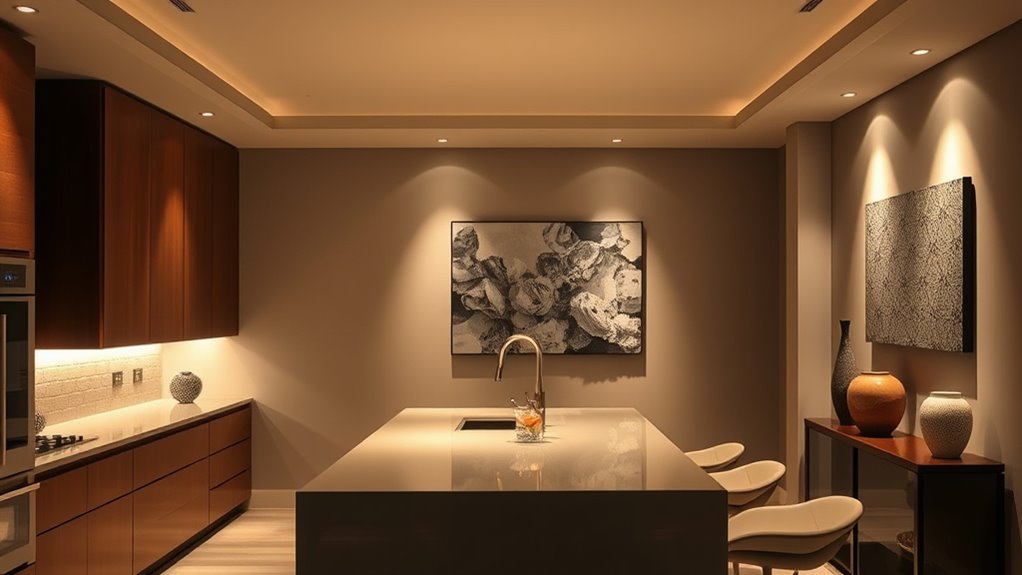
Layered lighting schemes are essential for creating a balanced and functional space, as they combine different types of lighting to enhance both the atmosphere and practicality of a room. When designing your lighting plan, integrating ambient, task, and accent lighting allows you to tailor the environment to your needs and mood. One of the key tools in achieving this flexibility is dimming controls. With dimmers, you can adjust light levels effortlessly, creating a cozy ambiance or bright task lighting as needed. Dimming also helps conserve energy and extends the lifespan of your bulbs. Another critical factor is color temperature, which influences the mood and perceived warmth or coolness of a space. Warmer tones (around 2700K to 3000K) create inviting, relaxing atmospheres, perfect for living rooms and bedrooms. Cooler temperatures (4000K to 5000K) promote alertness and focus, making them ideal for kitchens, workspaces, or offices. Combining these elements with different lighting layers ensures you can adapt your environment easily.
In practice, you’ll want to think carefully about how your lighting interacts. Your ambient lighting provides overall illumination, typically from ceiling fixtures or recessed lights, establishing the general brightness of the room. Incorporate dimmable fixtures here so you can control the mood. Task lighting is more focused and functional, such as under-cabinet lights in the kitchen or reading lamps in the living room. Dimming controls are especially useful here, allowing you to brighten or soften the light depending on the activity. Accent lighting, used to highlight artwork, architectural features, or decorative objects, adds visual interest and depth. Use adjustable fixtures or track lighting that you can direct precisely, and consider color temperature choices to complement the scene — warmer tones for cozy displays, cooler for modern, sleek accents.
Choosing the right lighting controls can make a significant difference in creating adaptable and energy-efficient lighting setups. Adjusting the color temperature of your lights can dramatically change the feel of a space. Many modern bulbs and fixtures now offer tunable white options, enabling you to switch between warm and cool light as needed. This flexibility lets you customize your environment throughout the day, matching natural light patterns or your personal preferences. When combining layered lighting, always think about how dimming controls can help you transition between different scenes effortlessly. Whether you want a relaxed evening or bright workspace, adjusting both brightness and color temperature makes your space versatile and inviting. By thoughtfully integrating these elements, you create a room that’s perfectly suited to your activities and mood, all while enhancing the overall aesthetic.

DLLT Flush Mount LED Ceiling Light: 13 Inch 5CCT (3000K-6000K) & Dimmable Ceiling Light Fixtures for Bedroom Hallway – 24W Modern Brushed Nickel Super Bright Kitchen Lighting Fixtures Ceiling
【Dimmable & 5CCT】Our flush mount led ceiling light provides 5 color temperature options(3000K/3500K/4000K/5000K/6000K) and is compatible with most…
As an affiliate, we earn on qualifying purchases.
As an affiliate, we earn on qualifying purchases.
Frequently Asked Questions
How Do I Choose the Right Lighting Layers for Small Spaces?
To choose the right lighting layers for small spaces, focus on space optimization and establishing a clear lighting hierarchy. Use bright ambient lighting to evenly illuminate the room, add task lighting where you need focused light, like near a desk or mirror, and include accent lighting to highlight artwork or architectural features. This balanced approach maximizes your space’s functionality and visual appeal without causing clutter or overwhelm.
Can Layered Lighting Reduce My Energy Costs Effectively?
Yes, layered lighting can substantially cut your energy costs. By strategically combining ambient, task, and accent lighting, you only use what’s necessary, avoiding waste. This targeted approach boosts energy efficiency and leads to noticeable cost savings over time. Imagine your space perfectly lit without excess, giving you control and savings simultaneously. Don’t underestimate the power of smart layering—your wallet and environment will thank you.
What Are the Best Fixtures for Accent Lighting?
You should choose fixtures like adjustable spotlights or track lighting for accent lighting, as they effectively highlight specific features. Use spotlighting techniques to focus light precisely, creating depth and interest. Opt for fixture materials like metal, brass, or matte finishes, which add elegance and durability. These fixtures allow you to direct light accurately, making your space more dynamic while enhancing architectural details or artwork.
How Do I Balance Different Light Intensities in a Room?
You balance different light intensities by adjusting your fixtures to create a harmonious flow. Start by setting a comfortable ambient light level, then add task lighting with higher intensity and warmer color temperature for focus. Use accent lights sparingly to highlight features without overpowering. Keep in mind, varying light intensity and color temperature helps define spaces and moods, ensuring each layer complements the others seamlessly.
Are Smart Lighting Controls Compatible With Layered Lighting Schemes?
Yes, smart lighting controls work well with layered lighting schemes. In your smart home, you can easily adjust ambient, task, and accent lights individually or together, creating the perfect mood. These controls help you balance light intensities effortlessly, saving energy and enhancing comfort. With automation and remote control, you optimize energy efficiency while maintaining the layered look, making your space both functional and stylish.

ShineTech LED Desk Lamp with Clamp, 3-Head Adjustable Gooseneck Task Lamps, Eye-Caring Stepless Dimming, 4 Color Modes, Memory & Auto-Off Timer, Clip On Desk Light for Home Office, Study, Reading
Triple-Head Wide Lighting: ShineTech LED desk lamp features an innovative 3-head design that expands illumination across your entire…
As an affiliate, we earn on qualifying purchases.
As an affiliate, we earn on qualifying purchases.
Conclusion
By blending ambient, task, and accent lighting, you create a space that feels warm and inviting, like a cozy evening glow. Imagine soft lights gently highlighting your favorite artwork, while focused beams brighten your workspace—each layer working together to craft a harmonious atmosphere. With this layered approach, your room transforms into a versatile sanctuary, where every detail is illuminated just right, inviting you to relax, work, or entertain in perfect, balanced light.

CLOUDY BAY 8W 3000K Warm White Dimmable LED Track Light Head,CRI90+ True Color Rendering Adjustable Tilt Angle Track Lighting Fixture,40° Angle for Accent Retail,White Finish,Halo Type- Pack of 6
Warm and Inviting Illumination: The 8W 3000K Warm White Dimmable LED Track Light Head emits a cozy and…
As an affiliate, we earn on qualifying purchases.
As an affiliate, we earn on qualifying purchases.

SYLVANIA Wifi LED Smart Light Bulb, 60W Equivalent Full Color and Tunable White A19, Dimmable, Compatible with Alexa and Google Home Only – 4 Pack (75674)
Voice control works with Alexa, Google Assistant, and Siri Shortcuts
As an affiliate, we earn on qualifying purchases.
As an affiliate, we earn on qualifying purchases.