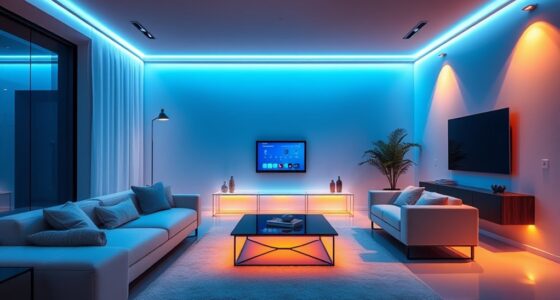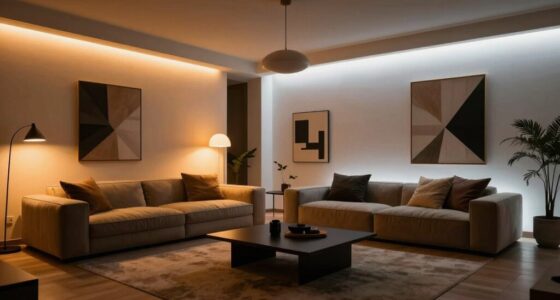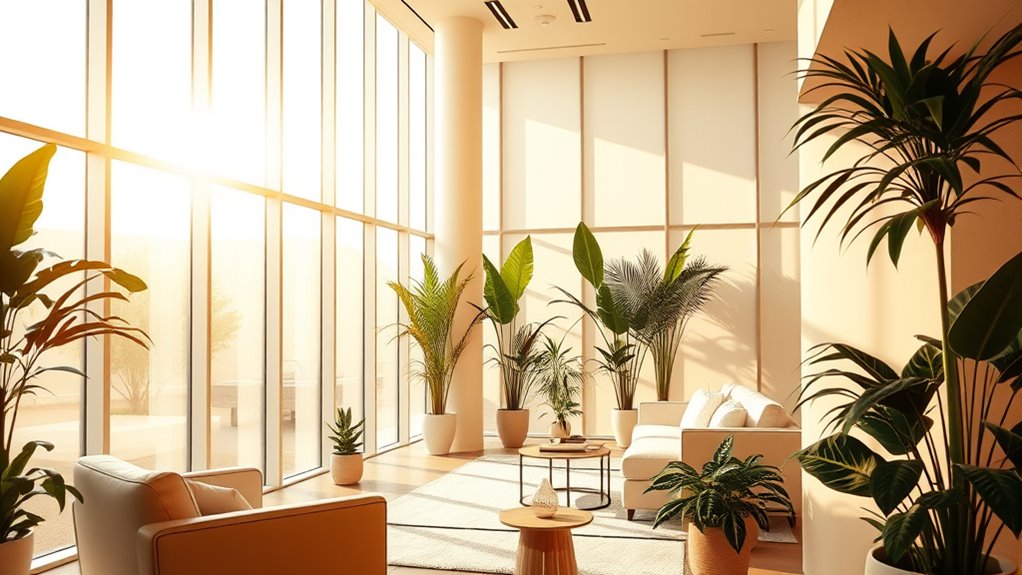

To improve your wellness, choose lighting that aligns with your natural circadian rhythms. During the day, opt for bright, natural-looking light to boost alertness and mood. In the evening, switch to warmer, softer lighting to promote relaxation and better sleep. Human-centric designs with adjustable fixtures can help support your overall health and emotional well-being. Keep exploring how thoughtful lighting choices can transform your environment and daily routines for ideal wellness.

Get furniture and decor delivered free with Prime
- Fast, free delivery on millions of items
- Prime Video, Amazon Music and more included
- Member-only deals all year
Key Takeaways
- Human-centric lighting mimics natural daylight patterns to support circadian rhythms and promote overall well-being.
- Bright, blue-enriched light during the day enhances alertness and mood, while warm, dim lighting at night facilitates sleep.
- Adjusting lighting intensity and color temperature throughout the day aligns indoor environments with natural circadian cues.
- Proper lighting design can reduce sleep disturbances, improve mood, and boost energy levels in residential and work spaces.
- Awareness of light quality and timing helps minimize light pollution and promotes healthier, more balanced living environments.

Have you ever wondered how lighting affects your overall well-being? The truth is, the way you light your environment plays a significant role in your daily health and happiness. Proper lighting isn’t just about visibility; it’s about aligning with your body’s natural rhythms to promote better sleep, elevate your mood, and support overall wellness. When you understand how lighting interacts with your circadian rhythms, you can make intentional choices that improve your quality of life. This is especially true for sleep optimization and mood enhancement, two critical aspects of well-being that are directly influenced by lighting conditions.
Your circadian rhythms are your body’s internal clock, dictating sleep-wake cycles, hormone release, and even body temperature. Disrupting these rhythms with poor lighting can lead to sleep difficulties, fatigue, and emotional instability. To optimize sleep, you need to mimic natural light patterns as much as possible. During the day, exposure to bright, blue-enriched light helps signal to your brain that it’s daytime, keeping you alert and focused. As evening approaches, reducing exposure to blue light and shifting to warmer, dimmer lighting signals your body that it’s time to wind down. This shift supports better sleep, making it easier to fall asleep and stay asleep longer, which is essential for overall health.
Mood enhancement is another benefit closely tied to lighting choices. Bright, natural-looking light can boost your mood and energy levels, helping you feel more positive and motivated throughout the day. Conversely, insufficient or poorly designed lighting can contribute to feelings of depression, lethargy, or irritability. Human-centric lighting solutions leverage adjustable fixtures and smart controls to create environments that support your emotional well-being. For example, adjustable lighting that mimics natural daylight during work hours can keep you engaged and uplifted, while softer, warmer tones in the evening promote relaxation and comfort.
Incorporating human-centric design into your lighting setup means being intentional about how light impacts your daily routines. It’s about more than just avoiding eye strain; it’s about creating spaces that work with your body’s natural processes. Using circadian-friendly lighting, you can enhance your sleep quality and boost your mood, leading to a more balanced, energized life. Additionally, understanding the importance of proper lighting can help you avoid the negative effects of light pollution, ensuring your environment remains conducive to health and well-being. By paying attention to the quality, intensity, and timing of your lighting, you can harness its power to support your overall wellness and create a healthier, more harmonious environment for yourself.
human-centric circadian rhythm lighting
As an affiliate, we earn on qualifying purchases.
As an affiliate, we earn on qualifying purchases.
Frequently Asked Questions
How Can I Optimize Lighting for Mental Health Benefits at Home?
To optimize lighting for mental health at home, maximize natural light during the day by opening curtains and positioning workspaces near windows. Use warm color temperatures in the evening to promote relaxation and better sleep. Incorporate adjustable lighting options so you can control brightness and hue, aligning your environment with your daily rhythms. This approach helps boost mood, reduce stress, and support overall well-being through thoughtful lighting choices.
What Are the Best Lighting Options for Sleep Quality Improvement?
Think of your sleep space as a calming lake at dusk. For better sleep, opt for warm, dim lighting with minimal blue hues to create a peaceful environment. Use lighting customization to gradually soften light in the evening, mimicking natural sunset tones. Avoid bright, blue-environment lighting before bed, as it tricks your brain into staying alert. Instead, choose amber or red-toned lights to help you wind down naturally.
How Does Lighting Affect Productivity and Focus in Workplace Environments?
Lighting greatly influences your productivity and focus at work. When you choose lighting with the right color temperature, such as cooler tones, it keeps you alert and enhances concentration. Glare reduction is essential to prevent eye strain and maintain clarity. Proper lighting minimizes distractions, boosts your energy, and helps you stay engaged throughout the day, making your workspace more efficient and comfortable.
Can Lighting Adjustments Help With Seasonal Affective Disorder (SAD)?
Lighting adjustments can substantially help with Seasonal Affective Disorder (SAD). You should consider using light therapy, which mimics natural sunlight and boosts your mood. Bright, full-spectrum lights in your environment can enhance your mood and reduce symptoms of SAD. By incorporating these lighting strategies into your daily routine, you’ll likely experience improved mood and increased energy, making it easier to cope with seasonal changes.
What Are Emerging Technologies in Human-Centric Lighting Design?
Imagine a future where lighting adapts seamlessly to your needs. Emerging technologies like smart controls and dynamic spectra make this possible, allowing luminaires to adjust brightness and color temperature in real-time. These innovations create personalized environments that support your circadian rhythms, boost mood, and enhance focus. By integrating sensors and AI, human-centric lighting design becomes more intuitive, ensuring your space nourishes your well-being effortlessly and beautifully.
Conclusion
So, next time you marvel at your perfectly lit space, remember it’s not just about aesthetics—it’s about fooling your body into thinking it’s still daytime. Who knew that aligning your lighting with your circadian rhythm could turn your home into a wellness sanctuary? Ironically, in our quest for ‘human-centric’ design, we might just be unwittingly creating the most enlightened, energy-efficient sleep deprivation chambers ever. Cheers to enlightened living—lit just right.
Halloween Picks
halloween
As an affiliate, we earn on qualifying purchases.