If you’re thinking about a backyard greenhouse for veggies, you’ll need a solid sunlight analysis—it’s more essential than you might expect. Aim for a spot that gets 6-8 hours of direct sunlight daily. Look for shaded areas from trees or buildings, and track sunlight movement throughout the day. Choosing the right plants based on their light needs prevents weak growth. Keep in mind, seasonal changes also play a role in your greenhouse’s success. There’s more to uncover about optimizing your setup!

Get furniture and decor delivered free with Prime
- Fast, free delivery on millions of items
- Prime Video, Amazon Music and more included
- Member-only deals all year
Key Takeaways
- Conduct a thorough solar analysis to identify optimal sunlight exposure for your greenhouse location before construction.
- Monitor shaded areas from trees, fences, and buildings to ensure plants receive adequate light.
- Different vegetables have distinct light requirements; choose plants based on their sunlight needs for better growth.
- Utilize transparent materials and shade cloth in greenhouse design to manage light and temperature effectively.
- Regularly assess seasonal changes in solar angles to adjust greenhouse conditions and maximize vegetable productivity.
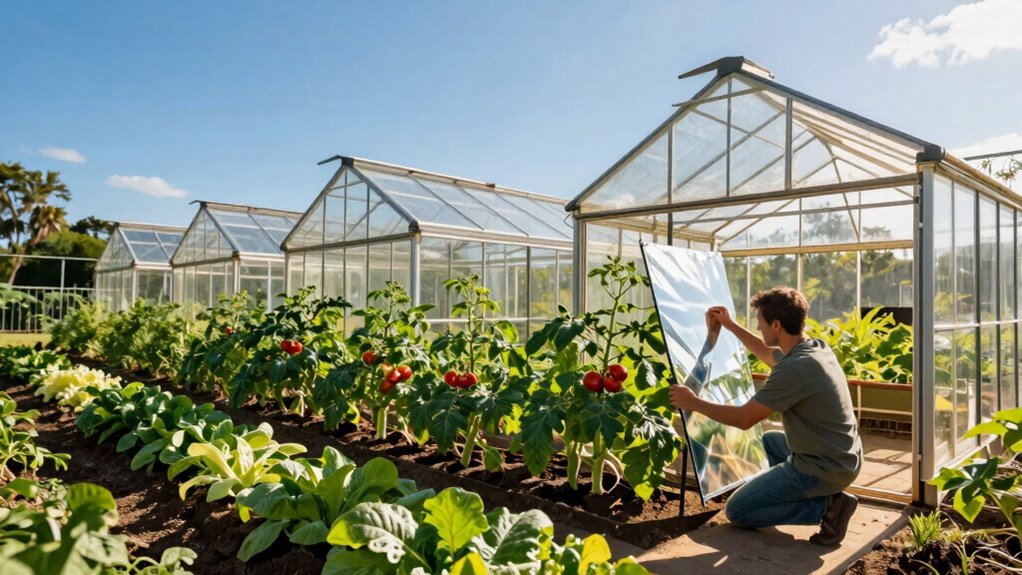
When you dream of growing fresh vegetables year-round, a backyard greenhouse can transform that vision into reality. However, before you rush into building one, it’s essential to analyze the sunlight exposure your greenhouse will receive. Many people underestimate the impact of light on plant growth, leading to poor plant selection and disappointing harvests. The right amount of sunlight can make or break your greenhouse gardening experience.
First off, take a good look at your yard. Observe how sunlight moves throughout the day. Do certain areas stay shaded for long periods? Are there trees, fences, or buildings that might block sunlight during vital hours? Ideally, your greenhouse should be placed in a spot that gets at least six to eight hours of direct sunlight each day. This isn’t just a suggestion; it’s a necessity for most vegetables, which thrive in bright conditions.
Once you’ve identified the best location, consider your plant selection. Not all vegetables have the same light requirements. For example, leafy greens like spinach and lettuce can tolerate partial shade, making them great choices for areas that don’t get full sun all day. On the other hand, sun-loving plants like tomatoes and peppers need maximum sunlight to flourish. If you choose the wrong plants for your light conditions, you’ll likely end up with leggy, weak growth rather than the robust vegetables you hoped for.
While planning your greenhouse, think about how you can maximize sunlight exposure. Transparent materials like polycarbonate or glass can help distribute light evenly. If you’re in a particularly hot area, consider adding shade cloth to protect sensitive plants during peak sunlight hours. You want to create an environment where your vegetables can thrive, so balancing sunlight and temperature is key. Additionally, understanding the importance of solar exposure can help you optimize your greenhouse location and design. Proper solar analysis can prevent costly mistakes and improve your harvest success. Conducting a thorough solar assessment during planning can provide valuable insights into the best positioning for your greenhouse. Furthermore, utilizing solar tracking systems can enhance sunlight capture throughout the year, maximizing your growing potential. Remember that seasonal variations also affect solar angles, so adjusting your setup accordingly can help maintain optimal light conditions year-round.
Products Worth Considering

Ring Alarm 14-Piece Wireless Security System Kit

Levoit Eleva 300X HEPA Air Purifier for Home and Bedroom

Hisense 85 U6 Pro Series Mini-LED ULED 4K UHD HDR Gaming AI Smart Fire TV (85U6SF Pro)
As an affiliate, we earn on qualifying purchases.
Frequently Asked Questions
What Materials Are Best for Greenhouse Construction?
For greenhouse construction, you’ll want to contemplate wood vs. metal frames. Wood offers a natural aesthetic but requires maintenance, while metal provides durability and strength. When it comes to glazing, glass alternatives like polycarbonate or acrylic are excellent choices. They’re lightweight, provide good insulation, and resist shattering. By balancing these materials, you can create a greenhouse that suits your needs and withstands the elements, ensuring your plants thrive.
How Do I Maintain Optimal Humidity Levels?
To maintain ideal humidity levels, think of your greenhouse as a sponge. You’ve got to wring it out just right. Use humidity control systems like vents and misters, and monitor moisture consistently with hygrometers. When you notice humidity rising too high, open those vents or use fans to circulate air. Conversely, if it’s too low, you can mist plants or add a humidifier. Keeping that balance helps your plants thrive!
Can I Use a Greenhouse Year-Round?
Yes, you can use a greenhouse year-round! It offers great benefits like extended growing seasons and protection from harsh weather. However, you’ll face seasonal challenges, especially in winter when maintaining heat and light can be tough. By using proper insulation and supplemental lighting, you can keep your plants thriving. Just be prepared to adjust your care routine as the seasons change, ensuring you maximize the potential of your greenhouse throughout the year.
What Pests Should I Watch for in Greenhouses?
Watch for common pests like aphids, whiteflies, spider mites, and fungus gnats in your greenhouse. Pest identification is vital to managing infestations early. You can use organic treatments like neem oil or insecticidal soap to keep these pests at bay. Regularly inspect your plants and maintain good airflow to reduce pest issues. By staying vigilant, you’ll guarantee a healthier environment for your vegetables and improve your overall yield.
How Do I Ventilate My Greenhouse Effectively?
To ventilate your greenhouse effectively, you can use both natural and mechanical ventilation. Open windows and vents during the day to encourage airflow, allowing hot air to escape and cooler air to enter. For mechanical ventilation, consider installing fans to enhance air circulation, especially on hot days. Confirm you monitor humidity and temperature levels regularly, adjusting your ventilation strategies as needed to create a balanced environment for your plants.
Conclusion
In the world of backyard gardening, a greenhouse can be your sunlit sanctuary, but don’t underestimate the importance of sun analysis. By understanding how sunlight dances across your space, you’ll reveal the full potential of your vegetable garden. A little planning can turn your greenhouse into a thriving ecosystem, ensuring your plants flourish and yield bountiful harvests. So, roll up your sleeves and let the sun guide you to greener pastures in your backyard!