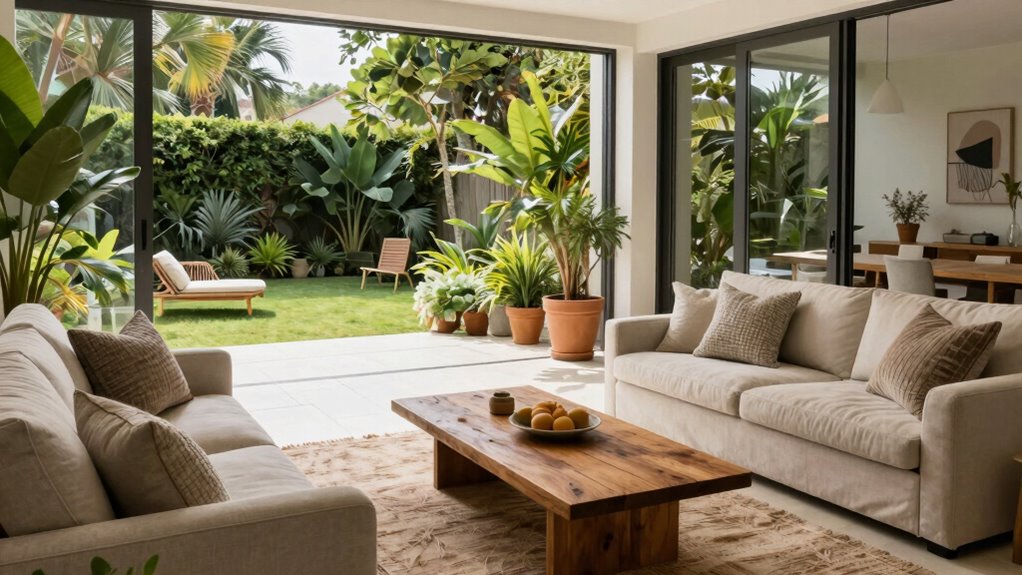

To coordinate indoor and outdoor design without matching everything, focus on creating a visual dialogue rather than exact replication. Extend your style outdoors with similar colors, textures, or accessories, like plants or textiles, to bring harmony. Use natural materials and layered lighting to unify spaces while maintaining their unique functions. Think about ecological harmony and subtle contrasts that keep the progression seamless yet vibrant. Keep exploring ideas, and you’ll discover how to craft a cohesive yet lively outdoor-indoor flow.

Get furniture and decor delivered free with Prime
- Fast, free delivery on millions of items
- Prime Video, Amazon Music and more included
- Member-only deals all year
Key Takeaways
- Extend indoor aesthetics outdoors through similar styles and subtle design elements like textiles, accessories, or plants.
- Use natural materials outdoors that complement interior textures, maintaining visual cohesion without exact matching.
- Incorporate consistent lighting styles or fixtures to unify indoor and outdoor spaces while allowing for functional differences.
- Choose biodiversity-friendly plants and natural materials to enhance ecological harmony and create a seamless transition.
- Focus on balanced contrast and cohesion, ensuring each space retains its unique function while feeling visually connected.
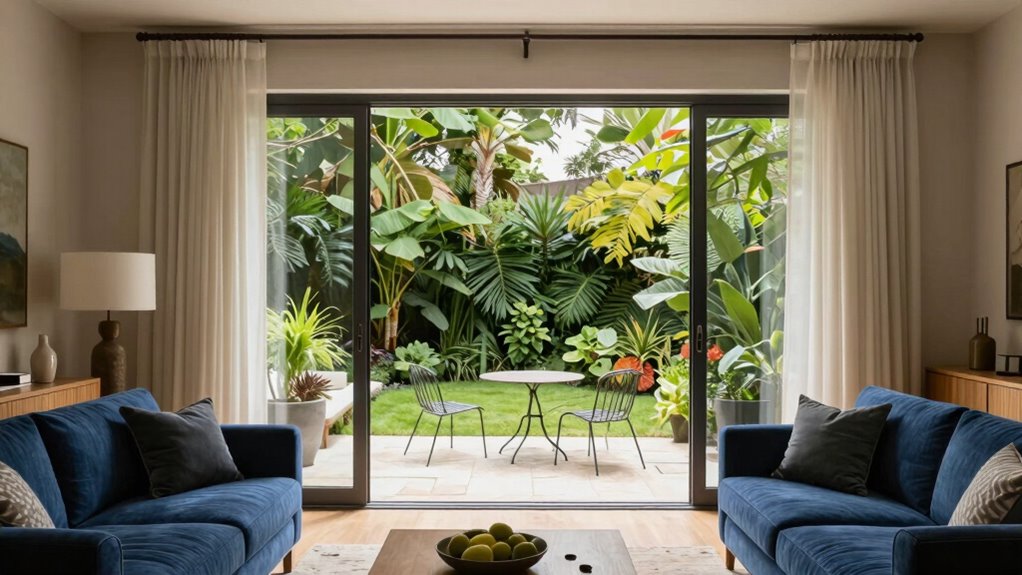
Avoid the temptation to replicate every detail from inside to outside. Instead, think of your design as a dialogue between the two environments. For example, if you have a modern, minimalist living room, you can extend that aesthetic outdoors with clean-lined furniture and understated decor. Use accessories, textiles, or plants to bridge the gap—these small touches can echo your indoor style without forcing a direct match. Incorporate natural elements like stone or wood outdoors that complement your interior’s materials, but vary their application to keep things interesting. Additionally, considering the use of biodiversity-friendly plants and natural materials can enhance the ecological harmony between your indoor and outdoor spaces. Creating visual cohesion through subtle design elements helps establish a seamless connection without sacrificing individuality. Lighting also plays a significant role in coordinating your indoor and outdoor spaces. Consistent lighting styles or similar fixtures can unify the areas, but don’t be afraid to diversify with outdoor-specific fixtures that withstand the elements. Incorporating ecological principles into your design can foster a more sustainable and balanced environment. This approach emphasizes the distinct functions of each space while maintaining a visual connection. Remember, the key to successful *harmonization* is about creating a harmonious flow rather than perfect replication. Be intentional with your choices, balancing color and material contrast thoughtfully, and you’ll craft a space that feels both cohesive and vibrant, inviting you to enjoy your home from every angle.
Products Worth Considering

Philips Hue Festavia Globe Outdoor String Lights, 32 Bulbs, 91 ft

Google Nest Cam Indoor (Wired, 3rd Gen) – Security Camera – Snow

Google Nest Cam Indoor Security Camera, 3-Pack
As an affiliate, we earn on qualifying purchases.
Frequently Asked Questions
How Can I Create Visual Flow Between Indoor and Outdoor Spaces?
You can create visual flow between indoor and outdoor spaces by using connecting elements like rugs, similar color palettes, or matching materials that link the two areas. Incorporate design features such as consistent furniture styles or complementary textures to enhance visual harmony. These elements guide the eye smoothly from inside to outside, making the shift seamless and inviting without needing everything to match perfectly.
What Are the Best Materials to Use for Outdoor Furniture?
Choosing outdoor furniture with exceptional durability and weather resistance is essential—these materials can withstand a hurricane’s worth of weather changes. Opt for high-quality teak, aluminum, or synthetic wicker, as they’re built to last through sun, rain, and snow. These materials not only resist corrosion and fading but also add a sleek, modern touch to your outdoor space, making it a cozy retreat that stays beautiful year-round.
How Do I Incorporate Color Without Clashing?
To incorporate color without clashing, focus on color harmony by choosing shades that complement each other, like analogous or monochromatic palettes. Use pattern mixing thoughtfully—pair solid colors with subtle patterns to add interest without overwhelming. Balance bold colors with neutral tones to create a cohesive look. This approach guarantees your indoor and outdoor spaces blend seamlessly, making your design feel intentional and harmonious.
Can Different Styles Work Together Seamlessly?
Yes, different styles can blend like a harmonious symphony if you embrace an eclectic mix and evolving style. Think of your space as a dance where contrasting moves come together seamlessly. Use neutral backgrounds to anchor diverse elements, and balance bold accents with subtle hues. This approach creates a fluid, curated look that feels intentional, not chaotic, allowing your unique personality to shine through while maintaining visual harmony.
How Do I Maintain Consistency in Design Themes?
You maintain consistency in design themes by focusing on color harmony and texture contrast. Use a cohesive color palette across indoor and outdoor spaces to create visual unity, even with different styles. Incorporate contrasting textures—smooth indoors, rough outdoors—to add interest without disrupting flow. This approach guarantees your design feels deliberate and connected, making shifts seamless while allowing individual style expressions to shine through.
Conclusion
By blending indoor and outdoor design seamlessly, you create a space that feels like a cohesive story rather than a mismatched collection. Think of it as a dance where each element moves in harmony, not identical steps. Trust your instincts, mix textures and colors thoughtfully, and focus on creating flow rather than matching everything perfectly. When you do, your home becomes a sanctuary that welcomes you with open arms—like a warm hug on a chilly day.